
The iPhone 12 Pro was a flagship powerhouse in 2020—its triple-camera system, stainless steel build, and A14 Bionic chip made it a favorite among professionals and enthusiasts. Fast forward to today, and the iPhone 15 represents Apple’s current standard for innovation, with USB-C, Dynamic Island, and a significantly improved camera. But does that mean upgrading from the 12 Pro is essential? For many users, the answer isn’t so simple. This comparison breaks down real-world performance, longevity, and value to help you decide whether the jump is justified—or if holding onto your 12 Pro remains a smart move.
Performance & Hardware: Generational Gaps That Matter
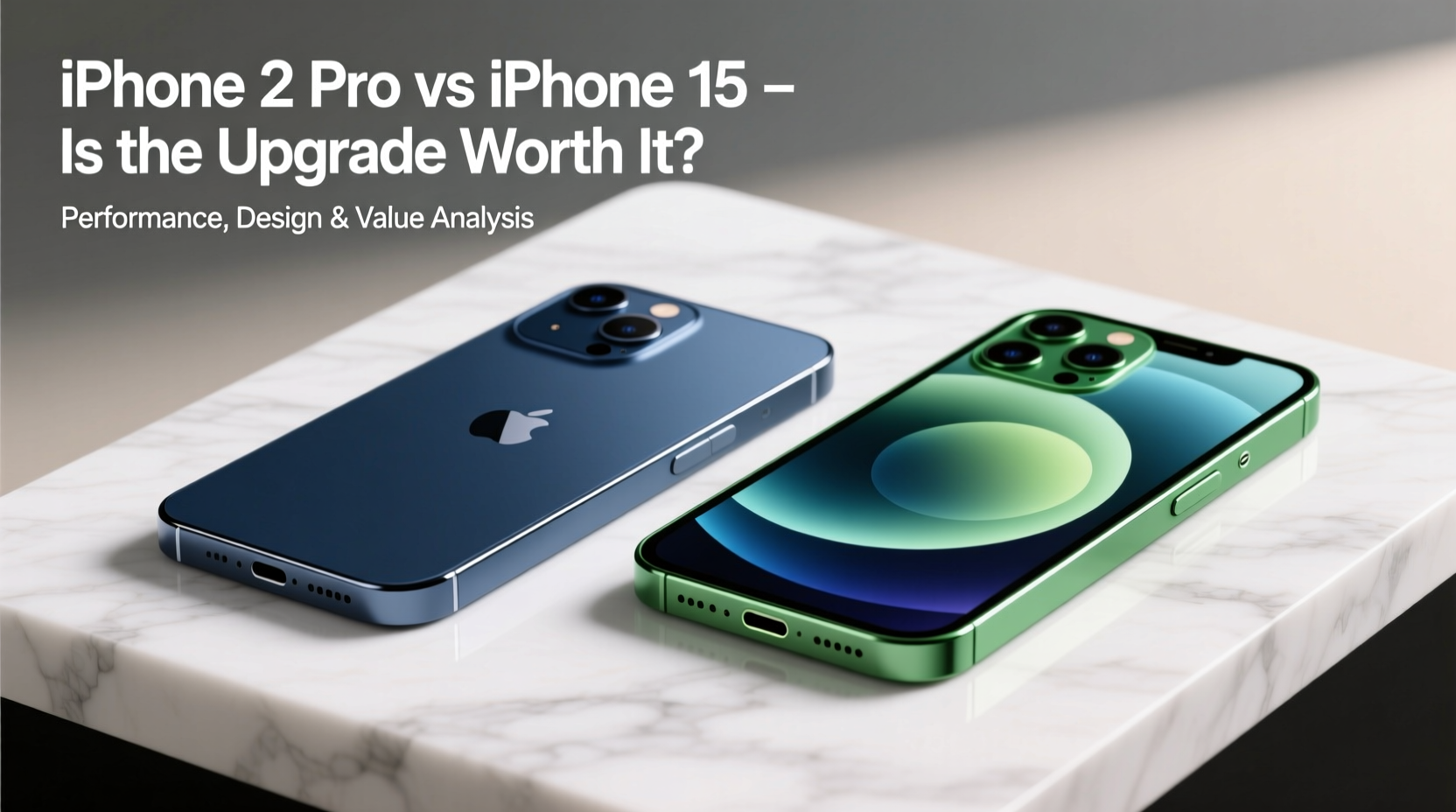
The core difference between these models lies in their processors. The iPhone 12 Pro runs on the A14 Bionic chip, built on a 5nm process. At launch, it was blazing fast and capable of handling any app or game with ease. However, the iPhone 15 uses the A16 Bionic chip—the same processor found in the iPhone 14 Pro. This chip delivers roughly 40% better CPU performance and 50% better GPU performance than the A14 under peak loads.
Beyond raw speed, thermal efficiency has improved. The A16 manages heat better during extended tasks like video editing or gaming, reducing throttling. Real-world impact? Apps open slightly faster, multitasking feels smoother, and future iOS updates will likely be optimized first for newer chips. While the A14 still handles iOS 17 well, its lifespan may end one or two updates sooner than the A16.
Camera Comparison: More Than Just Megapixels
The iPhone 12 Pro introduced Apple’s LiDAR scanner and a triple-lens setup (wide, ultra-wide, telephoto), which was excellent in its day. The iPhone 15, while sticking to a dual-camera system (wide and ultra-wide), brings significant upgrades:
- 48MP Main Sensor: The iPhone 15’s primary camera captures much more detail, especially in daylight. It uses pixel binning to deliver sharper 12MP photos but allows full 48MP shots when needed.
- 2x Telephoto Crop: Without a dedicated telephoto lens, the 15 simulates a 2x optical zoom using the center portion of the 48MP sensor—effectively matching the 12 Pro’s 2x zoom with better clarity.
- Improved Low-Light Performance: Larger sensor size and advanced computational photography result in cleaner night shots with less noise.
- Smart HDR 5: Enhanced dynamic range preserves more detail in shadows and highlights.
For casual photographers, the difference may not be dramatic. But for those who print photos, crop heavily, or shoot in mixed lighting, the iPhone 15 offers tangible improvements. The lack of a dedicated telephoto lens means the 12 Pro still wins at 4x and higher zoom levels, though image quality degrades faster.
“Camera software advancements now matter as much as hardware. The iPhone 15 leverages machine learning to optimize every shot before you even see it.” — David Lin, Mobile Imaging Analyst at TechPulse
Battery Life & Charging: Incremental But Meaningful Gains
Battery life on the iPhone 12 Pro was average for its class—about 17 hours of video playback. The iPhone 15 improves this to around 20–22 hours, thanks to a larger battery and more efficient components. In practical terms, that often translates to an extra half-day of light use or one more charge cycle per week.
Charging technology has also evolved. The iPhone 12 Pro supports 20W wired charging and MagSafe, but still uses Lightning. The iPhone 15 switches to USB-C—a long-overdue change that simplifies travel and aligns with EU regulations. While Apple’s implementation is limited to USB 2 speeds (480 Mbps), it opens the door to universal cables and easier accessory compatibility.
| Feature | iPhone 12 Pro | iPhone 15 |
|---|---|---|
| Chip | A14 Bionic | A16 Bionic |
| Rear Cameras | Triple: 12MP Wide, Ultra-Wide, Telephoto | Dual: 48MP Wide, 12MP Ultra-Wide |
| Front Camera | 12MP TrueDepth | 12MP TrueDepth + Autofocus |
| Display | 6.1” Super Retina XDR (OLED) | 6.1” Super Retina XDR with Dynamic Island |
| Charging Port | Lightning | USB-C |
| Battery Life (Video Playback) | 17 hours | 20 hours |
| Water Resistance | IP68 (6m for 30 min) | IP68 (6m for 30 min) |
| Starting Storage | 128GB | 128GB |
Design & Usability: Subtle Changes, Big Impacts
The design language between the iPhone 12 Pro and iPhone 15 reflects Apple’s shift toward refinement over reinvention. Both have flat aluminum or stainless edges and glass backs, but the 15 features a contoured edge design that feels more comfortable in hand. The biggest usability change is the introduction of Dynamic Island—a pill-shaped cutout that replaces the notch and animates alerts, timers, and music controls.
While not a functional necessity, Dynamic Island enhances interaction by making background activities visible without leaving your current app. It’s particularly useful for tracking deliveries, monitoring workouts, or managing audio playback. Users upgrading from the 12 Pro consistently report that Dynamic Island becomes indispensable within days.
Build-wise, the iPhone 12 Pro’s stainless steel frame is more premium-feeling but prone to scratches. The iPhone 15 uses aerospace-grade aluminum, which is lighter and more durable in daily carry. Both are IP68-rated, so water resistance is equivalent.
Is the iPhone 12 Pro Still Good in 2024?
Absolutely. The iPhone 12 Pro remains a highly capable device. It runs iOS 17 smoothly, receives security updates, and supports most modern apps. Its camera system, while older, still produces excellent photos in good lighting. Battery health on well-maintained units is typically solid, especially if charged between 20% and 80% regularly.
Apple continues to support devices for five years after release, meaning the 12 Pro should receive updates until at least 2025, possibly 2026. That makes it a viable daily driver for users who don’t need cutting-edge features.
When to Upgrade: A Practical Checklist
Ask yourself the following before deciding:
- ✅ Are you experiencing slow app launches or frequent crashes?
- ✅ Do you want better low-light photos or higher-resolution detail?
- ✅ Have you outgrown Lightning cables and want USB-C convenience?
- ✅ Do you value longer software support (iPhone 15 will get updates until ~2029)?
- ✅ Is your current battery lasting less than a full day?
If three or more apply, upgrading makes sense. Otherwise, you might be paying for improvements you won’t fully use.
Real-World Example: Sarah’s Upgrade Dilemma
Sarah, a freelance photographer, used her iPhone 12 Pro since 2021 for client scouting, social media content, and quick edits. By late 2023, she noticed her camera struggled in dim cafes and that exporting 4K videos took noticeably longer. Her battery dropped below 75% health, requiring midday charging.
She considered waiting for the iPhone 16 but tested an iPhone 15 at an Apple Store. The 48MP sensor captured textures in fabric and skin tone far better than her current phone. Video export times halved. She also appreciated using one USB-C cable for her phone, laptop, and headphones.
She upgraded—and immediately felt the difference. For her workflow, the investment paid off in time saved and output quality.
Frequently Asked Questions
Can the iPhone 12 Pro handle iOS 18?
Apple hasn’t confirmed iOS 18 support yet, but based on past patterns, the 12 Pro will likely receive the update. However, performance may degrade over time, especially with new AI features expected in iOS 18.
Is the iPhone 15 worth $799 if I have a working 12 Pro?
Only if you prioritize camera quality, battery life, or USB-C. For general use—calls, messaging, browsing, streaming—the 12 Pro still performs well. Consider selling your 12 Pro to offset the cost if you do upgrade.
Does the iPhone 15 have a telephoto lens like the 12 Pro?
No, the base iPhone 15 does not include a telephoto lens. That feature remains exclusive to the iPhone 15 Pro and Pro Max. However, its 48MP main sensor enables high-quality 2x “optical-quality” zoom via cropping.
Final Verdict: Upgrade Only If You Need More
The iPhone 12 Pro is still a strong performer in 2024. It’s reliable, well-built, and supported. But the iPhone 15 offers meaningful upgrades—especially in camera resolution, processing power, and charging convenience—that add up in daily use.
If you’re due for a new phone, value modern features, or rely on your iPhone for creative tasks, the upgrade is worthwhile. But if your 12 Pro works well and meets your needs, there’s no urgent reason to replace it. Sometimes, the best tech decision is knowing when not to spend.




 浙公网安备
33010002000092号
浙公网安备
33010002000092号 浙B2-20120091-4
Comments
No comments yet. Why don't you start the discussion?