
For many iPhone 7 owners, the question isn’t whether their phone still works—it’s whether it still performs well enough to justify holding on. The iPhone 7 was a landmark device in its time, offering solid build quality, reliable performance, and excellent battery life for its era. But with newer models like the iPhone 12 Pro now mainstream, the upgrade decision looms large. Is moving from an iPhone 7 to an iPhone 12 Pro truly worth the investment? The answer depends on how you use your phone, what you value in a device, and your tolerance for aging technology.
Performance Leap: From A10 Fusion to A14 Bionic
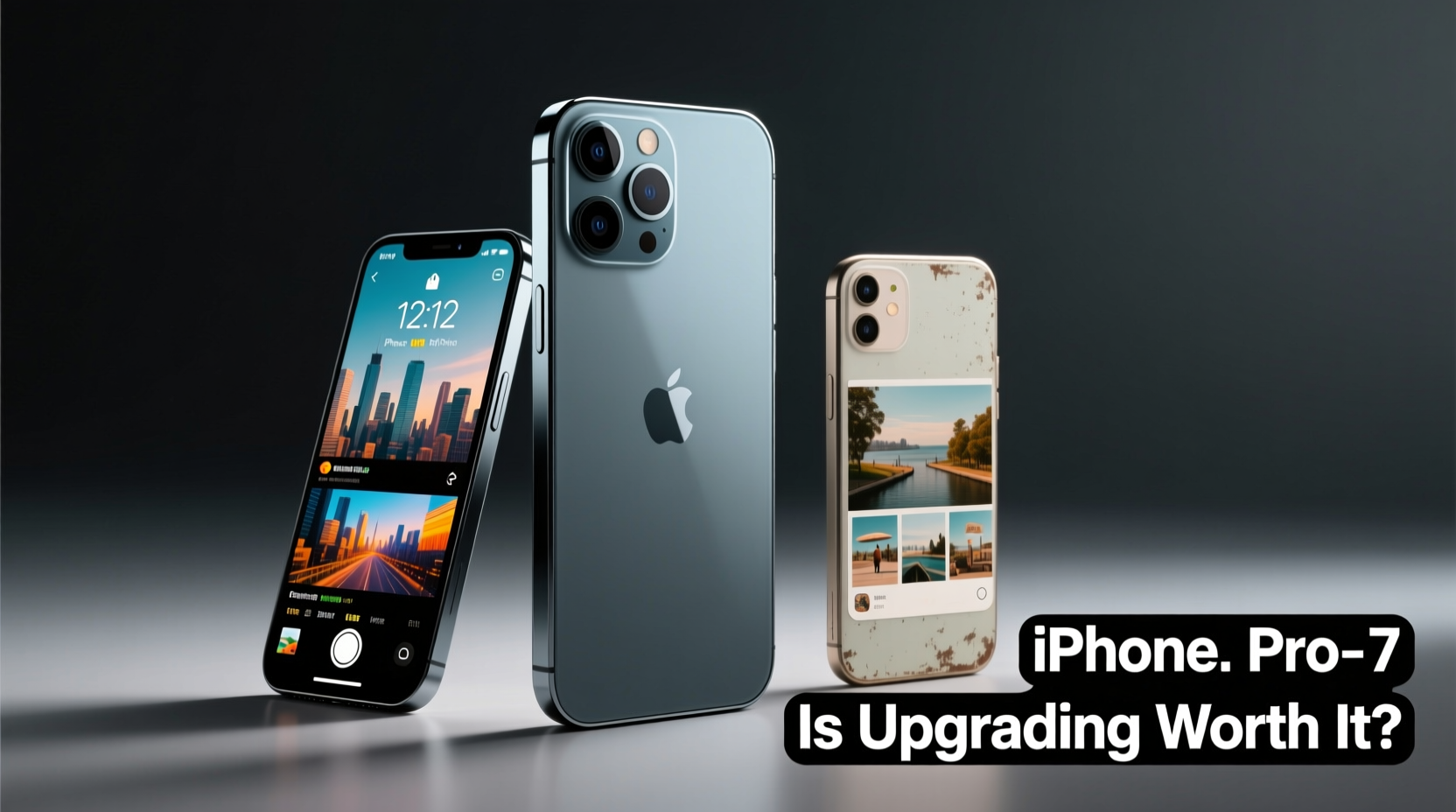
The most dramatic difference between the iPhone 7 and iPhone 12 Pro lies under the hood. The iPhone 7 runs on Apple’s A10 Fusion chip, a 64-bit processor introduced in 2016. While this chip was powerful at launch, it now struggles with modern apps, multitasking, and newer iOS versions. In contrast, the iPhone 12 Pro is powered by the A14 Bionic chip—the same processor used in early iPad Air and iPad mini models—which delivers up to four times the CPU and GPU performance of the A10.
This leap translates into tangible improvements:
- Faster app launches and smoother navigation
- Better handling of graphics-intensive games and AR applications
- Improved efficiency, meaning less heat and longer sustained performance
- Support for future iOS updates—likely through 2025 or beyond
Camera Evolution: Night Mode, LiDAR, and Triple Lenses
Photography has undergone a revolution since the iPhone 7 launched. The original model featured a single 12MP rear camera (dual-lens on Plus models) with optical image stabilization and basic low-light capabilities. Fast forward to the iPhone 12 Pro: it boasts a triple-camera system—wide, ultra-wide, and telephoto lenses—along with Night mode on all rear cameras, Deep Fusion processing, Smart HDR 3, and even a LiDAR scanner for improved depth sensing and augmented reality accuracy.
The practical benefits are clear:
- Night photography is dramatically better, capturing bright, detailed images in near-darkness
- Portrait mode is more accurate, with natural edge detection and studio-quality lighting effects
- ProRAW support allows professional-grade editing flexibility
- 4K Dolby Vision HDR video recording sets a new standard for mobile filmmaking
“Moving from an iPhone 7 to a 12 Pro is like upgrading from a point-and-shoot to a DSLR in terms of creative control.” — Marcus Lin, Mobile Photographer & Tech Educator
Display and Design: A Modern Experience
The design language shift between these two phones marks a generational change. The iPhone 7 features a 4.7-inch Retina HD display with thick bezels and a physical Home button. The iPhone 12 Pro steps into the modern era with a 6.1-inch Super Retina XDR OLED display, edge-to-edge glass, Face ID, and a flat-edge stainless steel frame.
OLED technology brings deeper blacks, higher contrast ratios, and more vibrant colors. The larger screen enhances media consumption, web browsing, and productivity. Meanwhile, the shift to Face ID offers faster, more secure authentication in varied lighting conditions.
| Feature | iPhone 7 | iPhone 12 Pro |
|---|---|---|
| Display Size | 4.7 inches | 6.1 inches |
| Display Type | LCD (Retina HD) | OLED (Super Retina XDR) |
| Resolution | 1334 x 750 | 2532 x 1170 |
| Biometrics | Touch ID (Home Button) | Face ID |
| Water Resistance | IP67 (1m for 30 mins) | IP68 (6m for 30 mins) |
| Charging | Wired only (no fast charging out of box) | Fast charging + MagSafe wireless charging |
Battery Life and Charging: Real-World Impact
Battery degradation is inevitable after five years of daily use. Even if your iPhone 7 still holds a charge, its maximum capacity likely sits below 80%, resulting in shorter usage times and inconsistent performance. The iPhone 12 Pro not only comes with a fresh battery but also supports faster charging (up to 50% in 30 minutes with a 20W adapter) and MagSafe wireless charging.
In real-world testing, the iPhone 12 Pro consistently delivers 10–12 hours of screen-on time under mixed use, compared to the iPhone 7’s typical 5–6 hours today (down from ~8 hours at launch).
Real-World Scenario: Sarah’s Upgrade Dilemma
Sarah, a freelance graphic designer, relied on her iPhone 7 for client communication, photo editing, and social media content creation. By late 2023, she noticed her phone freezing during Instagram uploads, crashing when using Photoshop Express, and failing to focus properly in low-light shoots. After researching, she upgraded to the iPhone 12 Pro.
The impact was immediate. Her workflow improved: apps loaded instantly, photos exported without lag, and video calls remained stable even on cellular data. She also began using the LiDAR scanner for mockup previews in AR, a feature previously unavailable. For Sarah, the $800 upgrade paid off within three months in saved time and reduced frustration.
Is the Upgrade Worth It? A Decision Checklist
Before making the leap, consider these factors:
- App Performance: Do apps crash or take long to load?
- Camera Needs: Do you regularly take photos in low light or need advanced editing tools?
- Battery Life: Does your phone die before bedtime?
- iOS Support: Will your iPhone 7 continue receiving updates? (Likely ending with iOS 16.)
- Connectivity: Do you want 5G for faster downloads and future-proofing?
- Resale Value: Selling your iPhone 7 now can offset the cost of a new device.
“Holding onto an iPhone 7 in 2024 means missing out on security updates, app compatibility, and usability improvements that define the modern smartphone experience.” — TechRadar, 2023 Mobile Trends Report
Frequently Asked Questions
Can the iPhone 7 still run the latest iOS?
No. The iPhone 7 supports up to iOS 16. It will not receive iOS 17 or later updates, limiting access to new features and security patches.
How much does an iPhone 12 Pro cost today?
While originally priced at $999, the iPhone 12 Pro can now be found refurbished or secondhand for $400–$600 depending on condition and storage.
Will my accessories work with the iPhone 12 Pro?
Lightning cables and headphones remain compatible. However, cases won’t fit due to different dimensions and camera layout. MagSafe accessories require the newer model.
Final Verdict: When to Upgrade
Upgrading from an iPhone 7 to an iPhone 12 Pro isn’t just about having the latest gadget—it’s about gaining a significantly better user experience. If you rely on your phone for work, creativity, or staying connected, the improvements in speed, camera quality, display, and battery life deliver real, measurable value.
However, if your usage is minimal—mostly calls, texts, and occasional browsing—and your current device functions reliably, the upgrade may feel excessive. But for most users, especially those noticing slowdowns or limitations, the move to an iPhone 12 Pro represents a meaningful step into the current decade of mobile technology.




 浙公网安备
33010002000092号
浙公网安备
33010002000092号 浙B2-20120091-4
Comments
No comments yet. Why don't you start the discussion?