
Choosing between flagship smartphones isn’t just about specs on paper—it’s about how they perform in your daily life. The iPhone 12 Pro and Google Pixel 4 XL represent two distinct philosophies in mobile design: Apple’s tightly integrated ecosystem versus Google’s AI-driven Android experience. While both launched within a year of each other, their long-term relevance in 2024 raises an important question: Is the iPhone 12 Pro still the premium choice, or is the Pixel 4 XL “good enough” for most users?
This isn’t a battle of who has more megapixels or faster RAM. It’s about durability, software support, camera consistency, ecosystem integration, and real-world usability. Let’s break down where each phone excels—and where compromises begin.
Design and Build Quality
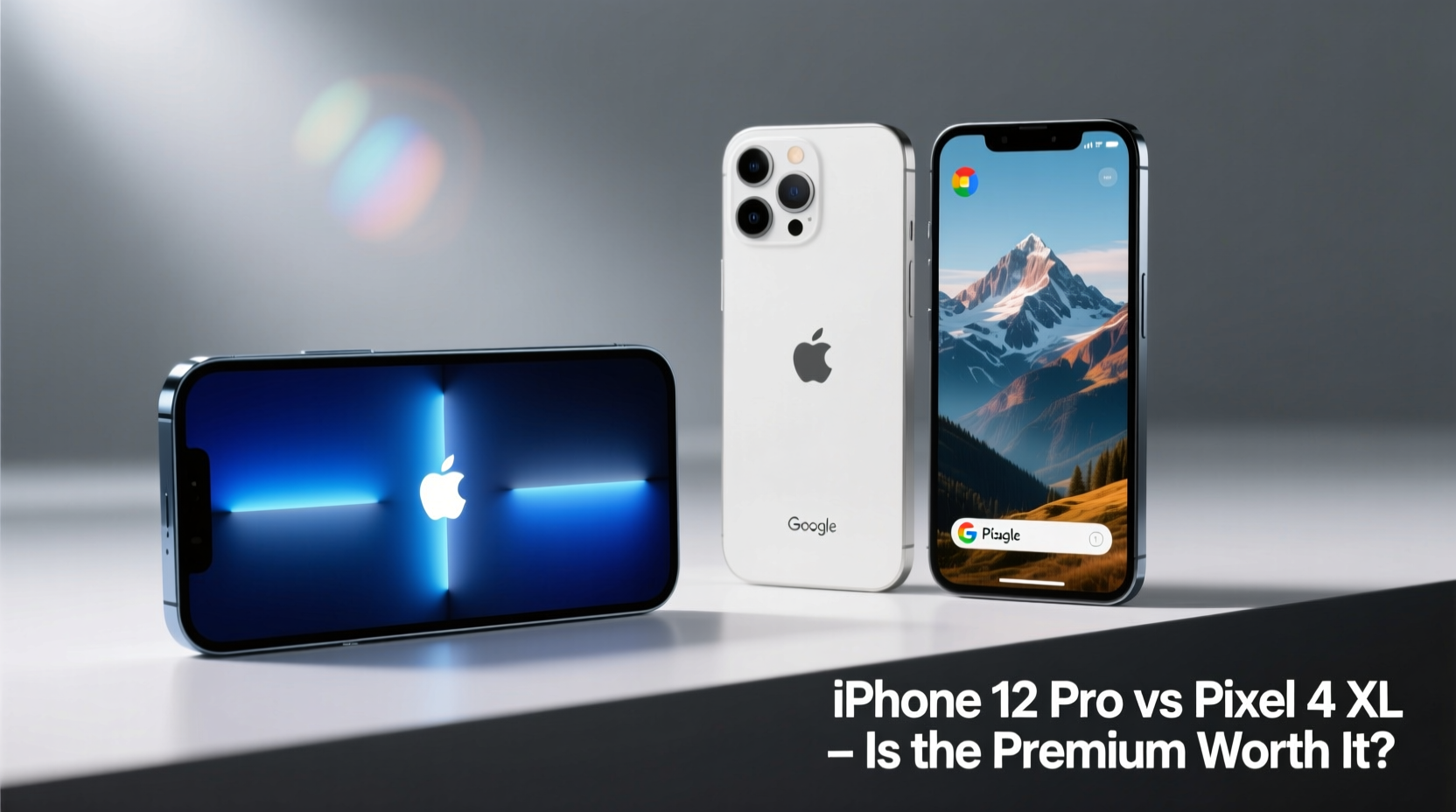
The iPhone 12 Pro sets a high bar for build quality. Its flat-edge stainless steel frame, matte glass back, and IP68 water resistance make it feel substantial and premium. At 189 grams, it’s heavier than many flagships, but that weight translates into durability and a sense of craftsmanship. The Ceramic Shield front glass also improves drop performance—Apple claims it’s tougher than any smartphone glass before it.
In contrast, the Pixel 4 XL opts for a more minimalist approach. It uses an aluminum frame and a glossy glass back, which feels sleek but attracts fingerprints. It’s lighter at 163 grams, making it easier to handle one-handed, though some may find it less sturdy. It also has IP68 rating, so both phones are equally protected against spills and dust.
Display and User Experience
The iPhone 12 Pro features a 6.1-inch Super Retina XDR OLED display with excellent color accuracy, deep blacks, and peak brightness ideal for outdoor use. It runs at 60Hz, which feels smooth but doesn’t match the fluidity of higher refresh rate screens.
The Pixel 4 XL counters with a 6.3-inch P-OLED panel and a 90Hz refresh rate—something the iPhone didn’t adopt until later models. Scrolling feels noticeably smoother, and animations are more responsive. However, Google’s auto-refresh feature toggles between 60Hz and 90Hz to save power, which can create subtle inconsistencies.
From a user experience standpoint, iOS remains polished and predictable. Every interaction feels intentional. Android 10 (upgradable to Android 12) on the Pixel offers deeper customization and Google Assistant integration, including Motion Sense for gesture controls—a novel feature that never quite lived up to its promise.
Camera Performance: Real-World Photography
Both phones have strong camera systems, but they approach photography differently.
The iPhone 12 Pro uses a triple-lens setup: 12MP wide, ultra-wide, and telephoto (2x optical zoom). Its strength lies in consistency. Whether shooting daylight landscapes or dimly lit dinners, the iPhone delivers natural colors, reliable HDR, and excellent video stabilization—even in 4K Dolby Vision.
The Pixel 4 XL sticks with a dual rear camera (12.2MP main + 16MP telephoto), skipping ultra-wide. But Google compensates with computational photography magic. Night Sight, Astrophotography mode, and superior HDR+ processing mean the Pixel often captures more detail in low light. Portrait mode is sharper, and skin tones tend to look more lifelike.
“Google’s software-first camera strategy allows older devices to punch above their hardware weight.” — David Imel, Mobile Photography Analyst
That said, the lack of an ultra-wide lens limits creative flexibility. And while Pixel photos impress initially, they sometimes oversharpen or over-saturate compared to the iPhone’s neutral tone.
Battery Life and Performance Longevity
Battery life is where the Pixel 4 XL starts to show its age. Rated for about 11 hours of screen-on time under ideal conditions, real-world usage often lands closer to 7–8 hours. Fast charging helps, but no wireless charging beyond standard speeds.
The iPhone 12 Pro, despite a modest 2,815mAh battery, benefits from iOS optimization and efficient A14 Bionic chip. Most users report 8–9 hours of screen time, with better standby efficiency. MagSafe opens up new charging options, and iOS 17 support ensures continued performance tuning.
Performance-wise, the A14 Bionic still outperforms the Pixel’s Snapdragon 855 in benchmarks and multitasking. More importantly, Apple’s unified software updates mean the iPhone 12 Pro receives security patches and feature upgrades years after release. The Pixel 4 XL reached end-of-life in 2023—no further OS updates, only limited security fixes.
Detailed Comparison Table
| Feature | iPhone 12 Pro | Pixel 4 XL |
|---|---|---|
| Release Date | October 2020 | October 2019 |
| OS (Current) | iOS 17 | Android 12 (No further updates) |
| Chipset | A14 Bionic | Snapdragon 855 |
| Rear Cameras | 12MP Wide, Ultra-Wide, Telephoto (2x) | 12.2MP Main, 16MP Telephoto (2x) |
| Front Camera | 12MP TrueDepth (Face ID) | 8MP |
| Battery Life (Screen-On) | 8–9 hours | 7–8 hours |
| Charging | Fast + MagSafe Wireless | Fast + Standard Wireless |
| Water Resistance | IP68 (6m for 30 mins) | IP68 (1.5m for 30 mins) |
| Software Support Until | ~2025–2026 | 2023 (Ended) |
Real-World Example: Travel Photographer’s Dilemma
Consider Sarah, a freelance travel photographer who used her Pixel 4 XL for two years. She loved the natural-looking portraits and Night Sight shots in Morocco’s alleyways. But by year three, app crashes increased, battery drained faster, and she couldn’t update to apps requiring newer Android versions. When she switched to the iPhone 12 Pro, she missed the 90Hz screen but gained reliability. Her editing workflow improved with iCloud sync across devices, and she appreciated consistent camera behavior across lighting conditions—critical when shooting rapidly changing environments.
For professionals and frequent travelers, the iPhone’s ecosystem integration and longer support window proved decisive—even if individual photos weren’t always as striking as the Pixel’s best.
Checklist: Choosing Between iPhone 12 Pro and Pixel 4 XL
- ✅ Need long-term software updates? → iPhone 12 Pro
- ✅ Prioritize low-light photo quality? → Pixel 4 XL (if still supported)
- ✅ Want seamless integration with Mac, iPad, or AirPods? → iPhone 12 Pro
- ✅ Prefer customizable interface and gestures? → Pixel 4 XL
- ✅ Planning to keep the phone beyond 2024? → iPhone 12 Pro only
- ✅ Value smooth scrolling and lightweight design? → Pixel 4 XL
Frequently Asked Questions
Can the Pixel 4 XL still be used safely in 2024?
Yes, but with caution. Without official OS updates, it’s more vulnerable to security risks. Use strong passwords, avoid sideloading apps, and consider it a secondary device.
Does the iPhone 12 Pro’s camera beat the Pixel 4 XL overall?
It depends. The Pixel wins in specific scenarios like night photography and portrait clarity. But the iPhone offers better consistency across all conditions, superior video quality, and broader lens versatility with ultra-wide.
Is the price difference justified?
Today, both phones can be found secondhand for $250–$400. For that range, the iPhone 12 Pro offers better future-proofing. Unless you’re deeply invested in the Google ecosystem, the extra cost for the iPhone pays off in longevity.
Final Verdict: Is the iPhone Still Worth It?
The answer is yes—if you value stability, ecosystem cohesion, and long-term usability. The iPhone 12 Pro isn’t just a camera phone or a web browser; it’s a node in a larger digital life. Face ID works flawlessly, iCloud keeps memories safe, and apps run smoothly even years after launch.
The Pixel 4 XL was groundbreaking in its time, especially for AI-powered photography. But its discontinuation of updates and aging hardware make it a riskier investment today. It might be “good enough” for casual users on a tight budget, but not for those who rely on their phone daily.
Ultimately, choosing between them comes down to what you expect from a smartphone. If you want a dependable, well-supported device that integrates seamlessly into modern digital life, the iPhone 12 Pro remains the smarter choice—even now.




 浙公网安备
33010002000092号
浙公网安备
33010002000092号 浙B2-20120091-4
Comments
No comments yet. Why don't you start the discussion?