
The smartphone market moves fast. What was top-tier two years ago may now be overshadowed by newer models boasting better cameras, smarter AI, and longer support. Yet, older flagships like the iPhone 12 Pro continue to hold their ground—especially in the used and refurbished markets. Meanwhile, Google’s Pixel 7 has been praised as a benchmark for computational photography and clean Android experience. But when placed side by side, which device truly delivers more value today?
This isn’t just about specs on paper. It’s about real-world usability, longevity, ecosystem integration, and whether paying less for an older iPhone makes sense—or if upgrading to the Pixel 7 is the smarter long-term play.
Performance & Hardware: Speed Meets Efficiency
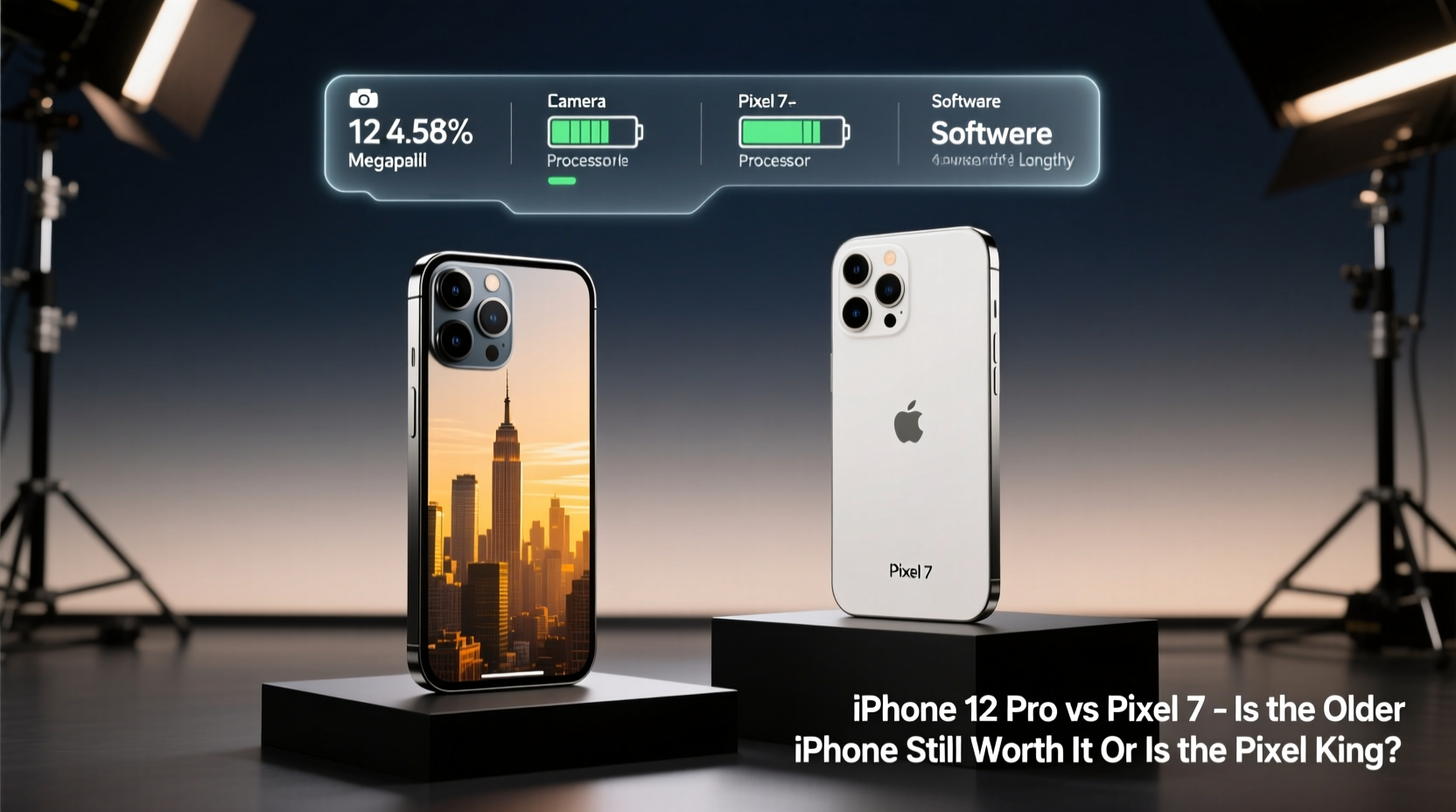
The iPhone 12 Pro runs on Apple’s A14 Bionic chip, built on a 5nm process. At launch, it was the fastest mobile processor available. Even today, it handles multitasking, gaming, and AR applications with ease. Paired with 6GB of RAM and iOS optimization, the device remains snappy in daily use.
In contrast, the Pixel 7 uses Google’s custom Tensor G2 chip. While not quite matching the raw CPU power of Apple’s A15 or A16 chips, the G2 excels in AI-driven tasks such as voice recognition, photo enhancement, and real-time translation. With 8GB of RAM and Android 13 (upgradable to Android 17), the Pixel offers smoother background app retention and better future-proofing in terms of software support.
Camera Comparison: Computational Photography vs Consistency
Cameras are often the deciding factor for many buyers. The iPhone 12 Pro features a triple-lens system: 12MP wide, ultra-wide, and telephoto (2x optical zoom). Its strengths lie in color accuracy, dynamic range, and video recording—particularly in Dolby Vision HDR, which remains unmatched in the Android space.
The Pixel 7, while limited to dual rear cameras (50MP main, 12MP ultra-wide), leverages Google’s industry-leading computational photography. Features like Magic Eraser, Face Unblur, and Real Tone deliver stunning results in challenging lighting. Night Sight and Astrophotography mode give it an advantage in low-light scenarios where the iPhone struggles without Night mode on all lenses.
“Google’s software-first approach to imaging allows mid-tier hardware to punch above its weight. The Pixel 7 proves that algorithms can rival optics.” — David Kim, Mobile Imaging Analyst at TechVision Labs
| Feature | iPhone 12 Pro | Pixel 7 |
|---|---|---|
| Main Sensor | 12MP f/1.6 | 50MP f/1.85 |
| Ultra-Wide | 12MP f/2.4 | 12MP f/2.2 |
| Telephoto | 12MP f/2.0 (2x zoom) | No optical zoom |
| Night Mode | Wide only | All lenses |
| Video Recording | Dolby Vision HDR up to 4K@60fps | 4K@30fps, no HDR video |
| Front Camera | 12MP f/2.2 + SL3D for Face ID | 10.8MP f/2.2 |
If you shoot a lot of video or prefer natural color science, the iPhone wins. For still photography enthusiasts who love editing flexibility and AI enhancements, the Pixel 7 is hard to beat.
Software & Longevity: Updates and Ecosystem
Apple leads in software support. The iPhone 12 Pro launched with iOS 14 and is expected to receive updates through at least 2026—potentially even iOS 19. This kind of longevity is rare outside Apple’s ecosystem.
Google promises five years of OS and security updates for the Pixel 7 (until 2027), matching Apple’s commitment. However, Android’s update delivery depends more on carrier approvals and regional variations, whereas iOS updates roll out uniformly.
iOS offers tighter integration with Macs, iPads, AirPods, and Apple Watch. Handoff, Universal Clipboard, and iMessage continuity create a seamless workflow. On the other hand, the Pixel 7 integrates best with Chromebooks, Wear OS watches, and Google services like Gmail, Drive, and Assistant.
Battery Life and Charging: Practical Endurance
The iPhone 12 Pro packs a 2,815mAh battery. In real-world usage, it lasts around 10–12 hours of mixed use. Fast charging reaches 50% in 30 minutes with a 20W adapter (not included), but wireless charging is limited to 15W via MagSafe.
The Pixel 7 comes with a larger 4,355mAh battery and typically delivers 1.2 to 1.5 days of moderate use. It supports 30W wired charging (charger sold separately) and 21W wireless charging. Adaptive Battery and optimized Tensor scheduling extend efficiency over time.
While the iPhone feels constrained by its smaller battery, the Pixel 7 offers noticeably better endurance—especially for heavy users.
Mini Case Study: Travel Photographer’s Choice
Sophia, a freelance travel photographer, used her iPhone 12 Pro for two years, capturing landscapes and cityscapes across Southeast Asia. She loved the color consistency and video quality but found herself frustrated by slow low-light shots and lack of night mode on the ultra-wide lens.
Last year, she switched to the Pixel 7. Though she missed iMessage and some app exclusives, she gained faster photo processing, superior night shots, and longer battery life during full-day shoots. “I can now take astrophotography without a tripod,” she says. “And editing RAW files straight from the camera feels more intuitive with Google Photos’ AI suggestions.”
For her workflow, the Pixel 7 proved to be the upgrade—not because it had more lenses, but because it reduced post-processing time and improved shot reliability in unpredictable conditions.
Value Proposition: Price vs Performance Today
When new, the iPhone 12 Pro started at $999. Today, unlocked used units sell for $350–$450 depending on condition. The Pixel 7 launched at $599 and now retails for $399–$449 new—a price drop that makes it highly competitive.
At similar price points today, the Pixel 7 offers newer software, better battery, superior front camera, and longer official update support. The iPhone counters with build quality (stainless steel frame, IP68 rating), Face ID, and broader accessory compatibility.
“The resale value of iPhones remains high, but the cost-to-performance ratio of Pixels has never been better. For budget-conscious buyers, the Pixel 7 offers modern features at near-refurbished pricing.” — Lena Patel, Consumer Tech Analyst at MarketPulse
Checklist: Which Phone Should You Buy?
- Choose the iPhone 12 Pro if:
- You already own other Apple devices
- You record a lot of video
- You prefer Face ID over fingerprint sensors
- You want excellent build quality and resale value
- Choose the Pixel 7 if:
- You want cutting-edge AI photo tools
- You need longer battery life
- You value timely Android updates
- You spend most of your time in Google apps
Frequently Asked Questions
Can the iPhone 12 Pro still run the latest apps smoothly?
Yes. Despite being released in 2020, the A14 Bionic chip ensures smooth performance with current iOS apps, including demanding games and productivity tools. Most developers optimize for backward compatibility up to the A12, so the 12 Pro remains capable.
Does the Pixel 7 overheat during extended use?
Some users report mild heating during prolonged camera use or gaming, typical of Tensor chips. However, thermal management has improved with recent Android updates. It doesn’t throttle performance as aggressively as early Tensor models did.
Is the iPhone 12 Pro waterproof?
Yes. It has an IP68 rating, meaning it can survive submersion in up to 6 meters of water for 30 minutes. The Pixel 7 also has IP68 certification, offering comparable protection against dust and water.
Final Verdict: Is the Older iPhone Worth It?
The iPhone 12 Pro is still a very capable phone. Its design, display quality, and video capabilities remain impressive. For users invested in Apple’s ecosystem, it continues to offer excellent value—especially at discounted prices.
But the Pixel 7 isn’t just competitive; in several key areas, it surpasses its older rival. With better battery life, smarter photography, modern software features, and equal update longevity, it represents what a 2022 flagship should be. Calling it the “king” might be bold, but it’s certainly reigning in the mid-to-high tier segment.
If you’re choosing between the two today, ask yourself: Do you need the absolute best video camera and seamless Apple integration? Or do you want advanced AI features, longer battery, and fresher hardware at a similar price? The answer will guide your decision.




 浙公网安备
33010002000092号
浙公网安备
33010002000092号 浙B2-20120091-4
Comments
No comments yet. Why don't you start the discussion?