
The leap between the iPhone 11 and iPhone 12 brought several changes under the hood, but one of the most noticeable differences lies in the display. For users still on the iPhone 11 wondering if it's time to upgrade, the screen is often a deciding factor. While both phones share similar resolutions and sizes, the underlying technology and user experience diverge more than Apple’s marketing might suggest. This breakdown examines what actually improves with the iPhone 12’s screen, what remains unchanged, and whether the visual upgrade justifies the cost.
Display Technology: A Fundamental Shift
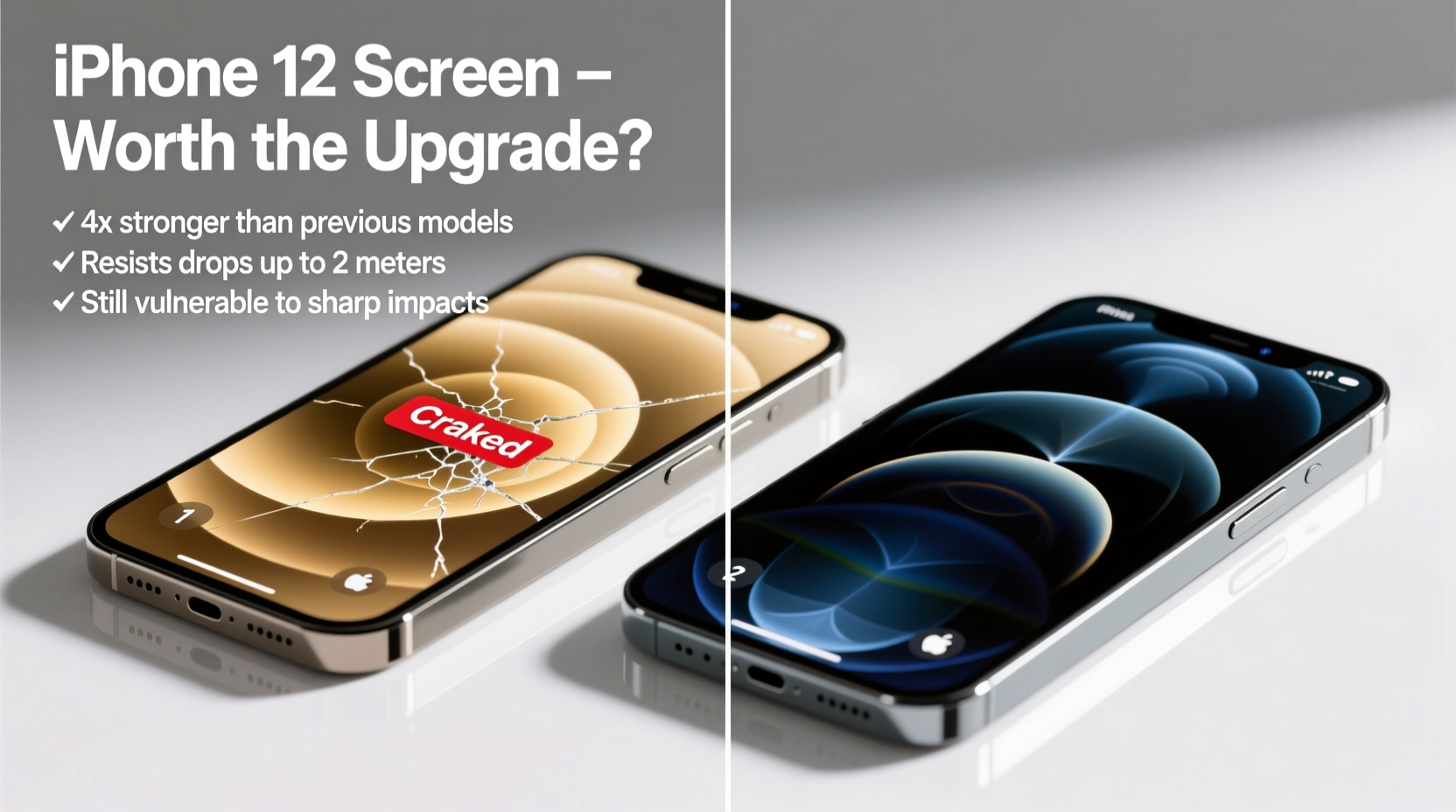
The most significant difference between the iPhone 11 and iPhone 12 screens is the panel technology. The iPhone 11 uses an LCD (Liquid Crystal Display) known as Liquid Retina HD, while the iPhone 12 introduced Super Retina XDR OLED (Organic Light-Emitting Diode). This shift is more than technical jargon—it directly impacts brightness, contrast, color accuracy, and power efficiency.
OLED panels allow individual pixels to turn off completely, resulting in true blacks and infinite contrast ratios. In practical terms, this means darker scenes in movies appear deeper, and text on dark mode feels genuinely immersive. LCDs, like the one in the iPhone 11, rely on a backlight, so blacks appear more like dark gray, and light can bleed through edges.
Key Screen Improvements in the iPhone 12
While both devices have a 6.1-inch display and 1792 x 828 resolution, the iPhone 12 delivers tangible upgrades in several areas:
- Brightness: The iPhone 12 reaches up to 1,200 nits peak HDR brightness, compared to the iPhone 11’s 625 nits. This makes a real difference when viewing HDR content or using the phone outdoors.
- Contrast Ratio: With a 2,000,000:1 contrast ratio (vs. 1400:1 on the iPhone 11), the iPhone 12 renders shadows and highlights with far greater precision.
- Color Accuracy: The iPhone 12 supports P3 wide color and achieves higher color fidelity, making photos and videos look richer and more lifelike.
- Thinner Bezels: Due to design refinements, the iPhone 12 has slightly smaller bezels, offering a more modern, edge-to-edge aesthetic.
- Durability: The iPhone 12 was the first to feature Ceramic Shield front cover, which Apple claims offers four times better drop performance.
“Switching from LCD to OLED on mid-tier iPhones was a game-changer. The visual depth and energy savings are immediately apparent.” — David Kim, Mobile Display Analyst at TechInsight Group
What Doesn’t Improve – Or Isn’t Worth the Hype
Despite the clear advantages, some aspects of the screen experience remain identical—or only marginally better—between the two models:
| Feature | iPhone 11 | iPhone 12 | Verdict |
|---|---|---|---|
| Resolution | 1792 x 828 | 1792 x 828 | No change |
| Refresh Rate | 60Hz | 60Hz | No smoother scrolling |
| Size | 6.1 inches | 6.1 inches | Same physical footprint |
| Touch Sensitivity | Standard | Standard | No responsiveness gain |
| True Tone & Haptic Touch | Yes | Yes | Fully retained |
The lack of a high refresh rate (like 90Hz or 120Hz) means that neither phone delivers the ultra-smooth scrolling seen on competing Android flagships or even later iPhones like the Pro models. Users expecting a fluidity boost will be disappointed. Additionally, while Ceramic Shield improves drop resistance, both phones lack scratch resistance beyond standard glass coatings. Daily pocket debris like keys can still leave micro-scratches.
Real-World Example: A Photographer’s Perspective
Jess Lin, a travel photographer who used the iPhone 11 for three years, upgraded to the iPhone 12 primarily for its camera and screen improvements. “I edit a lot of photos on the go,” she explains. “The iPhone 11’s screen made it hard to judge shadow detail accurately. On the iPhone 12, I can finally see true blacks and subtle gradients. It’s not just prettier—it’s more functional for my work.”
However, she notes a limitation: “For clients who need print-ready images, I still rely on calibrated monitors. But for quick edits and client previews, the iPhone 12’s screen gives me confidence I didn’t have before.”
Step-by-Step: Is the Upgrade Right for You?
Deciding whether the iPhone 12’s screen justifies leaving the iPhone 11 behind depends on your usage patterns. Follow this evaluation process:
- Assess Your Current Experience: Are you satisfied with how videos, photos, and text appear on your iPhone 11? If yes, the upgrade may feel incremental.
- Test OLED in Person: Visit an Apple Store and compare both screens side by side, especially with dark-mode apps and HDR videos.
- Evaluate Outdoor Use: Do you struggle to see your screen in sunlight? The iPhone 12’s higher brightness could be a decisive factor.
- Consider Longevity: The iPhone 12 runs iOS updates just as long as the iPhone 11, so software support isn’t a differentiator.
- Factor in Cost: If you’re paying full price or trading in a functional iPhone 11, calculate whether the screen benefits outweigh the expense.
Checklist: Before Upgrading from iPhone 11 to iPhone 12
- ✅ Compare both screens side-by-side with dark content
- ✅ Test brightness in direct sunlight
- ✅ Confirm your carrier supports 5G (iPhone 12 only)
- ✅ Check trade-in value of your iPhone 11
- ✅ Evaluate if camera improvements matter to you
- ✅ Consider using a case to protect Ceramic Shield’s edge durability
FAQ
Does the iPhone 12 screen save battery compared to the iPhone 11?
Yes, especially when using dark mode or dark-themed apps. OLED screens consume less power when displaying black pixels since those LEDs are turned off. In mixed usage, users report slightly longer screen-on time despite the brighter display.
Can you tell the resolution difference between iPhone 11 and iPhone 12?
No, because the resolution is identical. Any perceived sharpness improvement comes from better contrast and color clarity, not pixel density.
Is the iPhone 12 screen more prone to cracking?
While Ceramic Shield improves drop performance, the front glass is slightly more curved at the edges, which can make corner drops riskier. Using a protective case is strongly recommended.
Conclusion
The iPhone 12’s screen represents a meaningful upgrade over the iPhone 11, particularly in contrast, brightness, and color quality. For media consumers, photographers, and anyone who values visual fidelity, the move to OLED is transformative. However, the absence of a higher refresh rate and identical resolution tempers expectations. If you’re deeply satisfied with your iPhone 11 and don’t prioritize display depth, the upgrade may not be urgent. But if you’ve noticed limitations in dark scenes, outdoor visibility, or color reproduction, the iPhone 12’s screen delivers real-world benefits that stand the test of daily use.




 浙公网安备
33010002000092号
浙公网安备
33010002000092号 浙B2-20120091-4
Comments
No comments yet. Why don't you start the discussion?