
The jump from the iPhone 11 Pro Max to the iPhone 12 isn’t just about design or processor speed—it’s a shift in how Apple approaches computational photography and video capture. For users invested in mobile imaging, especially those capturing memories, content, or professional-grade footage, the question isn’t whether both phones take great photos, but whether the upgrade from the 11 Pro Max to the 12 delivers meaningful improvements in image and video quality.
This comparison dives deep into sensor performance, low-light behavior, dynamic range, video capabilities, and real-world usability to determine if the camera upgrade justifies the move—especially if you’re still satisfied with your 11 Pro Max.
Sensor and Hardware Evolution
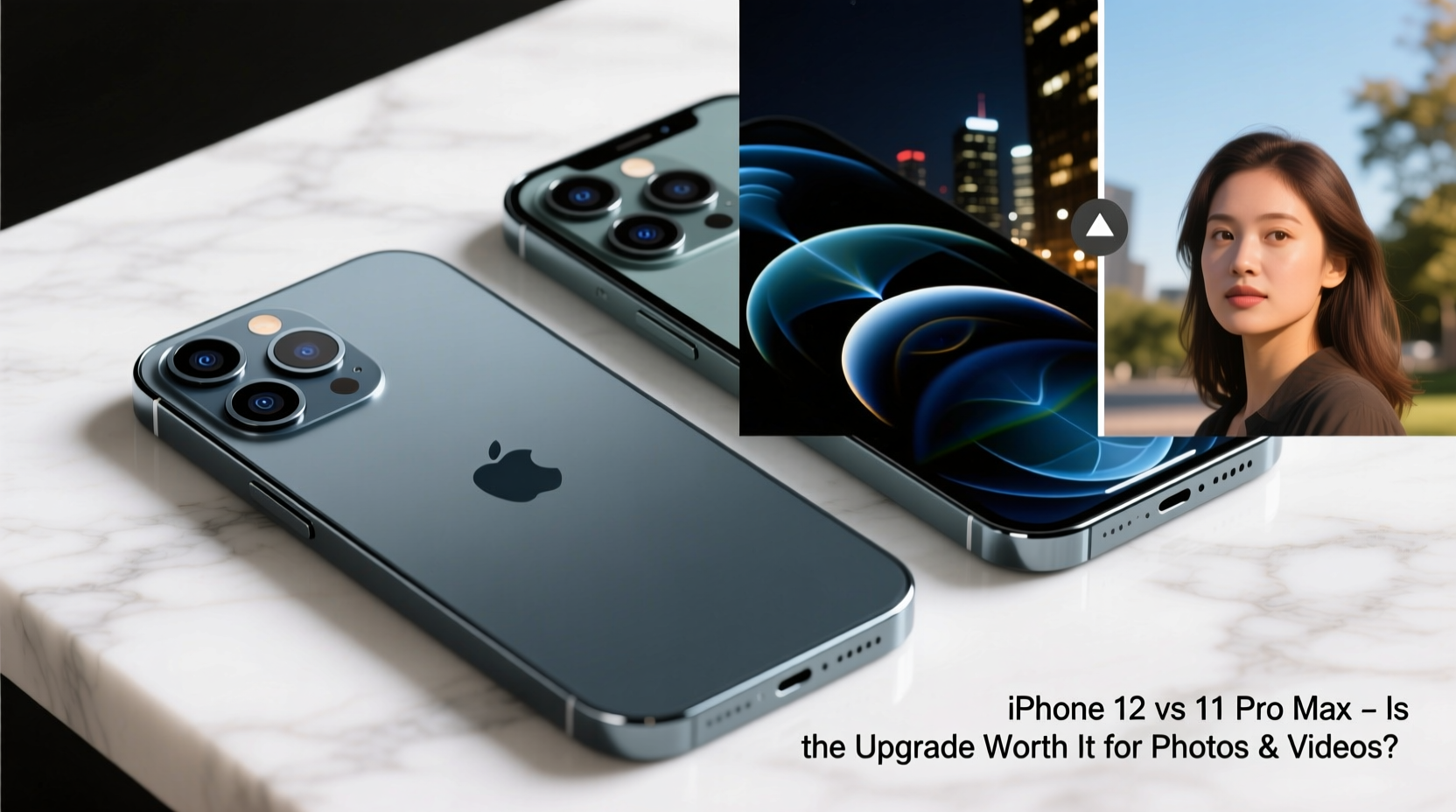
The iPhone 11 Pro Max launched with a triple-camera system: 12MP wide, ultra-wide, and telephoto lenses. At the time, it represented Apple’s most advanced mobile imaging setup, offering Night mode, Deep Fusion, and Smart HDR. The iPhone 12, while retaining the same megapixel count across its dual (or triple on Pro models) cameras, introduced significant behind-the-scenes upgrades.
The standard iPhone 12 features a 12MP wide and ultra-wide setup. However, the key improvement lies in the larger sensor aperture (f/1.6 on the wide lens vs. f/1.8 on the 11 Pro Max), allowing 27% more light intake. This may sound minor, but in practical terms, it translates to cleaner shadows, better detail retention in dim environments, and improved autofocus in near-dark conditions.
Low-Light and Night Mode Performance
Night mode debuted on the 11 Pro Max and was already impressive. But the iPhone 12 enhances it with faster processing and broader scene detection. The combination of the larger sensor, improved optical image stabilization (OIS), and next-generation Neural Engine allows the iPhone 12 to activate Night mode more aggressively—even in twilight or indoor ambient lighting.
In side-by-side tests, the iPhone 12 consistently produces warmer color balance and finer texture in dark areas. Where the 11 Pro Max might blur fine fabric patterns or lose definition in shadowed corners, the 12 preserves more detail. This is particularly noticeable in portrait shots taken at dusk or in restaurants with mood lighting.
“Apple’s focus on sensor efficiency over raw megapixels pays off in real-world shooting. The iPhone 12’s low-light gains aren’t revolutionary, but they’re consistent and measurable.” — David Kim, Mobile Imaging Analyst at TechSight Review
Video Capabilities: A Clear Leap Forward
If photography improvements are incremental, video is where the iPhone 12 pulls ahead decisively. While both phones support 4K at 60fps, the iPhone 12 introduces Dolby Vision HDR recording—a first for any smartphone. This means richer contrast, truer blacks, and more vibrant highlights when viewed on compatible displays.
Dolby Vision isn’t just a marketing feature. It dynamically adjusts brightness and color frame by frame, preserving detail in both sunlit skies and shaded alleyways. When editing footage in apps like Final Cut Pro or LumaFusion, the added dynamic range gives creators far more flexibility in post-production.
Moreover, the iPhone 12 improves audio isolation during video capture. Wind noise reduction is noticeably better, making outdoor vlogging or interview clips cleaner without external mics.
| Feature | iPhone 11 Pro Max | iPhone 12 |
|---|---|---|
| Photo Resolution | 12MP (triple) | 12MP (dual/triple) |
| Wide Lens Aperture | f/1.8 | f/1.6 |
| Night Mode (Photos) | Yes (all lenses) | Yes (improved activation & speed) |
| Smart HDR | Second-gen | Third-gen (better skin tones) |
| Video Recording | 4K@60fps, no HDR | 4K@60fps + Dolby Vision HDR |
| Deep Fusion | Yes | Yes (faster processing) |
Real-World Example: Travel Photography Upgrade
Consider Sarah, a travel blogger using her iPhone 11 Pro Max for two years. She shoots cityscapes, food, and street portraits across Europe. After upgrading to the iPhone 12, she noticed immediate differences during a trip to Prague.
Shooting inside St. Vitus Cathedral—dimly lit with stained glass filtering sunlight—the iPhone 12 captured more balanced exposures without blown-out windows or crushed shadows. Colors were more accurate, especially reds and blues in the glass. She also recorded a walking tour in Dolby Vision, later exporting it to YouTube. Viewers commented on the “cinematic” feel, particularly the smooth gradation from bright exteriors to darker interiors.
For Sarah, the upgrade wasn’t about chasing specs. It was about reliability in challenging light and future-proofing her content with HDR video—features that directly enhanced her storytelling.
Smart HDR and Color Science Refinements
One subtle but impactful change is Smart HDR 3, introduced with the iPhone 12. It uses machine learning to assess tone, texture, and even object recognition (e.g., sky, grass, faces) to adjust exposure and white balance per pixel. The result? More natural skin tones, especially under mixed lighting like LED and tungsten bulbs.
The iPhone 11 Pro Max sometimes leaned too warm in indoor settings or oversaturated greens in foliage. The iPhone 12 corrects this with a more neutral baseline, giving photographers greater control in editing. This matters for influencers, small business owners, or parents wanting true-to-life family photos.
Checklist: Is the iPhone 12 Camera Upgrade Worth It?
- ✅ You frequently shoot in low light and want cleaner, brighter photos without flash
- ✅ You create video content and value Dolby Vision HDR for professional presentation
- ✅ You edit photos on-device and benefit from improved dynamic range and Smart HDR
- ✅ You rely on consistent color accuracy across different lighting environments
- ✅ You plan to keep your phone for 2+ years and want longer software and format support
- ❌ You rarely shoot beyond daylight scenes and don’t edit media
- ❌ You’re satisfied with 11 Pro Max output and don’t need HDR video
Frequently Asked Questions
Can the iPhone 12 take better portraits than the 11 Pro Max?
Yes, slightly. The improved f/1.6 aperture and better edge detection in Portrait mode result in more precise subject separation and smoother bokeh. Skin tones are also more natural due to Smart HDR 3, especially in backlit scenarios.
Does the lack of a telephoto lens on the base iPhone 12 matter?
If you own the 11 Pro Max, yes—initially. The 12 lacks the dedicated 2x optical zoom telephoto lens. However, digital zoom up to 3x has improved thanks to the larger sensor and tighter image processing. For most casual zoom needs, the difference is minimal unless you're cropping heavily.
Is Dolby Vision worth it if I don’t edit videos?
Even if you only share clips on Instagram or WhatsApp, Dolby Vision ensures your videos look better on HDR-capable devices. Platforms like YouTube now support it, so future viewers will benefit. However, non-HDR screens downscale the footage, so the advantage is context-dependent.
Conclusion: Who Should Upgrade?
The iPhone 11 Pro Max remains an excellent camera phone in 2024. Its photos are sharp, colors are pleasing, and Night mode works reliably. But the iPhone 12 offers tangible upgrades—especially in video and low-light photography—that add up over time.
If you value content creation, long-term media quality, or simply want a more consistent experience across lighting conditions, the iPhone 12 is a worthwhile step up. The introduction of Dolby Vision alone makes it a compelling choice for anyone who records video regularly.
For casual users who primarily snap daylight photos and share them instantly, the upgrade may feel unnecessary. But for creators, travelers, and photography enthusiasts, the iPhone 12’s camera refinements deliver real-world value that justifies the transition.




 浙公网安备
33010002000092号
浙公网安备
33010002000092号 浙B2-20120091-4
Comments
No comments yet. Why don't you start the discussion?