
When Apple introduced the iPhone 12 and iPhone 12 mini in 2020, it marked a return to compact flagship smartphones. For years, larger screens had dominated the market, but the 12 mini brought back the appeal of one-handed usability without sacrificing core features. Both phones share nearly identical internals—same processor, camera system, and build quality—but differ significantly in screen size. So, does that difference actually matter in daily use? The answer depends on how you interact with your phone, what tasks you prioritize, and how much physical comfort influences your experience.
Design and Physical Handling
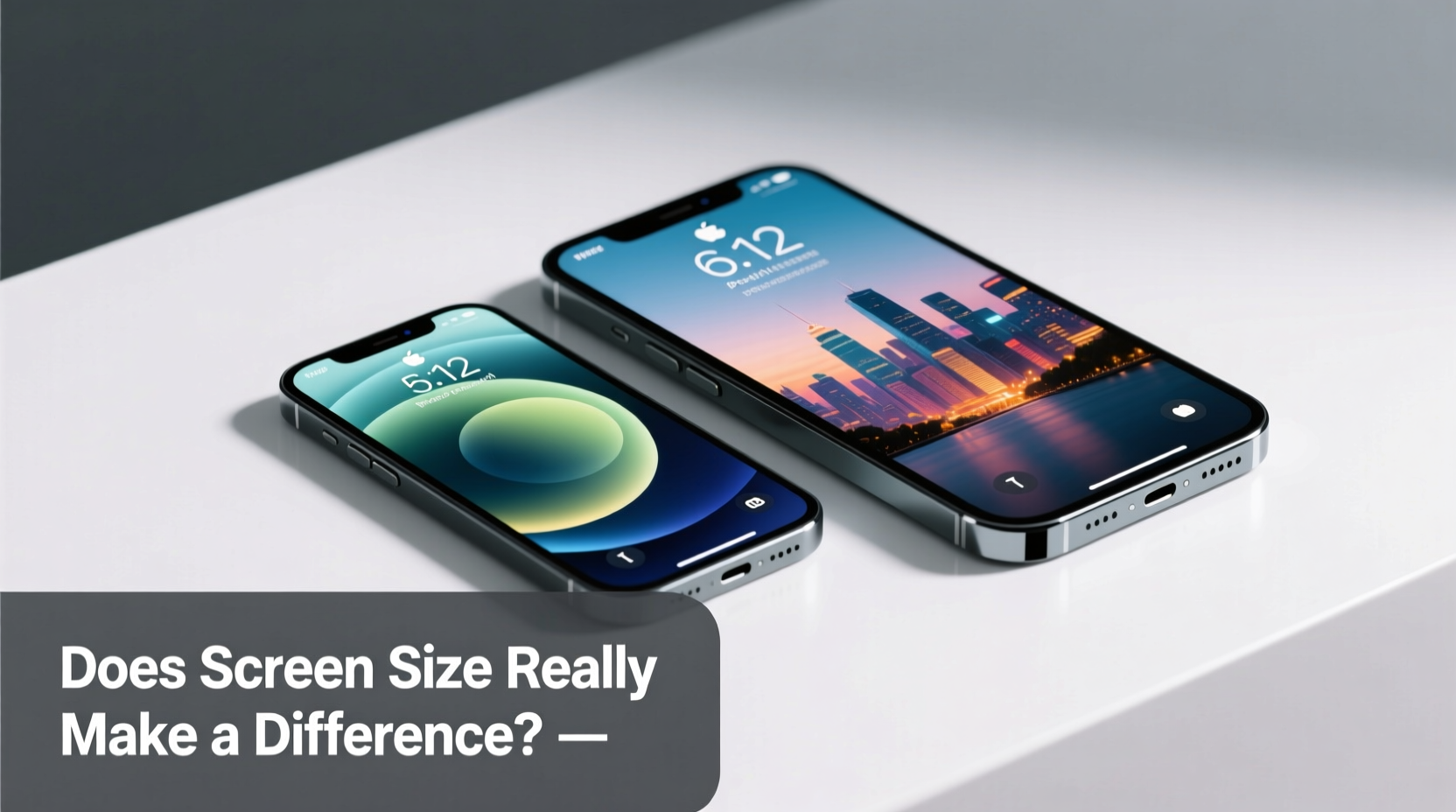
The most immediate distinction between the iPhone 12 and 12 mini is their physical footprint. The iPhone 12 has a 6.1-inch Super Retina XDR display, while the 12 mini packs a 5.4-inch screen into a smaller chassis. Despite the screen size gap, both devices use the same flat-edge aluminum design and Ceramic Shield front cover, making them feel premium and durable.
The mini’s compactness makes it noticeably easier to handle with one hand. Swiping across the screen, reaching the top corners, and typing without shifting your grip are all more natural on the smaller model. This advantage is especially evident for users with smaller hands or those who frequently operate their phone while on the move.
However, the smaller frame means less space for internal components. Most notably, the battery is significantly smaller in the 12 mini, which impacts longevity—a trade-off we’ll explore later.
Display Quality and Usability
Both models feature OLED Super Retina XDR displays with excellent brightness, contrast, and color accuracy. Pixel density is higher on the 12 mini (476 PPI vs. 460 PPI), resulting in a slightly sharper image. But beyond specs, real-world usability diverges based on screen real estate.
On the iPhone 12, apps have more breathing room. Reading articles, editing documents, and browsing social media feeds feel more immersive. Multitasking, such as using split-screen in compatible apps, benefits from the extra width. Even keyboard typing is more accurate due to larger key spacing.
In contrast, the 12 mini compresses everything into a tighter space. While iOS adapts well, some users report accidentally tapping adjacent buttons or links. Web pages may require more zooming and scrolling to read comfortably. Video consumption is still enjoyable, but the viewing area is clearly more constrained.
“Screen size isn’t just about resolution—it’s about interaction efficiency. A few millimeters can change how often you mis-tap or need to reposition your grip.” — David Lin, UX Researcher at Mobile Insights Group
Battery Life: The Hidden Trade-Off
One of the most consequential differences tied to screen size is battery performance. Despite similar usage patterns, the iPhone 12 consistently delivers longer endurance than the 12 mini. Apple officially rated the 12 mini for up to 15 hours of video playback, compared to 17 hours on the iPhone 12. In real-world mixed usage, many users find the mini requires midday charging, especially with 5G enabled.
This disparity stems directly from physics: the smaller body limits battery capacity. The 12 mini houses a 2,227 mAh battery, while the iPhone 12 uses a 2,815 mAh unit—an over 25% increase in capacity. Both support fast charging and MagSafe, but the mini depletes faster under heavy loads like gaming, navigation, or streaming.
| Feature | iPhone 12 | iPhone 12 mini |
|---|---|---|
| Screen Size | 6.1 inches | 5.4 inches |
| Resolution | 2532 x 1170 | 2340 x 1080 |
| Battery Capacity | 2,815 mAh | 2,227 mAh |
| Video Playback (Apple Rated) | Up to 17 hours | Up to 15 hours |
| Weight | 164 grams | 135 grams |
| Starting Storage | 64GB | 64GB |
Real-World Example: Commuter vs. Power User
Consider two users: Sarah, a city commuter who walks 30 minutes to work and values pocketability, and James, a freelance photographer who edits photos on his phone during downtime.
Sarah chooses the 12 mini. She appreciates being able to check messages, listen to podcasts, and navigate without fumbling in her coat pocket. The phone fits comfortably in her palm, and she charges it nightly. Though the battery runs low by evening, her usage is light enough to manage.
James opts for the iPhone 12. He shoots in ProRAW, edits in Lightroom, and streams music for hours. The larger screen helps him see detail in images, and the extended battery life ensures he doesn’t run out of power during long shoots. For him, the extra bulk is a fair compromise for reliability and usability.
Their experiences highlight a crucial point: screen size doesn’t exist in isolation. It affects battery, ergonomics, and functionality—all of which shape user satisfaction.
Performance and Camera: No Difference
Under the hood, both phones are identical. They use the A14 Bionic chip, 4GB of RAM, and the same dual-camera system: 12MP wide and ultra-wide lenses with Night mode, Deep Fusion, and Smart HDR 3. Photos and videos are indistinguishable between models when shot under the same conditions.
Performance in apps, gaming, and multitasking is equally smooth. Neither device shows lag or throttling in typical use. Software updates are delivered simultaneously, and both support iOS 18 and beyond. If raw power and photography are your priorities, screen size won’t affect output quality.
Checklist: Choosing Between iPhone 12 and 12 Mini
- Evaluate your grip preference: Can you comfortably reach across a 6.1-inch screen?
- Assess daily usage: Do you stream, game, or edit heavily? If yes, battery favors the 12.
- Consider portability: Will the mini fit better in small pockets or bags?
- Test one-handed operation: Try typing and swiping without shifting your hand.
- Think long-term: Are you likely to keep the phone for 3+ years? Battery degradation will hit the mini harder.
Frequently Asked Questions
Is the iPhone 12 mini still worth buying in 2024?
Yes, if you prioritize size and don’t mind charging more frequently. It runs the latest iOS versions smoothly and supports most accessories. However, consider newer compact options like the iPhone 15 if budget allows.
Can the iPhone 12 mini handle gaming?
Absolutely—the A14 chip handles demanding games like Genshin Impact or Call of Duty Mobile with ease. However, extended sessions will drain the battery quickly, and the small screen may limit visibility in complex scenes.
Does the smaller screen affect Face ID performance?
No. Face ID works identically on both models. The sensors are the same, and recognition speed is unaffected by screen size.
Conclusion: Screen Size Shapes Experience More Than Specs Suggest
The iPhone 12 and 12 mini may share DNA, but they serve different lifestyles. The screen size difference isn’t just cosmetic—it influences how long the battery lasts, how easily you type, and how immersive media feels. For some, the mini’s compactness is liberating; for others, the iPhone 12 strikes the ideal balance between size and substance.
Ultimately, choosing between them isn’t about which is objectively better, but which aligns with your habits. If you value convenience and portability above all, the 12 mini delivers a rare modern experience: a powerful phone that truly fits in your life. But if you rely on your phone throughout the day for work, creativity, or entertainment, the iPhone 12’s extra screen and stamina offer tangible advantages.




 浙公网安备
33010002000092号
浙公网安备
33010002000092号 浙B2-20120091-4
Comments
No comments yet. Why don't you start the discussion?