
For millions of iPhone users still holding onto the iPhone 8 Plus, the question isn’t just about desire—it’s about necessity. Released in 2017, the 8 Plus was a powerhouse in its time, known for its robust build, reliable performance, and beloved home button. But now, in 2024, Apple has moved on to newer designs, advanced chipsets, and 5G connectivity. The iPhone 12, launched in 2020, represents a major leap forward in design and capability. So, if you're still using an iPhone 8 Plus, is upgrading to the iPhone 12 truly worth it today?
The answer depends on your usage patterns, budget, and expectations from a smartphone. While the 8 Plus remains functional, it's increasingly constrained by outdated hardware and limited software support. The iPhone 12, on the other hand, offers modern features that enhance daily usability, longevity, and future-proofing.
Design and Build: A Shift in Philosophy
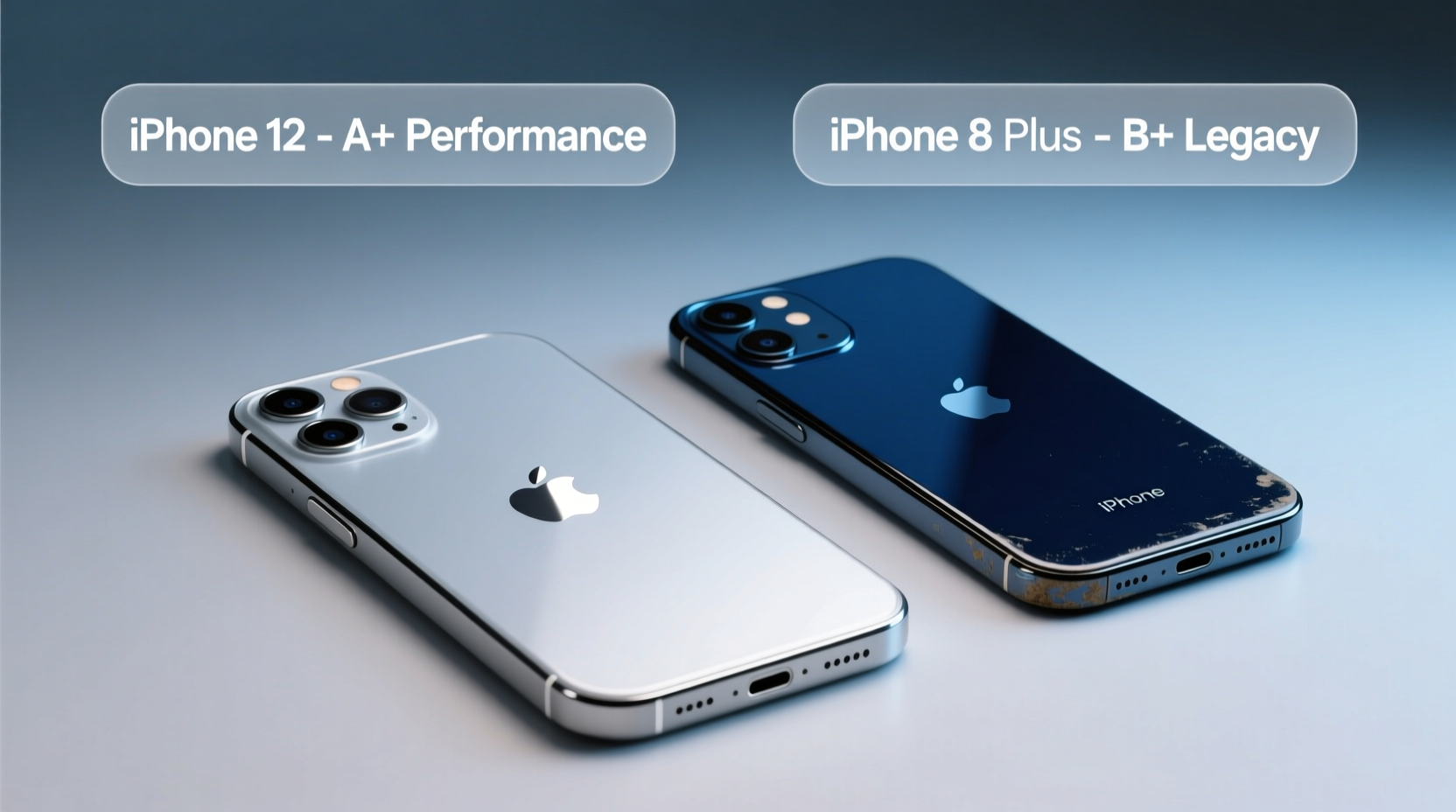
The most immediate difference between the iPhone 12 and the 8 Plus is design language. The 8 Plus sticks with Apple’s pre–Face ID era aesthetic: thick bezels, a physical home button, and Touch ID. It’s built with aluminum and glass but feels bulkier and less refined compared to modern standards.
In contrast, the iPhone 12 introduces a flat-edge aerospace-grade aluminum frame reminiscent of the iPhone 5, but with a sleeker, more compact form. It uses Ceramic Shield front cover—Apple claims it’s tougher than any smartphone glass—and supports MagSafe accessories. The shift to edge-to-edge OLED display (on the 12) versus the LCD on the 8 Plus also marks a significant upgrade in visual clarity and durability.
Performance and Software Longevity
Under the hood, the gap widens dramatically. The iPhone 8 Plus runs on the A11 Bionic chip, which, while impressive in 2017, struggles with modern multitasking, AR apps, and demanding games. More critically, it maxes out at iOS 16. Apple typically supports devices for five major OS updates, and the 8 Plus received its last major update in 2023. It will no longer receive feature updates and may soon lose security patches.
The iPhone 12, powered by the A14 Bionic chip, remains highly capable in 2024. It handles iOS 17 with ease and is expected to support iOS 20 or later. This means at least three more years of software updates, ensuring access to new features, app compatibility, and critical security improvements.
“Hardware longevity is only half the story. Software support determines how long a phone remains useful.” — David Lin, Mobile Analyst at TechPulse Insights
Camera Comparison: Night Mode and Computational Photography
Photography has evolved significantly between these two models. The iPhone 8 Plus features a dual 12MP rear system (wide + telephoto), capable of decent portraits and optical zoom. However, it lacks Night mode, Deep Fusion, Smart HDR 3, and Dolby Vision video recording—all standard on the iPhone 12.
The iPhone 12 brings computational photography into full force. Its dual-camera setup (12MP wide + ultra-wide) captures sharper images in low light, thanks to Night mode across all lenses. Video recording jumps from 4K at 60fps to 4K Dolby Vision HDR at 30fps, offering richer dynamic range and professional-grade color grading.
Front-facing cameras also improve: the 8 Plus has a 7MP FaceTime camera without portrait mode, while the 12 includes a 12MP TrueDepth camera with Night mode and better autofocus.
Camera Feature Comparison
| Feature | iPhone 8 Plus | iPhone 12 |
|---|---|---|
| Night Mode | No | Yes (all rear & front) |
| Dolby Vision Video | No | Yes (up to 4K 30fps) |
| Ultra-Wide Lens | No | Yes (12MP, 120° FOV) |
| Smart HDR | Smart HDR (basic) | Smart HDR 3 |
| Portrait Mode | Rear only, limited depth control | Rear & front, advanced lighting effects |
Battery Life and Charging: Efficiency vs Endurance
The iPhone 8 Plus has a larger battery and historically offered longer screen-on time than the iPhone 12, especially for video playback and audio streaming. However, the A14 chip’s power efficiency helps the 12 deliver competitive endurance despite a smaller capacity.
Real-world usage shows the 8 Plus lasting slightly longer in continuous video playback (up to 14 hours vs 11 on the 12), but the 12 performs better in mixed-use scenarios due to optimized background processes and 5G management (which can be toggled off).
Charging is where the 12 pulls ahead. It supports 20W fast charging (reaching 50% in ~30 minutes) and MagSafe wireless charging (15W). The 8 Plus is limited to 7.5W Qi wireless charging and 12W wired charging, making refueling slower.
Connectivity and Future-Proofing
This is perhaps the most compelling reason to upgrade. The iPhone 12 is Apple’s first 5G-capable device, supporting both mmWave and sub-6GHz networks. While 5G adoption varies globally, having access ensures faster downloads, improved streaming quality, and better VoLTE calling in supported areas.
Additionally, the 12 supports Wi-Fi 6, Bluetooth 5.0, and NFC enhancements—small upgrades that collectively improve smart home integration, accessory pairing, and overall responsiveness. The 8 Plus, stuck on LTE, Wi-Fi 5, and Bluetooth 5.0, feels increasingly isolated from modern ecosystems.
Mini Case Study: Sarah’s Upgrade Decision
Sarah, a freelance photographer based in Chicago, held onto her iPhone 8 Plus for nearly six years. She appreciated its durability and camera reliability for casual shots. But by early 2023, she noticed issues: slow app launches, failed AR previews in client meetings, and poor low-light photos during evening shoots.
After testing an iPhone 12 at a local store, she upgraded. The difference was immediate. Her editing apps loaded instantly, Night mode transformed her event photography, and 5G allowed her to upload high-res files directly from venues. “It wasn’t just a new phone,” she said. “It became a real work tool again.”
Upgrade Checklist: Are You Ready?
Before making the switch, consider this checklist to determine if upgrading makes sense for you:
- ✅ Is your iPhone 8 Plus experiencing frequent crashes or lag?
- ✅ Have you stopped receiving iOS updates or security patches?
- ✅ Do you use apps that require AR, machine learning, or high-resolution video?
- ✅ Do you travel often and need faster connectivity (5G, Wi-Fi 6)?
- ✅ Are you interested in MagSafe accessories (wallets, chargers, car mounts)?
- ✅ Can your budget accommodate $400–$600 (current used/refurbished price of iPhone 12)?
If you answered yes to three or more, the upgrade is likely worthwhile.
Frequently Asked Questions
Can the iPhone 8 Plus still run popular apps in 2024?
Most basic apps like WhatsApp, Instagram, and Gmail still function, but newer versions may lack features or run sluggishly. Apps requiring ARKit, advanced camera APIs, or iOS 17+ features won’t be compatible.
Is the iPhone 12 waterproof like the 8 Plus?
Yes, and better sealed. The iPhone 12 has an IP68 rating (submersion up to 6 meters for 30 minutes), compared to the 8 Plus’s IP67 (up to 1 meter for 30 minutes).
Will my accessories work with the iPhone 12?
Old Lightning cables and headphones will work, but cases won’t fit due to different dimensions and the addition of MagSafe. You’ll need new ones for optimal alignment and charging.
Final Verdict: Yes, Upgrading Is Worth It in 2024
While the iPhone 8 Plus was a landmark device, it’s now firmly in legacy territory. The iPhone 12 offers tangible improvements in speed, camera quality, display technology, and future readiness. For users who rely on their phones for productivity, creativity, or connectivity, the upgrade delivers meaningful returns.
It’s not just about having a newer model—it’s about gaining access to a platform that will remain supported, secure, and functional for years to come. In a world where smartphones are central to work, communication, and entertainment, staying on outdated hardware carries hidden costs in time, frustration, and missed opportunities.




 浙公网安备
33010002000092号
浙公网安备
33010002000092号 浙B2-20120091-4
Comments
No comments yet. Why don't you start the discussion?