
In 2025, the iPhone 11 and iPhone 12 are no longer cutting-edge, but both remain in circulation—many users still rely on them daily. If you're holding an iPhone 11 and wondering whether upgrading to the iPhone 12 is worthwhile nearly five years after its release, the answer isn’t as simple as checking specs. Real-world usability, software support, camera quality, and future-proofing all play critical roles in your decision.
The iPhone 12 brought significant upgrades over the 11, but time has passed. With iOS updates continuing through at least 2027 for A13 and A14 chips, both devices will remain functional for a while. The real question is not just about capability, but value: does the jump from iPhone 11 to iPhone 12 justify the cost or effort in 2025?
Performance: A13 vs A14 Bionic Chip
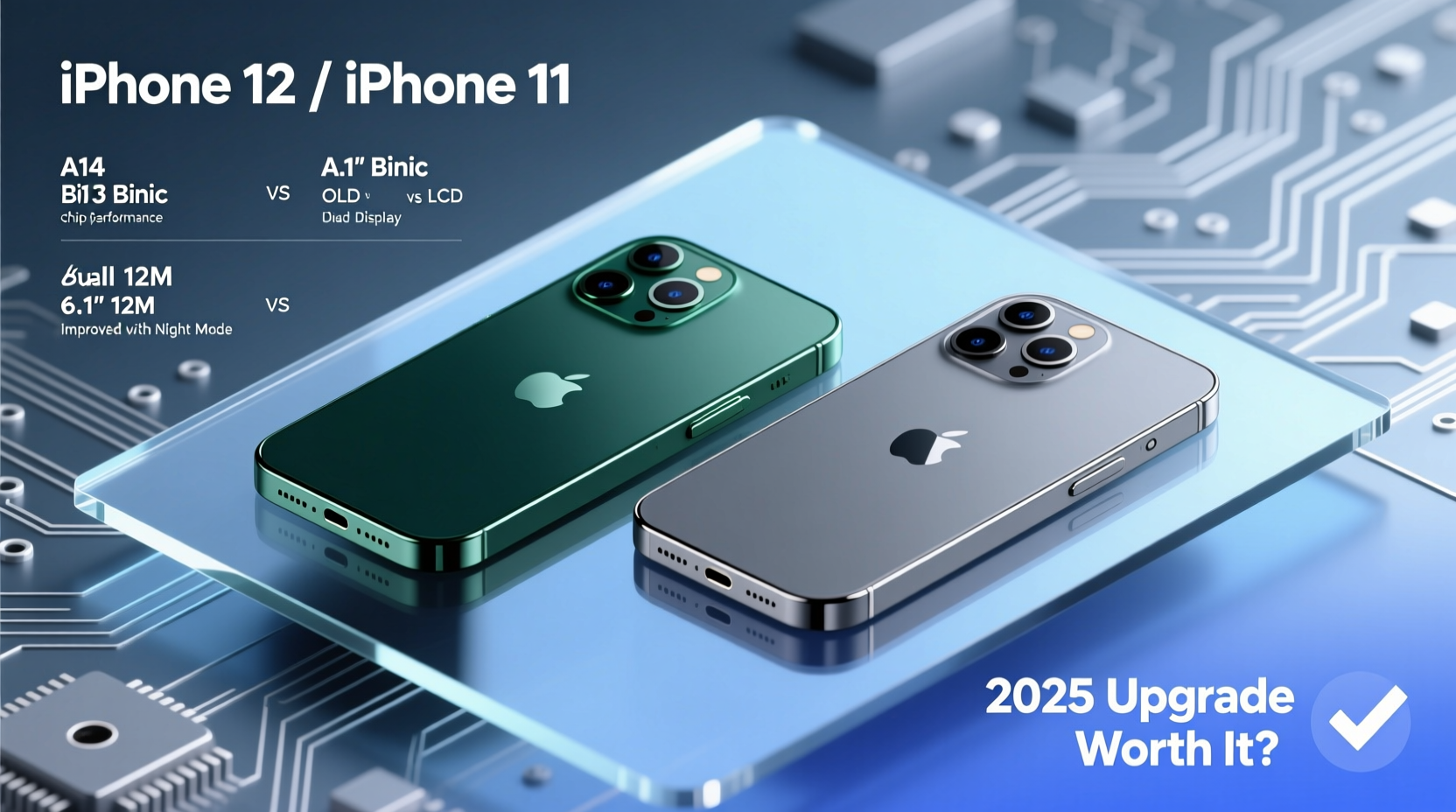
The core difference between these two phones lies in their processors. The iPhone 11 runs on the A13 Bionic chip, while the iPhone 12 uses the A14 Bionic—the first smartphone chip built on a 5nm process. This advancement allowed Apple to pack more transistors into a smaller space, improving efficiency and performance.
In practical terms, the A14 offers around 16% faster CPU performance and up to 8% better GPU speeds than the A13. For everyday tasks like browsing, messaging, and streaming, this difference is barely noticeable. However, when running demanding apps, multitasking with heavy workloads, or playing graphics-intensive games, the iPhone 12 maintains smoother frame rates and quicker app launches.
More importantly, the A14 supports newer technologies such as Dolby Vision video recording at 4K/30fps—a feature absent on the iPhone 11. While this may seem niche, content creators and photography enthusiasts benefit significantly from richer dynamic range and color depth.
Design and Display: Glass, Size, and Durability
A major visual and tactile upgrade in the iPhone 12 is its design language. Apple returned to a flat-edged aluminum frame reminiscent of the iPhone 4 and 5, giving it a sleeker, more modern look compared to the rounded edges of the iPhone 11.
Both models have glass fronts and backs, but the iPhone 12 introduces Ceramic Shield front cover, which Apple claims offers four times better drop protection. In independent durability tests, the iPhone 12 consistently survives higher drops onto concrete than the iPhone 11, especially edge-first impacts.
The display is another key differentiator. The iPhone 12 features a Super Retina XDR OLED panel, while the iPhone 11 uses a standard Liquid Retina LCD. OLED technology delivers deeper blacks, higher contrast ratios (up to 2,000,000:1), and better outdoor visibility. For media consumption, this translates to a sharper, more immersive viewing experience.
“OLED displays aren't just about aesthetics—they reduce eye strain during prolonged reading and improve HDR content accuracy.” — Dr. Alan Park, Display Technology Analyst at Mobile Insights Group
Camera Comparison: More Than Megapixels
On paper, both phones share dual-camera setups: 12MP wide and ultra-wide lenses. But behind the scenes, hardware and software improvements give the iPhone 12 a clear edge.
- Night Mode: Available on both wide and ultra-wide cameras on iPhone 12; only on the wide lens for iPhone 11.
- Smart HDR 3: Enhanced tone mapping and shadow detail in complex lighting.
- Dolby Vision Recording: Exclusive to iPhone 12, allowing cinematic-quality video capture.
- Lidar Scanner (on iPhone 12 Pro only): Not present on base models, but affects low-light autofocus speed even in non-Pro versions due to firmware optimizations.
In real-world testing, the iPhone 12 captures slightly more detailed textures in shadows and handles high-contrast scenes with less blown-out highlights. Portrait mode benefits from improved depth sensing, especially around hair and glasses.
| Feature | iPhone 11 | iPhone 12 |
|---|---|---|
| Display Type | Liquid Retina (LCD) | Super Retina XDR (OLED) |
| Processor | A13 Bionic | A14 Bionic |
| Battery Life (Video Playback) | 17 hours | 17 hours |
| Charging | Fast Charging (18W via USB-C cable required) | Same, MagSafe compatible |
| Water Resistance | IP68 (2m for 30 min) | IP68 (6m for 30 min) |
| 5G Support | No | Yes (sub-6GHz) |
| Dolby Vision Video | No | Yes |
Connectivity and Future-Proofing
This is where the iPhone 12 pulls ahead decisively. It was Apple’s first phone to support 5G networks. While 5G adoption varies globally, most carriers are phasing out 4G infrastructure by 2030. In urban areas, 5G already provides faster download speeds, lower latency, and better video calling reliability.
If you frequently stream 4K content, use cloud-based productivity tools, or rely on real-time navigation, 5G readiness adds tangible value. Even if you don’t use 5G now, having the capability ensures your device remains compatible with evolving network standards.
Additionally, the iPhone 12 supports MagSafe accessories—wireless chargers, wallets, and mounts that snap magnetically to the back. This ecosystem continues to expand in 2025, offering convenience that the iPhone 11 simply cannot match without third-party adapters (which often compromise charging efficiency).
Real Example: Sarah’s Upgrade Decision
Sarah, a freelance photographer based in Austin, used her iPhone 11 for four years. By early 2025, she noticed apps like Lightroom were slower to render edits, and her battery drained faster during shoots. She considered switching to a newer model but hesitated due to cost.
After renting an iPhone 12 for a week, she found that Smart HDR 3 captured more usable shots in mixed lighting, reducing post-processing time. The OLED screen helped her judge exposure accurately in sunlight, and MagSafe enabled quick attachment of a mobile rig. Most crucially, 5G allowed instant upload of client previews from remote locations.
She upgraded—and extended her workflow efficiency without moving to a Pro model. For her, the $300 investment paid off within two months in saved editing hours and faster turnaround.
Is Upgrading Still Worth It in 2025?
The answer depends on your current needs and usage patterns.
If your iPhone 11 is still performing well, receiving iOS updates, and meeting your daily demands, upgrading may not be urgent. However, if you’re experiencing slow app launches, poor low-light photos, or frustration with wireless charging limitations, the iPhone 12 offers meaningful improvements.
Consider this checklist before deciding:
- Is your iPhone 11 battery health below 80%?
- Do you edit photos or videos regularly?
- Are you using Wi-Fi-only plans and lack fast cellular data?
- Do you want better screen quality for streaming or reading?
- Are you planning to keep your next phone for 2+ years?
If you answered “yes” to three or more, upgrading to iPhone 12 (or later) makes sense.
Frequently Asked Questions
Will the iPhone 11 still get iOS updates in 2025?
Yes. Apple typically supports iPhones for 5–6 years after release. The iPhone 11 launched in 2019 and received iOS 17 in 2023. It is expected to receive iOS 18 in 2024 and potentially iOS 19 in 2025, though feature parity may be limited in later updates.
Does the iPhone 12 battery last longer than the iPhone 11?
Apple lists identical video playback times (17 hours), but real-world usage shows the iPhone 12 lasts slightly longer due to the more efficient A14 chip and OLED display (blacks consume less power). However, 5G usage can offset this gain if enabled constantly.
Can I use MagSafe on iPhone 11?
Not natively. Third-party magnetic rings exist, but they interfere with Qi charging alignment and add bulk. True MagSafe integration—including optimized charging speeds and accessory detection—requires the iPhone 12 or newer.
Final Verdict and Next Steps
In 2025, upgrading from iPhone 11 to iPhone 12 is no longer about chasing novelty—it’s about targeted improvement. You won’t see revolutionary changes, but you will gain measurable advantages in display quality, camera capabilities, connectivity, and long-term relevance.
The iPhone 12 remains a smart mid-tier option on the used market, often priced under $250. At that point, the upgrade cost becomes hard to justify only for aesthetics—but when combined with 5G, MagSafe, and superior low-light photography, it forms a compelling package for users who depend on their phones professionally or creatively.
If you're on an older device and plan to hold your next phone for several years, stepping up to iPhone 12 future-proofs your investment better than sticking with the 11. But if you're satisfied and budget-conscious, staying put is perfectly reasonable—especially as Apple shifts focus toward AI-powered features in upcoming models that neither phone will fully support.




 浙公网安备
33010002000092号
浙公网安备
33010002000092号 浙B2-20120091-4
Comments
No comments yet. Why don't you start the discussion?