
The smartphone market in 2020 was defined by two giants: Apple’s iPhone 12 and Samsung’s Galaxy Note 10. One represented a fresh design language and ecosystem strength; the other, a legacy of productivity and versatility. Years later, with both devices available at more accessible prices, consumers face a real dilemma. Is the iPhone 12 worth the enduring premium, or does the Galaxy Note 10 still hold its ground as a capable, feature-rich alternative?
This isn’t just about specs on paper—it’s about daily usability, longevity, ecosystem integration, and value for money. Let’s cut through the marketing noise and examine where each device truly excels.
Design and Build: Premium vs Practical
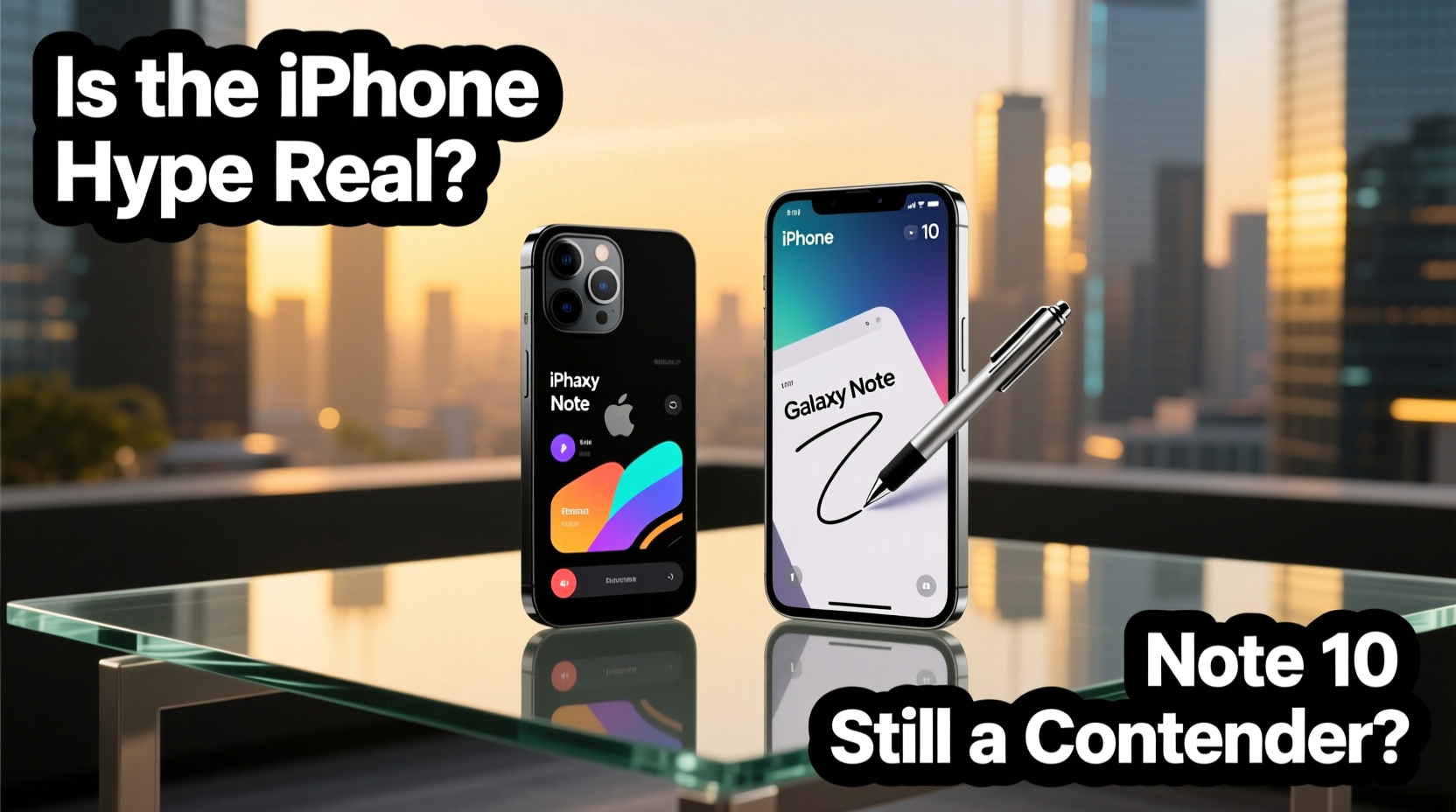
The iPhone 12 marked Apple’s return to flat-edged aluminum framing, echoing the classic iPhone 4 but with modern materials. Its Ceramic Shield front glass and aerospace-grade aluminum give it a sleek, minimalist look that feels substantial without being bulky. At 162 grams, it’s light enough for one-handed use, though its compact size means smaller hands may struggle with reachability.
In contrast, the Galaxy Note 10 embraced a curved glass design with a nearly bezel-less Infinity-O display. It felt futuristic at launch, with a contoured back that fit comfortably in larger palms. Weighing 168 grams and slightly taller, it offered more screen real estate while maintaining a slim profile. The inclusion of an S Pen added functional distinction—something the iPhone 12 lacks entirely.
Display and Usability: OLED Showdown
Both phones feature OLED panels, but their approaches differ. The iPhone 12 uses a 6.1-inch Super Retina XDR display with a resolution of 2532×1170 pixels. Apple’s color accuracy and HDR performance are excellent, especially for media consumption. However, it runs at a standard 60Hz refresh rate—a noticeable step down from what Android competitors were already offering.
The Galaxy Note 10’s 6.3-inch Dynamic AMOLED display supports HDR10+ and delivers vibrant colors, deeper blacks, and higher peak brightness. While also capped at 60Hz, Samsung’s adaptive tone mapping and superior outdoor visibility gave it an edge in varied lighting conditions.
Where the Note 10 shines is in multitasking. With DeX support, split-screen apps, and floating windows, it functions more like a mini-computer. The iPhone 12, while smooth and responsive, offers limited multitasking capabilities outside of third-party app workarounds.
Performance and Software: iOS vs Android Realities
The iPhone 12 is powered by Apple’s A14 Bionic chip—the first in the industry built on a 5nm process. Even years later, it handles demanding games, photo editing, and video rendering with ease. Paired with iOS 14 (upgradable to newer versions), it benefits from tight hardware-software integration, consistent updates, and long-term support. Apple typically provides five to six years of OS updates, making the iPhone 12 a future-proof investment.
The Galaxy Note 10, launched with the Exynos 9825 or Snapdragon 855 depending on region, was top-tier in 2019. But by 2020 standards, it began showing signs of aging. Heavy multitasking could cause stutters, and thermal throttling was common during extended gaming sessions. Samsung promised four years of OS updates, but rollout delays and regional inconsistencies weakened confidence.
“Apple’s vertical integration gives iPhones a longevity advantage that few Android devices can match.” — David Kim, Mobile Analyst at TechPulse Insights
iOS offers simplicity, security, and seamless integration with other Apple devices. For users in the Apple ecosystem—Mac, iPad, AirPods—switching away creates friction. Android, however, offers customization, file system access, and broader hardware compatibility. The Note 10’s software experience is richer in flexibility but less uniform across regions.
Camera Comparison: Stillness vs Versatility
The iPhone 12 features a dual-camera setup: a 12MP wide and a 12MP ultra-wide lens. Its computational photography engine excels in low light, delivering natural color tones and excellent dynamic range. Night mode is automatic and effective, and Smart HDR ensures balanced exposures even in challenging lighting.
Video recording remains Apple’s crown jewel. The iPhone 12 supports Dolby Vision HDR recording at 4K/60fps—an unmatched feature in its class. For content creators, this alone can justify the choice.
The Galaxy Note 10 has a triple rear system: 12MP wide, 16MP ultra-wide, and a 12MP telephoto with 2x optical zoom. It lacks Night mode on par with Apple’s implementation, but offers Live Focus video, AR Doodle, and more manual controls. Samsung’s AI scene optimizer enhances photos automatically, though results can appear oversaturated.
In daylight, both perform admirably. In low light, the iPhone 12 pulls ahead. For creative flexibility, the Note 10 offers more shooting modes, including Studio Mode and background blur in video.
| Feature | iPhone 12 | Galaxy Note 10 |
|---|---|---|
| Processor | A14 Bionic (5nm) | Snapdragon 855 / Exynos 9825 |
| Display | 6.1\" Super Retina XDR (60Hz) | 6.3\" Dynamic AMOLED (60Hz) |
| Rear Cameras | 12MP Wide + 12MP Ultra-Wide | 12MP Wide + 16MP Ultra-Wide + 12MP Telephoto |
| Front Camera | 12MP TrueDepth | 10MP |
| Battery | 2,815 mAh | 3,500 mAh |
| Charging | 20W wired, 15W MagSafe | 25W fast charging, no wireless charging (base model) |
| Special Features | Face ID, MagSafe, Dolby Vision video | S Pen, DeX, Bixby, reverse wireless charging |
Battery Life and Charging: Efficiency vs Capacity
The iPhone 12 packs a smaller 2,815 mAh battery compared to the Note 10’s 3,500 mAh. Yet, thanks to the efficiency of the A14 chip and iOS optimization, both deliver similar real-world endurance—around 6–7 hours of screen-on time under moderate use.
Heavy users will notice the iPhone 12 dipping below 20% by evening, while the Note 10 lasts slightly longer in browsing and video playback. However, the Note 10’s lack of wireless charging in the base model (except in certain regions) is a drawback. The iPhone 12 supports MagSafe and Qi wireless charging, adding convenience.
Fast charging favors Samsung: the Note 10 supports 25W charging (with compatible adapter), reaching 50% in about 30 minutes. The iPhone 12 supports 20W, but Apple doesn’t include the charger in-box, forcing additional cost.
Real-World Example: The Hybrid Worker’s Dilemma
Consider Maria, a freelance designer who travels frequently. She owns a MacBook and uses her phone for client calls, sketching concepts, and editing photos on the go. Initially drawn to the iPhone 12 for its video quality and iCloud sync, she found herself missing the S Pen for quick annotations and the ability to connect her phone to a monitor via DeX for impromptu presentations.
After six months, she switched back to her old Note 10+. Despite older hardware, the productivity tools and stylus made her workflow faster. “The iPhone takes better videos,” she said, “but I spend more time working than filming. The Note just fits how I operate.”
This scenario illustrates a key truth: raw specs don’t always dictate user satisfaction. Use case determines the winner.
Is the iPhone Hype Real? Or Is the Note Still a Contender?
The iPhone 12’s hype is not unfounded. It delivers exceptional build quality, best-in-class video recording, long-term software support, and seamless ecosystem integration. For users prioritizing reliability, resale value, and media creation, it’s a compelling choice—even today.
But the Galaxy Note 10 remains a serious contender, especially for those who value productivity. The S Pen, DeX, expandable storage (in some variants), and headphone jack (absent on iPhone 12) offer tangible benefits that Apple doesn’t match. At discounted prices now available, the Note 10 presents remarkable value for power users on a budget.
Frequently Asked Questions
Can the iPhone 12 still run modern apps smoothly?
Yes. The A14 Bionic remains powerful enough for all current iOS apps, including intensive ones like Adobe Lightroom and 4K video editors. Most users won’t experience slowdowns until at least 2025.
Does the Galaxy Note 10 still receive software updates?
No. Samsung ended major OS updates for the Note 10 in 2022, and security patches have since ceased. While functional, it no longer receives official support, posing potential security risks over time.
Which phone holds its value better?
The iPhone 12 retains value significantly better. After three years, used models sell for 40–50% of original price, while the Note 10 fetches 20–30%, reflecting Apple’s stronger resale market.
Final Checklist: Choosing Between iPhone 12 and Note 10
- ✅ Need a stylus? → Choose Galaxy Note 10
- ✅ Prioritize video recording? → Choose iPhone 12
- ✅ Use Mac or iPad regularly? → iPhone 12 integrates better
- ✅ Want longer software support? → iPhone 12 wins
- ✅ Prefer multitasking and desktop mode? → Note 10 with DeX
- ✅ Care about future resale? → iPhone 12 holds value longer
Conclusion: Make the Choice That Fits Your Life
The iPhone 12 lives up to much of its hype—not because it has the most features, but because it delivers a cohesive, reliable, and future-ready experience. Its strengths lie in refinement, not revolution.
The Galaxy Note 10, while aging, proves that thoughtful design and unique tools like the S Pen can keep a device relevant beyond its prime. It’s not the fastest anymore, but for the right user, it’s still the most useful.




 浙公网安备
33010002000092号
浙公网安备
33010002000092号 浙B2-20120091-4
Comments
No comments yet. Why don't you start the discussion?