
When choosing between the iPhone 12 and the iPhone SE (2020), many users focus on price, camera quality, or processor performance. But one of the most practical considerations—especially for everyday comfort—is size. How each phone fits in your hand, slips into your pocket, or rides alongside you during a commute can dramatically affect your experience. Despite both devices sharing Apple’s A13 Bionic chip (in the case of the SE) and A14 Bionic (iPhone 12), their physical dimensions tell very different stories. So, does the size difference truly matter in your pocket? The answer depends on how you use your phone and what kind of lifestyle you lead.
Dimensions and Physical Design: A Side-by-Side Comparison
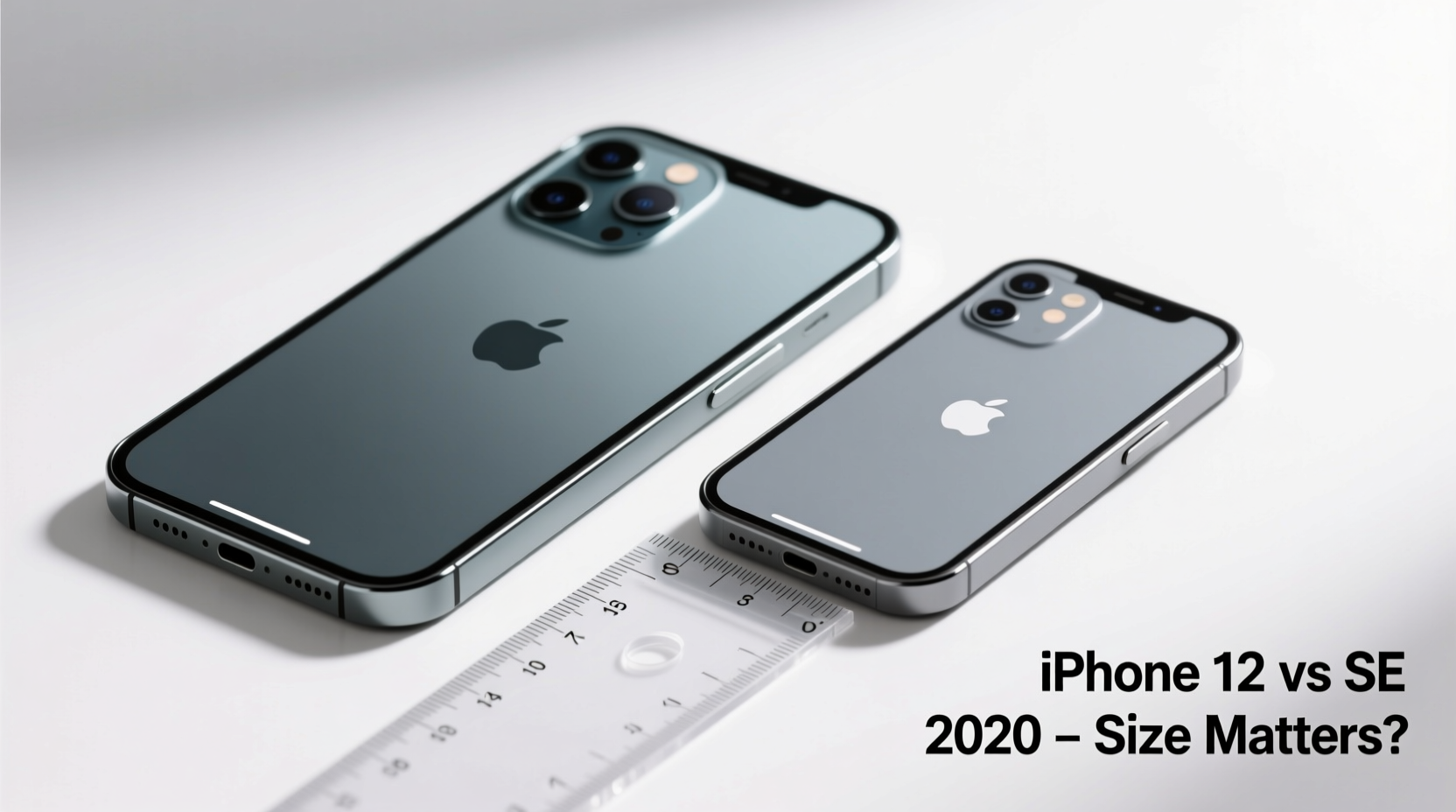
The iPhone 12 and iPhone SE (2020) represent two distinct philosophies in smartphone design. The iPhone 12 embraces the modern trend of edge-to-edge displays and flat aluminum edges, while the SE sticks to a more compact, classic form factor reminiscent of the iPhone 8.
| Feature | iPhone 12 | iPhone SE (2020) |
|---|---|---|
| Height | 146.7 mm (5.78 inches) | 138.4 mm (5.45 inches) |
| Width | 71.5 mm (2.82 inches) | 67.3 mm (2.65 inches) |
| Thickness | 7.4 mm (0.29 inches) | 7.3 mm (0.29 inches) |
| Weight | 164 grams (5.78 oz) | 148 grams (5.22 oz) |
| Display Size | 6.1 inches (Super Retina XDR) | 4.7 inches (Retina HD) |
| Screen-to-Body Ratio | ~87% | ~65% |
The numbers reveal a clear winner in compactness: the SE is shorter, narrower, and lighter. While the thickness is nearly identical, the reduced width makes a tangible difference when gripping the phone or fitting it into tight jeans pockets. The iPhone 12, though still considered mid-sized by today’s standards, demands more space and attention.
Pocketability: Real-World Testing Across Scenarios
Size isn’t just about measurements—it’s about how the device behaves in motion. To assess real-world pocket fit, consider three common scenarios: front jeans pocket, back pocket, and jacket inner pocket.
- Front Jeans Pocket: The SE slides in effortlessly, even in tighter denim. The iPhone 12 often requires slight adjustment and may protrude slightly, especially with thicker fabrics.
- Back Pocket: Both phones fit, but the iPhone 12 increases the risk of strain on seams or accidental bending if sat on. The SE sits flush and low-profile.
- Jacket or Coat Pocket: In winter wear, where pockets are often shallower, the SE again proves more reliable. The iPhone 12 can feel bulky and may require two-handed retrieval.
“Pocket ergonomics are underrated. A phone that fits naturally reduces subconscious stress and improves daily usability.” — David Lin, Mobile Usability Researcher at UX Dynamics Lab
Mini Case Study: Commuter Lifestyle
Take the example of Maria, a graphic designer who commutes via subway in New York City. She carries her phone in her front pocket during rush hour. With the iPhone 12, she found herself constantly adjusting its position, worried about it slipping out or bulging awkwardly. After switching to the iPhone SE (2020), she reported immediate relief: “It just stays put. I don’t think about it anymore. That small change made my commute less stressful.”
This anecdote underscores a broader truth: for people on the move, minimizing friction—even from something as small as pocket bulk—can enhance overall satisfaction.
Usability Trade-offs: Screen Size vs. Portability
While the SE wins in portability, it sacrifices screen real estate. The 4.7-inch display, though sharp, limits multitasking and media immersion. Watching videos, reading long articles, or editing documents requires more scrolling and zooming compared to the expansive 6.1-inch OLED panel of the iPhone 12.
Touch reachability is another factor. The SE’s smaller size allows one-handed use with ease—your thumb can comfortably reach all corners. The iPhone 12, however, often forces users to shift their grip or use both hands, especially when navigating top menus or typing at the bottom of the screen.
Who Benefits Most from Each Phone?
- Choose the iPhone SE (2020) if: You prioritize pocket comfort, prefer one-handed operation, wear tight clothing regularly, or want a lightweight daily driver.
- Choose the iPhone 12 if: You value screen size for media, gaming, or productivity, don’t mind slightly bulkier handling, and have room in your pockets or bag.
Step-by-Step Guide: Choosing Based on Pocket Fit
Follow this decision-making process to determine which phone suits your lifestyle best:
- Assess Your Daily Carry: List the clothes you wear most—jeans, slacks, dresses, athletic wear—and note pocket depth and tightness.
- Test Dummy Dimensions: Cut a piece of paper to 138.4 x 67.3 mm (SE) and 146.7 x 71.5 mm (iPhone 12). Slide them into your pockets to simulate fit.
- Evaluate Usage Patterns: Do you mostly text and browse, or do you watch videos and edit photos? Match screen needs to behavior.
- Consider Secondary Devices: If you own a tablet or larger iPad, the SE’s small screen becomes less of a limitation.
- Try Before You Buy: Visit an Apple Store or authorized reseller. Hold both phones, mimic pulling them from a pocket, and gauge comfort.
Expert Insight: The Psychology of Device Comfort
Dr. Elena Torres, a human-computer interaction specialist, explains: “People underestimate how much subconscious anxiety arises from a poorly fitting device. If a phone feels like it might fall, dig into your leg, or distort your silhouette, it creates micro-stress throughout the day. The ideal phone disappears into your routine—not your awareness.”
This aligns with Apple’s original design ethos behind the SE line: deliver flagship performance in a familiar, manageable size. For users who grew up with smaller smartphones, the SE isn’t a downgrade—it’s a return to intuitive control.
FAQ
Is the iPhone SE (2020) too small for modern apps?
No. While some apps are optimized for larger screens, all iOS apps function properly on the SE. Many users adapt quickly, especially if they’ve used older iPhones. Text remains readable, and touch targets are well-spaced.
Does the iPhone 12 feel heavy in the pocket?
Not excessively, but its wider frame creates more pressure points. Over extended wear—such as during a full workday or long walk—it may feel more noticeable than the SE, particularly in shallow pockets.
Can I use the same case or wallet attachment for both phones?
No. Due to differences in dimensions and button placement, cases are not interchangeable. MagSafe accessories work only with the iPhone 12 and later models; the SE (2020) lacks MagSafe support.
Checklist: Is the iPhone SE (2020) Right for You?
- ✅ Prefer a phone that fits easily in tight pockets
- ✅ Use your phone primarily for calls, messaging, and social media
- ✅ Value one-handed usability
- ✅ Already own a larger screen device (iPad, laptop)
- ✅ Want flagship performance at a lower price
Conclusion
The size difference between the iPhone 12 and iPhone SE (2020) absolutely matters—if you care about how your phone integrates into your body and daily rhythm. It’s not just about aesthetics or specs; it’s about the subtle, constant interaction between you and your device. For those who walk a lot, dress formally, or simply dislike the feeling of a large slab in their pocket, the SE delivers unmatched convenience. For others who prioritize visual clarity and immersive experiences, the iPhone 12’s larger footprint is a fair trade-off.
Ultimately, the best phone is the one you forget you’re carrying—until you need it. Consider your habits, not just the benchmarks. Try both. Feel the weight. Test the fit. Then decide which one truly belongs in your life.




 浙公网安备
33010002000092号
浙公网安备
33010002000092号 浙B2-20120091-4
Comments
No comments yet. Why don't you start the discussion?