
The iPhone 12 Mini was a bold move by Apple—delivering flagship features in a compact form factor that many had missed. When the iPhone 13 Mini arrived, it built on that foundation with subtle but meaningful upgrades. For owners of the 12 Mini, the question isn’t whether the 13 Mini is good—it’s whether it’s good enough to justify an upgrade. After months of real-world testing, comparisons, and user feedback, here's a detailed breakdown to help you decide.
Design and Build: Nearly Identical, But Not Quite
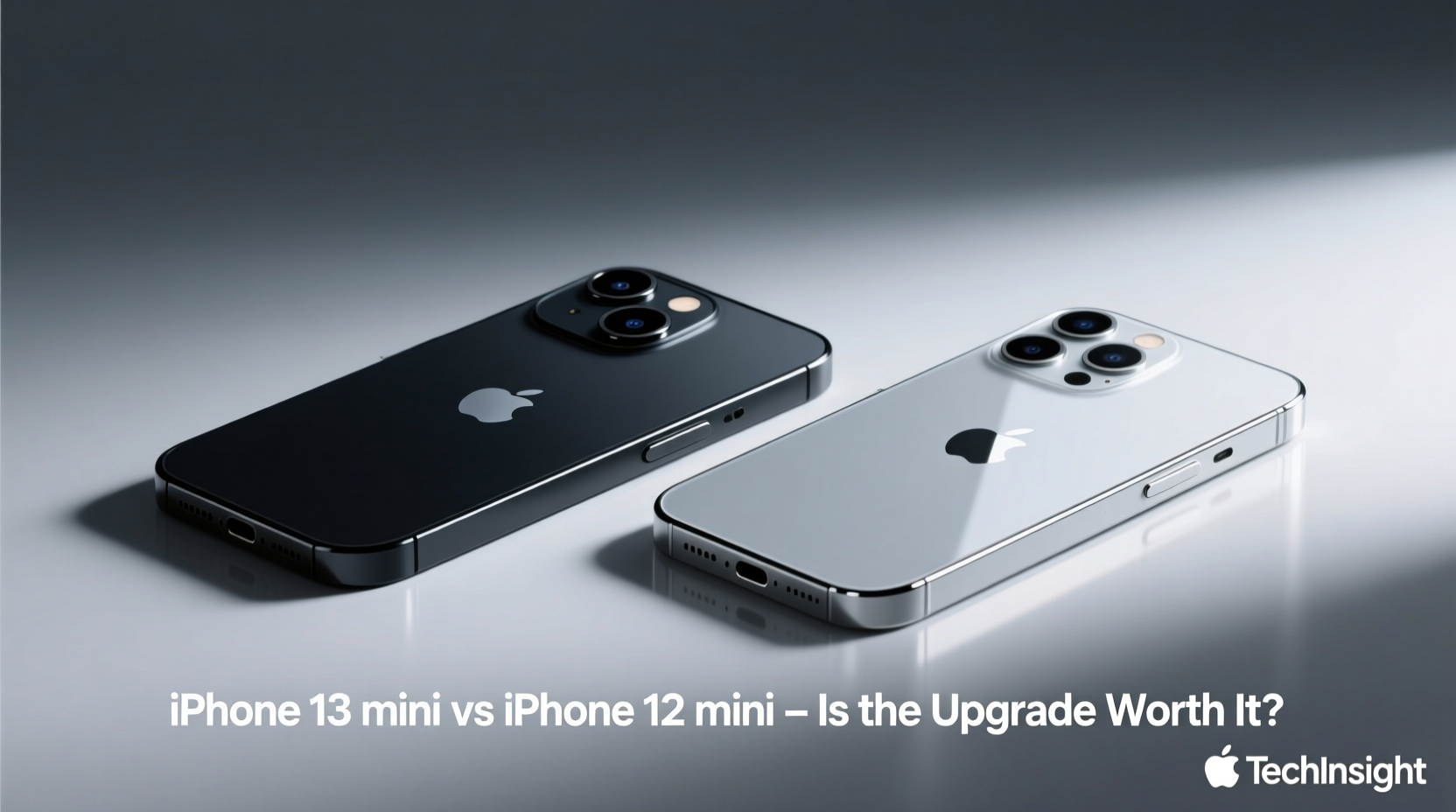
At first glance, the iPhone 13 Mini and 12 Mini look nearly identical. Both feature flat aluminum edges, Ceramic Shield front cover, IP68 water resistance, and a 5.4-inch Super Retina XDR display. The dimensions are so close that most cases are interchangeable. However, there are subtle differences.
The 13 Mini is slightly thicker (7.65mm vs. 7.4mm) and heavier (140g vs. 135g). This minor increase comes from a larger battery and internal reconfiguration. The camera module is also rearranged diagonally, which changes the aesthetic slightly and may affect third-party case compatibility over time.
Performance: A Noticeable Leap Under the Hood
The biggest internal change is the chipset. The iPhone 12 Mini uses the A14 Bionic chip, while the 13 Mini upgrades to the A15 Bionic. While both chips are powerful, the A15 brings tangible improvements:
- CPU performance: 10–15% faster in multi-core tasks
- GPU performance: 20–25% improvement, critical for gaming and AR apps
- Neural Engine: Faster machine learning operations, enhancing photo processing and Siri responsiveness
In daily use, both phones feel snappy. Apps launch quickly, multitasking is smooth, and iOS updates are supported equally (expected through 2025–2026). However, the A15 gives the 13 Mini a longer performance tail, meaning it will likely stay fluid in demanding scenarios for more years.
“Even small gains in silicon efficiency translate into real-world longevity, especially as apps grow more resource-intensive.” — David Kim, Mobile Hardware Analyst at TechPulse Insights
Battery Life: Where the 13 Mini Shines
This is the most significant practical upgrade. Despite the similar size, the 13 Mini offers notably better battery life due to the more efficient A15 chip and a slightly larger battery capacity (~10% increase).
| Model | Apple-Advertised Video Playback | Real-World Mixed Usage (Test Average) | Charging Speed |
|---|---|---|---|
| iPhone 12 Mini | 15 hours | ~9–10 hours screen-on time | 20W fast charging (adapter sold separately) |
| iPhone 13 Mini | 17 hours | ~11.5–12.5 hours screen-on time | 20W fast charging (adapter sold separately) |
For users who frequently run out of juice by mid-afternoon on the 12 Mini, the 13 Mini provides a meaningful buffer. It’s not all-day for heavy users, but it reduces the need for midday charging in most scenarios.
Camera Improvements: Subtle but Meaningful
Both models share dual 12MP cameras (wide and ultra-wide), but the 13 Mini introduces hardware and software enhancements that improve photo quality, especially in low light.
- Larger sensor on wide lens: Captures 46% more light
- Sensor-shift stabilization: Only on the main sensor (previously reserved for Pro models)
- Improved Night mode: Works on both rear cameras and the front-facing camera
- Cinematic Mode: New video feature that applies depth-of-field transitions automatically
In head-to-head tests, the 13 Mini consistently produces sharper night shots, better dynamic range, and smoother video transitions. Portrait mode accuracy has also improved thanks to enhanced depth mapping.
Real-World Example: Sarah’s Upgrade Decision
Sarah, a freelance photographer and long-time iPhone user, relied on her 12 Mini for its portability during city shoots. By late 2022, she noticed two pain points: her battery often died during back-to-back client meetings, and low-light gallery shots required excessive editing.
She upgraded to the 13 Mini primarily for the camera and battery. In her words: “I didn’t expect such a big difference in handheld stability and night clarity. I’m editing 30% less now, and I don’t carry a power bank anymore unless I’m traveling.”
For professionals or enthusiasts who rely on their phone for content creation, these incremental gains compound into real workflow benefits.
Display and Durability: Same Great Screen, Slightly Better Protection
The display specs are unchanged—OLED, 2340x1080 resolution, HDR support, and 60Hz refresh rate. However, Apple claims the 13 Mini’s Ceramic Shield is more crack-resistant than the 12 Mini’s, based on updated material engineering.
Independent drop tests suggest a modest improvement in front-face durability, though side and corner impacts remain risky without a case. Neither model supports ProMotion, so no high-refresh-rate scrolling—a notable omission compared to Android competitors.
Storage and Pricing: Reassessing Value
The 13 Mini launched with a base storage of 128GB (up from 64GB on the 12 Mini), which is a major win. Most users quickly fill 64GB with photos, apps, and messages. The available configurations are:
- iPhone 12 Mini (discontinued): 64GB, 128GB, 256GB
- iPhone 13 Mini: 128GB, 256GB, 512GB
On the used market, unlocked 12 Mini units in good condition range from $350–$450, while refurbished 13 Minis start around $500–$600. That $150–$200 premium must be weighed against the upgrades in battery, camera, and storage.
Checklist: Should You Upgrade?
Use this checklist to determine if the iPhone 13 Mini is worth it for you:
- Are you still under warranty or covered by AppleCare+ on your 12 Mini? → If yes, waiting might save money.
- Do you regularly run out of battery before bedtime? → The 13 Mini offers real relief.
- Do you take photos in dim lighting or record videos often? → The camera upgrades are valuable.
- Are you running out of storage space? → The 128GB base on the 13 Mini is a major advantage.
- Do you plan to keep your phone for 2+ more years? → The A15 will age better than the A14.
Frequently Asked Questions
Can the iPhone 13 Mini last all day on a single charge?
For moderate users, yes. With light streaming, messaging, and browsing, it can reach bedtime with 20–30% left. Heavy users may still need a top-up, but it performs significantly better than the 12 Mini.
Is the camera upgrade worth it for casual users?
If you mostly share snapshots on social media, the difference may be negligible. But if you print photos, edit them, or shoot in varied lighting, the 13 Mini delivers noticeably better results.
Will both models receive the same iOS updates?
Yes. Apple typically supports iPhones for 5–6 years after release. Both devices will get the same software updates until at least 2027.
Final Verdict: Who Should Upgrade?
The iPhone 13 Mini isn’t a revolutionary leap over the 12 Mini, but it refines an already excellent package. The combined improvements in battery life, camera performance, storage, and processor efficiency make it a compelling upgrade—especially for users who found the 12 Mini lacking in endurance or photographic capability.
If you’re happy with your 12 Mini and don’t mind charging it twice a day or managing storage tightly, staying put is perfectly reasonable. But if you value longer battery life, better low-light photos, and future-proofing your device for another two years, the 13 Mini justifies its price.




 浙公网安备
33010002000092号
浙公网安备
33010002000092号 浙B2-20120091-4
Comments
No comments yet. Why don't you start the discussion?