
When choosing between the iPhone 13 Mini and the iPhone 11, one of the most pressing questions consumers face is whether the newer model’s camera is worth the upgrade. Both phones are compact, reliable, and built for everyday use, but Apple made significant strides in computational photography between 2019 and 2021. The difference isn’t just about megapixels—it's about how the hardware and software work together to capture better images in a variety of conditions.
This comparison dives into real-world camera performance, examining not only specs but also practical outcomes like dynamic range, night mode effectiveness, portrait accuracy, and video stabilization. If you’re holding onto an iPhone 11 and wondering if it’s time to move up, or if you're considering buying a used iPhone 11 instead of a new 13 Mini, this breakdown will help you decide based on actual photographic capability.
Camera Hardware: A Closer Look at the Specs
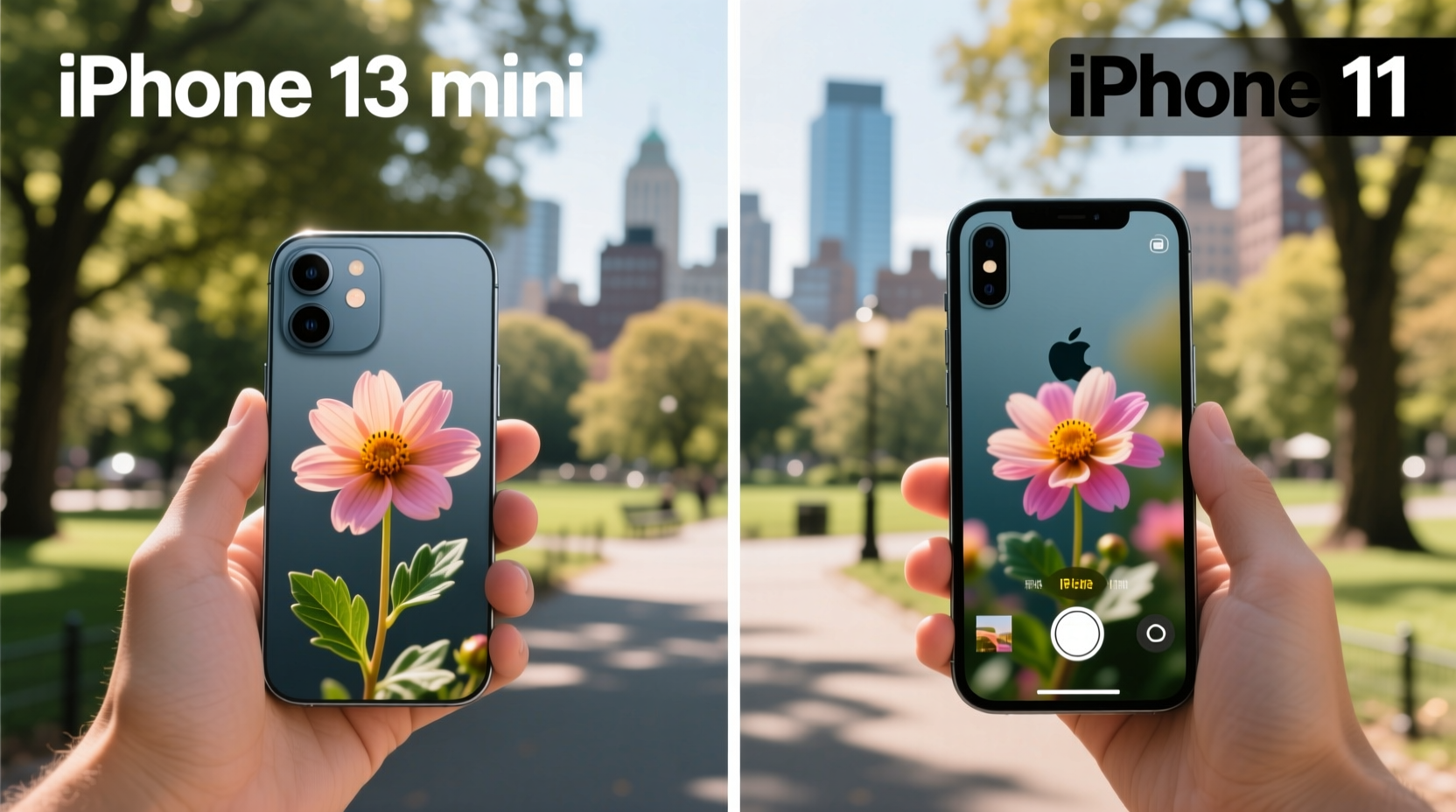
The foundation of any smartphone camera lies in its hardware. While both the iPhone 11 and iPhone 13 Mini feature dual-camera systems with wide and ultra-wide lenses, there are subtle but impactful differences in sensor size, aperture, and image signal processing.
| Feature | iPhone 11 | iPhone 13 Mini |
|---|---|---|
| Main Sensor Resolution | 12 MP (f/1.8) | 12 MP (f/1.6) |
| Ultra-Wide Lens | 12 MP (f/2.4) | 12 MP (f/2.4) |
| Sensor Size (Main) | 1/2.55\" | 1/1.85\" |
| Aperture (Main) | f/1.8 | f/1.6 |
| Night Mode | Yes (on all lenses) | Yes (improved algorithm + sensor shift) |
| Deep Fusion | Yes | Enhanced Deep Fusion |
| Photographic Styles | No | Yes |
| Cinematic Mode Video | No | Yes (1080p @ 30fps) |
The iPhone 13 Mini’s larger main sensor and wider f/1.6 aperture allow more light to hit the sensor—critical in low-light environments. This alone results in brighter, cleaner photos with less noise. Additionally, the improved Deep Fusion process analyzes textures and edges at the pixel level before merging multiple exposures, preserving detail without over-processing.
Real-World Photo Performance: Daylight vs Low Light
In daylight, both phones produce excellent results. Colors are natural, dynamic range is strong, and autofocus is quick. However, the iPhone 13 Mini consistently captures slightly more balanced exposures, particularly in high-contrast scenes like backlit portraits or bright skies with shadowed foregrounds.
Where the gap widens significantly is in dim lighting. The iPhone 13 Mini’s Night mode activates earlier (down to 2 lux vs 10 lux on the 11) and produces noticeably brighter shots with finer detail in shadows. Skin tones remain accurate, and noise reduction is far more refined. On the iPhone 11, Night mode often leaves shadows muddy and introduces slight color casts, especially under artificial lighting.
“Apple’s sensor improvements in the 13 series weren’t flashy, but they were foundational. More light capture means better data for computational photography to work with.” — David Liu, Mobile Imaging Analyst at DXOMARK
Portrait mode also benefits from the upgraded system. The 13 Mini uses machine learning models trained on billions of images to better distinguish hair strands, glasses, and complex edges. The result is fewer artifacts around ears or collars and smoother depth transitions. The iPhone 11 still performs well, but misjudges edges more frequently, especially in motion or uneven lighting.
Video Capabilities: Beyond Still Photos
If you shoot video regularly, the iPhone 13 Mini offers a clear advantage. It supports Dolby Vision HDR recording at 4K up to 30fps—something the iPhone 11 lacks. HDR brings richer highlights, deeper blacks, and more vibrant colors, especially noticeable when viewed on compatible screens.
But the biggest leap is Cinematic Mode, introduced with the 13 series. This feature automatically shifts focus between subjects during recording, mimicking the shallow depth-of-field effects seen in professional filmmaking. While best suited for controlled scenarios, it adds creative flexibility previously unavailable on iPhones. The iPhone 11 has no equivalent, limiting users to manual focus taps during recording.
Additionally, the 13 Mini includes sensor-shift optical image stabilization (OIS) on the main camera—a first for a non-Pro iPhone. This stabilizes the sensor itself rather than the lens, resulting in smoother handheld footage, especially while walking or filming in a moving vehicle.
Checklist: What to Test When Comparing Camera Quality
- Take a portrait in mixed lighting—check edge detection and background blur accuracy.
- Shoot a night scene with city lights—look for noise levels and highlight control.
- Record a short video while walking—assess stabilization smoothness.
- Use ultra-wide in tight spaces—compare distortion and corner sharpness.
- Try shooting into the sun—evaluate flare resistance and dynamic range.
Mini Case Study: Travel Photography in Lisbon
Consider Sarah, a frequent traveler who owns an iPhone 11 and rented an iPhone 13 Mini for a weekend trip to Lisbon. Her goal was to capture street markets, historic architecture, and evening dinners without carrying extra gear.
During the day, her photos from both phones looked nearly identical when viewed on Instagram. But when reviewing full-resolution images later, she noticed the 13 Mini captured more texture in tilework and better preserved details in shaded alleyways. At dinner in a dimly lit restaurant, the iPhone 11 struggled to balance the warm ambient lighting, producing orange-tinted images with grainy shadows. The 13 Mini, using Night mode and Smart HDR 4, rendered food accurately and maintained clean backgrounds—even though she didn’t use a tripod.
She also filmed a short clip walking through Alfama. The 13 Mini’s OIS kept the footage stable enough for direct posting, while the 11’s video required third-party stabilization in editing. For someone prioritizing mobile storytelling, the upgrade paid off in reduced post-production effort.
Frequently Asked Questions
Is the iPhone 13 Mini camera worth upgrading from the iPhone 11?
If you value photography—especially in low light—or create video content, yes. The improvements in sensor size, Night mode, and video features represent meaningful gains. Casual users may not notice daily differences, but enthusiasts will appreciate the enhanced dynamic range, sharper details, and advanced tools like Cinematic Mode.
Can the iPhone 11 still take good photos today?
Absolutely. The iPhone 11 remains capable of capturing excellent photos in good lighting. Its software updates ensure compatibility with modern editing tools and sharing platforms. For many users, especially those who primarily share images on social media, the 11’s output is more than sufficient.
Does the smaller size of the 13 Mini affect camera performance?
No. Despite its compact body, the 13 Mini shares the same camera hardware and image processing engine as the standard iPhone 13. You get the full benefit of Apple’s 2021 imaging technology in a smaller form factor.
Conclusion: Making the Right Choice for Your Needs
The camera on the iPhone 13 Mini is objectively better than the iPhone 11’s—but whether that difference matters depends on how you use your phone. For casual snapshots and daytime social media posts, the iPhone 11 continues to deliver solid results. However, if you frequently shoot in low light, value video quality, or want access to the latest features like Photographic Styles and Cinematic Mode, the 13 Mini represents a tangible upgrade.
It’s not just about sharper images; it’s about consistency across conditions, smarter software processing, and greater creative control. The advancements reflect Apple’s focus on making computational photography feel effortless, even in challenging environments.




 浙公网安备
33010002000092号
浙公网安备
33010002000092号 浙B2-20120091-4
Comments
No comments yet. Why don't you start the discussion?