
When Apple introduced the iPhone 13 lineup, the iPhone 13 mini stood out as a bold statement in an era of ever-larger smartphones. For years, screen sizes have crept upward—6.1 inches, then 6.7 inches—pushing usability to its limits for single-handed use. The iPhone 13 mini, with its compact 5.4-inch display, offered a rare alternative: a flagship iPhone that fits comfortably in one hand and slips easily into pockets. But at what cost? Compared to the standard iPhone 13, the mini trades space, battery life, and camera flexibility for portability. So, is the smaller size truly worth it, or are users missing out on essential features?
Design and Usability: Form Meets Function
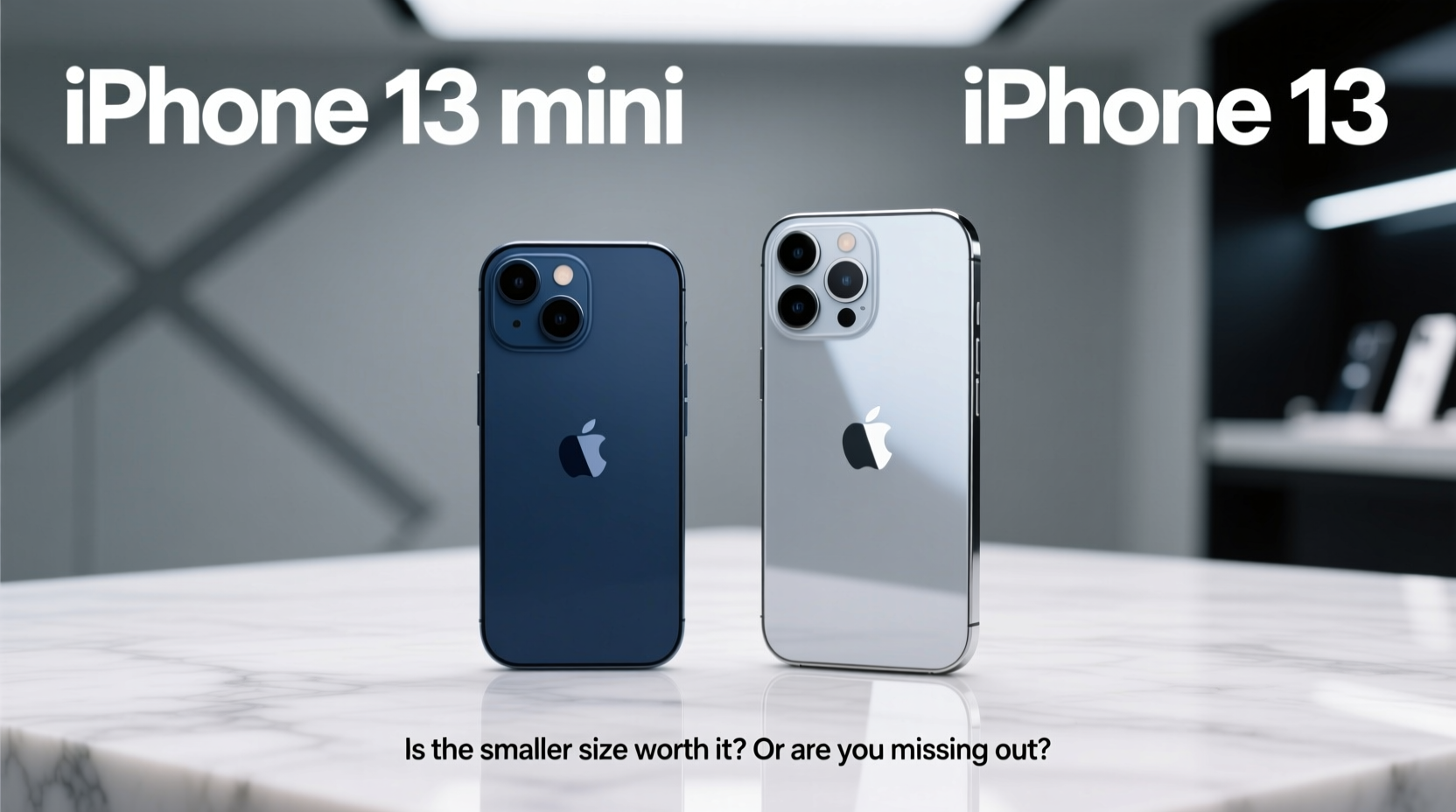
The most immediate difference between the iPhone 13 and iPhone 13 mini lies in their physical design. Both share the same flat-edge aluminum frame and Ceramic Shield front, but the mini measures just 131.5 x 64.2 x 7.65 mm and weighs 140 grams—significantly smaller and lighter than the iPhone 13’s 146.7 x 71.5 x 7.65 mm and 174 grams.
This reduction makes the mini ideal for users who prioritize pocketability and comfort during extended use. Typing one-handed is more natural, and navigating menus without stretching your thumb across the screen becomes feasible. However, the trade-off is real: the smaller display compresses UI elements, making multitasking and media consumption feel cramped.
Battery Life: The Hidden Compromise
One of the most significant sacrifices with the iPhone 13 mini is battery performance. Despite sharing the same A15 Bionic chip and efficient OLED display technology, the mini’s smaller chassis houses a 2,438 mAh battery—compared to the iPhone 13’s 3,240 mAh unit.
In real-world usage, this translates to noticeable differences. Apple advertised up to 17 hours of video playback for the mini versus 19 hours on the standard model. While that may seem minor, daily patterns tell a different story. Heavy users often find themselves charging the mini by mid-afternoon, especially when using GPS, streaming audio, or browsing social media.
“Battery anxiety is real with the mini. It’s a premium device with a mid-tier endurance.” — David Kim, Mobile Tech Analyst at GadgetInsight
If you’re someone who travels frequently, works remotely, or dislikes carrying a power bank, the iPhone 13’s superior battery life could be a deciding factor.
Camera Capabilities: Nearly Identical, But Not Quite
Both devices feature dual-camera systems: a 12MP main sensor and a 12MP ultrawide lens. They support Night mode, Deep Fusion, Smart HDR 4, and Cinematic Mode for video. In most lighting conditions, photo quality is indistinguishable.
However, the iPhone 13 benefits from slightly better sensor-shift optical image stabilization (OIS), which Apple implemented only on the main camera of the mini due to space constraints. On the standard iPhone 13, OIS is applied directly to the sensor rather than the lens, resulting in sharper images in low light and smoother video stabilization.
Additionally, the larger body allows for better thermal management during long recording sessions. Users shooting 4K video for extended periods may notice the mini heating up faster, potentially triggering throttling.
| Feature | iPhone 13 Mini | iPhone 13 |
|---|---|---|
| Display Size | 5.4 inches | 6.1 inches |
| Battery Capacity | 2,438 mAh | 3,240 mAh |
| Video Playback (max) | 17 hours | 19 hours |
| Weight | 140g | 174g |
| OIS Type | Lens-shift (main only) | Sensor-shift (main) |
| Starting Storage | 128GB | 128GB |
Real-World Example: Commuter vs. Creator
Consider two users: Maya, a city commuter who uses her phone mainly for messaging, maps, and music; and Jordan, a freelance photographer who shoots and edits on the go.
Maya loves the mini. She can unlock it quickly with Face ID while holding groceries, reply to texts with one hand, and never worries about bulging pockets. Her usage rarely exceeds five hours of screen time, and she charges nightly. For her, the mini delivers all the power of the iPhone 13 in a more manageable form.
Jordan, however, finds the mini limiting. Editing photos on the smaller screen is less precise, and shooting 4K videos drains the battery before a full day’s work is done. He values the extra half-hour of battery and improved stabilization on the standard model. For him, the larger iPhone 13 isn’t just preferable—it’s necessary.
Who Should Choose the iPhone 13 Mini?
The iPhone 13 mini is not for everyone—but it’s perfect for specific audiences. Consider these traits:
- You value one-handed operation
- You carry your phone in tight pockets or small bags
- Your daily screen time is under 5 hours
- You prefer lightweight devices
- You don’t rely heavily on mobile gaming or video editing
If these describe you, the mini offers a unique blend of performance and portability that no other flagship iPhone provides.
Checklist: iPhone 13 vs iPhone 13 Mini – Which Fits Your Lifestyle?
- Assess your daily screen time: Over 6 hours? Lean toward the iPhone 13.
- Test grip comfort: Can you reach the top corners without shifting your grip?
- Evaluate your charging habits: Do you forget to charge overnight? The mini may leave you stranded.
- Consider your primary use: Photography, gaming, or multitasking? Larger screen wins.
- Think about future-proofing: Apps and media are trending larger. Will you adapt in two years?
Frequently Asked Questions
Can the iPhone 13 mini last a full day?
For moderate users—light browsing, messaging, and occasional calls—yes. But heavy users, especially those streaming or using navigation, will likely need a midday charge.
Is the iPhone 13 mini harder to repair?
Due to its compact design, internal repairs like battery replacement are more complex and costly. Independent repair shops report higher labor times for the mini.
Will Apple continue the mini line?
As of 2023, Apple has discontinued new mini models after the iPhone 14 cycle, citing lower sales volume. This suggests limited long-term support, though existing mini users still receive full iOS updates.
Final Verdict: Worth It for the Right User
The iPhone 13 mini isn’t objectively worse than the iPhone 13—it’s different. It’s a deliberate choice for those who prioritize size over stamina. You’re not “missing out” if your needs align with its strengths. But if you demand all-day battery, immersive media experiences, or robust creative tools, the standard iPhone 13 remains the balanced choice.
Ultimately, smartphone satisfaction hinges on fit—both physical and functional. The mini proves that flagship power doesn’t require flagship size. But it also reminds us that engineering compromises are inevitable when shrinking high-performance hardware.




 浙公网安备
33010002000092号
浙公网安备
33010002000092号 浙B2-20120091-4
Comments
No comments yet. Why don't you start the discussion?