
For years, iPhone 8 owners have enjoyed a reliable, compact smartphone with solid build quality and iOS support that has lasted well beyond initial expectations. But as Apple pushes forward with newer models, many long-time users face a decision: is upgrading to the iPhone 13 mini—particularly for its battery life—truly worth it? The answer isn’t just about mAh ratings or screen-on time; it’s about how daily usage patterns, software demands, and hardware efficiency shape real-world experience.
The iPhone 8, released in 2017, was designed during an era when battery capacity wasn’t the top priority. In contrast, the iPhone 13 mini (2021) arrived at a time when mobile workloads had grown exponentially—from high-definition video streaming to AR apps and multitasking. While both devices are small, their internal philosophies differ significantly. Let’s break down whether the newer battery—and everything that comes with it—is a compelling enough reason to make the switch.
Battery Capacity and Efficiency: Beyond the Numbers
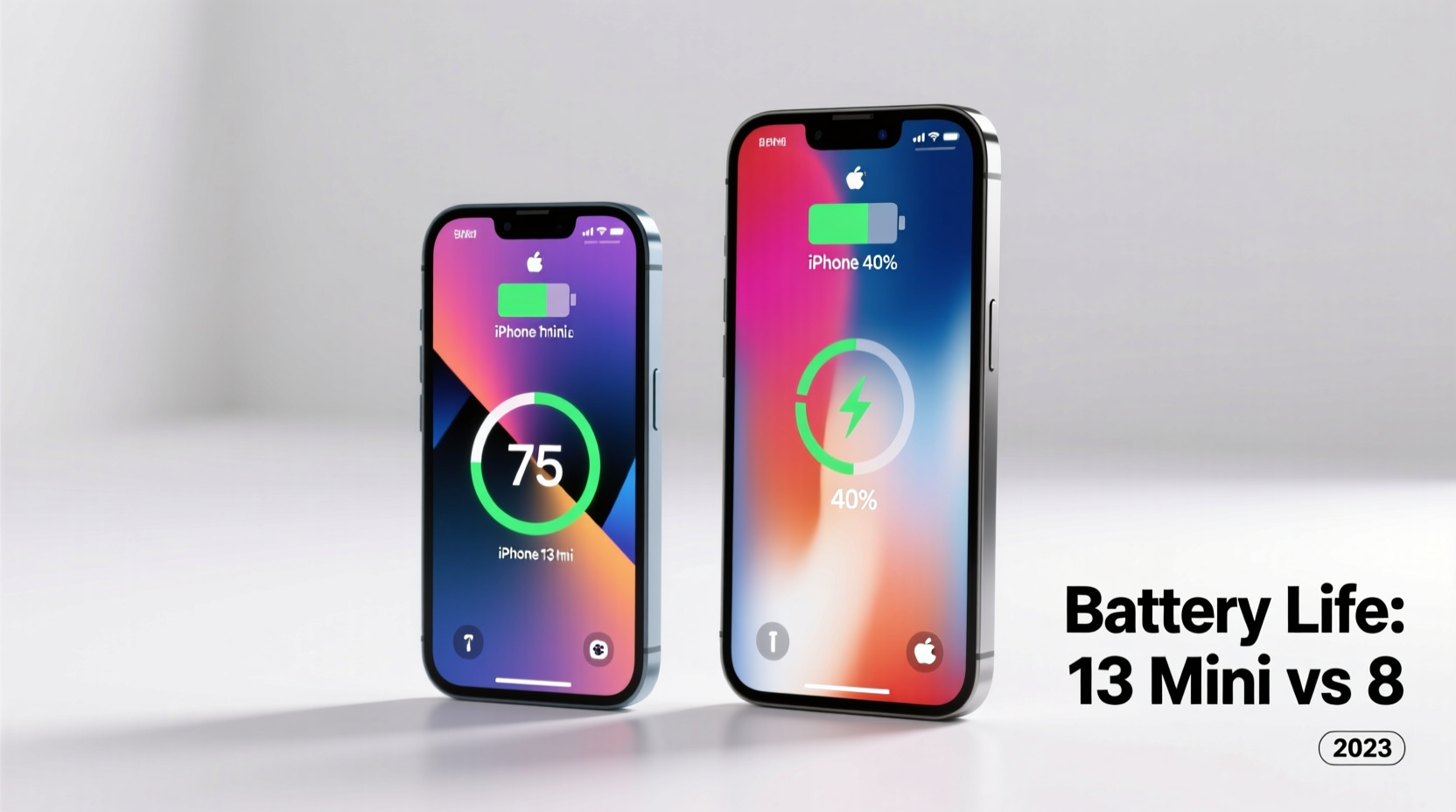
On paper, the iPhone 13 mini has a modest 2,406mAh battery, while the iPhone 8 packs only 1,821mAh. That’s a 32% increase in capacity, but what matters more is how efficiently that power is used. The 13 mini runs on Apple’s A15 Bionic chip, built on a 5-nanometer process, which delivers higher performance per watt compared to the A11 Bionic in the iPhone 8.
Apple also introduced Optimized Battery Charging and Low Power Mode improvements in iOS 15, which help extend usable battery life by learning user habits and reducing background drain. These features weren’t available when the iPhone 8 launched and remain limited even with updates.
Despite its smaller physical size, the 13 mini often delivers up to 17 hours of video playback, whereas the iPhone 8 manages around 13 hours under similar conditions. Real-world mixed usage shows an even starker difference: the 13 mini regularly lasts a full day with moderate to heavy use, while the iPhone 8 often requires midday charging for users who rely on navigation, messaging, and social media.
Performance and Software Longevity
Upgrading isn’t just about battery—it’s about future-proofing. The iPhone 8 supports iOS updates up to iOS 16, with limited feature parity in later versions. Features like Live Text, Focus Modes, and enhanced privacy tools either don’t exist or perform poorly due to hardware constraints.
In contrast, the iPhone 13 mini runs iOS 17 smoothly and will likely receive updates through 2026 or beyond. This extended support window means better security, app compatibility, and access to new functionalities that can indirectly affect battery usage—for example, smarter location services and improved background task management.
“Battery life isn’t just about capacity—it’s about how smartly the system manages energy across CPU, display, and radios.” — Dr. Lena Park, Mobile Systems Researcher at Stanford University
The A15 chip’s neural engine and GPU efficiency allow apps to complete tasks faster and return to idle sooner, reducing overall power draw. This architectural advantage gives the 13 mini longer endurance despite having a relatively small battery by modern standards.
Comparative Overview: iPhone 13 mini vs iPhone 8
| Feature | iPhone 13 mini | iPhone 8 |
|---|---|---|
| Battery Capacity | 2,406 mAh | 1,821 mAh |
| Charging Speed | 20W fast charging (wired), MagSafe compatible | 12W max (with adapter), no MagSafe |
| Display Type | Super Retina XDR OLED (60Hz) | Retina HD LCD (60Hz) |
| Processor | A15 Bionic (5nm) | A11 Bionic (10nm) |
| Expected iOS Support | Through 2026+ | Ended with iOS 16 |
| Camera System | Dual 12MP (wide + ultra-wide), Night mode, Cinematic mode | Single 12MP (wide), basic HDR |
| Water Resistance | IP68 (6m for 30 mins) | IP67 (1m for 30 mins) |
| Starting Price (Launch) | $699 | $699 |
This table highlights that the upgrade offers more than just battery improvements. You gain better cameras, stronger durability, faster processing, and longer software relevance—all of which contribute to a more efficient device that doesn’t waste energy struggling to keep up.
Real-World Example: One User’s Transition
Consider Sarah, a freelance photographer who used her iPhone 8 for five years. She appreciated its simplicity and camera quality for casual shots but found herself constantly carrying a portable charger. Editing photos on Lightroom, using GPS for client meetings, and uploading galleries drained her battery by noon.
After switching to the iPhone 13 mini, she noticed immediate changes. Even with heavier photo editing and continuous iCloud syncing, the battery lasted through her workday. More importantly, the phone didn’t throttle performance under load, meaning tasks completed faster and the processor returned to low-power states quicker. Her daily anxiety about finding an outlet disappeared.
She summarized: “The battery isn’t twice as big, but it feels like it lasts twice as long because everything works better together.”
When the Upgrade Makes Sense: A Practical Checklist
Not every iPhone 8 user needs to upgrade. Use this checklist to determine if the move to iPhone 13 mini aligns with your lifestyle:
- You charge your iPhone 8 more than once a day during normal use.
- You frequently encounter app crashes or slowdowns, especially with newer iOS versions.
- You want better camera capabilities (e.g., night mode, ultra-wide lens).
- You rely on your phone for navigation, music, or calls throughout the day without easy access to charging.
- You plan to keep your next phone for 3+ years and want longer software support.
- You value water resistance and wireless charging convenience.
If three or more apply, the iPhone 13 mini’s battery—and the ecosystem around it—likely represents a meaningful improvement.
Frequently Asked Questions
Does the iPhone 13 mini battery degrade slower than the iPhone 8?
Yes. The 13 mini includes optimized charging algorithms that reduce lithium-ion stress by delaying full charges until needed. It also uses higher-quality battery materials and thermal management. With proper care, the 13 mini should retain over 80% of its capacity after 500 full charge cycles—on par with Apple’s design goals—while older models like the iPhone 8 show faster degradation due to age and lack of adaptive charging intelligence.
Can I improve my iPhone 8’s battery life without upgrading?
To some extent. Replace an aged battery (if below 80% health), disable background app refresh for non-essential apps, lower screen brightness, and turn on Low Power Mode early in the day. However, these are stopgap measures. If your battery health is already poor, even a replacement won’t match the efficiency of newer chips and displays.
Is the iPhone 13 mini still being sold by Apple?
No. As of 2023, Apple discontinued the iPhone 13 mini. However, it remains widely available through carriers, resellers, and certified refurbished programs. Its combination of size, performance, and battery makes it a sought-after model among compact phone enthusiasts.
Final Verdict: Is the Newer Battery Worth It?
The iPhone 13 mini’s battery may not seem dramatically larger, but its impact is amplified by advancements across the board: a more efficient processor, smarter software, better display technology, and improved charging options. For iPhone 8 users still clinging to a device past its prime, the upgrade isn’t just about lasting one more hour on a charge—it’s about gaining back time, reliability, and peace of mind.
If you’ve been hesitating solely because the 13 mini is “just another small phone,” reconsider. The difference lies beneath the surface. Modern iOS demands more from hardware, and the 13 mini meets those demands gracefully, where the iPhone 8 struggles.




 浙公网安备
33010002000092号
浙公网安备
33010002000092号 浙B2-20120091-4
Comments
No comments yet. Why don't you start the discussion?