
For users still clinging to the iPhone X, the allure of Apple’s newer compact flagship—the iPhone 13 Mini—can be both exciting and confusing. Released just four years apart, these two devices represent pivotal moments in Apple’s design evolution. The iPhone X introduced the world to Face ID and edge-to-edge OLED displays, while the iPhone 13 Mini refined that vision with modern internals and improved efficiency. But is upgrading truly worthwhile? Let’s break down the key differences in real-world usability, longevity, and value.
Design and Build: Evolution of Compact Excellence
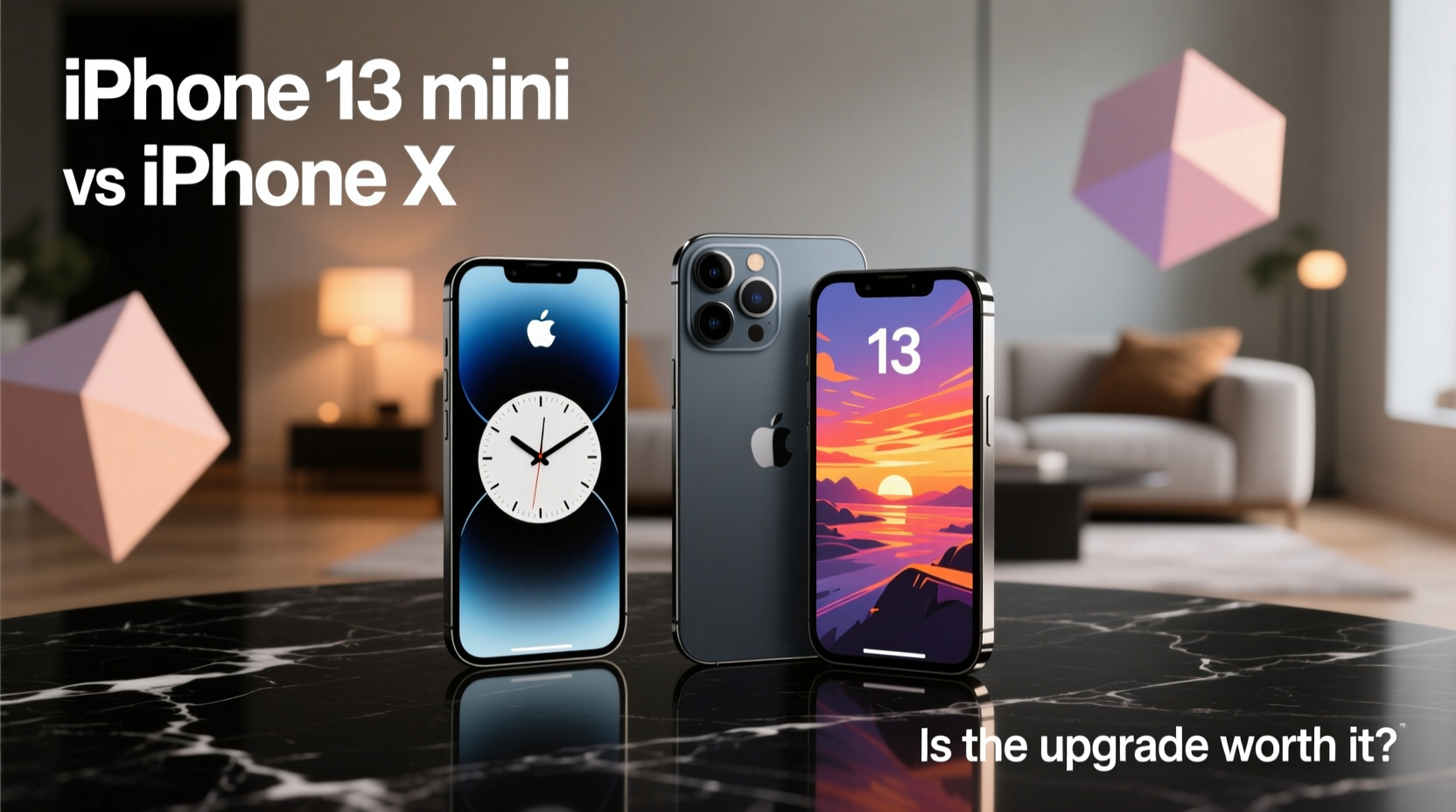
The iPhone X was a game-changer when it launched in 2017. It abandoned the home button for Face ID, adopted an all-glass body with surgical-grade stainless steel, and delivered a sleek 5.8-inch OLED display. At the time, it felt futuristic. Fast forward to 2021, and the iPhone 13 Mini arrived with a nearly identical footprint but subtle refinements: flatter edges reminiscent of the iPhone 4, tighter bezels, and slightly better IP68 water resistance (up to 6 meters for 30 minutes, compared to 1 meter on the X).
While both phones are compact and pocketable, the 13 Mini feels more durable and modern. Its Ceramic Shield front cover offers better drop protection, and the overall build quality reflects advancements in material science. However, the design language remains familiar—so much so that without checking the model number, you might struggle to tell them apart at a glance.
Performance: A Quantum Leap in Processing Power
This is where the gap becomes undeniable. The iPhone X runs on the A11 Bionic chip—a powerhouse in its day but now significantly outpaced by modern standards. In contrast, the iPhone 13 Mini features the A15 Bionic chip, one of the fastest mobile processors ever made at its release.
Benchmarks show the A15 delivering nearly triple the CPU performance and over four times the GPU power of the A11. Real-world implications? Smoother multitasking, faster app launches, seamless AR experiences, and sustained performance during intensive tasks like video editing or gaming. Even iOS updates favor newer chips; as of iOS 17, the iPhone X is no longer supported, meaning security patches and feature updates have stopped.
“Upgrading from an A11 to an A15 isn’t just about speed—it’s about future-proofing your device for at least another 4–5 years.” — David Lin, Mobile Hardware Analyst
Camera Comparison: Night Mode and Computational Photography
The iPhone X’s dual-camera system (12MP wide + telephoto) was excellent for its time, especially in daylight. Low-light performance, however, was limited. The iPhone 13 Mini retains a single-lens setup (12MP wide), but pairs it with advanced computational photography features: Night mode, Deep Fusion, Smart HDR 4, and sensor-shift stabilization (on the main lens in Pro models, but improved stabilization even on the Mini).
Night mode alone makes a dramatic difference. Photos taken in dim lighting on the 13 Mini retain detail, color accuracy, and reduced noise—something the iPhone X struggles with even using third-party apps. Video recording also leaps forward: the 13 Mini supports Dolby Vision HDR at up to 4K/30fps, offering cinematic quality unmatched by the X.
| Feature | iPhone X | iPhone 13 Mini |
|---|---|---|
| Primary Camera | 12MP f/1.8 Wide + 12MP f/2.4 Telephoto | 12MP f/1.6 Wide |
| Low-Light Performance | Limited, no Night mode | Excellent, with Night mode on all lenses |
| Video Recording | 4K up to 60fps | 4K up to 60fps with Dolby Vision HDR |
| Front Camera | 7MP f/2.2 | 12MP f/2.2 with Night mode & 4K video |
| Cinematic Mode | No | Yes (1080p at 30fps) |
Battery Life: Small Size, Big Improvement
One of the most common complaints about the iPhone 13 Mini was its small battery—after all, packing flagship performance into a tiny chassis comes with trade-offs. Yet, thanks to the energy-efficient A15 chip and optimized iOS 15+, the 13 Mini delivers up to 17 hours of video playback. Compare that to the iPhone X’s maximum of 13 hours, and the improvement is clear.
In daily use, iPhone X owners often report needing midday charges, especially with social media, navigation, and messaging. The 13 Mini, while not lasting two full days, consistently gets through a heavy usage day with some reserve. Standby optimization is also far superior, reducing background drain.
Display and Durability: Brighter, Tougher, More Efficient
Both phones feature 5.8-inch OLED displays with True Tone and HDR support, but the 13 Mini introduces several under-the-hood upgrades. It has a peak brightness of 800 nits (1,000 nits for HDR), compared to the X’s 625 nits, making outdoor visibility significantly better. The screen also benefits from Apple’s latest anti-reflective coatings and improved color calibration.
Durability is another win. The 13 Mini uses Ceramic Shield glass, which Apple claims offers 4x better drop performance than previous models. While neither phone is indestructible, the 13 Mini stands a better chance of surviving accidental drops onto pavement or tile.
Real-World Example: Sarah’s Upgrade Journey
Sarah had been using her iPhone X since 2018. By 2022, she noticed apps taking longer to load, frequent crashes on Instagram and WhatsApp, and her battery dying by noon. She hesitated to upgrade, worried the newer Mini would be too similar or not last longer.
After switching to the iPhone 13 Mini, her experience transformed. Apps opened instantly, photos in low light were usable again, and she finally watched HDR videos on Netflix as intended. Most importantly, her phone lasted through her workday without anxiety. Two years later, she’s still on iOS 17, receiving updates and security patches—something her old X could never offer.
Step-by-Step: How to Decide If You Should Upgrade
- Evaluate your current phone’s performance: Does it lag during basic tasks? Are apps crashing or failing to update?
- Check iOS compatibility: The iPhone X maxed out at iOS 16. If you’re on iOS 17 or plan to be, you need a newer device.
- Assess battery health: Go to Settings > Battery > Battery Health. If maximum capacity is below 80%, replacement cost may justify a new phone.
- Consider camera needs: Do you take photos in low light? Want better video quality? The 13 Mini excels here.
- Calculate long-term value: Spending $599 on a 13 Mini (or less used) buys 4+ years of support. Repairing an aging X may cost nearly as much for shorter gains.
Frequently Asked Questions
Can the iPhone X still be used in 2024?
Yes, but with limitations. It runs iOS 16, lacks critical security updates beyond 2023, and many newer apps either don’t support it or perform poorly. For light use like calls and texts, it’s functional—but not recommended for primary use.
Is the iPhone 13 Mini waterproof?
It has IP68 rating, meaning it can survive submersion in up to 6 meters of water for 30 minutes. That’s double the depth rating of the iPhone X. However, water resistance degrades over time and isn’t guaranteed against all liquids.
Does the smaller size mean worse battery life than larger iPhones?
Yes, compared to the iPhone 13 or 13 Pro, the Mini has shorter battery life. But compared to the iPhone X, it lasts noticeably longer due to hardware efficiency—even with a similarly compact form factor.
Final Verdict: Is the Upgrade Worth It?
The answer depends on your priorities. If you're still satisfied with your iPhone X, aren't bothered by slower performance, and don’t care about the latest camera features or iOS updates, holding on might make sense—especially if you’ve replaced the battery recently.
But for most users, the iPhone 13 Mini represents a meaningful leap. It brings modern processing power, superior photo and video capabilities, better battery life, and crucially, years of future software support. At a time when Apple has discontinued the Mini line, this model is also becoming a collector’s favorite for fans of compact smartphones.
If you value longevity, performance, and peace of mind knowing your phone won’t slow to a crawl in the next two years, the upgrade from iPhone X to iPhone 13 Mini isn’t just worth it—it’s overdue.




 浙公网安备
33010002000092号
浙公网安备
33010002000092号 浙B2-20120091-4
Comments
No comments yet. Why don't you start the discussion?