
For users still relying on the iPhone XS, the decision to upgrade isn’t always straightforward. The iPhone 13 Mini promises modern features and improved performance, but at what cost? With Apple’s ecosystem encouraging long device lifespans, it’s reasonable to ask whether moving from the XS to the 13 Mini delivers meaningful improvements or just incremental changes. This in-depth analysis compares both models across key categories—performance, camera, battery life, design, and software support—to help you determine if the upgrade truly makes sense for your lifestyle and usage patterns.
Performance: A Generational Leap in Processing Power
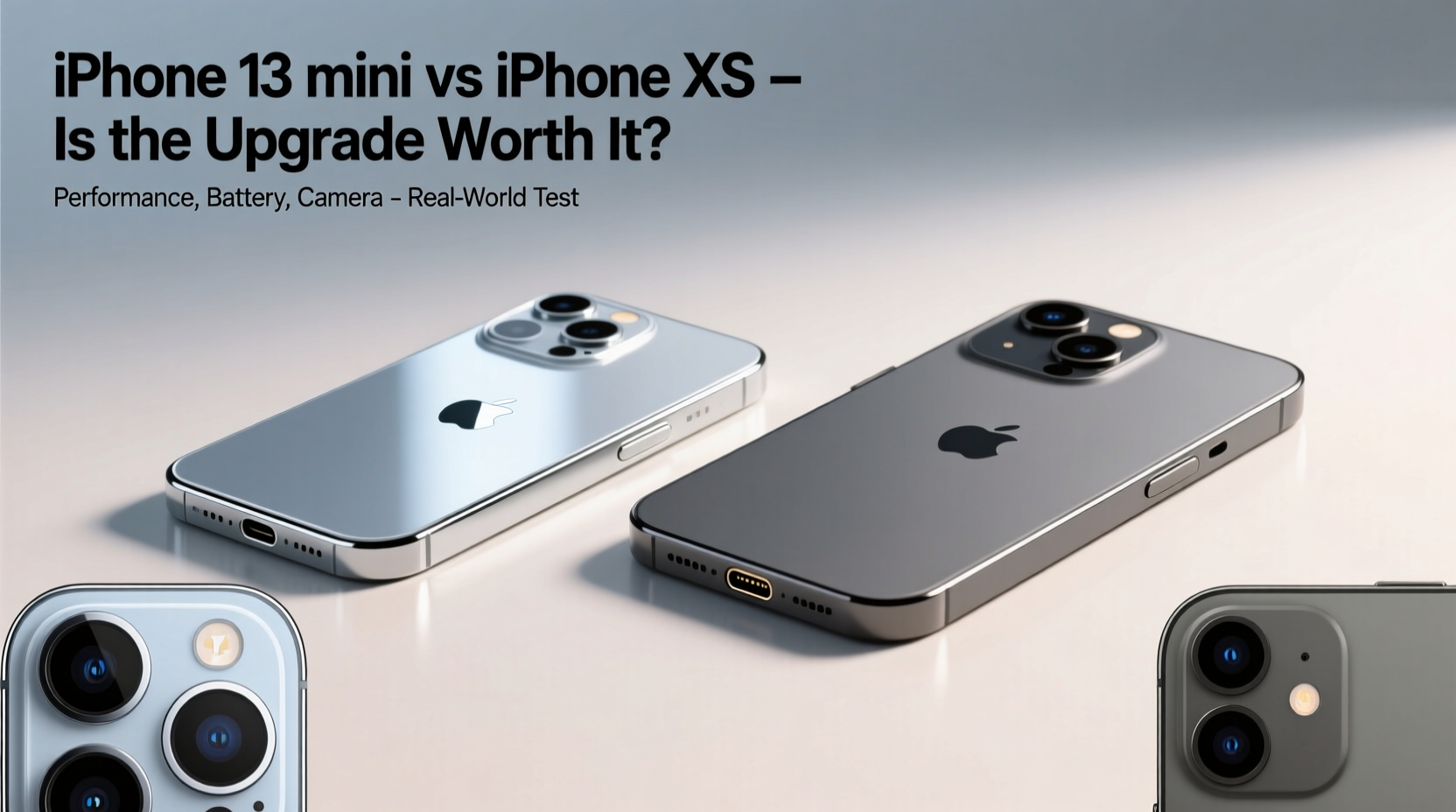
The most significant difference between the iPhone 13 Mini and the iPhone XS lies under the hood. The iPhone XS runs on Apple’s A12 Bionic chip, a solid performer in its time, capable of handling everyday tasks with ease. However, the iPhone 13 Mini features the A15 Bionic chip—one of Apple’s most powerful processors to date. This isn’t just a minor speed bump; it represents nearly four years of advancements in silicon design.
The A15 Bionic offers up to 50% faster CPU performance and twice the GPU speed compared to the A12. Real-world implications include smoother multitasking, faster app launches, better gaming performance, and more efficient machine learning tasks like photo processing and voice recognition. Apps that struggle on the XS—especially newer, graphics-intensive titles or augmented reality tools—run fluidly on the 13 Mini.
Camera Capabilities: Night Mode, Sensor Improvements, and Computational Photography
Photography has evolved dramatically between these two models. The iPhone XS features a single 12MP wide camera with optical image stabilization and basic Smart HDR. While photos were excellent for 2018, they now lack the dynamic range and low-light capabilities expected today.
In contrast, the iPhone 13 Mini includes sensor-shift optical image stabilization (a first for the Mini line), larger sensors, and advanced computational photography. It supports Night mode on all cameras—including the ultra-wide—and introduces Photographic Styles, Deep Fusion, and Smart HDR 4. These enhancements result in richer shadows, more accurate skin tones, and better detail retention in challenging lighting.
Videographers benefit as well. The 13 Mini supports Dolby Vision HDR recording at up to 4K/30fps, while the XS maxes out at 4K/60fps without HDR. The addition of Cinematic Mode—a feature that applies real-time focus transitions—adds a professional touch absent on older devices.
“Smartphone photography isn't just about megapixels anymore—it's about how software and hardware work together. The jump from XS to 13 Mini is one of the most dramatic in recent Apple history.” — David Lin, Mobile Imaging Analyst at TechVision Weekly
Battery Life: Small Body, Big Improvement
Despite its compact size, the iPhone 13 Mini delivers notably better battery life than the XS. Apple optimized both hardware efficiency and battery capacity, resulting in up to 17 hours of video playback versus the XS’s 14 hours. In real-world mixed usage—browsing, messaging, social media, and some streaming—the 13 Mini typically lasts a full day, whereas the XS often requires a midday charge for moderate to heavy users.
This improvement stems not only from the larger battery but also from the energy-efficient 5nm A15 chip and iOS 15+ power management optimizations. Additionally, the 13 Mini supports faster charging (up to 50% in 30 minutes with a 20W adapter) and MagSafe wireless charging, neither of which are officially supported on the XS.
Design and Display: Familiar Form, Better Functionality
Both phones share a similar aesthetic language: stainless steel frames, glass backs, and Face ID integration. However, the iPhone 13 Mini improves upon the XS in critical ways. Its Super Retina XDR display offers higher peak brightness (up to 1,200 nits vs. 625 nits), making it far more usable outdoors. The OLED panel also provides deeper blacks and improved contrast ratios.
Durability has been upgraded too. The 13 Mini uses Ceramic Shield front cover glass, which Apple claims offers “four times better drop performance.” It also boasts an IP68 rating (6 meters for 30 minutes), matching the XS’s water resistance but with improved dust protection.
One trade-off: the 13 Mini is slightly heavier (140g vs. 177g) and thicker, though the difference is negligible in hand. Both retain the beloved small form factor ideal for one-handed use, but the 13 Mini does so with modern refinements.
Software Support and Longevity Outlook
Apple typically provides five to six years of iOS updates. The iPhone XS launched with iOS 12 and received updates through iOS 17, likely reaching its end-of-support window around 2024. In contrast, the iPhone 13 Mini debuted with iOS 15 and is expected to receive updates until at least 2028.
This extended support means better security patches, access to new features like StandBy mode, enhanced privacy tools, and compatibility with future apps. Developers increasingly optimize for newer iOS versions, meaning older devices may eventually lose functionality or run apps poorly.
Comparison Table: iPhone 13 Mini vs iPhone XS
| Feature | iPhone 13 Mini | iPhone XS |
|---|---|---|
| Release Year | 2021 | 2018 |
| Chipset | A15 Bionic | A12 Bionic |
| Rear Cameras | Dual 12MP (Wide + Ultra-Wide) | Single 12MP (Wide) |
| Front Camera | 12MP TrueDepth with Night mode | 7MP FaceTime HD |
| Display Brightness (Peak) | 1,200 nits | 625 nits |
| Battery Life (Video Playback) | Up to 17 hours | Up to 14 hours |
| Charging | Faster wired, MagSafe, Qi wireless | Qi wireless only (slower) |
| Water Resistance | IP68 (6m for 30 min) | IP68 (2m for 30 min) |
| Expected Software Support | Until ~2028 | Until ~2024 |
Real-World Example: Sarah’s Upgrade Decision
Sarah had used her iPhone XS since 2018. By 2023, she noticed apps loading slower, her camera struggling in dim lighting, and needing to carry a power bank daily. After testing a friend’s iPhone 13 Mini, she was struck by how quickly Messages loaded, how clear her night photos became, and how she no longer needed to recharge during her commute. She upgraded and found the experience transformative—not flashy, but consistently better in daily interactions. For her, the $599 price (on refurbished) was justified by three tangible upgrades: reliability, photo quality, and peace of mind about future updates.
Upgrade Checklist: Is the iPhone 13 Mini Right for You?
- ✅ Are you experiencing slowdowns or app crashes on your XS?
- ✅ Do you want better low-light photos and video recording?
- ✅ Is battery life becoming a daily concern?
- ✅ Do you plan to keep your phone for 3+ more years?
- ✅ Are you interested in using newer features like MagSafe or Cinematic Mode?
If you answered yes to two or more, the upgrade offers substantial value. If your XS still performs well and you’re not pushing its limits, waiting another year could be sensible—especially with rumors of a potential iPhone 15 Mini revival.
Frequently Asked Questions
Can the iPhone XS still run the latest apps smoothly?
Most lightweight apps work fine, but newer, resource-heavy applications—especially games and video editors—may lag or fail to launch. Some developers have begun dropping support for devices older than four years.
Is the iPhone 13 Mini worth buying in 2024?
Yes, especially at discounted prices. As Apple discontinued the Mini line after the 14 series, the 13 Mini remains the best compact flagship available, offering modern performance in a rare small footprint.
Does the iPhone 13 Mini support 5G?
Yes, it includes sub-6GHz 5G, providing faster download speeds and improved network responsiveness where coverage is available. The XS only supports 4G LTE.
Final Verdict: Should You Upgrade?
The iPhone 13 Mini isn’t just a newer version of the XS—it’s a meaningful evolution. While both devices share a commitment to premium build and intuitive iOS design, the 13 Mini excels in areas that matter most today: performance, camera intelligence, battery longevity, and future-proofing.
For users clinging to a well-worn XS, the upgrade brings tangible benefits that accumulate over time. Faster interactions, crisper photos, longer battery life, and continued software support collectively enhance the user experience in ways that transcend specs.




 浙公网安备
33010002000092号
浙公网安备
33010002000092号 浙B2-20120091-4
Comments
No comments yet. Why don't you start the discussion?