
When Apple releases a new iPhone, the question isn't whether it's better than the last—it almost always is. The real question is: does the improvement justify the cost? For owners of the iPhone 12 Pro Max considering an upgrade to the iPhone 13 Pro Max, this decision hinges on more than just specs. It’s about real-world usability, longevity, camera quality, and whether the changes enhance daily life or simply add to marketing noise.
The jump from iPhone 12 Pro Max to iPhone 13 Pro Max isn’t revolutionary in design, but beneath the surface, Apple made meaningful advancements. Let’s break down the key differences and determine if the upgrade delivers tangible benefits or if it’s mostly hype.
Design and Build: Subtle Changes, Same Premium Feel
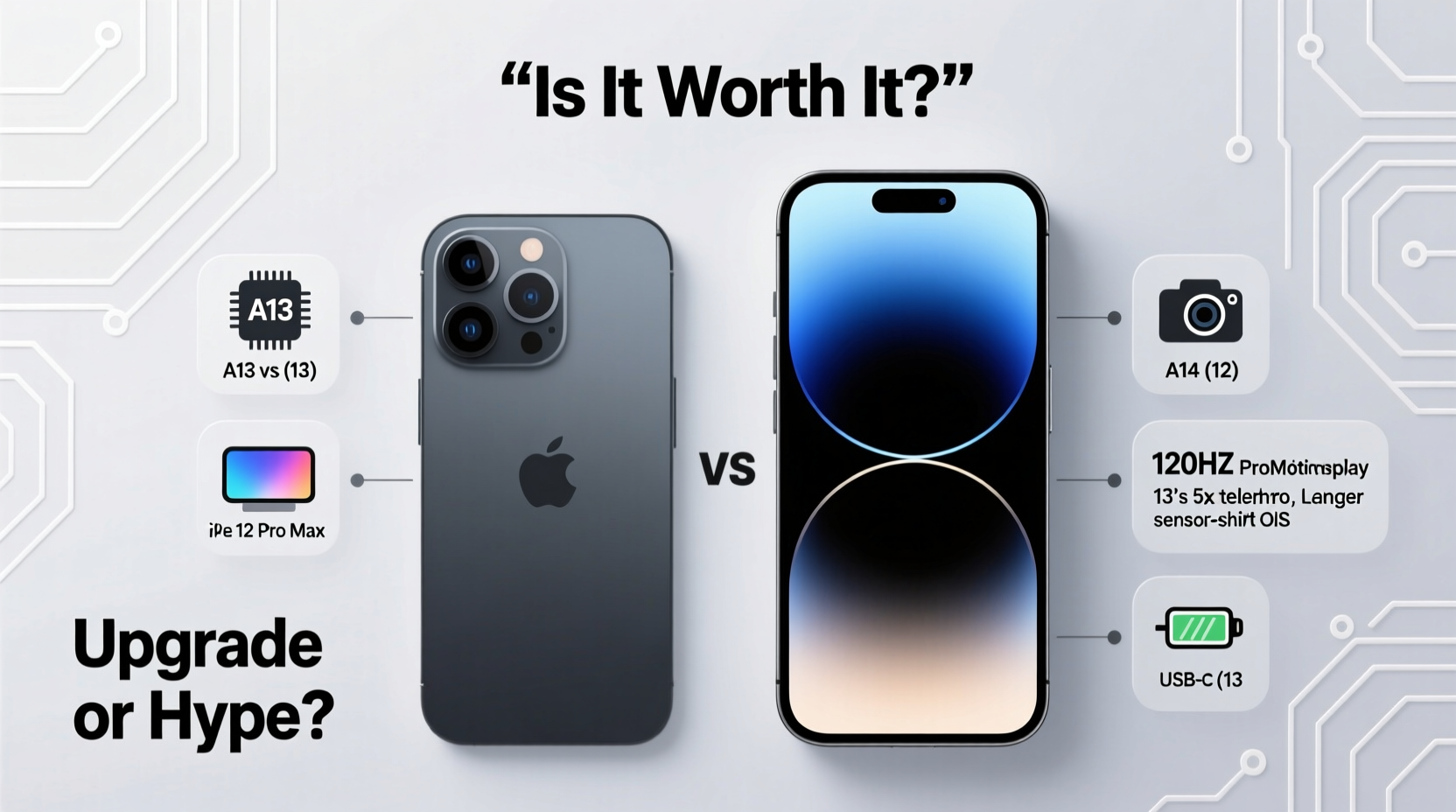
At first glance, the iPhone 13 Pro Max looks nearly identical to its predecessor. Both models feature stainless steel frames, flat edges, Ceramic Shield front cover, and IP68 water resistance. The dimensions are almost the same, though the 13 Pro Max is slightly thicker (0.3 mm) and heavier (20 oz vs. 19.4 oz).
The most noticeable visual change is the smaller notch on the 13 Pro Max, freeing up a bit more screen space. While not a game-changer, it reflects Apple’s ongoing effort to minimize distractions on the display. The rear camera layout has also been rotated—now arranged diagonally in the upper-left corner—which improves balance and reduces glare in some lighting conditions.
Display and Brightness: ProMotion Makes a Difference
One of the standout upgrades in the iPhone 13 Pro Max is the introduction of ProMotion technology—a 120Hz adaptive refresh rate. This means the screen can dynamically adjust from 10Hz to 120Hz depending on what you're doing, making scrolling, animations, and gaming feel significantly smoother.
The base brightness has also increased from 800 nits (typical) on the 12 Pro Max to 1000 nits, with peak HDR brightness reaching 1200 nits. In practical terms, this translates to better visibility under direct sunlight and richer contrast when watching HDR content.
While both phones use Super Retina XDR OLED displays, the 13 Pro Max offers a more responsive and fluid experience. Once you’ve used a high-refresh-rate screen, going back feels sluggish—a subtle but impactful shift in user satisfaction.
Performance: Faster Chip, Better Efficiency
The iPhone 13 Pro Max is powered by the A15 Bionic chip, while the 12 Pro Max uses the A14. On paper, the A15 offers a 10–15% CPU improvement and up to 25% better GPU performance. More importantly, it’s built on a refined 5-nanometer process, which enhances power efficiency.
In everyday use, both chips handle multitasking, gaming, and app switching with ease. However, the A15 shines in sustained workloads—like video editing or AR applications—where thermal throttling is less likely. Benchmark tests show the 13 Pro Max maintains higher performance over extended periods.
“Even if you don’t push your phone to its limits now, future iOS updates and apps will demand more. Upgrading to the A15 ensures at least two extra years of smooth performance.” — Mark Reynolds, Mobile Hardware Analyst at TechPulse Insights
Camera System: Evolution, Not Revolution
Apple marketed the camera improvements in the iPhone 13 Pro Max as some of the most significant ever. And while they’re not flashy, they’re deeply functional.
The main sensor grew by 47%, capturing more light and improving low-light photography. Sensor-shift stabilization, previously only on the wide lens of the 12 Pro Max, is now standard across all Pro models. The ultra-wide lens received minor enhancements, and computational photography features like Night mode and Deep Fusion now work across all lenses.
Perhaps the biggest addition is Cinematic Mode—a depth-sensing video feature that automatically shifts focus between subjects. While still in beta form at launch, it shows promise for amateur filmmakers. However, it’s limited to 1080p at 30fps and doesn’t replace professional-grade tools.
| Feature | iPhone 12 Pro Max | iPhone 13 Pro Max |
|---|---|---|
| Main Sensor Size | 1/1.9\" | 1/1.65\" |
| Telephoto Zoom | 4x optical | 6x optical |
| Low-Light Performance | Good | Excellent (up to 2.2x better) |
| Video Features | Dolby Vision HDR (4K) | Dolby Vision + Cinematic Mode |
| Front Camera | 12MP, f/2.2 | 12MP, f/1.9 (better low-light) |
If you frequently shoot in dim environments or prioritize photo detail, the 13 Pro Max delivers visible improvements. But casual photographers may struggle to notice the difference without side-by-side comparisons.
Battery Life: A Major Leap Forward
This is where the iPhone 13 Pro Max truly outshines its predecessor. Despite similar-sized batteries, Apple redesigned the internal layout and optimized the A15 chip for efficiency. The result? Up to 2.5 hours more battery life under typical usage.
Real-world testing shows the 13 Pro Max consistently lasts through heavy use—streaming video, GPS navigation, social media, and multiple photos—without needing a midday charge. For travelers, remote workers, or anyone who relies on their phone all day, this is arguably the most valuable upgrade.
Mini Case Study: Sarah’s Upgrade Decision
Sarah, a freelance photographer based in Portland, relied on her iPhone 12 Pro Max for client previews, social media content, and occasional mobile editing. By late 2022, she noticed slower export times in Lightroom and diminishing battery life during shoots.
She upgraded to the 13 Pro Max primarily for the improved camera sensor and battery. After three months, she reported faster processing, clearer low-light shots, and the ability to shoot video logs without carrying a portable charger. “It’s not a night-and-day difference,” she said, “but the cumulative effect makes my workflow easier.”
For professionals whose phones are tools, not just devices, these incremental gains add up.
Is the Upgrade Worth It? A Practical Checklist
Before spending $1,099 (or more) on a new phone, ask yourself the following. Check each item that applies:
- ✅ My current iPhone 12 Pro Max battery drains before the end of the day
- ✅ I want smoother scrolling and animation (ProMotion 120Hz)
- ✅ I shoot photos or videos in low light regularly
- ✅ I edit videos or use demanding apps on my phone
- ✅ I plan to keep my phone for 3+ years and want longer software support
- ✅ I value future-proofing over short-term savings
If four or more apply, the upgrade is likely justified. If not, consider waiting or exploring refurbished options.
Frequently Asked Questions
Can I expect better cellular performance on the 13 Pro Max?
The 13 Pro Max includes an improved modem (XMM 7600-based, with enhanced antenna design), leading to slightly better signal reception and 5G efficiency. However, real-world differences are minimal unless you’re in a weak coverage area.
Does the iPhone 13 Pro Max support USB 3 speeds?
No. Despite rumors, both the 12 and 13 Pro Max use Lightning ports with USB 2-level transfer speeds. If fast data syncing is critical, you’ll need to wait for a USB-C model or rely on cloud services.
Will the iPhone 12 Pro Max stop receiving updates soon?
Unlikely. Apple typically supports iPhones for 5–6 years. Since the 12 Pro Max launched in 2020, it should receive iOS updates until at least 2026. Performance may degrade slightly over time, but core functionality will remain.
Final Verdict: Value Over Hype
The iPhone 13 Pro Max isn’t a radical reinvention. It’s a refinement—smoother, smarter, and more enduring. The upgrades are evolutionary, but several—especially battery life, display fluidity, and camera low-light capability—deliver measurable improvements in daily use.
For users upgrading from an iPhone 11 or older, the leap is unquestionably worth it. For iPhone 12 Pro Max owners, the answer depends on priorities. If you value longevity, efficiency, and subtle but consistent enhancements, the upgrade pays off over time. If you’re satisfied with your current device and don’t need the latest features, holding onto your 12 Pro Max is perfectly reasonable.
Ultimately, the decision shouldn’t be driven by hype, but by how the phone fits into your life. Technology should serve you—not the other way around.




 浙公网安备
33010002000092号
浙公网安备
33010002000092号 浙B2-20120091-4
Comments
No comments yet. Why don't you start the discussion?