
For many users, upgrading an iPhone isn’t just about getting the latest model—it’s a financial decision, a lifestyle shift, and often a test of whether new features truly improve daily use. The leap from the iPhone 13 Pro Max to the iPhone 16 Pro Max spans three generations, bringing significant advancements in processing power, camera systems, battery life, and software intelligence. But does that translate into tangible benefits for someone already using a high-end device like the 13 Pro Max?
This comparison cuts through marketing hype to examine real-world improvements, cost-effectiveness, and long-term usability—so you can decide if now is the right time to upgrade.
Performance and Processing Power
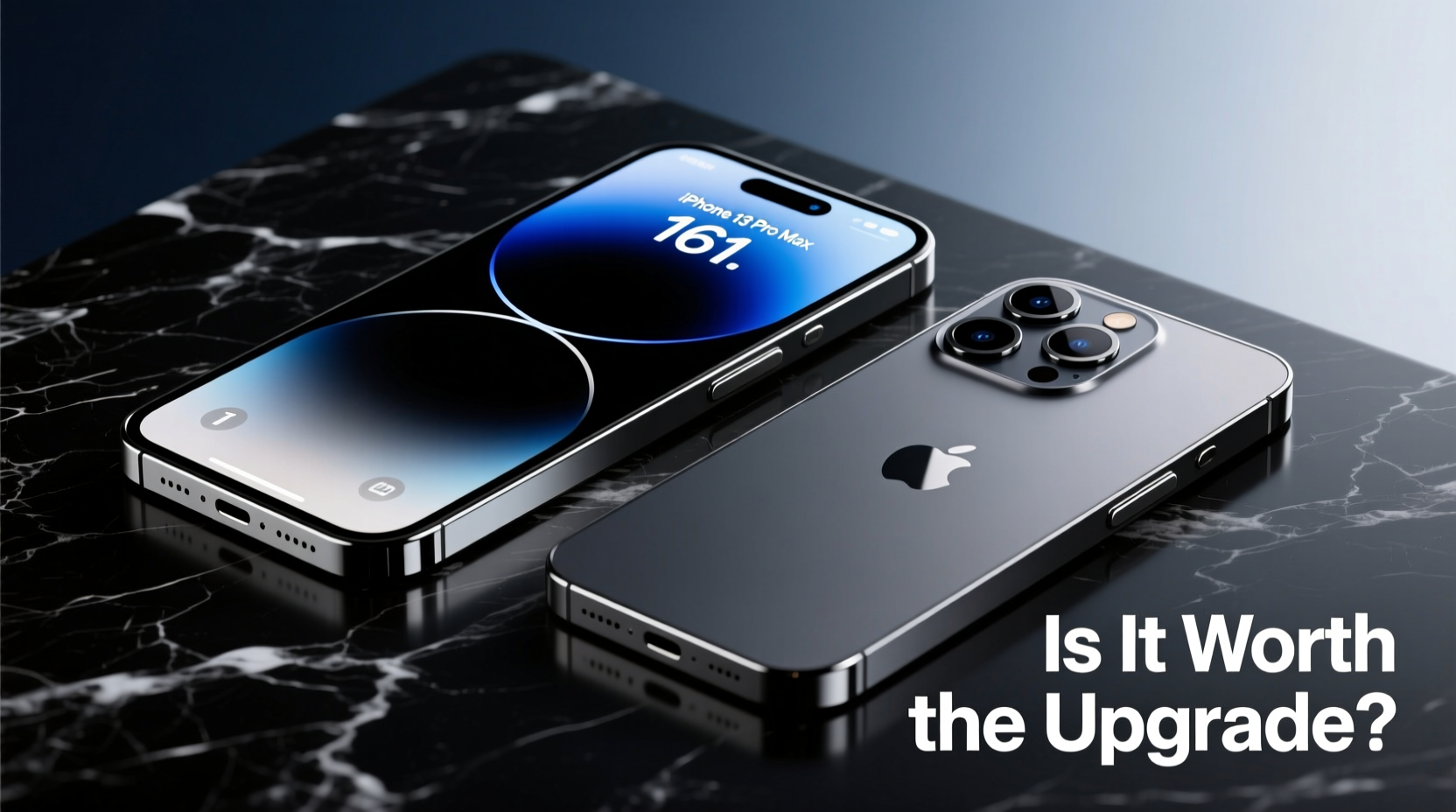
The iPhone 13 Pro Max was powered by Apple’s A15 Bionic chip with a 5-core GPU, which at the time delivered industry-leading performance for gaming, multitasking, and augmented reality applications. Fast forward to the iPhone 16 Pro Max, equipped with the A18 Pro chip built on a 3nm process, and the difference in raw speed and efficiency becomes substantial.
Benchmarks show the A18 Pro delivers up to 40% faster CPU performance and nearly 60% better GPU performance than the A15. More importantly, thermal efficiency has improved dramatically. The 16 Pro Max sustains peak performance longer during intensive tasks like video editing or 4K rendering—something the 13 Pro Max struggles with after extended use.
Machine learning capabilities have also evolved. The upgraded Neural Engine in the A18 Pro enables advanced AI features such as real-time language translation, enhanced photo organization, and predictive text input that adapts more naturally to user behavior.
Camera System: Evolution in Image Quality
The camera is where Apple has made some of its most noticeable generational leaps. The iPhone 13 Pro Max introduced macro photography and improved Night mode across all lenses, but the iPhone 16 Pro Max takes computational photography further with hardware and software synergy.
- Telephoto lens: Now extends up to 5x optical zoom (vs. 3x on the 13 Pro Max), with improved low-light stabilization.
- Sensor size: Larger main sensors capture more light, reducing noise in dark environments.
- Photonic Engine: Enhanced across all cameras, delivering richer color accuracy and dynamic range.
- New features: AI-powered portrait mode adjustments, automatic framing in video calls, and lossless digital zoom up to 25x.
In practical terms, this means sharper photos in dim lighting, more natural skin tones, and greater flexibility when cropping or editing. For travelers, content creators, or parents capturing fast-moving moments, these upgrades are immediately useful.
“With the iPhone 16 Pro Max, we’re seeing a shift from ‘taking good photos’ to ‘capturing professional-grade visuals without effort.’” — David Lin, Mobile Photography Analyst at TechScope
Battery Life and Charging Efficiency
Battery degradation over time affects all smartphones, especially models used heavily for streaming, navigation, or work. Even under ideal conditions, a well-used iPhone 13 Pro Max today likely delivers 10–12 hours of screen-on time—down from the original 14–16 hours.
The iPhone 16 Pro Max counters this with both larger battery capacity and smarter energy management. Thanks to the efficient A18 chip and optimized iOS 18 background processes, Apple claims up to 22 hours of video playback—approximately 3 hours more than the 13 Pro Max’s best-case scenario.
More importantly, modern iPhones include adaptive charging algorithms that learn your routine and delay full charging until just before you wake up, reducing battery wear over time. This feature wasn’t available on the 13 Pro Max and significantly improves long-term battery health.
| Feature | iPhone 13 Pro Max | iPhone 16 Pro Max |
|---|---|---|
| Chipset | A15 Bionic (5nm) | A18 Pro (3nm) |
| Rear Cameras | Triple 12MP (f/1.5, f/2.8, f/1.8) | Triple 48MP (main), 12MP telephoto & ultrawide |
| Zoom Capability | 3x optical, 15x digital | 5x optical, 25x lossless digital |
| Battery Life (Video Playback) | Up to 20 hours | Up to 22 hours |
| Charging | MagSafe, Qi wireless, 20W wired | MagSafe 2.0, 30W fast charging, optimized overnight charging |
| AI Features | Limited on-device ML | Advanced AI: voice separation, scene enhancement, live translation |
Real-World Example: Should Sarah Upgrade?
Sarah, a freelance photographer and frequent traveler, has used her iPhone 13 Pro Max since late 2021. She relies on it for client previews, social media content, and personal documentation. By mid-2024, she noticed slower app launches, reduced battery endurance during shoots, and limitations in zooming without quality loss.
After testing the iPhone 16 Pro Max on a week-long trip through Morocco, she found immediate differences: faster export times from editing apps, clearer distant shots of architecture, and no need to carry a separate compact camera. The improved low-light performance meant fewer retakes indoors, and the AI-assisted editing suggestions saved her hours post-shoot.
While the $1,199 price tag gave her pause, Sarah calculated that the time savings, reliability, and image quality justified the investment—especially since she uses her phone as a core business tool.
Is It Worth the Upgrade? A Step-by-Step Decision Guide
Not every user will benefit equally from upgrading. Follow this timeline to evaluate your personal case:
- Assess current device condition: Check battery health in Settings > Battery. If maximum capacity is below 80%, consider replacement or upgrade.
- Evaluate usage patterns: Do you use your phone for creative work, video calls, or gaming? Heavy users gain more from newer chips and cooling systems.
- Review software support: The iPhone 13 Pro Max will likely receive updates until 2027, but future iOS versions may run slower. The 16 Pro Max guarantees optimal performance for 5+ years.
- Calculate total cost: Include trade-in value. Many carriers offer $400–$600 for a functional 13 Pro Max, reducing the net upgrade cost.
- Test the new model: Visit an Apple Store or borrow a demo unit. Try camera features, app switching, and screen brightness in sunlight.
Frequently Asked Questions
Will my accessories work with the iPhone 16 Pro Max?
Most MagSafe-compatible cases, chargers, and wallets will work, though slight dimensional changes may affect fit. The port remains USB-C, so existing cables are compatible.
Does the iPhone 16 Pro Max have a better display?
Yes. While both models use Super Retina XDR OLED displays, the 16 Pro Max features higher peak brightness (up to 3,000 nits for HDR), improved outdoor visibility, and reduced motion blur thanks to ProMotion at adaptive 120Hz refresh rates fine-tuned for video playback.
Can the AI features replace professional tools?
Not entirely, but they reduce dependency on third-party apps. Tasks like removing unwanted objects from photos, enhancing audio in videos, or translating speech in real time are now handled directly on the device—securely and instantly.
Final Verdict: Who Should Upgrade?
The iPhone 16 Pro Max is not a revolutionary redesign, but it represents meaningful progress—especially for users who depend on their phones for creativity, communication, and productivity. If your iPhone 13 Pro Max shows signs of aging—sluggish performance, degraded battery, or frustration with photo quality—the upgrade offers measurable improvements.
However, if you're satisfied with your current experience and don’t engage in demanding tasks, waiting another year could yield even greater innovations, potentially including Apple’s rumored advancements in foldable displays or deeper AI integration.
Ultimately, this upgrade makes the most sense for professionals, creatives, and tech enthusiasts who want the best mobile experience available today—not just tomorrow’s novelty.




 浙公网安备
33010002000092号
浙公网安备
33010002000092号 浙B2-20120091-4
Comments
No comments yet. Why don't you start the discussion?