
On paper, comparing a smartphone to a tablet might seem like comparing apples to oranges. But with Apple’s iPhone 13 Pro Max and iPad Pro (2021) sharing nearly identical chipsets, display technology, and ecosystem integration, the line between them blurs. Both devices are powered by the M1 chip — yes, the same one found in high-end MacBooks — and deliver desktop-class performance in handheld form. Yet, one fits in your pocket, while the other demands a bag. So, is the iPhone 13 Pro Max actually better than the iPad Pro 2021 for most people?
The answer isn’t about raw specs. It’s about how you work, create, and move through your day. For professionals, students, or creatives, the choice hinges on workflow priorities: portability versus productivity, immediacy versus immersion.
Performance: More Than Just the M1 Chip
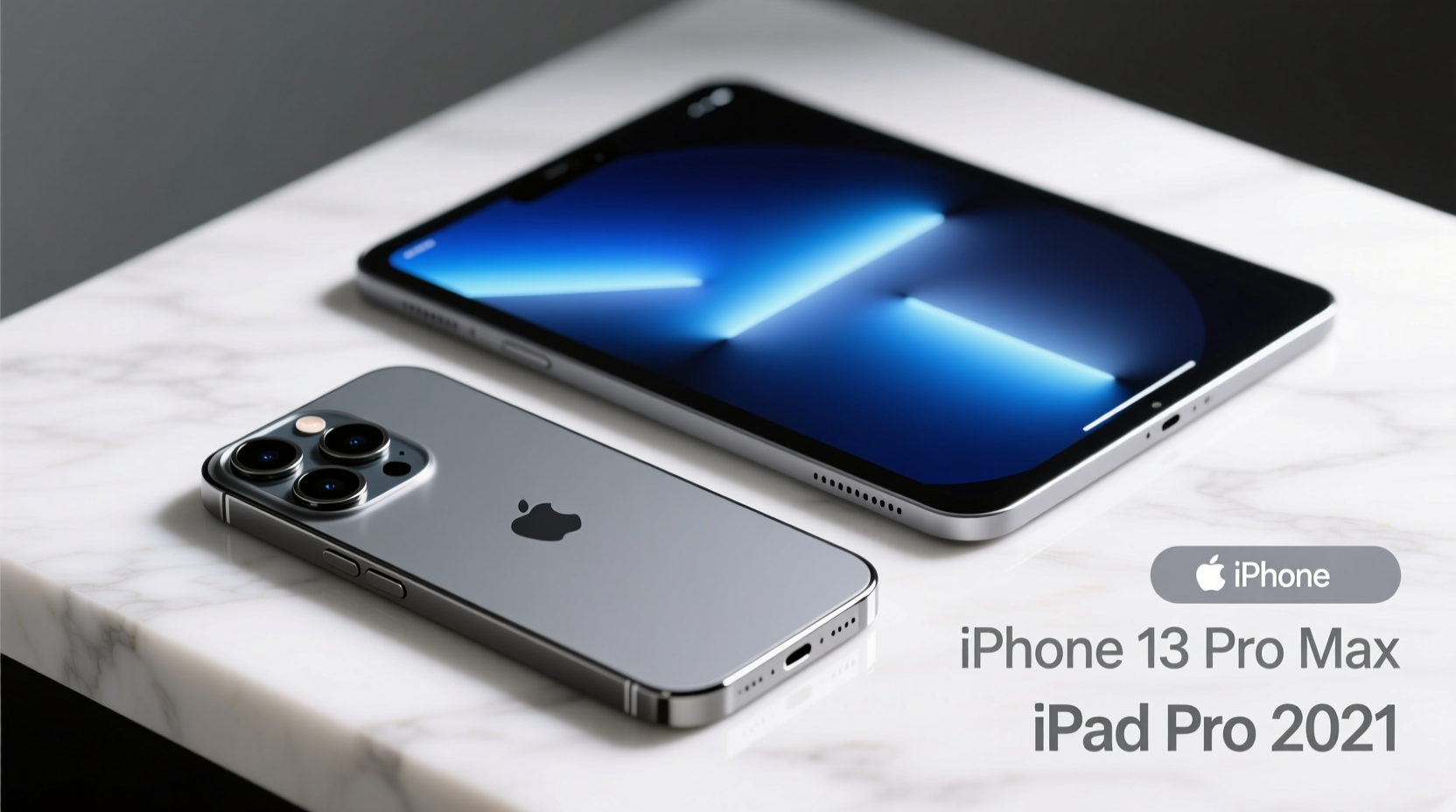
Both devices run on Apple’s M1 chip, which was revolutionary when introduced in Macs and remains powerful years later. In benchmarks, they perform almost identically in CPU and GPU tasks. Whether editing 4K video, running complex AR apps, or multitasking across demanding software, neither device stutters.
But performance isn’t just processing power. It’s thermal management, sustained workload capability, and software optimization. The iPad Pro 2021, with its larger chassis, dissipates heat more efficiently. This allows it to maintain peak performance during extended sessions — crucial for video editors rendering timelines or designers using Procreate at full canvas size.
The iPhone 13 Pro Max, while equally capable, throttles slightly under prolonged stress due to its compact design. Still, for everyday tasks — social media, email, photography, even light video editing — this difference is negligible.
Display and Usability: Screen Real Estate Matters
The 12.9-inch Liquid Retina XDR display on the iPad Pro 2021 is a technological marvel. With mini-LED backlighting, extreme brightness (up to 1600 nits), and true blacks, it rivals professional monitors. For photo retouchers, filmmakers color-grading footage, or anyone consuming HDR content, it’s unmatched in the mobile space.
In contrast, the iPhone 13 Pro Max features a 6.7-inch Super Retina XDR OLED panel. It’s stunning — sharp, vibrant, and supports ProMotion at 120Hz — but simply can't match the immersive scale of the iPad’s screen. When reviewing documents, coding, or managing spreadsheets, having multiple windows open side-by-side changes how you interact with information.
Touch interface aside, usability diverges further when accessories enter the picture. The iPad Pro supports the Magic Keyboard and Apple Pencil 2, turning it into a hybrid workstation. You can type comfortably, take handwritten notes, sketch illustrations, or manage projects in Notion with split apps.
The iPhone, despite its excellent keyboard shortcuts and cursor support in iOS, remains limited by size. Typing long emails or editing essays is possible but fatiguing over time.
“With the right setup, the iPad Pro isn’t just a consumption device — it’s a creation machine.” — David Ng, Digital Artist & iPad Workflow Consultant
Portability and Battery Life: The Daily Carry Factor
Here, the iPhone dominates. Weighing 240 grams and slipping easily into a coat pocket, the 13 Pro Max offers full cellular connectivity, Face ID, and all-day battery life without compromise. Its 4,352mAh battery lasts 20+ hours of mixed usage, enough to survive international flights or back-to-back meetings.
The iPad Pro 2021, at 682 grams (Wi-Fi model), requires a dedicated case or sleeve. While its battery lasts up to 10 hours — sufficient for most days — it doesn’t offer the same “always-on-you” reliability. Need to reply to an urgent message at a coffee shop? The iPhone is already in your hand. Need to sign a PDF or check a flight status? Same story.
Yet, the iPad wins in passive scenarios: watching movies on a plane, reading textbooks, or displaying dashboards during presentations. Its large screen reduces eye strain and enhances engagement.
Camera Capabilities: Where the Phone Pulls Ahead
This is one category where the iPhone 13 Pro Max clearly outshines the iPad Pro. Despite both having triple-lens setups with ultra-wide, wide, and telephoto sensors, only the iPhone benefits from computational photography advances like Photographic Styles, Night mode on all lenses, and Cinematic Mode for video.
The iPad’s camera system feels secondary — functional for scanning documents or joining video calls, but not designed for artistic photography. There’s no optical image stabilization on the ultra-wide lens, and low-light performance lags significantly.
If capturing moments matters — whether family events, travel scenes, or product shots for small business — the iPhone is the obvious tool. Its LiDAR scanner also enables superior AR experiences and portrait lighting effects.
Real-World Comparison: Who Should Choose What?
Consider Sarah, a freelance graphic designer who travels frequently. She owns both devices but relies on her iPad Pro for client presentations, sketching concepts with the Apple Pencil, and editing layouts in Affinity Designer. But she uses the iPhone 13 Pro Max to shoot reference photos, communicate with clients via Messages and Slack, and quickly edit Instagram content using Lightroom Mobile.
For her, the devices aren’t competitors — they’re collaborators. The iPhone captures and connects; the iPad creates and presents.
Now consider James, a sales executive who needs to stay reachable, review contracts, and join Zoom calls. He chose the iPhone 13 Pro Max over carrying an iPad because he rarely edits large documents and values being able to pull up his calendar, email, or CRM app instantly — even mid-conversation.
Their choices reflect different workflows. Neither is wrong. But if forced to pick one, James would struggle with the iPad’s lack of cellular calling. Sarah would find the iPhone too cramped for detailed design work.
Feature Comparison Table
| Feature | iPhone 13 Pro Max | iPad Pro 2021 |
|---|---|---|
| Chipset | M1 | M1 |
| Display Size | 6.7\" Super Retina XDR | 12.9\" Liquid Retina XDR (mini-LED) |
| Battery Life | Up to 28h video playback | Up to 10h web browsing |
| Camera System | Triple 12MP + Night mode + Cinematic | Triple 12MP, no Night mode |
| Calling | Yes (cellular + VoLTE) | No native dialer (FaceTime only) |
| Accessories | MagSafe, AirPods | Magic Keyboard, Apple Pencil 2 |
| Primary Use Case | Communication, photography, mobility | Creative work, multitasking, media |
Frequently Asked Questions
Can the iPad Pro replace an iPhone?
No, not fully. While the iPad can handle messaging, email, and FaceTime audio, it lacks native phone calling capabilities. You cannot receive traditional voice calls unless linked to an iPhone via Continuity.
Is the M1 chip overkill for a phone?
Possibly, but it ensures longevity. The iPhone 13 Pro Max handles future iOS updates, augmented reality apps, and advanced camera processing with ease. That headroom pays off in long-term usability.
Which device is better for note-taking?
The iPad Pro with Apple Pencil 2 is vastly superior for handwriting, sketching, or annotating PDFs. Apps like GoodNotes and Notability unlock full potential. The iPhone’s small screen limits practicality here.
Final Verdict: It Depends on Your Definition of “Better”
“Better” depends on what you prioritize. If your life revolves around communication, photography, and constant movement, the iPhone 13 Pro Max is the more essential device. It consolidates your digital identity — calls, messages, wallet, health data — into one always-available package.
But if your work involves visual creativity, document management, or multitasking across apps, the iPad Pro 2021 transforms mobile computing. With external storage support, USB-C connectivity, and desktop-class apps like Final Cut Pro and Logic Pro for iPad, it challenges traditional laptops.
Ultimately, the iPhone is the better daily driver. The iPad Pro is the better productivity enhancer. And for many, owning both creates a seamless, powerful ecosystem.




 浙公网安备
33010002000092号
浙公网安备
33010002000092号 浙B2-20120091-4
Comments
No comments yet. Why don't you start the discussion?