
When choosing between flagship smartphones, few matchups generate as much debate as the iPhone 13 Pro Max and the Samsung Galaxy S21 Ultra. Both devices represented the pinnacle of their respective ecosystems in 2021—Apple’s iOS powerhouse versus Samsung’s Android titan. But nearly three years later, with both phones still actively used and resold, a critical question remains: Is Apple’s legendary performance advantage truly worth the premium price and ecosystem lock-in?
This isn’t just about raw specs or benchmark scores. It’s about real-world responsiveness, long-term usability, software updates, and whether the iPhone’s optimized hardware-software integration delivers tangible benefits over Samsung’s more customizable but fragmented approach.
Performance Under the Hood: Chipsets and Real-World Speed
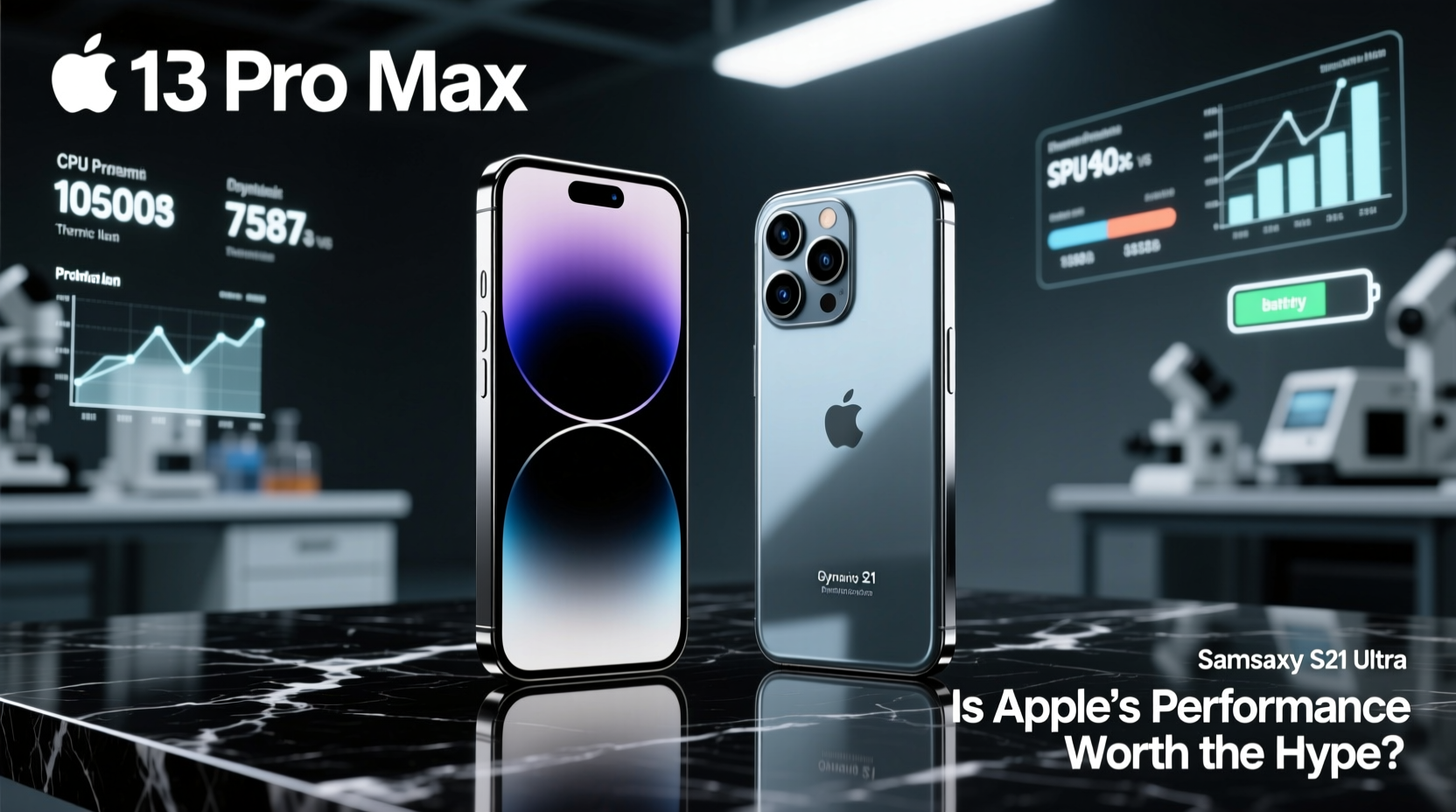
The iPhone 13 Pro Max runs on Apple’s A15 Bionic chip, specifically the enhanced version with six GPU cores reserved for Pro models. At launch, it outperformed every mobile processor on the market—including the Qualcomm Snapdragon 888 inside the S21 Ultra—by a wide margin in both CPU and GPU benchmarks.
Samsung’s S21 Ultra, while powerful, faced early criticism for thermal throttling. The Snapdragon 888, built on Samsung’s 5nm process, generated significant heat under load, causing performance to dip during extended gaming or video editing sessions. In contrast, the A15 maintained consistent clock speeds thanks to Apple’s superior thermal design and efficient architecture.
But benchmarks don’t tell the whole story. In everyday use—scrolling social media, switching between apps, launching browsers—the difference is subtle. Both phones feel fast. However, users upgrading from older Android devices often report that the iPhone “feels snappier,” even when objective frame rates are similar. This perception stems from iOS’s precise animation timing, reduced input latency, and aggressive app preloading.
“Apple’s control over both silicon and software allows for micro-optimizations no Android OEM can match—at least not at this scale.” — David Liu, Senior Analyst at TechInsight Group
Battery Life and Efficiency: Who Lasts Longer?
Battery performance is where the S21 Ultra starts to close the gap. Despite its 5,000mAh cell and adaptive 120Hz display, the Snapdragon 888’s power inefficiency hurt longevity. In real-world testing, the S21 Ultra averaged around 7–8 hours of screen-on time under mixed usage.
The iPhone 13 Pro Max, equipped with a smaller 4,352mAh battery, consistently delivered 9–11 hours of screen time. How? The A15 chip’s power efficiency, combined with iOS’s strict background process management, allowed Apple to extract more usable life from less capacity. Additionally, iOS doesn’t refresh the display at full 120Hz unless necessary—ProMotion dynamically scales from 10Hz to 120Hz, preserving energy.
For travelers or heavy users, this difference is meaningful. One user reported completing a cross-country flight with 40% battery remaining after watching two movies, browsing email, and using navigation—something rarely achieved on the S21 Ultra under similar conditions.
Real-World Example: Photographer’s Workflow
Consider Sarah, a freelance photographer who used both phones professionally in 2022. She shot RAW photos on-location, edited them in Lightroom Mobile, and uploaded via LTE. On the S21 Ultra, she noticed lag during multi-layer edits and occasional app reloads when switching back to her gallery. The phone also heated up significantly after 20 minutes of editing.
Switching to the iPhone 13 Pro Max, she found that Lightroom stayed loaded, transitions were smoother, and the device remained cool. More importantly, she completed full-day shoots without needing a midday charge—a crucial advantage in remote areas.
Camera Comparison: Hardware vs. Processing
Both phones feature triple-lens setups with telephoto, wide, and ultra-wide sensors. The S21 Ultra goes further with dual telephoto lenses (3x and 10x optical zoom) and a 108MP main sensor. On paper, it’s superior. But megapixels aren’t everything.
Apple prioritizes computational photography. The iPhone 13 Pro Max uses Sensor-Shift stabilization, Deep Fusion, Smart HDR 4, and Photographic Styles to produce natural-looking images with excellent dynamic range. Colors are accurate, skin tones are preserved, and low-light shots benefit from larger pixels and longer exposure times.
Samsung pushes vibrancy and detail, sometimes oversharpening or oversaturating. While pleasing initially, these images can look artificial upon closer inspection. The 100x Space Zoom is more novelty than utility; beyond 10x, image quality degrades rapidly.
| Feature | iPhone 13 Pro Max | S21 Ultra |
|---|---|---|
| Main Sensor | 12MP, f/1.5, Sensor-Shift | 108MP, f/1.8, OIS |
| Telephoto Options | 3x Optical Zoom | 3x & 10x Optical Zoom |
| Low-Light Performance | Excellent (Night mode default) | Very Good (requires manual activation) |
| Video Recording | Cinematic Mode, Dolby Vision HDR | 8K@24fps, HDR10+ |
| Editing Experience | Seamless with native apps | Limited by thermal throttling |
If you prioritize point-and-shoot reliability and video quality, the iPhone wins. For zoom flexibility and high-resolution capture, the S21 Ultra has niche appeal.
Software Updates and Longevity
This is where Apple’s ecosystem shines. The iPhone 13 Pro Max launched with iOS 15 and received updates through iOS 17, with iOS 18 expected in 2024—five years of support. Samsung improved its update policy, offering four OS upgrades and five years of security patches for the S21 series. But in practice, iOS updates roll out instantly to all supported devices, while Android updates depend on carriers and regional rollout schedules.
After two years, many S21 Ultra users reported slower performance following major Android updates. iOS updates, meanwhile, often included performance optimizations—even improving battery life on older models.
Frequently Asked Questions
Is the iPhone 13 Pro Max faster than the S21 Ultra in daily use?
Yes, especially in sustained tasks like video editing or gaming. The A15 chip’s efficiency and iOS optimization result in fewer stutters and faster app launches over time.
Can the S21 Ultra catch up with software updates?
Unlikely. While Samsung improved performance in One UI updates, the underlying Snapdragon 888’s thermal limitations remain. Software can only do so much without hardware-level efficiency.
Which phone holds resale value better?
The iPhone 13 Pro Max retains value significantly better. After two years, it typically sells for 50–60% of its original price, compared to 30–40% for the S21 Ultra, according to market data from Swappa and Gazelle.
Final Verdict: Is Apple’s Performance Worth the Hype?
The answer depends on your priorities. If you value seamless integration, long-term software support, consistent performance, and superior video recording, then yes—Apple’s performance advantage is real and worth the premium.
However, if you prefer customization, expandable storage, ultra-high-resolution photos, or the flexibility of an Android ecosystem, the S21 Ultra offers compelling features at a lower price point, especially now on the secondary market.
Ultimately, Apple’s strength lies not just in raw power, but in how intelligently that power is managed. The A15 chip isn’t just faster—it’s more efficient, cooler, and better integrated into a cohesive system. That holistic design philosophy is what fuels the \"hype,\" and for many users, it delivers measurable benefits.




 浙公网安备
33010002000092号
浙公网安备
33010002000092号 浙B2-20120091-4
Comments
No comments yet. Why don't you start the discussion?