
For millions of iPhone users still relying on the iPhone XR, the question isn’t whether newer models exist—it’s whether upgrading makes financial and practical sense in 2024. The iPhone 13 Pro Max, released just two generations later, represents a significant leap in technology. But does that leap justify the cost for someone already satisfied with their XR? The answer depends on your usage patterns, priorities, and how much longer you plan to keep your phone.
The iPhone XR, launched in 2018, was a groundbreaking device in Apple’s lineup—offering flagship-level performance at a more accessible price. It remains surprisingly capable in 2024, especially with iOS updates still supported through iOS 17. However, the iPhone 13 Pro Max, released in 2021, brings major advancements in display, camera, processing power, and longevity. To determine if the upgrade is worthwhile, we need to compare them across key categories and consider real-world implications.
Performance: A Clear Generational Gap
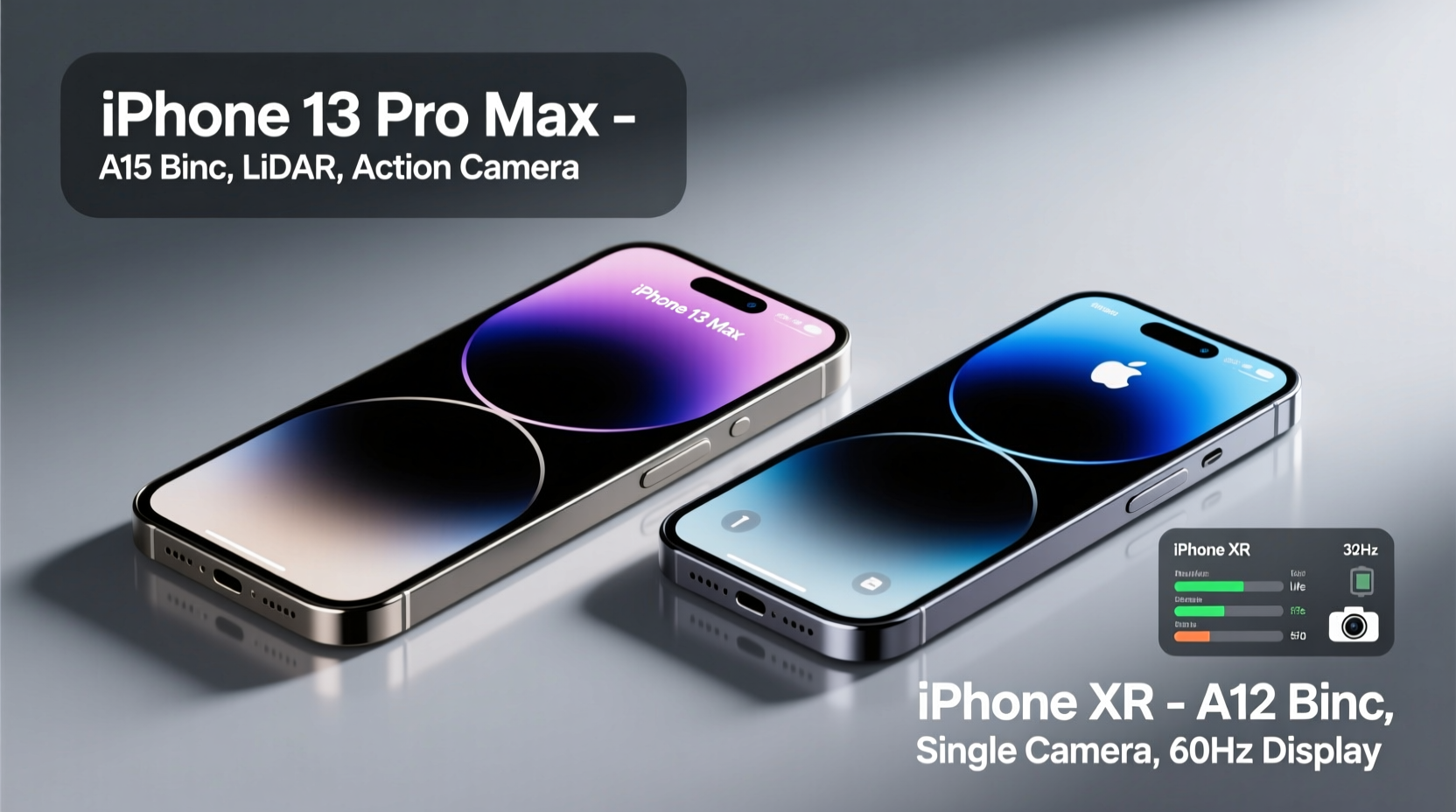
At the heart of any smartphone decision is performance. The iPhone XR runs on the A12 Bionic chip—a solid performer in its time, but now showing its age under heavy workloads. In contrast, the iPhone 13 Pro Max features the A15 Bionic chip with a 5-core GPU (in the Pro variant), delivering up to 50% faster graphics performance.
This difference manifests in everyday use. Apps launch noticeably faster on the 13 Pro Max. Multitasking between demanding apps like video editors, games, and augmented reality tools is smoother. Even routine tasks like scrolling through social media or switching between Safari tabs feel more fluid thanks to the combination of the A15 and 6GB of RAM (versus 3GB in the XR).
Benchmark data confirms this: the A15 scores nearly double the CPU and triple the GPU performance of the A12 in tools like Geekbench and GFXBench. For users who push their phones beyond basic functions, the upgrade offers tangible benefits.
Display Quality: From Good to Exceptional
The iPhone XR uses a 6.1-inch Liquid Retina LCD display with a resolution of 1792×828 pixels and a standard 60Hz refresh rate. While bright and colorful, it lacks the depth and smoothness of modern OLED panels.
The iPhone 13 Pro Max, on the other hand, features a 6.7-inch Super Retina XDR OLED display with a resolution of 2778×1284 pixels and Apple’s ProMotion technology—supporting adaptive refresh rates from 10Hz to 120Hz. This means smoother scrolling, reduced motion blur, and better responsiveness during gaming or handwriting input.
The visual difference is stark. Blacks are truly black on the OLED screen, colors are more accurate, and HDR content (like videos on Netflix or YouTube) looks dramatically better. The larger screen also enhances media consumption and multitasking, especially with Split View in compatible apps.
“Display quality affects every interaction you have with your phone. Upgrading from an LCD to a 120Hz OLED is one of the most impactful changes a user can experience.” — David Lin, Mobile UX Analyst at TechInsight Group
Camera Comparison: Night Mode, Zoom, and Pro Features
The camera systems between these two phones reflect a shift from consumer-grade to professional-grade photography.
- iPhone XR: Single 12MP wide camera, no optical zoom, limited low-light performance, no Night mode.
- iPhone 13 Pro Max: Triple-camera system (12MP wide, ultra-wide, telephoto), 3x optical zoom, Night mode on all lenses, Sensor-shift stabilization, ProRes video recording.
In daylight, both capture solid images, though the 13 Pro Max produces more dynamic range and detail. The real difference emerges in low light. The XR struggles with noise and exposure, while the 13 Pro Max delivers clean, well-lit photos thanks to advanced computational photography.
Zoom capability is another game-changer. The XR relies entirely on digital zoom, which degrades image quality quickly. The 13 Pro Max offers 3x optical zoom and up to 15x digital zoom with usable results, making it far more versatile for distant subjects.
| Feature | iPhone XR | iPhone 13 Pro Max |
|---|---|---|
| Rear Cameras | 1 (Wide) | 3 (Wide, Ultra-Wide, Telephoto) |
| Optical Zoom | None | 3x in, 2x out |
| Night Mode | No | Yes (all lenses) |
| Video Recording | 4K@60fps | 4K@60fps + ProRes, Cinematic Mode |
| Front Camera | 7MP | 12MP + Auto-Focus |
Battery Life and Longevity in 2024
The iPhone XR was praised for its battery life at launch, offering around 12–14 hours of mixed usage. By 2024, however, battery degradation is common—even with optimal charging habits. Most used XR units today likely deliver only 70–80% of original capacity, meaning shorter daily endurance.
The iPhone 13 Pro Max boasts one of the best battery lives in any iPhone, regularly achieving 18–24 hours of use depending on settings. This is due to both a larger battery and improved efficiency from the A15 chip and iOS 15+ optimizations.
If you’re someone who travels often, works remotely, or dislikes midday charging, the 13 Pro Max’s stamina is a major advantage. It can easily last a full day of heavy use—and sometimes stretch into a second day with lighter loads.
Real-World Example: Sarah’s Upgrade Dilemma
Sarah has used her iPhone XR since 2019. She takes occasional photos, uses messaging and navigation apps daily, and watches videos during commutes. Her phone still works, but apps take longer to load, and the battery dies by 6 PM.
She considered the iPhone 13 Pro Max but hesitated at the $1,000+ price tag. After testing one in-store, she noticed immediate improvements: apps opened instantly, videos looked sharper, and the camera captured clearer night shots of her kids’ events. She also realized she could trade in her XR for about $150 and buy a refurbished 13 Pro Max for around $700.
For Sarah, the upgrade wasn’t about chasing specs—it was about regaining reliability and enjoyment from her device. Six months later, she reports less frustration, longer productivity, and greater satisfaction with her phone overall.
Is Upgrading Worth It in 2024? A Step-by-Step Decision Guide
Before making the jump, follow this logical sequence to assess your needs:
- Evaluate current pain points: Is your XR slow, lagging, or failing to hold a charge?
- Test the 13 Pro Max: Visit an Apple Store or borrow one to experience the display, camera, and responsiveness firsthand.
- Check trade-in value: Use Apple’s trade-in tool to see how much credit you can get for your XR.
- Consider refurbished options: Certified pre-owned 13 Pro Max units offer 90% of the experience at 30–40% lower cost.
- Project future use: Do you plan to keep your next phone for 3+ years? If so, investing in a more durable, supported model makes sense.
Frequently Asked Questions
Will the iPhone XR stop working in 2024?
No. The XR supports iOS 17 and will likely receive security updates into 2025. However, app developers are increasingly optimizing for newer hardware, which may affect long-term compatibility.
Can I notice the 120Hz screen in daily use?
Yes. Once you’ve used a 120Hz display, returning to 60Hz feels sluggish. Scrolling, animations, and gameplay all benefit from the smoother refresh rate.
Is the camera upgrade worth the cost?
If you value photography—especially in low light, zoom, or video—the improvement is substantial. For casual shooters, it’s less critical but still impressive.
Final Verdict: Who Should Upgrade?
Upgrading from the iPhone XR to the iPhone 13 Pro Max in 2024 is not essential for everyone—but it is highly beneficial for specific users:
- Those experiencing battery degradation or performance slowdowns.
- Users who consume media, play games, or multitask heavily.
- Photography enthusiasts wanting better low-light and zoom capabilities.
- People planning to keep their phone for 3+ years and want longer software support.
If your XR still meets your needs and you’re on a tight budget, extending its life with a battery replacement or using it as a secondary device may be smarter. But if you’re ready for a more powerful, future-proof experience, the iPhone 13 Pro Max delivers meaningful improvements that justify the investment.




 浙公网安备
33010002000092号
浙公网安备
33010002000092号 浙B2-20120091-4
Comments
No comments yet. Why don't you start the discussion?