
The leap between iPhone generations often brings subtle but meaningful improvements, especially in display technology. For users still holding onto an iPhone 11 Pro, the decision to upgrade to the iPhone 13 Pro isn't just about raw performance or camera upgrades—it's also about how the device feels in daily use. And at the heart of that experience is the screen. Is the jump from the 11 Pro to the 13 Pro worth it purely for the display? The answer depends on what you value: screen size, brightness, smoothness, durability, and overall visual fidelity.
Screen Size and Design Evolution
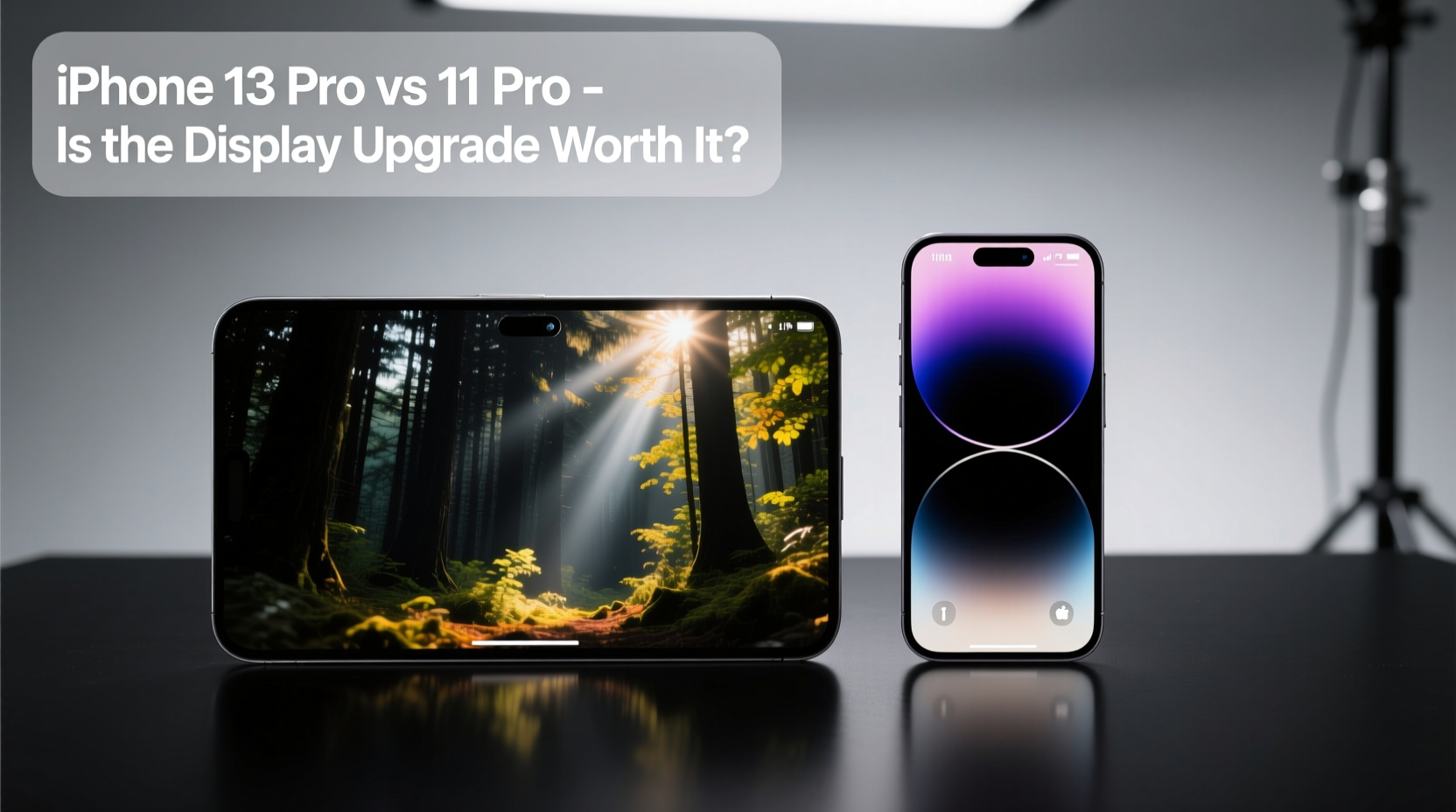
At first glance, the screen sizes of the iPhone 11 Pro and iPhone 13 Pro appear nearly identical—both feature a 6.1-inch OLED display. However, subtle design changes make a noticeable difference in real-world usage. Apple redesigned the front layout with the iPhone 13 series, reducing the notch size by approximately 20%. While this doesn’t increase the actual screen area, it improves screen-to-body ratio and gives a slightly more immersive feel, particularly when watching videos or browsing full-screen content.
The bezels on the 13 Pro are marginally thinner, and the curvature of the screen edges has been refined for better edge touch response. These tweaks don’t change the fundamental screen size, but they do enhance the perception of space and usability.
Brightness and Outdoor Visibility
One of the most significant display upgrades from the 11 Pro to the 13 Pro lies in brightness. The iPhone 11 Pro offers a peak brightness of around 800 nits, which was excellent for its time. The iPhone 13 Pro, however, pushes up to 1,000 nits under typical conditions and reaches a staggering 1,200 nits in HDR mode. This improvement is immediately noticeable in direct sunlight, where text remains crisp and colors stay vibrant even under harsh conditions.
This enhanced luminance isn’t just a spec boost—it translates into practical benefits. Reading maps outdoors, checking messages in bright daylight, or viewing photos outside becomes significantly less frustrating. For professionals who rely on their phones for photo review or video editing in variable lighting, the 13 Pro’s display is a clear step forward.
“Display brightness isn’t just about comfort—it impacts usability, accessibility, and color accuracy in real-world environments.” — Dr. Lena Torres, Display Technology Researcher, MIT Media Lab
ProMotion and 120Hz Refresh Rate
The single most transformative display upgrade in the iPhone 13 Pro is the introduction of ProMotion technology—a 120Hz adaptive refresh rate. The iPhone 11 Pro is limited to a standard 60Hz refresh rate, which, while smooth for basic tasks, feels dated compared to modern high-refresh displays.
With ProMotion, scrolling through feeds, swiping between apps, and even typing become noticeably smoother. The system intelligently scales the refresh rate from 10Hz to 120Hz based on content, balancing fluidity with battery efficiency. Animations feel more responsive, games run more smoothly, and the entire interface appears more “alive.”
While screen size hasn’t changed, the higher refresh rate effectively makes the same 6.1 inches feel more dynamic and engaging. Users upgrading from the 11 Pro often describe the difference as “going from butter to silk.”
Real-World Example: Daily Use Comparison
Consider Sarah, a freelance photographer who used her iPhone 11 Pro for five years. She upgraded to the 13 Pro primarily for better photo review capabilities. Initially skeptical about the value of a higher refresh rate, she noticed immediate improvements: panning across high-resolution images felt seamless, and adjusting sliders in Lightroom became far more precise. Combined with the brighter screen, she could now assess exposure and color balance accurately even on outdoor shoots. For her, the display upgrade alone justified the move—even without major changes in screen size.
Durability and Protection: Ceramic Shield and Scratch Resistance
Another often-overlooked aspect of display quality is durability. The iPhone 13 Pro features Apple’s Ceramic Shield front cover, which Apple claims offers four times better drop performance than previous models. Independent lab tests have confirmed improved resistance to cracks and micro-scratches, especially along the screen edges.
In contrast, the iPhone 11 Pro uses a traditional glass formulation that, while durable, is more prone to chipping when dropped on hard surfaces. Over time, everyday wear—keys in pockets, placement on rough surfaces—can degrade clarity and touch sensitivity. The 13 Pro’s tougher surface maintains optical quality longer, preserving the premium look and feel of the display over extended use.
Display Specifications Compared
| Feature | iPhone 11 Pro | iPhone 13 Pro |
|---|---|---|
| Screen Size | 6.1 inches | 6.1 inches |
| Panel Type | OLED | OLED (Super Retina XDR) |
| Refresh Rate | 60Hz | Adaptive 10–120Hz (ProMotion) |
| Peak Brightness (HDR) | 800 nits | 1,200 nits |
| Typical Brightness | 625 nits | 1,000 nits |
| Front Glass | Standard Glass | Ceramic Shield |
| Notch Size | Larger | Reduced by ~20% |
Is the Upgrade Worth It for the Display Alone?
If you're asking whether the display improvements justify the upgrade from the 11 Pro to the 13 Pro, the answer hinges on your expectations and usage patterns.
For casual users who mostly browse, message, and stream content indoors, the 11 Pro’s screen is still perfectly functional. The core experience—color accuracy, resolution, and touch responsiveness—isn’t obsolete. But if you spend long hours on your phone, work outdoors, edit media, or simply appreciate a smoother, brighter, and more durable display, the 13 Pro delivers tangible benefits.
The 120Hz ProMotion display is arguably the most impactful change. Once experienced, returning to 60Hz feels like stepping back in time. Combine that with superior brightness and better durability, and the display becomes a compelling reason to upgrade—even without a larger screen.
Checklist: Should You Upgrade for the Display?
- ✅ Do you frequently use your phone outdoors?
- ✅ Are you sensitive to screen smoothness or animation lag?
- ✅ Do you review photos or videos on your phone?
- ✅ Have you noticed screen scratches or dim visibility in sunlight?
- ✅ Are you ready for a more responsive, future-proof interface?
If you answered yes to three or more, the display upgrade alone may be worth the investment.
Frequently Asked Questions
Does the iPhone 13 Pro have a bigger screen than the 11 Pro?
No, both models have a 6.1-inch OLED display. However, the 13 Pro features a smaller notch and slightly thinner bezels, giving a more modern and immersive look despite the same screen size.
Is the 120Hz refresh rate really that noticeable?
Yes. The difference is most apparent during scrolling, gaming, and app transitions. Once you’ve used a 120Hz display, returning to 60Hz feels sluggish and less responsive, especially in fast-paced interactions.
Can I expect better battery life with the adaptive refresh rate?
Yes. The 13 Pro’s ProMotion display dynamically adjusts the refresh rate based on content, dropping as low as 10Hz for static screens like reading or maps. This helps conserve battery while maintaining performance where needed.
Final Verdict
The iPhone 13 Pro doesn’t offer a larger screen than the 11 Pro, but it redefines what that screen can do. Brighter, smoother, more durable, and more efficient—the display upgrades are not just incremental but transformative for daily usability. For users who value visual clarity, responsiveness, and outdoor functionality, the leap in display quality alone can justify the upgrade.
Technology evolves not just in size, but in sophistication. The 13 Pro proves that sometimes, the same number of inches can deliver a vastly different experience.




 浙公网安备
33010002000092号
浙公网安备
33010002000092号 浙B2-20120091-4
Comments
No comments yet. Why don't you start the discussion?