
By 2024, both the iPhone 13 Pro and Galaxy S23 Plus are well into their lifecycle, yet they remain relevant contenders for users considering an upgrade. With newer models like the iPhone 15 series and Galaxy S24 lineup on the market, many owners of the iPhone 13 Pro or older Android devices are asking: is switching to the Galaxy S23 Plus—or sticking with Apple’s ecosystem—still a smart move? The answer depends on your priorities: longevity, software support, camera quality, performance, and long-term value.
This comparison dives deep into real-world usability, future-proofing, and cost-effectiveness to help you determine whether making the leap in 2024 is justified.
Performance and Longevity: A Closer Look at Chipsets
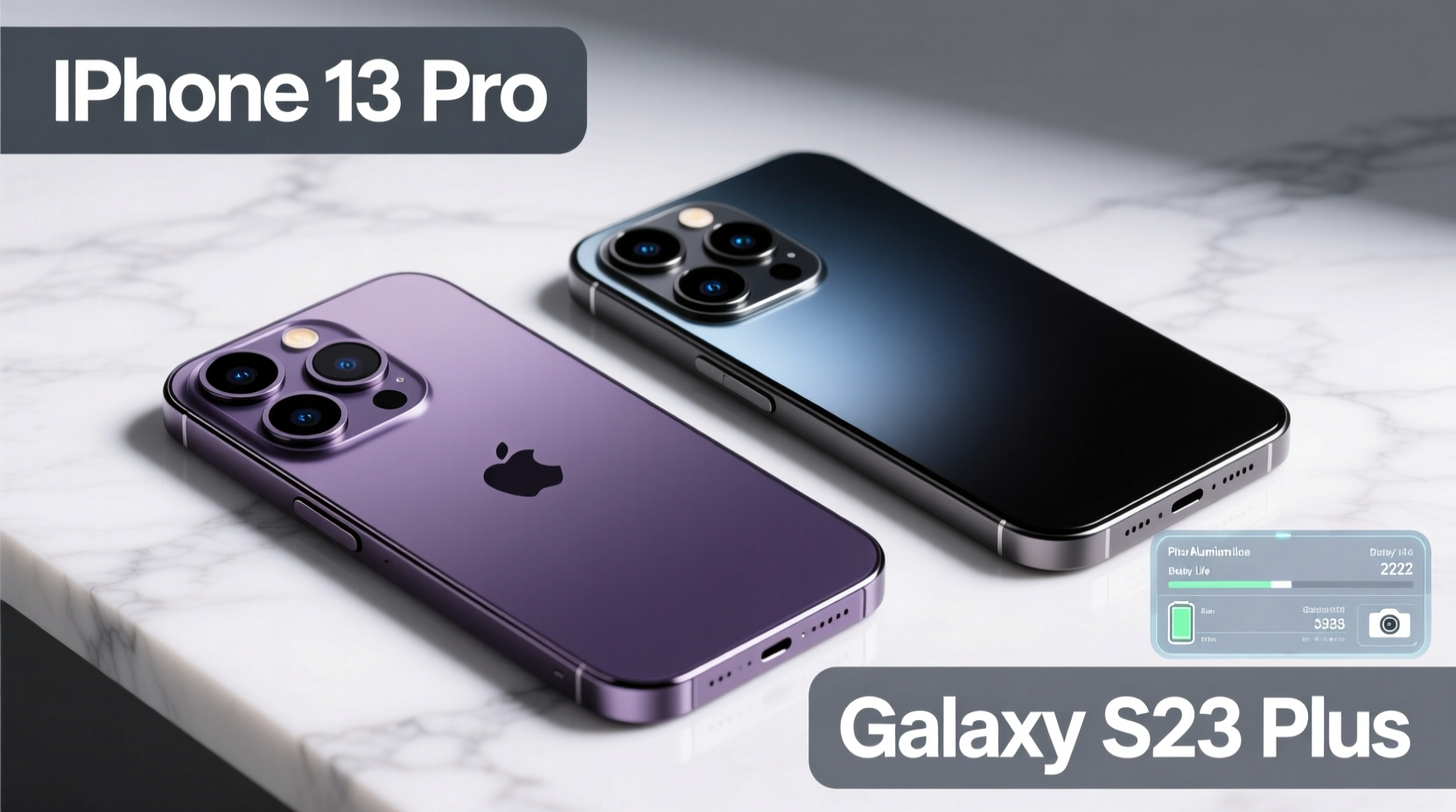
The heart of any smartphone is its processor, and in this matchup, both devices deliver strong performance despite being a few generations old.
The iPhone 13 Pro runs on Apple’s A15 Bionic chip, specifically the version with a 5-core GPU—a configuration exclusive to the Pro models. Even in 2024, the A15 remains highly capable. It handles intensive tasks like video editing, gaming, and multitasking with ease. iOS optimization further extends its lifespan, allowing smooth operation well beyond typical Android device timelines.
On the other side, the Galaxy S23 Plus uses Qualcomm’s Snapdragon 8 Gen 2 for Galaxy, a customized chipset built exclusively for Samsung. This SoC outperforms standard Snapdragon 8 Gen 2 variants and competes closely with the A15 in CPU tasks. In GPU benchmarks, it slightly lags behind the A15 but still delivers excellent performance for mobile gaming and high-resolution media.
However, real-world longevity isn’t just about raw power—it's also about software support. Apple guarantees iOS updates for the iPhone 13 Pro until at least 2027, possibly extending to 2028. Samsung promises four major Android OS upgrades and five years of security patches for the S23 series, meaning support will likely end by 2027. Both offer comparable lifespans, but Apple’s track record gives it a slight edge in consistency.
Camera Comparison: Still Relevant in 2024?
Photography remains a key deciding factor for many users. Let’s break down how these two flagships perform today.
The iPhone 13 Pro features a triple-camera system: 12MP main, ultra-wide, and telephoto (3x optical zoom). Its strengths lie in color accuracy, dynamic range, and video recording. The introduction of Cinematic Mode and improved Night mode made it a standout in 2021, and those features still hold up remarkably well. Video capabilities, especially Dolby Vision HDR recording, remain best-in-class—even when compared to newer Android phones.
The Galaxy S23 Plus, meanwhile, has a dual 50MP main + 10MP telephoto (3x zoom) setup, omitting the ultra-wide sensor found on the Ultra model. While the pixel-binning technology produces sharp daylight photos, low-light performance shows more noise than the iPhone. However, Samsung’s AI-powered processing excels in enhancing colors and contrast, appealing to users who prefer vibrant, social media-ready shots.
“Even in 2024, the iPhone 13 Pro captures some of the most natural-looking photos in its class—especially in mixed lighting.” — David Lin, Mobile Photography Analyst at TechPulse
For videographers, the iPhone continues to lead. For casual photographers who enjoy editing flexibility, the S23 Plus offers great results but may require more post-processing to match Apple’s consistency.
Battery Life and Charging: Real-World Endurance
Daily battery life is where the Galaxy S23 Plus pulls ahead. Equipped with a 5,000mAh battery, it consistently lasts a full day and a half under moderate use. Fast charging (45W) allows a 0–100% charge in about 60 minutes, though the charger is sold separately.
The iPhone 13 Pro, with its 3,095mAh battery, relies heavily on efficiency from the A15 chip and iOS optimization. It manages a solid one-day battery life, but heavy users may need to recharge by late evening. Charging remains slow—20W wired max, no included charger, and MagSafe topping out at 15W.
| Feature | iPhone 13 Pro | Galaxy S23 Plus |
|---|---|---|
| Battery Capacity | 3,095 mAh | 5,000 mAh |
| Charging Speed (Wired) | Up to 20W | Up to 45W |
| Wireless Charging | Yes (MagSafe & Qi) | Yes (Qi/PMA) |
| Typical Daily Use | One day (heavy use may require recharge) | One to one-and-a-half days |
User Experience and Ecosystem Fit
Your choice may ultimately come down to ecosystem loyalty. If you own other Apple devices—Mac, iPad, AirPods, Apple Watch—the iPhone 13 Pro integrates seamlessly. Features like AirDrop, Handoff, Universal Clipboard, and iMessage continuity enhance productivity and convenience.
The Galaxy S23 Plus shines within the Samsung ecosystem. With a Galaxy Watch, Buds, or Tab S-series tablet, you gain DeX support, Quick Share, and multi-control clipboard. Samsung also offers robust customization through One UI, including themes, icon packs, and deeper settings access—something iOS restricts.
In terms of software, iOS remains simpler and more consistent, while One UI provides greater flexibility. Privacy-wise, both platforms have strengthened protections, but Apple emphasizes on-device processing and transparency, which appeals to privacy-conscious users.
Mini Case Study: Sarah’s Upgrade Dilemma
Sarah has used her iPhone 13 Pro since 2021. By early 2024, she noticed slower app launches and occasional stutters in games. Her battery health dropped to 82%, requiring midday charging. She considered switching to Android for better battery life and faster charging.
After testing the Galaxy S23 Plus at a store, she appreciated the brighter display and longer endurance. However, she missed iMessage, FaceTime grid view, and seamless syncing with her MacBook. She also disliked Samsung’s pre-installed apps and ad-like suggestions in the app drawer.
In the end, Sarah decided to replace her iPhone 13 Pro battery ($89) and continue using it until iOS 18 showed signs of slowing it down. She concluded that for her workflow and ecosystem reliance, staying with iOS offered better long-term value than switching platforms.
Is Upgrading Worth It in 2024? A Step-by-Step Decision Guide
Before making a decision, follow this practical timeline to assess your needs:
- Evaluate Current Device Health: Check battery health (Settings > Battery > Battery Health on iPhone; third-party apps on Android). Below 80% often signals degradation.
- Assess Performance Needs: Are apps crashing? Is the camera struggling in low light? Does multitasking lag?
- Review Ecosystem Ties: Do you rely on cloud sync, wearables, or cross-device workflows?
- Compare Costs: New S23 Plus retails around $899; refurbished units start at $550. iPhone 13 Pro starts at $650 used. Consider repair costs too.
- Test Alternatives: Try both devices in-store. Pay attention to weight, screen quality, and one-handed usability.
- Project Future Use: Will you keep the phone for 2+ more years? If yes, prioritize software support and durability.
Checklist: Should You Upgrade?
- ✅ Battery drains before end of day consistently
- ✅ Camera no longer meets your standards
- ✅ Apps feel sluggish or frequently crash
- ✅ Missing critical features (e.g., USB-C, fast charging, expandable storage)
- ✅ You’re ready to switch ecosystems (iOS ↔ Android)
Frequently Asked Questions
Should I upgrade from iPhone 13 Pro to Galaxy S23 Plus in 2024?
If you value longer battery life, faster charging, and a more customizable interface, the switch can be worthwhile. However, if you depend on Apple’s ecosystem and prefer consistent software updates, staying put—or upgrading to a newer iPhone—might be smarter.
Does the Galaxy S23 Plus outperform the iPhone 13 Pro in daily use?
In raw specs and battery capacity, yes. But the iPhone 13 Pro compensates with superior optimization, longer update support, and smoother app experiences due to iOS efficiency. Real-world performance differences are minimal for most users.
Can either phone last until 2026?
Possibly. The iPhone 13 Pro is more likely to run iOS 19 or 20 smoothly, given Apple’s update history. The S23 Plus should receive Android 14–17, but heavier skins like One UI may cause slowdowns over time. Proper maintenance improves odds for both.
Final Verdict: To Upgrade or Not?
The decision isn’t purely technical—it’s personal. The iPhone 13 Pro remains a capable device in 2024, especially for users satisfied with iOS and Apple’s ecosystem. Its camera, build quality, and long-term support make it a durable choice.
The Galaxy S23 Plus offers tangible improvements: larger battery, faster charging, and a modern design with USB-C. It’s ideal for Android loyalists or those seeking a performance boost without jumping to the Ultra tier.
But “worth it” depends on your current situation. If your iPhone 13 Pro still performs well, consider a battery replacement instead. If you're on an older Android phone and want a premium experience, the S23 Plus delivers excellent value—especially at discounted prices in 2024.




 浙公网安备
33010002000092号
浙公网安备
33010002000092号 浙B2-20120091-4
Comments
No comments yet. Why don't you start the discussion?