
For millions of iPhone users still holding onto their iPhone 8 Plus, the question isn’t whether newer models exist—it’s whether upgrading makes financial and practical sense. The iPhone 13 Pro represents a significant leap in Apple’s smartphone evolution, but so does the price. If you’re weighing the real-world benefits of moving from the 8 Plus to the 13 Pro, this analysis cuts through the marketing hype to deliver a clear answer.
The iPhone 8 Plus, released in 2017, was a powerhouse in its time—featuring a dual-camera system, solid build quality, and reliable performance. But nearly six years later, technology has evolved dramatically. The iPhone 13 Pro, launched in 2021, brings advancements that touch every aspect of the user experience: processing power, display technology, camera capabilities, battery life, and long-term software support.
This isn’t just about specs on a datasheet. It’s about how those improvements translate into daily use—does your phone feel faster? Do photos look better in low light? Does it last through a full day of heavy use? And ultimately, can you justify spending hundreds of dollars more?
Performance and Speed: A Night-and-Day Difference
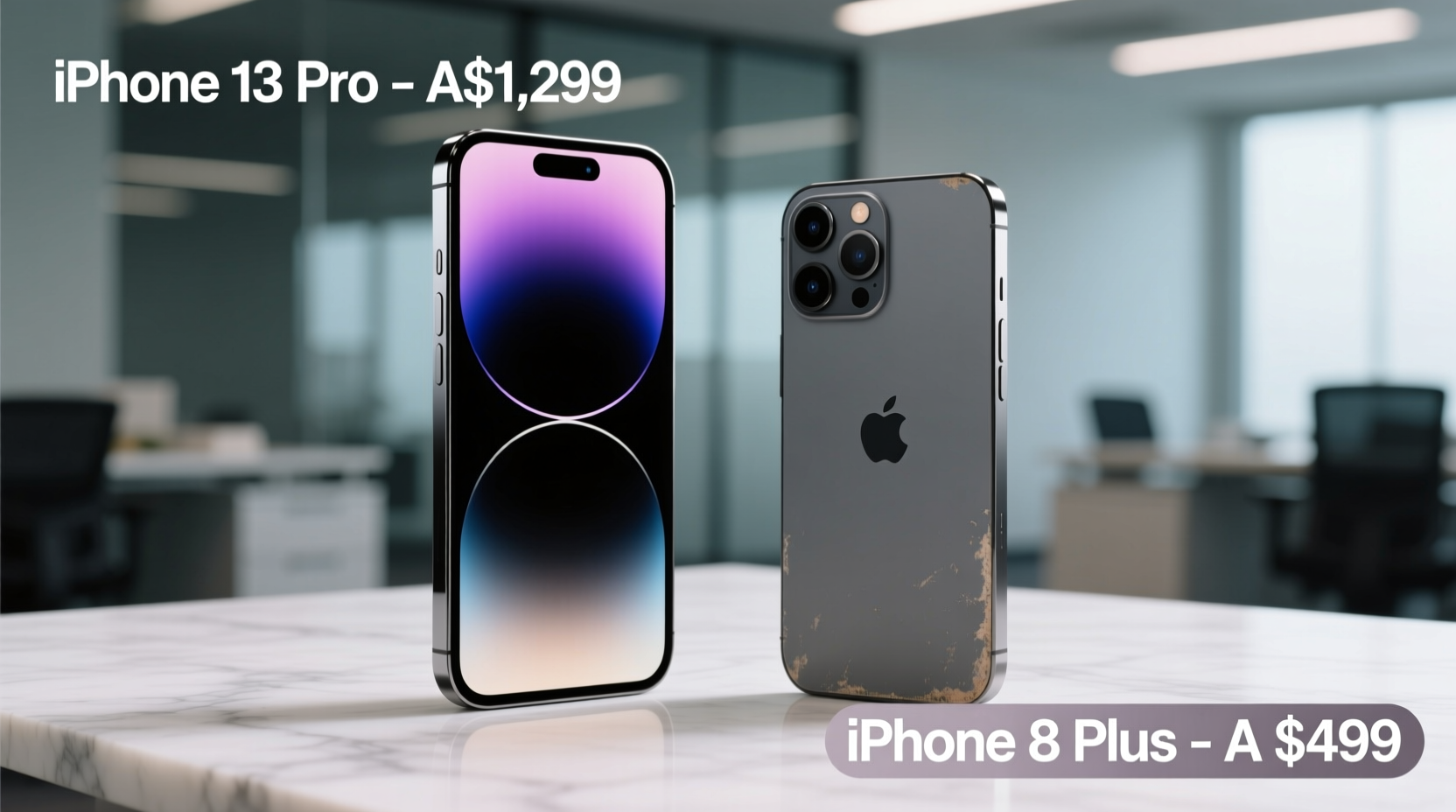
The heart of any smartphone is its processor. The iPhone 8 Plus runs on the A11 Bionic chip, which was impressive in 2017 but now struggles with modern multitasking demands. In contrast, the iPhone 13 Pro features the A15 Bionic chip—one of the most powerful mobile processors ever made.
Benchmarks show the A15 delivering up to **three times** the CPU and GPU performance of the A11. Real-world usage reflects this gap: apps launch instantly, games run smoothly at high frame rates, and complex tasks like video editing or AR experiences are no longer sluggish or impossible.
Additionally, the iPhone 13 Pro includes 6GB of RAM compared to the 8 Plus’s 3GB. This allows for smoother app switching and better handling of resource-heavy applications like Photoshop Express or Final Cut Rush.
Display Quality: From Good to Exceptional
The iPhone 8 Plus features a 5.5-inch LCD Retina HD display with a resolution of 1920x1080. While sharp for its era, it lacks the vibrancy and contrast of modern OLED panels. The iPhone 13 Pro, on the other hand, boasts a 6.1-inch Super Retina XDR OLED display with HDR support, higher brightness (up to 1000 nits), and ProMotion technology with a 120Hz adaptive refresh rate.
This means scrolling feels buttery smooth, animations are more responsive, and videos appear richer and more cinematic. For anyone who consumes media regularly—whether YouTube, Netflix, or reading long articles—the upgrade is immediately noticeable.
“Moving from an LCD screen to a 120Hz OLED is one of the most tangible improvements in smartphone UX over the past decade.” — David Kim, Mobile Experience Analyst at TechPulse Insights
Camera Capabilities: More Than Just Megapixels
The camera is where the iPhone 13 Pro pulls ahead most dramatically. Both phones have dual rear cameras, but the technological gap is vast.
| Feature | iPhone 8 Plus | iPhone 13 Pro |
|---|---|---|
| Main Sensor | 12MP f/1.8 | 12MP f/1.5 (larger sensor) |
| Telephoto Lens | 12MP f/2.8 | 12MP f/2.8 with improved zoom |
| Ultra-Wide Lens | None | 12MP f/1.8 (new addition) |
| Night Mode | No | Yes (all lenses) |
| ProRes Video | No | Yes (4K up to 30fps) |
| Sensor-Shift Stabilization | No | Yes (main camera) |
The inclusion of an ultra-wide lens opens creative possibilities for landscape and architectural shots. Night mode dramatically improves low-light photography—something the 8 Plus simply cannot match. And sensor-shift stabilization ensures sharper images and smoother video, even when walking.
One real-world example: Sarah, a small business owner using her phone for product photography, upgraded from an 8 Plus to a 13 Pro. She noticed immediate improvements in image clarity and color accuracy, reducing her need for post-processing. “I used to take five shots to get one good one,” she said. “Now, four out of five are usable.”
Battery Life and Charging: Practical Daily Impact
The iPhone 8 Plus had decent battery life for its time, lasting around 10–12 hours of mixed use. However, the iPhone 13 Pro offers up to **22 hours** of video playback and consistently lasts a full day—even with heavy usage.
This improvement comes from both a larger battery and the A15 chip’s superior energy efficiency. Additionally, the 13 Pro supports fast charging (50% in 30 minutes with a 20W adapter) and MagSafe wireless charging—neither of which the 8 Plus supports.
Software Support and Future-Proofing
Apple typically provides iOS updates for around 5–6 years. The iPhone 8 Plus received its last major update with iOS 16 and may not be supported beyond 2023–2024. In contrast, the iPhone 13 Pro will likely receive updates until at least 2027.
This longevity matters. New features, security patches, and app compatibility depend on up-to-date software. As developers optimize for newer hardware, older devices become slower or lose functionality entirely. Upgrading now ensures you’ll stay secure and compatible for years.
Is the Upgrade Worth the Money? A Cost-Benefit Breakdown
The iPhone 13 Pro starts at $999, while many iPhone 8 Plus units can be sold for $100–$150 depending on condition. That puts the net cost between $850 and $900—a steep investment.
But consider what you're gaining:
- 3+ more years of iOS support
- Dramatically better camera for photos and video
- Noticeably longer battery life
- Faster performance for multitasking and future apps
- Modern features like Face ID, MagSafe, and ProMotion display
If you rely on your phone for work, creativity, or communication, these upgrades compound in value. For casual users who mainly text and browse, the jump might feel less essential—but even then, the improved battery and camera often tip the balance.
Checklist: Should You Upgrade?
- ✅ Is your iPhone 8 Plus showing signs of slowdown or battery degradation?
- ✅ Do you want better photos, especially in low light?
- ✅ Are you frustrated by short battery life?
- ✅ Do you plan to keep your next phone for 3+ years?
- ✅ Can you resell your 8 Plus to offset costs?
If you answered yes to three or more, upgrading is likely worth it.
Frequently Asked Questions
Can the iPhone 8 Plus still handle everyday tasks?
Yes, for basic functions like calling, texting, email, and light browsing. However, newer apps may run slowly, and iOS updates are ending soon.
Is the iPhone 13 Pro too advanced for average users?
No. While it has pro-level features, the core experience—speed, battery, camera—is beneficial to all users, regardless of technical skill.
Are there cheaper alternatives to the iPhone 13 Pro?
Absolutely. The iPhone 13 (non-Pro) offers 90% of the performance and camera quality at a lower price. Even the iPhone SE (2022 or 2023) provides A15 speed in a compact form.
Final Verdict: To Upgrade or Not?
Upgrading from the iPhone 8 Plus to the iPhone 13 Pro isn’t just about having the latest gadget—it’s about investing in a device that performs reliably, captures life more vividly, and stays relevant longer. The cost is significant, but so are the gains in usability, efficiency, and enjoyment.
If your current phone is struggling to keep up, or if you find yourself missing photo opportunities due to poor low-light performance, the upgrade pays for itself in daily convenience and capability. Technology should serve you, not hold you back. When your phone becomes a bottleneck, it’s time to move forward.




 浙公网安备
33010002000092号
浙公网安备
33010002000092号 浙B2-20120091-4
Comments
No comments yet. Why don't you start the discussion?