
For many long-time Samsung Galaxy Note 9 users, the idea of switching to an iPhone—especially a modern one like the iPhone 13 Pro—can feel like crossing a digital border. The Note 9, released in 2018, was a powerhouse in its time, known for its stylus functionality, expansive display, and robust build. But nearly five years later, technology has evolved dramatically. With newer chipsets, advanced cameras, and vastly improved software ecosystems, the iPhone 13 Pro represents a generational leap. So, is upgrading from the Note 9 to the iPhone 13 Pro truly worth it? The answer depends on your priorities: performance, photography, longevity, ecosystem integration, and daily usability.
Performance: A Quantum Leap in Speed and Efficiency
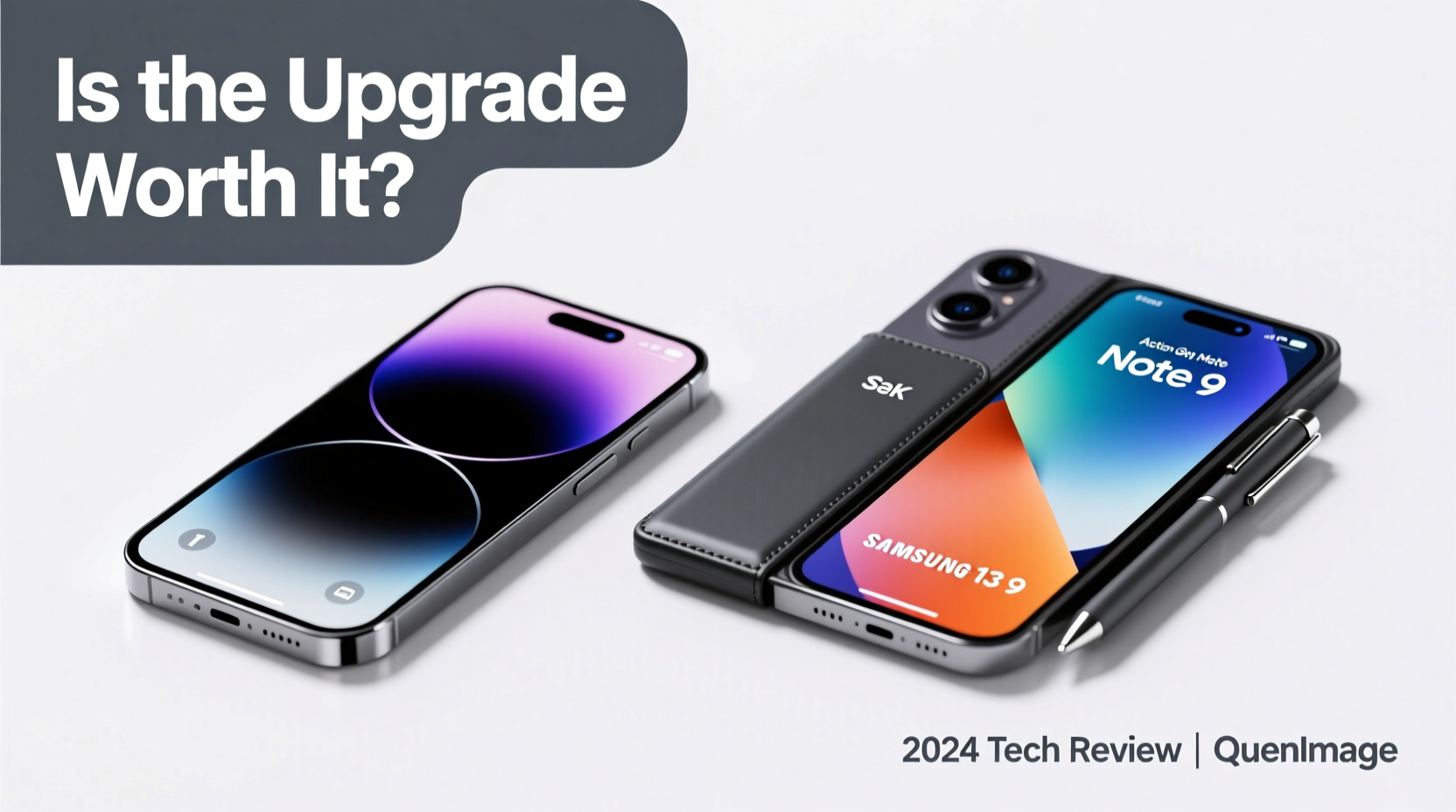
The core difference between the Note 9 and the iPhone 13 Pro lies in processing power. The Note 9 ran on either the Qualcomm Snapdragon 845 or Exynos 9810, depending on region—both capable chips for their era. In contrast, the iPhone 13 Pro features Apple’s A15 Bionic chip, built on a 5nm process with significantly higher transistor density, better thermal efficiency, and far superior CPU and GPU performance.
Benchmarks tell the story clearly: the A15 Bionic outperforms the Snapdragon 845 by over 200% in single-core tasks and more than 300% in multi-core workloads. Real-world usage reflects this. Apps launch faster, multitasking is seamless, and demanding games like *Genshin Impact* run smoothly at high frame rates on the iPhone 13 Pro—something the Note 9 struggles with even on medium settings today.
Camera Comparison: Night and Day Evolution
Photography has seen perhaps the most dramatic improvement between these two devices. The Note 9 featured a dual rear camera setup (12MP wide + 12MP telephoto) with decent low-light performance and optical zoom. While it was excellent in 2018, it pales in comparison to the iPhone 13 Pro’s triple-camera system: 12MP wide (with sensor-shift stabilization), 12MP ultra-wide, and 12MP telephoto with 3x optical zoom.
More importantly, computational photography has transformed mobile imaging. The iPhone 13 Pro uses Deep Fusion, Smart HDR 4, and Night mode across all lenses. This means sharper textures, better dynamic range, and cleaner low-light shots—even in near-darkness. Video recording is another massive upgrade: the iPhone supports Dolby Vision HDR recording up to 4K at 60fps, while the Note 9 maxes out at 4K at 30fps without advanced color grading.
“Smartphone cameras are no longer just about megapixels—they’re about how software and hardware work together. The iPhone 13 Pro sets the benchmark.” — David Kim, Mobile Imaging Analyst at TechPulse Insights
Display and Design: Different Philosophies, Same Goal
The Galaxy Note 9 had a 6.3-inch Quad HD+ Super AMOLED display with a flat design and a visible bezel. It supported the S Pen and offered vibrant colors, but lacked high refresh rate support. The iPhone 13 Pro, meanwhile, features a 6.1-inch Super Retina XDR OLED display with ProMotion technology—offering a 120Hz adaptive refresh rate that makes scrolling and animations buttery smooth.
While the Note 9’s screen was larger, the iPhone 13 Pro’s panel delivers better brightness (up to 1000 nits), improved outdoor visibility, and deeper blacks thanks to superior pixel control. The design is also more compact and durable, with Ceramic Shield front cover and IP68 water resistance matching the Note 9’s rating.
| Feature | Samsung Galaxy Note 9 | iPhone 13 Pro |
|---|---|---|
| Display Size | 6.3 inches | 6.1 inches |
| Refresh Rate | 60Hz | 120Hz (ProMotion) |
| Peak Brightness | 600 nits | 1000 nits |
| Stylus Support | Yes (S Pen) | No (Apple Pencil not compatible) |
| Water Resistance | IP68 | IP68 |
Battery Life and Charging: Practical Endurance vs. Ecosystem Integration
The Note 9 came with a 4,000mAh battery, which was generous for its time. The iPhone 13 Pro packs a smaller 3,095mAh cell, but thanks to the energy-efficient A15 chip and iOS optimization, it lasts longer in real-world use. Apple claims up to 22 hours of video playback; independent tests confirm around 10–12 hours of screen-on time under mixed usage. The Note 9, especially on Android 10 or later updates, often struggles to reach 7–8 hours after heavy use.
Charging is where preferences diverge. The Note 9 supports fast charging (15W wired, 12W wireless), while the iPhone 13 Pro supports 20W+ fast charging and MagSafe wireless charging. However, Apple does not include a charger in the box, requiring an additional purchase. That said, if you're invested in Apple's ecosystem—AirPods, Apple Watch, iCloud—the seamless integration of charging and syncing becomes a compelling advantage.
Software and Longevity: Why Updates Matter
This is arguably the most overlooked factor when considering an upgrade. The Note 9 received three major Android OS updates (up to Android 11) and four years of security patches, ending official support in 2022. In contrast, the iPhone 13 Pro launched with iOS 15 and is expected to receive updates through at least 2027—potentially six to seven years of support.
iOS offers tighter app optimization, consistent update rollouts, and better privacy controls. Features like App Tracking Transparency, Focus Modes, and enhanced Find My capabilities improve both security and user experience. For users who rely on their phone for work, finance, or creative projects, long-term software support can be a deciding factor.
Real-World Example: Sarah’s Upgrade Journey
Sarah, a freelance graphic designer, used her Note 9 from 2018 to early 2023. By 2021, she noticed frequent app crashes, slow rendering in Adobe Illustrator Draw, and diminishing battery life. After switching to the iPhone 13 Pro, she reported immediate improvements: faster export times, smoother Apple Pencil-like precision using third-party styli in Procreate, and reliable all-day battery during client meetings. Though she missed the S Pen’s convenience, she adapted quickly to iPad integration via Sidecar and found the iPhone’s camera invaluable for capturing design inspiration on the go.
Checklist: Is the iPhone 13 Pro Right for You?
- ✅ Need faster performance for multitasking and creative apps?
- ✅ Want significantly better photo and video quality?
- ✅ Value long-term software updates and security patches?
- ✅ Use other Apple devices (Mac, iPad, AirPods)?
- ✅ Prefer a compact, premium build with best-in-class display tech?
- ❌ Rely heavily on the S Pen for notes or sketches?
- ❌ Prefer expandable storage or USB-C flexibility?
If most of your answers are “yes” to the positives and “no” to the drawbacks, the upgrade makes strong practical sense.
Frequently Asked Questions
Can I transfer my data easily from Note 9 to iPhone 13 Pro?
Yes. Apple’s “Move to iOS” app allows seamless transfer of contacts, messages, photos, calendars, and WhatsApp data over Wi-Fi from Android to iPhone. Some app data may require manual backup, but the process is straightforward and well-documented.
Will my accessories work with the iPhone 13 Pro?
Most Bluetooth accessories (headphones, speakers, fitness trackers) will pair normally. However, micro-USB chargers and older docks won’t work—you’ll need Lightning or USB-C cables and possibly new cases designed for the iPhone’s form factor.
Is the lack of S Pen a dealbreaker?
It depends on your workflow. If you take handwritten notes daily or annotate PDFs extensively, the absence of a built-in stylus could be limiting. However, the iPhone works well with third-party capacitive styli, and pairing it with an iPad opens up full Apple Pencil functionality.
Conclusion: Taking the Leap Forward
Upgrading from the Galaxy Note 9 to the iPhone 13 Pro isn’t just about getting a new phone—it’s about stepping into a more integrated, future-proofed digital experience. The gains in performance, camera quality, display fluidity, and software longevity are substantial. While the transition involves adapting to iOS and letting go of certain Android conveniences like the S Pen, the overall package delivers a noticeably more responsive, capable, and enduring device.
For users still holding onto a Note 9 in 2024, the iPhone 13 Pro represents not just an upgrade, but a meaningful evolution in mobile computing. If you're ready for faster apps, richer photos, and years of reliable updates, the switch is absolutely worth it.




 浙公网安备
33010002000092号
浙公网安备
33010002000092号 浙B2-20120091-4
Comments
No comments yet. Why don't you start the discussion?