
When Apple released the iPhone 13 Pro and iPhone 13 Pro Max, it reinforced a long-standing trend: offering nearly identical specs across models but differentiating primarily through size and battery life. The core question for most buyers remains unchanged—does the larger display and extended endurance of the Pro Max justify its higher price and reduced portability? For users considering an upgrade or comparing these models ahead of newer releases like the iPhone 14 series, understanding the tangible differences is crucial.
Design and Physical Differences
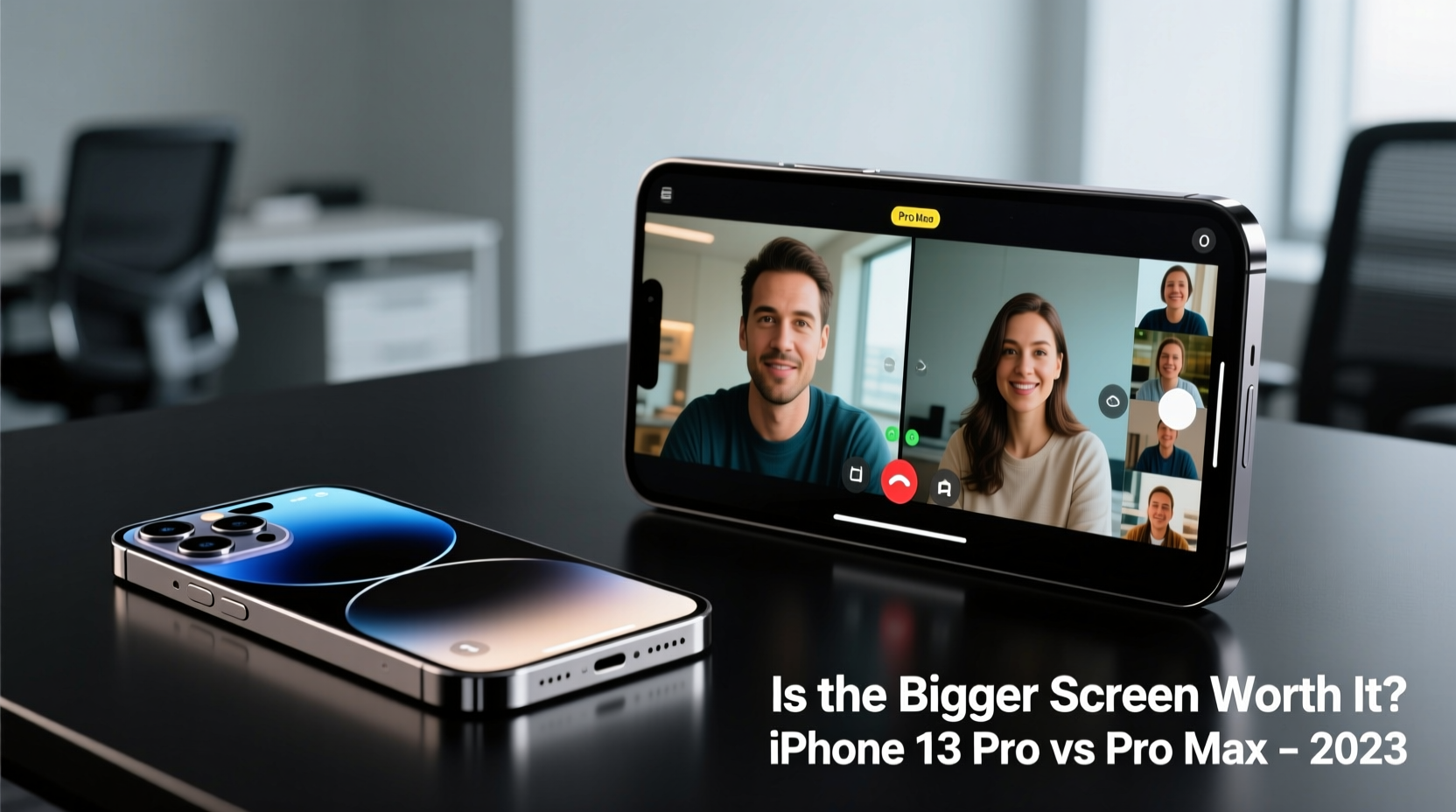
The most obvious distinction between the iPhone 13 Pro and iPhone 13 Pro Max lies in their dimensions. Both share the same flat-edge stainless steel design, Ceramic Shield front cover, and IP68 water resistance, ensuring premium durability. However, the Pro Max is noticeably larger and heavier.
| Feature | iPhone 13 Pro | iPhone 13 Pro Max |
|---|---|---|
| Display Size | 6.1 inches | 6.7 inches |
| Weight | 204 grams (7.2 oz) | 240 grams (8.5 oz) |
| Height | 146.7 mm | 160.8 mm |
| Width | 71.5 mm | 78.1 mm |
| Battery Life (Video Playback) | Up to 22 hours | Up to 28 hours |
The extra 0.6 inches in screen size may not sound significant, but it dramatically affects one-handed usability. Users with smaller hands often find the Pro Max difficult to operate without shifting their grip or using both hands. The added weight also becomes noticeable during prolonged use, such as reading or watching videos while lying down.
Display Quality and Usability
Both devices feature Apple’s Super Retina XDR OLED display with ProMotion technology, delivering a 120Hz adaptive refresh rate that makes scrolling and animations incredibly smooth. The color accuracy, brightness (up to 1000 nits HDR), and contrast ratio are identical. So technically, neither screen is “better” in quality—but the experience differs due to scale.
The 6.7-inch display on the Pro Max offers more screen real estate, which benefits media consumption, multitasking, and productivity. Watching movies, editing documents, or browsing web pages feels more immersive. Apps like Safari, Notes, and Mail take advantage of the wider layout, reducing the need to scroll.
However, the larger screen increases the risk of accidental touches near the top, especially when held one-handed. While Reachability helps by sliding the interface down, it’s an extra step that interrupts flow. In tight spaces—like commuting or using the phone in bed—the compact 13 Pro often proves more convenient.
“The Pro Max delivers a mini-iPad experience in a phone form factor, but only if you’re willing to compromise on pocketability.” — David Kim, Mobile Tech Analyst at GadgetInsight
Battery Life: Where the Pro Max Shines
If there’s one area where the Pro Max clearly outperforms the 13 Pro, it’s battery endurance. Apple rates the Pro Max for up to 28 hours of video playback compared to 22 hours on the 13 Pro. In real-world usage, this often translates to a full extra day of moderate use.
For heavy users—those who stream music, play games, use GPS navigation, or shoot video frequently—the Pro Max’s battery is a game-changer. It reduces dependency on power banks and midday charging. Travelers, field workers, and professionals on back-to-back calls benefit significantly from the extended uptime.
The 13 Pro still offers respectable battery life, lasting a full day for most users. But under heavy load, it can dip below 20% by evening, requiring a recharge. Fast charging and MagSafe compatibility are identical on both models, so charging speed isn’t a differentiator.
Real-World Example: A Day in the Field
Sarah, a freelance photographer based in Portland, uses her iPhone for location scouting, client communication, and quick photo edits. She tested both models over two weeks. With the 13 Pro, she needed to carry a portable charger during shoots. Switching to the 13 Pro Max, she completed three full workdays without recharging—even after hours of Lightroom editing and continuous GPS use. The larger device was harder to handle with one hand, but the battery savings outweighed the inconvenience.
Camera Performance: Nearly Identical, But Not Quite
Apple equips both models with the same triple-camera system: 12MP wide, ultra-wide, and telephoto lenses, along with Night mode, Sensor-shift stabilization, and Cinematic Mode for video. Photos and videos taken with either phone are indistinguishable in quality.
However, the Pro Max has a slight edge in zoom capabilities. Its telephoto lens supports 3x optical zoom (vs. 2x on the 13 Pro), enabling tighter framing from a distance. For wildlife photography, concerts, or discreet shooting, this extra reach matters. Digital zoom performance is also better due to improved image processing on larger files.
Additionally, the larger body allows for slightly better thermal management during extended video recording. While both phones can record 4K ProRes video, the Pro Max sustains longer recording times before overheating—a critical factor for vloggers and creators.
Is the Bigger Screen Worth It? A Practical Checklist
Deciding between the 13 Pro and 13 Pro Max depends on your lifestyle and priorities. Use this checklist to evaluate your needs:
- I prioritize battery life – Choose Pro Max
- I watch a lot of videos or read on my phone – Pro Max enhances immersion
- I have small hands or prefer one-handed use – 13 Pro is more manageable
- I travel frequently and dislike charging – Pro Max reduces charging anxiety
- I shoot a lot of photos or videos – Pro Max offers better zoom and cooling
- I wear tight jeans or small pockets – 13 Pro fits more comfortably
- I use my phone mostly for calls, messaging, and social media – 13 Pro is sufficient
Frequently Asked Questions
Can the iPhone 13 Pro Max fit in most pockets?
It depends on the clothing. Most front pants pockets accommodate the Pro Max with difficulty, especially if carrying other items. Jacket or bag storage is more reliable. Users often report “phablet fatigue” after extended carry.
Do both phones support the same features and updates?
Yes. Software updates, iOS features, camera modes, and performance are identical. The A15 Bionic chip performs the same in both models. You’re not missing any functionality by choosing the smaller version.
Will the iPhone 14 Pro Max offer similar trade-offs?
Yes. The pattern continues with the iPhone 14 series. The Pro Max again offers a larger screen, longer battery, and enhanced camera capabilities (like 48MP main sensor), while maintaining the same core design and performance. The decision still hinges on size versus endurance.
Final Verdict: Who Should Upgrade to the Pro Max?
The iPhone 13 Pro Max isn’t objectively “better” than the 13 Pro—it’s different. It excels for users who value screen space, battery longevity, and advanced photography. If you regularly run out of battery by mid-afternoon or wish your phone felt more like a media tablet, the Pro Max delivers meaningful improvements.
But if you value comfort, pocketability, and ease of use, the 13 Pro offers the same high-end experience in a more balanced package. There’s no performance penalty, no camera downgrade, and no software limitations. For many, it remains the sweet spot in Apple’s Pro lineup.
Ultimately, the bigger screen isn’t automatically “worth it.” It depends on how you use your phone. Evaluate your daily habits, physical comfort, and charging routine. The right choice aligns with your life—not just the spec sheet.




 浙公网安备
33010002000092号
浙公网安备
33010002000092号 浙B2-20120091-4
Comments
No comments yet. Why don't you start the discussion?