
The iPhone 13 Pro and iPhone 13 Pro Max are nearly identical in design, performance, and features—both powered by Apple’s A15 Bionic chip, featuring ProMotion 120Hz displays, advanced triple-camera systems, and premium stainless steel builds. The most significant difference? Screen size and battery life. But for many users, that single distinction raises a critical question: is the larger display of the Pro Max truly worth the trade-offs in portability, price, and daily handling?
This isn’t just about numbers on a spec sheet. It’s about how the phone fits in your hand, lasts through your day, and enhances (or hinders) your digital experience. Whether you're a content creator, frequent traveler, or someone who simply enjoys media on the go, understanding the real-world implications of choosing between these two models can save you money—and frustration.
Size and Portability: One-Handed Use vs. Immersive Viewing
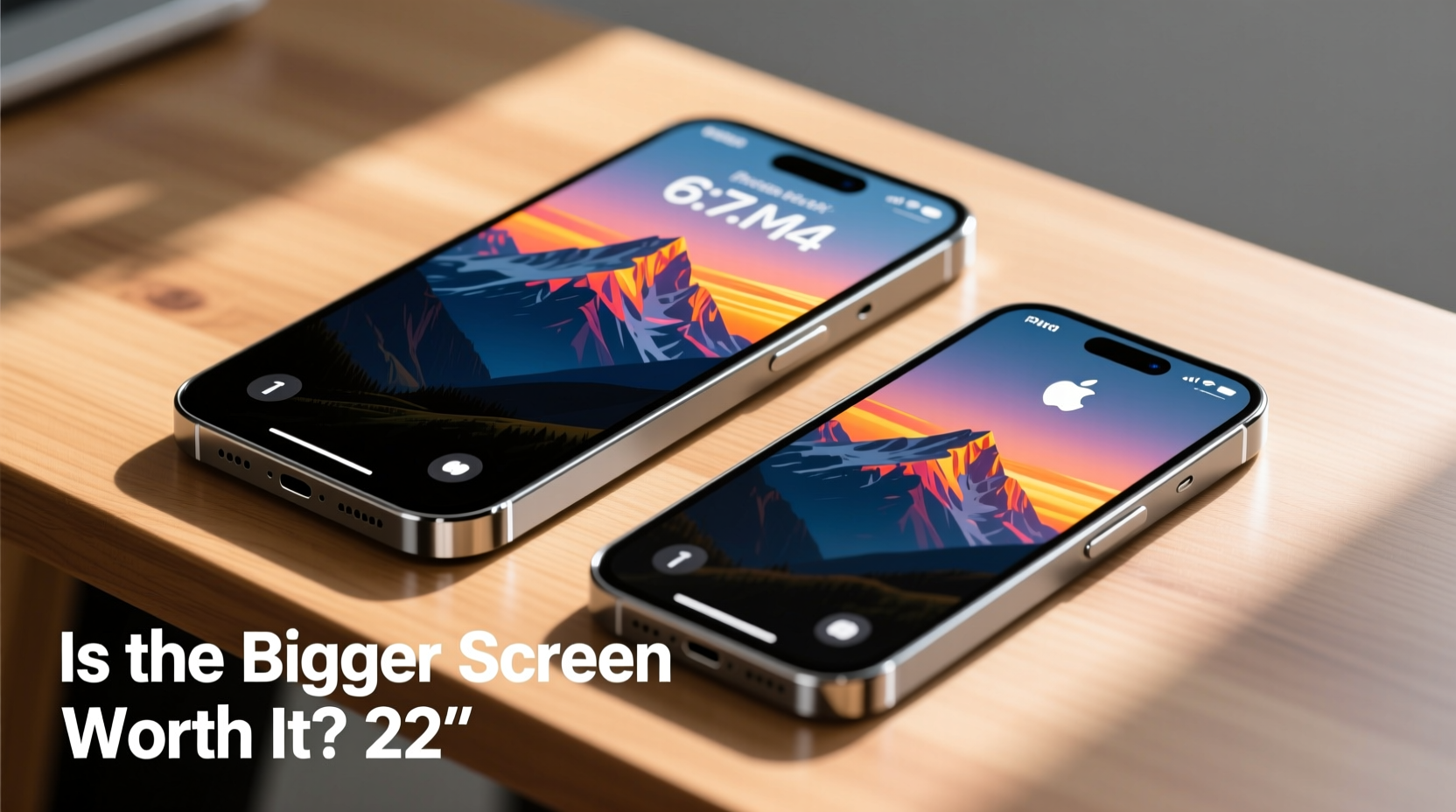
The iPhone 13 Pro features a 6.1-inch Super Retina XDR display, while the Pro Max expands to 6.7 inches. That 0.6-inch difference may seem minor, but it dramatically alters the phone’s footprint. The Pro Max is taller, wider, and heavier—measuring 160.8 x 78.1 x 7.65 mm and weighing 240 grams compared to the Pro’s 146.7 x 71.5 x 7.65 mm and 204 grams.
For users with smaller hands or those who prioritize one-handed operation, the Pro is significantly more manageable. Typing, swiping, and reaching top-level controls require less stretching or repositioning. In contrast, the Pro Max demands two hands for comfortable use, especially when navigating apps like Safari or Messages.
However, the larger screen excels in media consumption. Watching movies, reading e-books, or editing documents on the Pro Max feels more immersive. The extra screen real estate provides better multitasking capabilities, particularly when using split-view or picture-in-picture modes on iOS.
Battery Life: Where the Pro Max Pulls Ahead
One of the most tangible benefits of the larger form factor is battery capacity. The Pro Max houses a 4,352mAh battery, outperforming the Pro’s 3,095mAh unit. This translates into real-world usage differences that many users notice immediately.
Apple rates the Pro Max for up to 28 hours of video playback, compared to 22 hours on the Pro. In typical mixed-use scenarios—browsing, messaging, social media, and some video—the Pro Max often lasts a full day and a half on a single charge, while the Pro typically requires nightly charging, especially under heavy use.
“Battery anxiety is real, and for professionals on the move, the Pro Max’s endurance can be a game-changer.” — David Lin, Mobile Tech Analyst at TechPulse Weekly
If you travel frequently, work remotely, or rely on your phone for navigation and productivity throughout the day, the extended battery life may justify the size increase. However, if you have reliable access to charging or use your phone moderately, the Pro’s battery is still more than sufficient.
Camera Performance: Nearly Identical, But Size Affects Stability
Both models share the same advanced camera system: a 12MP triple setup with ultra-wide, wide, and telephoto lenses, Sensor-Shift stabilization, Night mode, and Dolby Vision HDR recording. There’s no difference in sensor quality or computational photography features.
That said, the Pro Max’s larger body provides a slight edge in handheld stability. The extra weight and surface area make it easier to hold steady during low-light shots or zoomed-in photography. While both phones use Sensor-Shift stabilization, user grip plays a role in minimizing motion blur—something the Pro Max naturally supports better.
Additionally, the Pro Max’s display offers a marginally better preview canvas for framing and reviewing photos, thanks to its increased resolution area. For photographers and videographers who review images on-device, this can enhance workflow efficiency.
Display and Performance Comparison
Both phones feature Apple’s ProMotion technology—a 120Hz adaptive refresh rate that makes scrolling, gaming, and animations smoother. The displays are equally bright (up to 1,000 nits peak HDR, 1,200 nits peak for HDR content), with excellent color accuracy and contrast.
Despite the size difference, pixel density remains high on both: ~460 ppi on the Pro and ~458 ppi on the Pro Max. Most users won’t perceive a sharpness difference. However, the Pro Max’s screen offers approximately 20% more visible content vertically, which benefits web browsing, document editing, and gaming.
| Feature | iPhone 13 Pro | iPhone 13 Pro Max |
|---|---|---|
| Screen Size | 6.1 inches | 6.7 inches |
| Battery Life (Video Playback) | Up to 22 hours | Up to 28 hours |
| Weight | 204 g | 240 g |
| Starting Price (2022) | $999 | $1,099 |
| Camera System | Triple 12MP (Ultra-Wide, Wide, Telephoto) | Same as Pro |
Real-World Example: Sarah’s Decision Dilemma
Sarah, a freelance graphic designer based in Austin, needed a new iPhone for client meetings, photo editing, and staying connected while traveling. She valued screen clarity for reviewing design mockups but also commuted via bike and used her phone one-handed during errands.
She initially leaned toward the Pro Max for its larger canvas and longer battery. After testing both in-store, she found the Pro Max cumbersome when pulling it out of her jacket pocket or typing notes quickly. She also realized her iPad covered most of her creative work, reducing the need for a large phone screen.
In the end, Sarah chose the iPhone 13 Pro. The compact size fit her lifestyle better, and she charged her phone each night without issue. Her takeaway: “Just because a feature exists doesn’t mean I need it every day.”
When the Pro Max Makes Sense: A Checklist
Consider the iPhone 13 Pro Max if:
- You consume a lot of video content on your phone
- You frequently travel or spend long days away from chargers
- You edit photos or videos directly on your device
- You prefer minimal charging interruptions
- You have larger hands or don’t mind using two hands regularly
Stick with the iPhone 13 Pro if:
- You prioritize comfort and one-handed use
- You already own a tablet or laptop for media and productivity
- You want to save $100 on the base model
- You carry your phone in tight pockets or small bags
- Your daily usage doesn’t push battery limits
Frequently Asked Questions
Is the iPhone 13 Pro Max too big for average users?
It depends on personal preference and usage habits. Many users adapt to the size within a few days, especially if they value screen space and battery life. However, those with smaller hands or minimalist lifestyles often find the Pro more practical.
Do both phones support the same accessories?
Yes, both models use the same Lightning port, MagSafe technology, and case designs (though cases are not interchangeable due to size). You can use the same chargers, docks, and wireless peripherals across both devices.
Does the Pro Max offer any exclusive features?
No. All software features, camera modes, and performance capabilities are identical. The advantages are purely ergonomic and battery-related.
Conclusion: Matching Device to Lifestyle
The iPhone 13 Pro and Pro Max represent two sides of the same coin: professional-grade smartphones tailored to different lifestyles. The Pro Max’s larger screen and superior battery life are compelling—especially for media lovers and power users. Yet, the iPhone 13 Pro delivers the same core experience in a more balanced, portable package.
Ultimately, the decision isn’t about which phone is objectively better—it’s about which one aligns with how you live. Technology should serve you, not weigh you down. If the idea of a lighter, more agile device appeals to you, the Pro is more than capable. But if you crave endurance and immersion, the Pro Max stands as one of the best large-screen smartphones ever made.




 浙公网安备
33010002000092号
浙公网安备
33010002000092号 浙B2-20120091-4
Comments
No comments yet. Why don't you start the discussion?