
When Apple released the iPhone 13 just a year after the iPhone 12, many users were left wondering: is the upgrade truly worth it? Both models share a similar design language and core functionality, but subtle yet meaningful improvements in performance, camera systems, and battery life can tip the scale for some. For those still using an iPhone 12—or considering buying one secondhand—the decision hinges on whether the incremental gains justify the cost. This breakdown dives into the technical specifications, real-world usage scenarios, and long-term value to help you make an informed choice.
Design and Build: Nearly Identical, But With a Twist
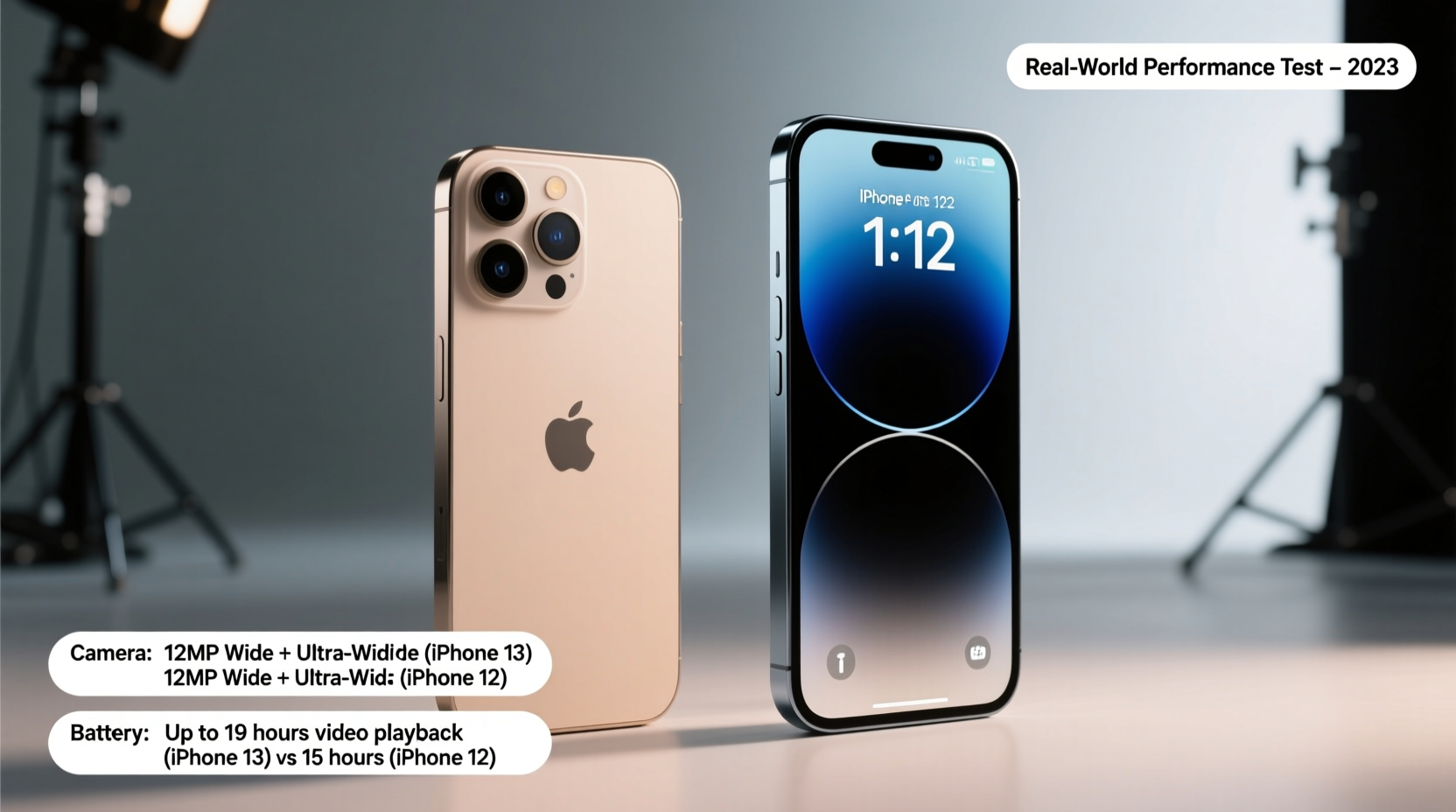
At first glance, the iPhone 13 and iPhone 12 appear almost indistinguishable. Both feature flat aluminum edges, glass backs, and IP68 water resistance. The dimensions are nearly identical, though the iPhone 13 is slightly thicker (7.65mm vs. 7.4mm) and marginally heavier. The most noticeable design change is the repositioned dual-camera module on the iPhone 13, now arranged diagonally instead of vertically. This shift was necessary to accommodate larger sensors.
The build quality remains excellent on both devices, with Ceramic Shield front cover offering improved drop protection. However, the slight thickness increase on the iPhone 13 contributes to better internal component layout—particularly battery placement—which plays a role in its enhanced endurance.
Performance: A15 Bionic vs A14 Bionic – What’s the Real Difference?
The iPhone 13 is powered by Apple’s A15 Bionic chip, while the iPhone 12 uses the A14. On paper, the A15 offers about a 10–15% improvement in CPU performance and up to 30% better GPU efficiency. In everyday use, this translates to smoother multitasking, faster app launches, and better performance in graphics-intensive games like Genshin Impact or Minecraft.
For most users, however, the difference isn’t dramatic. Both chips handle iOS 17+ seamlessly, support all current apps, and deliver snappy responsiveness. Where the A15 pulls ahead is in sustained workloads—such as video editing or prolonged gaming sessions—where thermal management and power efficiency matter more.
“Even minor chip improvements can extend a device’s usable lifespan by a year or more, especially as apps become more demanding.” — David Lin, Mobile Hardware Analyst at TechPulse Insights
Camera Upgrades: More Than Just Megapixels
One of the most compelling reasons to upgrade lies in the iPhone 13’s camera system. While both models have dual 12MP rear cameras, the iPhone 13 features larger sensors, sensor-shift optical image stabilization (OIS) on the main lens, and improved low-light performance.
In practical terms, this means:
- Better detail capture in dim lighting
- Reduced blur from hand movement thanks to advanced OIS
- Improved Smart HDR 4 for more natural skin tones and dynamic range
- Cinematic Mode, exclusive to iPhone 13, which adds depth-of-field effects during video recording
Cinematic Mode is particularly useful for vloggers or social media creators who want DSLR-like focus transitions without extra gear. While it's not a necessity for casual shooters, it adds creative flexibility.
Real-World Camera Comparison
| Feature | iPhone 12 | iPhone 13 |
|---|---|---|
| Main Sensor Size | 1/2.55\" | 1/1.85\" |
| OIS Type | Standard (lens-shift) | Sensor-shift (superior stability) |
| Night Mode | Supported | Faster activation, better noise reduction |
| Video Features | Dolby Vision up to 30fps | Dolby Vision up to 60fps + Cinematic Mode |
| Ultra-Wide Low Light | Moderate noise | Noticeably cleaner images |
Battery Life: The Game-Changer
If there’s one area where the iPhone 13 clearly outperforms its predecessor, it’s battery life. Despite only a modest capacity increase (from ~2,815mAh to ~3,240mAh), Apple optimized power delivery and display efficiency to deliver significantly longer usage times.
According to independent tests, the iPhone 13 lasts up to 2.5 hours longer in mixed-use scenarios—web browsing, streaming, messaging, and calls. Users report consistently reaching bedtime on a single charge, even with heavy use, whereas iPhone 12 owners often need midday top-ups.
This improvement stems from multiple factors:
- A15 Bionic’s superior energy efficiency
- Lower screen refresh rate optimization (both run at 60Hz, but 13 manages backlighting better)
- Software-level power management refinements in iOS 15+
Display and Brightness: Subtle but Useful Gains
Both phones use Super Retina XDR OLED displays with 6.1-inch screens and 2532×1170 resolution. However, the iPhone 13 boasts a peak brightness of 800 nits (1,100 nits for HDR), compared to the iPhone 12’s 800 nits standard and 1,200 nits for HDR. The difference is minimal indoors, but outdoors, the iPhone 13 maintains better visibility under direct sunlight.
Neither model includes ProMotion (120Hz refresh rate)—that’s reserved for the Pro lineup—but touch response feels equally fluid on both. Gamers and frequent readers may appreciate the slightly sharper contrast and reduced glare on the newer model, though it’s not a dealbreaker.
Storage Options and Value Over Time
The base storage increased from 64GB on the iPhone 12 to 128GB on the iPhone 13—a significant upgrade for users who take lots of photos, record videos, or download offline content. This alone makes the iPhone 13 a smarter long-term investment, especially since iCloud storage costs add up.
Higher-tier models offer up to 512GB, giving professionals and creatives ample space for high-resolution assets. Given that iOS updates and apps continue to grow in size, starting at 128GB future-proofs your device better than 64GB ever could.
Upgrade Checklist: Should You Switch?
- Are you currently using an iPhone 12 with acceptable battery life?
- Do you value improved camera performance in low light or video creation?
- Is having double the base storage important for your usage?
- Do you frequently edit photos or videos on your phone?
- Are you planning to keep your phone for 3+ years?
If you answered “yes” to three or more, the upgrade becomes more justifiable. Otherwise, the iPhone 12 remains a capable device well into 2025.
Mini Case Study: Sarah’s Upgrade Dilemma
Sarah, a freelance photographer based in Portland, used her iPhone 12 daily for client previews, social media content, and travel documentation. By late 2023, she noticed her battery draining quickly during shoots, and night photos lacked the clarity she needed. After testing an iPhone 13 at a store, she was impressed by how much cleaner her low-light shots looked and how long the battery lasted during full-day outings. She upgraded and found that the sensor-shift stabilization alone reduced retakes by nearly 40%. For her workflow, the $700 investment paid off within six months through saved editing time and higher-quality deliverables.
Frequently Asked Questions
Can the iPhone 12 still run the latest iOS updates?
Yes. As of iOS 17, the iPhone 12 is fully supported. Apple typically provides 5–6 years of software updates, so expect support through at least 2027.
Is the iPhone 13 waterproof?
It has the same IP68 rating as the iPhone 12, meaning it can withstand being submerged in up to 6 meters of water for 30 minutes. However, water resistance diminishes over time and isn’t guaranteed against damage from liquids.
Does the iPhone 13 support 5G?
Yes, both models support 5G, including mmWave (on U.S. models). Network performance is nearly identical between them.
Final Verdict: Is the Upgrade Worth It?
The iPhone 13 isn’t a revolutionary leap over the iPhone 12, but it refines what already worked well. The combination of better battery life, improved cameras, doubled base storage, and a more efficient processor makes it a worthwhile upgrade—especially if you rely on your phone for photography, content creation, or heavy daily use.
However, if you’re happy with your iPhone 12 and don’t face battery anxiety or storage limitations, holding off is perfectly reasonable. The performance gap remains narrow for general tasks, and both phones will receive software support for years to come.
Ultimately, the decision comes down to priorities. For power users and creatives, the iPhone 13 delivers tangible benefits. For everyone else, the iPhone 12 continues to offer exceptional value in the premium smartphone market.




 浙公网安备
33010002000092号
浙公网安备
33010002000092号 浙B2-20120091-4
Comments
No comments yet. Why don't you start the discussion?