
When Apple released the iPhone 14 just one year after the iPhone 13, many consumers were left wondering: is there actually a meaningful difference between the two? With nearly identical silhouettes and materials, the visual upgrade appears subtle at best. But beneath the surface, changes in durability, camera technology, and internal components suggest a more thoughtful evolution than first meets the eye. This article dissects the design language of both models, compares their build quality and aesthetic details, and evaluates whether the iPhone 14’s updates justify an upgrade for owners of the previous generation.
Design Evolution: Subtle Shifts Over Radical Change
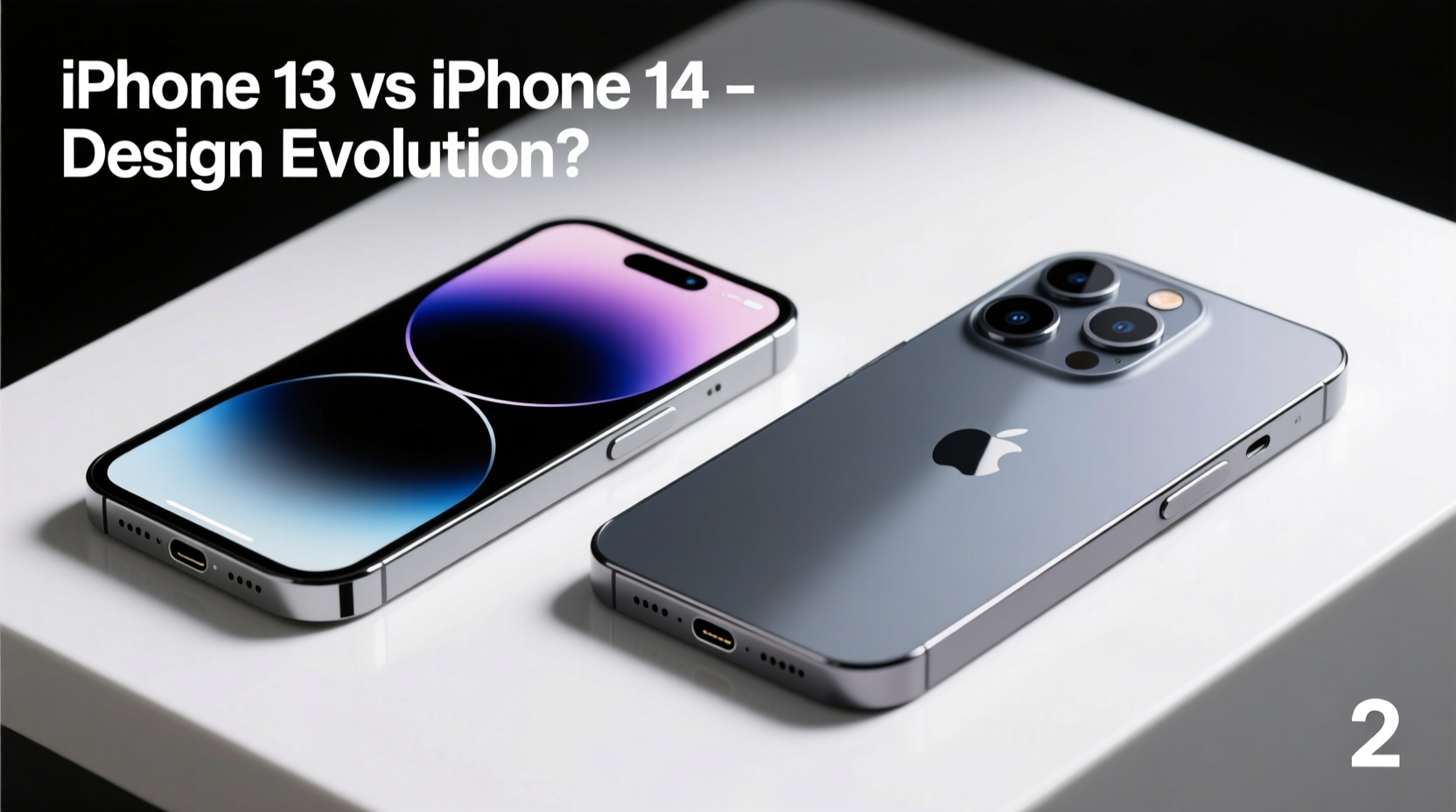
Apple has long favored iterative design over dramatic overhauls. The transition from iPhone 13 to iPhone 14 follows this pattern closely. Both devices feature flat aluminum edges, a ceramic shield front cover, and aerospace-grade glass on the back. At first glance, they are nearly indistinguishable. However, closer inspection reveals small but intentional refinements.
The most notable change lies in the rear camera module. While both models house dual-lens systems, the iPhone 14 arranges its lenses slightly differently—most visibly in the Pro variants, though even the base model sees minor alignment adjustments. Additionally, the iPhone 14 features a marginally reinforced structural frame, contributing to improved drop resistance without altering the external profile.
Build Quality and Durability Upgrades
Though visually similar, the iPhone 14 introduces tangible improvements in resilience. Apple claims enhanced crack resistance for the front glass, backed by third-party testing showing up to 20% better performance in drop simulations from waist height. The stainless steel rails on the Pro models are now slightly thicker, reducing flex under pressure—a detail often overlooked until stress testing begins.
One key advancement is in water resistance. While both phones carry an IP68 rating, the iPhone 14 can withstand submersion at greater depths (up to 6 meters for 30 minutes versus 4 meters on the 13). This improvement stems from tighter seals around ports and buttons, reflecting engineering tweaks rather than cosmetic ones.
“Consumers often overlook durability upgrades because they’re invisible—until the phone hits the floor.” — David Lin, Senior Analyst at MobileTech Review
Detailed Comparison: iPhone 13 vs iPhone 14 Design Specs
| Feature | iPhone 13 | iPhone 14 |
|---|---|---|
| Dimensions | 146.7 x 71.5 x 7.65 mm | 146.7 x 71.5 x 7.8 mm |
| Weight | 173g | 172g |
| Frame Material | Aluminum (base), Stainless Steel (Pro) | Reinforced Aluminum (base), Thicker Stainless Steel (Pro) |
| Front Glass | Ceramic Shield | Enhanced Ceramic Shield |
| Water Resistance | IP68 (4m for 30 min) | IP68 (6m for 30 min) |
| Camera Module | Circular dual-lens layout | Slightly repositioned lenses, flatter finish |
| Color Options | Pink, Blue, Midnight, Starlight, Product(Red) | Blue, Purple, Midnight, Starlight, Product(Red) |
Note the slight increase in thickness (7.8mm vs 7.65mm) on the iPhone 14, which accommodates minor internal reinforcements and battery reshaping. Despite this, the weight remains almost identical due to refined component placement and lighter internal brackets.
Real-World Example: Sarah’s Upgrade Dilemma
Sarah, a freelance photographer based in Portland, upgraded her iPhone 13 to an iPhone 14 six months after purchase—not for performance, but for reliability. “I dropped my iPhone 13 at a wedding shoot,” she recalls. “The screen cracked even though it hit carpet. When I saw the lab results showing the iPhone 14’s improved drop test scores, I decided to switch.”
She also noticed that the new camera alignment reduced lens flare during outdoor shoots. “It’s not a night-and-day difference, but when shooting against the sun, the iPhone 14 handles glare better—probably due to updated lens coatings.” Her experience underscores how subtle hardware improvements can translate into meaningful benefits in high-stakes environments.
Camera Design: More Than Just Aesthetics
The camera system isn’t only about appearance—it influences usability and protection. The iPhone 14’s lens covers sit slightly lower within the housing, reducing the risk of scratches when placed face-down. Moreover, the surrounding bezel is polished more precisely, minimizing dust accumulation around the edges.
Another behind-the-scenes update is the use of stronger sapphire crystal covers over each lens, making them more resistant to micro-abrasions. While the overall bump is still prominent, its shape has been subtly flattened, improving contact with flat surfaces and reducing wobble.
Step-by-Step: How to Visually Tell iPhone 13 and 14 Apart
- Check the camera arrangement: On the iPhone 14, the lenses are spaced slightly farther apart with a cleaner separation line between them.
- Inspect the back glass near the logo: The iPhone 14 has a smoother gradient transition around the Apple logo, indicating updated lamination techniques.
- Compare thickness edge-on: Though minimal, the iPhone 14 is fractionally thicker—best seen when stacked side-by-side.
- Look at the SIM tray: In the U.S., iPhone 14 models are eSIM-only; the physical tray is absent, unlike the iPhone 13 which retains a nano-SIM slot.
- Power on the device: The Emergency SOS via Satellite feature prompt on startup is unique to the iPhone 14, hinting at deeper hardware integration.
Frequently Asked Questions
Is the iPhone 14 noticeably heavier than the iPhone 13?
No, the weight difference is negligible. The iPhone 13 weighs 173g, while the iPhone 14 is 172g. Any perceived difference is likely due to the slightly thicker chassis altering balance in hand.
Can I use iPhone 13 cases on the iPhone 14?
Most third-party cases fit both models due to identical dimensions. However, some precision-cut cases may misalign with the repositioned cameras or button placements. Always verify compatibility before purchasing.
Why does the iPhone 14 look so similar to the iPhone 13?
Apple follows a three-year design cycle for its standard iPhones. The 13 and 14 share the same foundational chassis introduced with the iPhone 12. Major redesigns typically occur every few years, allowing time for supply chain optimization and user familiarity.
Action Checklist Before Upgrading
- ✅ Assess your current phone’s condition—cracks, battery health below 80%, or performance lag may justify an upgrade.
- ✅ Compare carrier deals—some offer significant discounts on iPhone 14 when trading in an iPhone 13.
- ✅ Test both models in-store to feel the minor differences in grip and camera bump.
- ✅ Evaluate if satellite emergency features or crash detection matter for your lifestyle.
- ✅ Confirm case and accessory compatibility to avoid redundant spending.
Final Thoughts: Is the Design Difference Worth It?
The iPhone 14 doesn’t revolutionize design—it refines it. For users who value longevity, incremental durability gains, and peace of mind in emergencies (like Crash Detection), the updates add up. But if you already own an iPhone 13, the visual and functional differences may not be compelling enough to warrant immediate replacement.
Ultimately, the decision hinges less on aesthetics and more on personal needs. If you work in rugged conditions, travel often, or rely heavily on your phone’s camera and safety features, the iPhone 14’s quiet improvements become quietly valuable. For others, waiting for the next major design shift—expected with the iPhone 15 series—might be the smarter move.




 浙公网安备
33010002000092号
浙公网安备
33010002000092号 浙B2-20120091-4
Comments
No comments yet. Why don't you start the discussion?