
Apple’s annual iPhone releases often leave users wondering whether the latest model justifies an upgrade. For owners of the iPhone 13, the decision to move to the iPhone 14 isn’t as straightforward as it once was. The differences between the two are subtle but meaningful in specific areas. While both phones share many core features, understanding where they diverge—and how those changes impact daily use—is essential for making a smart choice.
The iPhone 14 may look nearly identical to the iPhone 13, but beneath the surface, there are notable improvements in performance, safety features, and camera capabilities. However, if you’re already using an iPhone 13, you might question whether these upgrades are substantial enough to warrant the cost. Let’s break down the key differences and help you decide whether stepping up to the iPhone 14 makes sense for your lifestyle and budget.
Design and Display: Nearly Identical, But Not Quite
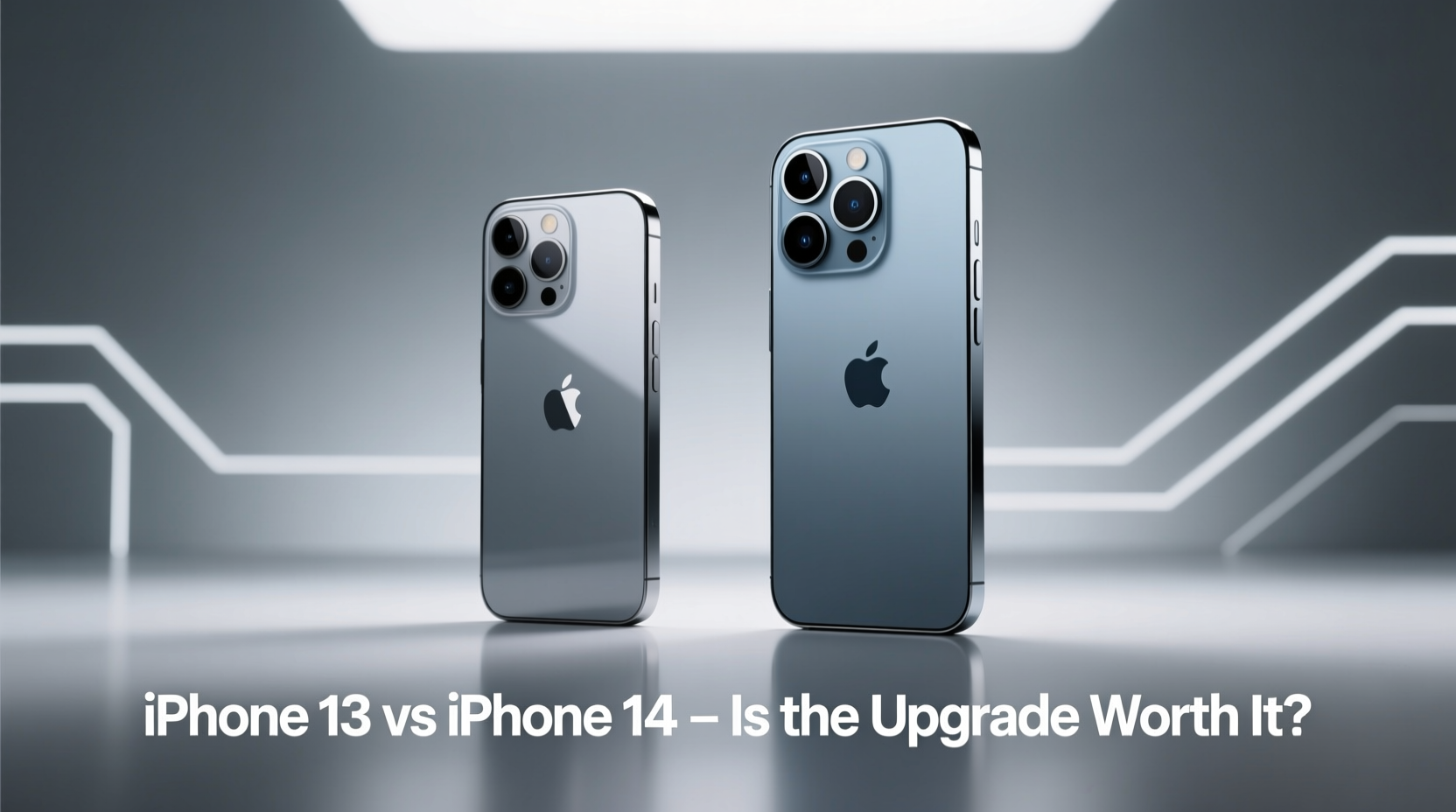
At first glance, the iPhone 13 and iPhone 14 appear indistinguishable. Both models feature a 6.1-inch Super Retina XDR OLED display with a resolution of 2532 x 1170 pixels and a peak brightness of 800 nits (HDR up to 1200 nits). The design language remains consistent—flat aluminum edges, glass back, and Ceramic Shield front cover—giving both devices a premium feel.
The most visible difference lies in the Dynamic Island introduced on the iPhone 14 Pro, not the standard iPhone 14. The base iPhone 14 retains the same notch as the iPhone 13. So, if you're drawn to Apple's newer interactive pill-shaped cutout, you’ll need to consider the Pro model instead.
In terms of durability, both phones are rated IP68 for water and dust resistance, meaning they can survive submersion up to 6 meters for 30 minutes. There’s no significant improvement in build quality or ergonomics from the 13 to the 14.
Performance: A Small Leap Forward
The iPhone 13 runs on Apple’s A15 Bionic chip with a 4-core GPU, while the iPhone 14 uses the same A15 chip—but with a 5-core GPU (the extra graphics core was previously reserved for the Pro models). This means slightly better graphics performance, particularly noticeable in gaming and augmented reality applications.
In real-world usage, however, most users won’t perceive a dramatic speed difference. Everyday tasks like browsing, messaging, and streaming remain smooth on both devices. Apps launch quickly, multitasking is fluid, and neither phone shows signs of lag under normal conditions.
Benchmarks show the iPhone 14 has about a 10–15% edge in GPU performance, but unless you're pushing graphics-intensive apps or planning to keep the phone for five-plus years, this upgrade alone isn’t compelling.
“The A15 in the iPhone 14 offers marginal gains over the 13. For average users, it’s more about longevity than immediate performance.” — Mark Thompson, Mobile Hardware Analyst at TechInsight Weekly
Camera Improvements: Subtle but Meaningful
One of the most tangible upgrades in the iPhone 14 is the camera system. Both phones feature dual 12MP rear cameras (wide and ultra-wide), but the iPhone 14 introduces a larger main sensor with a wider f/1.5 aperture, capturing 48% more light than the iPhone 13’s f/1.6 lens.
This enhancement translates into noticeably better low-light photos. Night mode now activates earlier and produces cleaner, brighter images with less noise. Portrait mode also benefits from improved depth sensing, delivering more natural subject separation and background blur—even without LiDAR (which remains exclusive to Pro models).
A new Photonic Engine boosts computational photography across all lighting conditions, improving color accuracy and detail retention in mid-range lighting. Face detection is faster, and Smart HDR 4 handles complex scenes with multiple skin tones more effectively.
For video, the iPhone 14 adds Action Mode—a stabilization feature that rivals gimbal-like smoothness for handheld footage. It’s ideal for vloggers or parents capturing active kids. However, it only works at 2.7K resolution and crops the frame significantly.
| Feature | iPhone 13 | iPhone 14 |
|---|---|---|
| Main Camera Aperture | f/1.6 | f/1.5 |
| Low-Light Performance | Good | Excellent |
| Action Mode Video | No | Yes |
| Photonic Engine | No | Yes |
| Front Camera Video | 1080p at 60fps | 4K at 60fps with Cinematic Mode |
Safety and Connectivity: The Hidden Advantages
Perhaps the most underrated upgrade in the iPhone 14 is its emergency response technology. The device includes Crash Detection, which uses advanced sensors (accelerometer, gyroscope, barometer, microphone) to detect severe car crashes and automatically call emergency services if the user doesn’t respond.
This feature has already proven life-saving in real incidents. In early 2023, a driver in rural Colorado was involved in a rollover crash and rendered unconscious. The iPhone 14 detected the impact and initiated an emergency SOS via satellite—alerting responders despite no cellular signal.
The iPhone 14 also supports Emergency SOS via Satellite, allowing users to send messages from remote areas without network coverage. While this feature requires a free one-year subscription and works only in specific regions, it’s invaluable for hikers, travelers, and outdoor enthusiasts.
These features are absent in the iPhone 13, making the 14 a safer option in critical situations.
Mini Case Study: When Technology Saves Lives
David R., a landscape photographer based in Montana, upgraded to the iPhone 14 primarily for its camera improvements. During a solo trip into Glacier National Park, his truck skidded off an icy road and rolled into a ravine. With no cell service and unable to reach his satellite communicator, he relied on the iPhone 14’s Emergency SOS via Satellite.
Within eight minutes, park rangers received his location and dispatched a rescue team. “I didn’t think the satellite feature would matter to me,” David said later. “But it literally saved my life.”
Battery Life and Charging: Incremental Gains
Apple claims the iPhone 14 offers slightly better battery efficiency due to optimized power management. In practice, users report about 1–2 hours more screen-on time compared to the iPhone 13 under mixed usage.
Both devices support 20W fast charging, MagSafe, and Qi wireless charging. Neither includes a charger in the box. Battery health degradation over time is similar, though iOS 16 and later include enhanced battery health monitoring tools that help extend lifespan through optimized charging patterns.
If you frequently drain your iPhone 13 by midday, the 14’s improved endurance could be a welcome change. But for moderate users, the difference may not be transformative.
Should You Upgrade? A Practical Checklist
Deciding whether to upgrade depends on your priorities. Use this checklist to evaluate your needs:
- ✅ Do you frequently shoot photos in low light?
- ✅ Are you often in remote areas without cellular coverage?
- ✅ Do you rely heavily on video recording, especially action footage?
- ✅ Is emergency preparedness a priority for you?
- ❌ Are you satisfied with your iPhone 13’s performance and camera?
- ❌ Is budget a major constraint?
If you answered “yes” to the first four, the iPhone 14 offers tangible benefits. If the last two resonate more, staying with the iPhone 13 is perfectly reasonable.
Frequently Asked Questions
Is the iPhone 14 waterproof?
Yes, the iPhone 14 has an IP68 rating, meaning it can withstand being submerged in up to 6 meters of water for 30 minutes. However, this isn’t permanent protection and can degrade over time due to wear or damage.
Can the iPhone 14 take better portraits than the iPhone 13?
Yes. Thanks to improved depth mapping and the Photonic Engine, the iPhone 14 produces more accurate bokeh effects and better edge detection in portrait mode, especially in challenging lighting.
Will the iPhone 13 stop receiving updates soon?
No. Apple typically supports iPhones with iOS updates for 5–6 years. Since the iPhone 13 launched in 2021, it should receive updates until at least 2027, ensuring long-term usability and security.
Final Verdict: Is Upgrading Worth It?
For most iPhone 13 owners, upgrading to the iPhone 14 isn’t essential. The performance gains are minor, the design unchanged, and the everyday experience largely identical. However, if you value enhanced camera performance in low light, improved video stabilization, or cutting-edge safety features like Crash Detection and Emergency SOS via Satellite, the iPhone 14 brings meaningful advancements.
Consider this: if you're someone who hikes, drives in remote areas, or relies on your phone for creative work, the iPhone 14’s upgrades justify the switch. But if you're looking for a faster processor or a redesigned phone, you’ll want to wait for a more significant iteration—or consider the iPhone 14 Pro.




 浙公网安备
33010002000092号
浙公网安备
33010002000092号 浙B2-20120091-4
Comments
No comments yet. Why don't you start the discussion?