
Choosing between the iPhone 13 and the Galaxy S22 Plus isn’t just about brand loyalty—it’s a decision rooted in real-world performance, ecosystem compatibility, and long-term value. While Apple’s iPhone 13 remains a top-tier device with strong software integration and resale value, Samsung’s Galaxy S22 Plus enters the ring with superior hardware flexibility, advanced display technology, and a more future-ready feature set. But does that translate into a meaningful upgrade for someone already invested in the Apple ecosystem?
This comparison dives deep into design, performance, camera capabilities, battery life, software experience, and overall value to answer one critical question: If you're coming from an iPhone 13, is switching to the Galaxy S22 Plus actually worth it?
Design and Build: Premium Feel, Different Philosophies
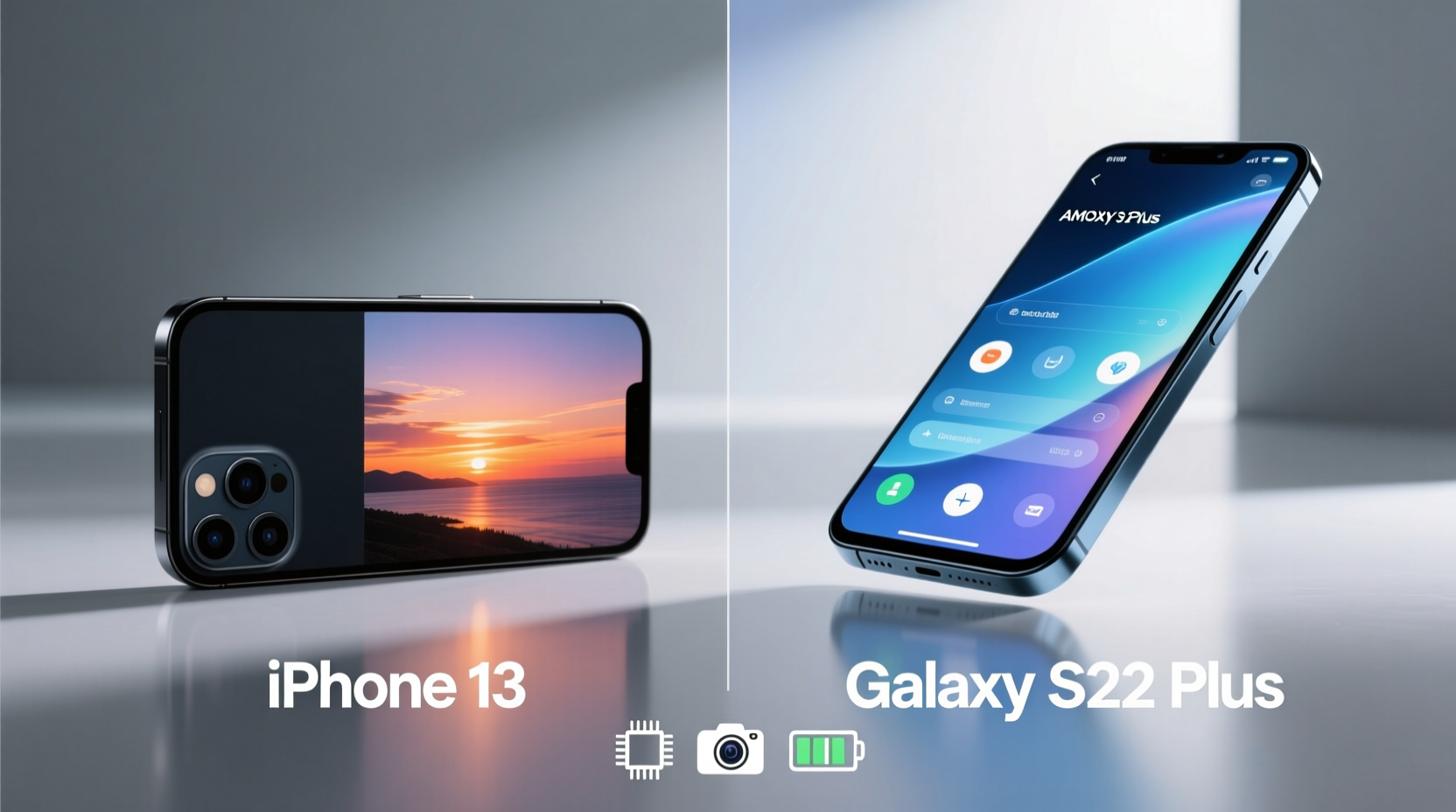
The iPhone 13 sticks to Apple’s minimalist aluminum-and-glass formula—flat edges, compact form, and IP68 water resistance. It’s light at 174 grams and fits comfortably in most hands. The Ceramic Shield front adds durability, and the matte glass back resists fingerprints better than glossy finishes.
In contrast, the Galaxy S22 Plus uses Armor Aluminum and Gorilla Glass Victus+, offering similar protection but with a sleeker, slightly curved profile. At 195 grams, it’s noticeably heavier, which some users interpret as a sign of premium build, while others find it cumbersome over time. The curved display enhances aesthetics but can introduce accidental touches and glare in bright environments.
Display and Screen Experience
One of the clearest advantages the Galaxy S22 Plus holds is its display. It features a 6.6-inch Dynamic AMOLED 2X panel with a variable 120Hz refresh rate, adapting between 48Hz and 120Hz based on content. This means smoother scrolling, sharper animations, and better responsiveness during gaming or multitasking.
The iPhone 13, meanwhile, uses a 6.1-inch Super Retina XDR OLED with a fixed 60Hz refresh rate. While color accuracy and brightness (up to 800 nits typical, 1200 HDR) are excellent, the lack of high refresh rate feels dated in 2024, especially when navigating fast UIs or playing high-frame-rate games.
“High refresh rate displays aren’t just a gimmick—they fundamentally change how fluid and responsive a phone feels.” — David Kim, Mobile UX Analyst at TechPulse Insights
Performance and Real-World Speed
Under the hood, both phones deliver flagship-level performance, but they take different approaches. The iPhone 13 runs on Apple’s A15 Bionic chip with a 5-core GPU, still one of the most efficient and powerful mobile processors available. Apps launch instantly, multitasking is seamless, and iOS optimization ensures long-term smoothness.
The Galaxy S22 Plus uses either the Snapdragon 8 Gen 1 (in the U.S.) or Exynos 2200 (in select regions), depending on market. While powerful, these chips historically lag behind Apple’s silicon in sustained performance and thermal management. Some users report throttling during extended gaming or video editing sessions, especially with the Exynos variant.
However, Android 13 on the S22 Plus supports split-screen, drag-and-drop, and deeper customization—features absent from iOS. If productivity and multitasking matter, Samsung’s software layer (One UI 5) offers tangible benefits despite occasional stutters.
Camera Comparison: Strengths in Different Areas
Both devices have strong dual and triple camera systems, but their philosophies differ significantly.
| Feature | iPhone 13 | Galaxy S22 Plus |
|---|---|---|
| Main Sensor | 12MP, f/1.6, sensor-shift stabilization | 50MP, f/1.8, OIS |
| Ultra-Wide | 12MP, f/2.4, 120° FoV | 12MP, f/2.2, 120° FoV |
| Telephoto | N/A (Digital zoom only) | 10MP, f/2.4, 3x optical zoom |
| Video Recording | 4K@60fps, Dolby Vision HDR | 8K@24fps, Super Steady mode |
| Low-Light Performance | Natural color, minimal noise | Brighter output, more aggressive processing |
The iPhone 13 excels in natural tone reproduction, especially in video. Its Dolby Vision recording is unmatched—no other smartphone captures log-encoded HDR video out of the box. For vloggers and content creators who edit professionally, this is a major advantage.
The S22 Plus counters with higher resolution photos, 3x optical zoom, and AI-enhanced night shots. Its “Night Mode” brightens scenes aggressively, which looks impressive initially but can appear artificial. Portrait mode is more automated, while the iPhone gives more control over depth and lighting effects.
Mini Case Study: Travel Photographer's Dilemma
Lena, a travel content creator, switched from the iPhone 13 to the S22 Plus for a two-week trip across Southeast Asia. She loved the 3x telephoto lens for capturing distant temples and wildlife without cropping. However, she missed the consistency of iPhone color grading when uploading footage directly to Instagram. “The Samsung made my sunset shots pop,” she said, “but I spent extra time editing to tone down the saturation.”
Battery Life and Charging Flexibility
Battery capacity favors Samsung: the S22 Plus packs a 4,500mAh cell versus the iPhone 13’s 3,240mAh. In real-world testing, the S22 Plus consistently delivers 7–8 hours of screen-on time, compared to 5–6 hours on the iPhone 13.
But where Samsung pulls ahead is charging versatility. The S22 Plus supports 45W wired fast charging (charger sold separately), allowing a 0–70% charge in 30 minutes. It also offers 15W wireless charging and reverse wireless charging to power accessories.
The iPhone 13, by contrast, maxes out at 20W wired charging (0–50% in ~30 mins) and 7.5W MagSafe wireless charging. No reverse charging. While iOS optimizes background activity well, heavy users often need to carry a power bank.
Software, Updates, and Ecosystem Fit
iOS 17 continues to be a major strength for the iPhone 13. Apple guarantees five years of OS updates, meaning the device will likely receive support through 2027. Security patches are frequent, and new features roll out uniformly across supported devices.
Samsung promises four major Android OS upgrades and five years of security updates for the S22 series—also excellent. However, update delivery can vary by carrier and region, and the rollout is slower than Apple’s centralized model.
Ecosystem integration is where the decision gets personal. If you use AirPods, Apple Watch, or a Mac, the iPhone 13 enables seamless Handoff, Universal Clipboard, and Instant Hotspot. These features work so well they often keep users locked into Apple.
Samsung pairs best with Galaxy Buds, Watches, and Windows PCs via Link to Windows. While improving, it doesn’t match Apple’s cohesion. That said, Samsung allows sideloading apps, default app selection, and deeper system customization—freedoms iOS restricts.
FAQ
Is the Galaxy S22 Plus better than the iPhone 13 for gaming?
Yes, in terms of raw display performance and cooling. The 120Hz screen and larger battery give the S22 Plus an edge in long gaming sessions. However, iPhone 13 still runs many games more efficiently due to A15 optimization, and iOS has a broader library of high-quality exclusive titles.
Can I transfer my data easily from iPhone to Galaxy S22 Plus?
Absolutely. Samsung’s Smart Switch app allows seamless transfer of contacts, messages, photos, calendars, and even app data over Wi-Fi or cable. iCloud photos and Google Account sync make the transition smooth for most users.
Does the S22 Plus hold its value like the iPhone 13?
No. iPhones generally retain 15–30% more resale value after two years. The S22 Plus depreciates faster, though refurbished models now offer better value for budget-conscious buyers.
Final Verdict: Is the Upgrade Worth It?
The Galaxy S22 Plus brings meaningful improvements: a brighter, smoother display, faster charging, longer battery life, optical zoom, and greater hardware flexibility. If you value these features and are open to Android’s ecosystem, the upgrade makes sense—especially if you're frustrated with the iPhone 13’s 60Hz screen or slow charging.
However, if you rely heavily on Apple’s ecosystem, prioritize consistent camera tones, or want maximum longevity and resale value, sticking with the iPhone 13—or upgrading within the iPhone lineup—is still the smarter choice.
The “worth” of the upgrade ultimately depends on your priorities. For tech enthusiasts craving cutting-edge specs and customization, the S22 Plus delivers. For those who value simplicity, ecosystem harmony, and long-term reliability, the iPhone 13 remains compelling—even years after release.




 浙公网安备
33010002000092号
浙公网安备
33010002000092号 浙B2-20120091-4
Comments
No comments yet. Why don't you start the discussion?