
In a smartphone market dominated by large slabs of glass and metal, Samsung’s Galaxy Z Flip stands out—literally. With its compact folding design, it brings back the nostalgic charm of flip phones while packing modern tech under a sleek exterior. On the other side, the iPhone 13 remains a benchmark for reliability, camera quality, and ecosystem integration. But when placed head to head, which device truly serves your lifestyle better? Is the Galaxy Z Flip’s innovative form factor more than just a fashion statement, or does the iPhone 13’s consistency make it the smarter long-term choice?
Design and Portability: Form Meets Function
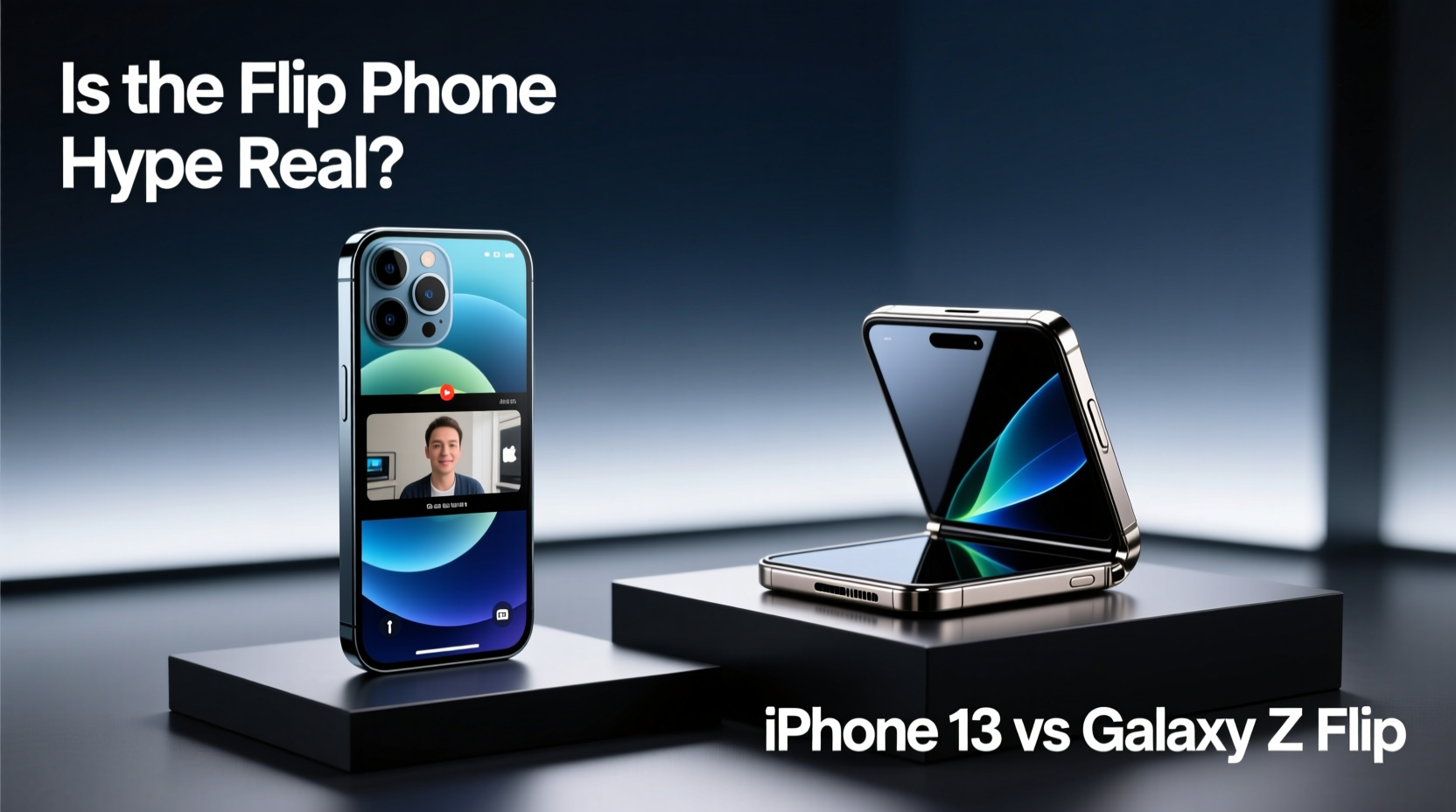
The most immediate difference between the two lies in their physical design. The iPhone 13 follows Apple’s familiar flat-edge aesthetic—a solid, rectangular slab with a 6.1-inch Super Retina XDR display. It fits comfortably in most hands and pockets, though not without some bulk.
The Galaxy Z Flip, however, reimagines what a smartphone can look like. When folded, it’s about half the size of the iPhone 13—small enough to slip into a jeans pocket or even a clutch. Unfolded, it reveals a 6.7-inch Dynamic AMOLED screen with a flexible hinge that allows it to stand on its own. This “Flex Mode” enables hands-free video calls or selfies using the cover screen and rear cameras simultaneously.
However, folding comes at a cost. The Z Flip’s hinge mechanism, while impressively refined over earlier models, still collects dust and debris over time. Samsung claims improved dust resistance (IPX8 water resistance), but no official IP rating for particulate protection. The crease down the center of the screen is visible upon close inspection and may bother users accustomed to flawless displays.
Performance and Software Experience
Under the hood, both devices are powerful, but they serve different purposes. The iPhone 13 runs on Apple’s A15 Bionic chip—one of the fastest mobile processors ever made. Paired with iOS 16 (and upgradable to newer versions), it delivers buttery-smooth performance, exceptional app optimization, and industry-leading software support lasting up to five years.
The Galaxy Z Flip uses Qualcomm’s Snapdragon 888 (in the original model) or 8 Gen 1 (in later variants), paired with Android 12 or higher. While capable, these chips run hotter and less efficiently than the A15. Real-world usage shows slightly slower app launches and multitasking hiccups when switching between heavy apps.
“Foldables push boundaries, but software maturity lags behind hardware innovation.” — Mark Liu, Mobile Analyst at TechInsight Asia
iOS offers a consistent, secure experience across Apple’s ecosystem. Features like AirDrop, iCloud syncing, FaceTime, and seamless integration with Macs and Apple Watches create a frictionless environment. Android, especially Samsung’s One UI, is highly customizable but can feel cluttered. App compatibility with the Z Flip’s split-screen mode is improving but inconsistent—some apps don’t adapt well to the folded interface.
Camera Comparison: Quality vs. Creativity
The iPhone 13 continues Apple’s legacy of reliable, point-and-shoot excellence. Its dual-camera system (12MP wide and ultra-wide) produces natural color tones, excellent dynamic range, and class-leading video recording (up to 4K at 60fps). Night mode works effectively on both lenses, and computational photography ensures consistent results—even in challenging lighting.
The Galaxy Z Flip also features dual 12MP rear cameras but leans into creative flexibility. Thanks to Flex Mode, you can set the phone at an angle and shoot stabilized vlogs or hands-free content. The cover screen acts as a viewfinder for high-quality selfies using the main rear camera—an advantage over the iPhone 13’s front TrueDepth camera, which, while good, isn’t quite on par with the primary sensors.
However, image processing on the Z Flip often oversaturates colors and struggles with HDR balancing. In low light, noise becomes apparent faster than on the iPhone. Video stabilization is decent but not as smooth as Apple’s cinematic mode or sensor-shift stabilization found in higher-end iPhones.
Durability and Longevity: Built to Last?
This is where the debate intensifies. The iPhone 13 features Ceramic Shield front cover, IP68 water and dust resistance, and a sturdy aluminum frame. With proper care, it can last three to five years without major issues.
The Galaxy Z Flip, despite improvements, remains inherently fragile. The folding screen is protected by ultra-thin glass, but it’s still prone to micro-scratches. The hinge, though rated for hundreds of thousands of folds, is a mechanical weak point. Dropping the device hinge-first can result in costly repairs—Samsung’s warranty doesn’t fully cover accidental damage, and third-party repair options are limited.
| Feature | iPhone 13 | Galaxy Z Flip |
|---|---|---|
| Display Type | Super Retina XDR (OLED) | Dynamic AMOLED 2X (Foldable) |
| Battery Life | Up to 19 hours video playback | Up to 12 hours video playback |
| Water Resistance | IP68 (6m for 30 mins) | IPX8 (1.5m for 30 mins) |
| Software Support | 5+ years (iOS updates) | 4 years OS + 5 years security |
| Starting Price (Launch) | $699 | $999 |
Real-World Use Case: Who Is Each Phone For?
Consider Sarah, a 28-year-old marketing professional who commutes daily in New York City. She values efficiency, camera quality for social media content, and long battery life. She owns a MacBook and AirPods, so ecosystem synergy matters. After testing both phones, she returned the Z Flip within a week. Despite loving its compact size, she found herself constantly worried about dropping it, frustrated by shorter battery life, and missing iMessage and seamless AirDrop sharing.
On the other hand, Jordan, a 24-year-old fashion influencer in Los Angeles, chose the Z Flip as his primary device. He loves the aesthetic, uses Flex Mode for TikTok videos, and appreciates how easily it fits into tight outfits. For him, the phone is as much a style accessory as a tool. He charges it twice a day and uses a rugged case—trade-offs he’s happy to make for the standout design.
Step-by-Step: How to Decide Which Phone Suits You
- Evaluate your ecosystem. If you use a Mac, iPad, or Apple Watch, the iPhone 13 integrates seamlessly. Switching to Android disrupts continuity.
- Assess your usage patterns. Heavy texters, email users, or productivity-focused individuals benefit from the iPhone’s stability.
- Test portability needs. Try carrying a small mirror or compact in your pocket for a day—if that convenience appeals, the Z Flip might be worth it.
- Consider longevity. Are you planning to keep the phone for 3+ years? The iPhone 13 will likely receive updates longer and maintain resale value better.
- Weigh repair costs. The Z Flip’s screen replacement can exceed $300, while AppleCare+ reduces iPhone repair fees significantly.
Frequently Asked Questions
Is the Galaxy Z Flip durable enough for everyday use?
It’s more durable than early foldables, but still requires caution. Avoid exposing it to sand, dust, or drops. Using a case and screen protector is strongly recommended.
Can the iPhone 13 compete with foldables on innovation?
Apple prioritizes refinement over radical change. While it lacks a folding screen, its advancements in chip technology, camera systems, and software integration represent a different kind of innovation—focused on reliability and user experience.
Does the Z Flip’s cover screen replace the need to unfold it?
Partially. The 1.9-inch cover screen handles notifications, music controls, and quick replies. However, most tasks still require unfolding, limiting true “quick glance” functionality compared to smartwatches.
Final Verdict: Hype or Worth It?
The Galaxy Z Flip is undeniably cool. It’s a conversation starter, a fashion piece, and a glimpse into the future of mobile design. But it’s not yet a full replacement for a mainstream flagship in terms of durability, battery life, or long-term value.
The iPhone 13, meanwhile, represents peak refinement. It won’t turn heads in a café, but it will work flawlessly for years, capture stunning photos, and integrate effortlessly into a digital life built around Apple’s ecosystem.
If you’re drawn to novelty and don’t mind trading some practicality for style, the Z Flip is a compelling experiment. But if you want a phone that simply works—every day, in every condition, for years to come—the iPhone 13 remains the safer, smarter bet.




 浙公网安备
33010002000092号
浙公网安备
33010002000092号 浙B2-20120091-4
Comments
No comments yet. Why don't you start the discussion?