
For millions of iPhone users still relying on the iPhone 11, the question isn’t whether the iPhone 13 is better—it’s whether the improvements, especially in the camera, justify the cost of upgrading. The iPhone 13 brought meaningful upgrades over its predecessor, but if photography is your primary concern, does it truly deliver enough to warrant the switch? Let’s break down the differences with real-world context, technical insights, and practical use cases to help you decide.
Camera Hardware: What Changed Between iPhone 11 and iPhone 13?
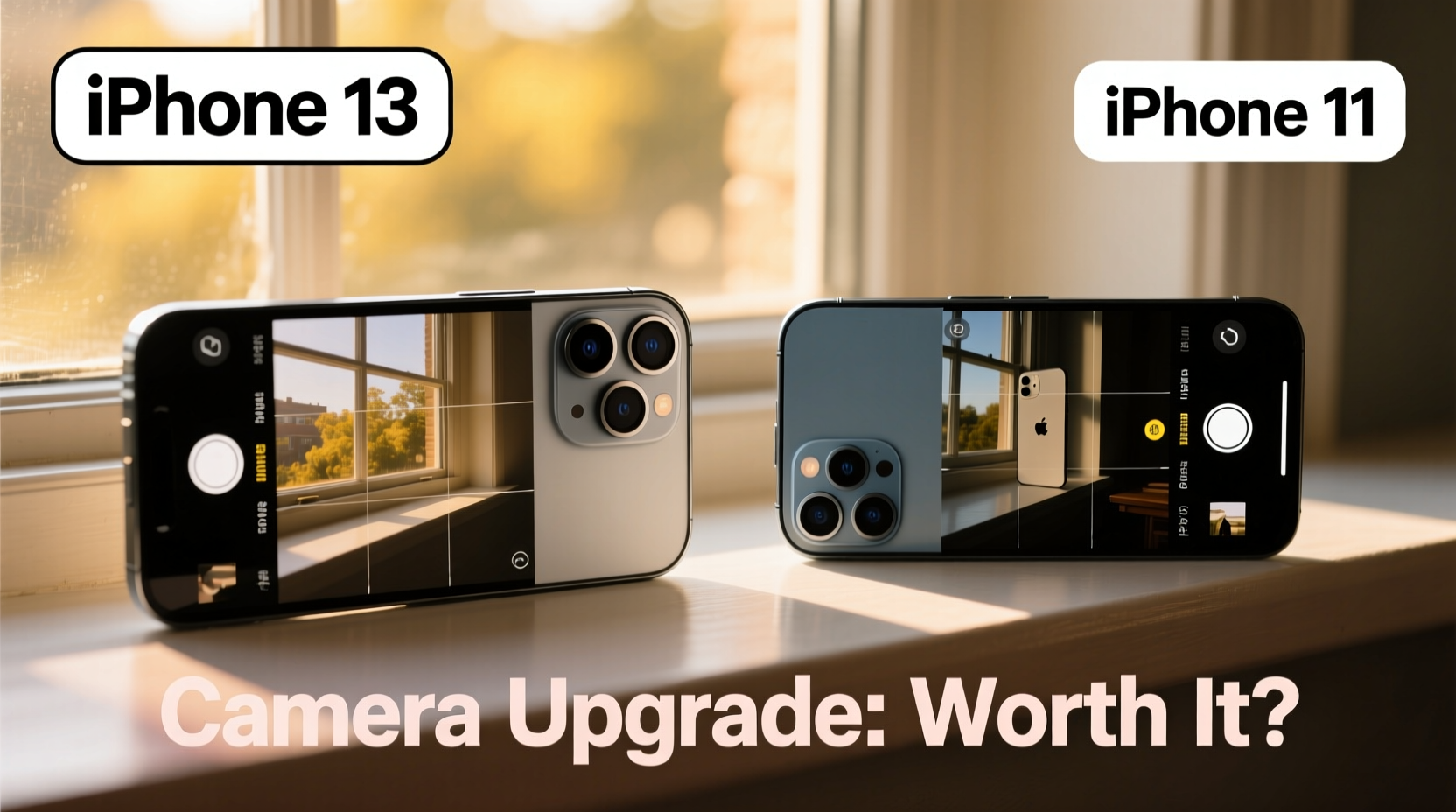
The iPhone 11 launched in 2019 with a dual-camera system: a 12MP wide lens and a 12MP ultra-wide lens. At the time, it was considered a solid step forward in smartphone photography, offering Night mode and improved dynamic range. However, by 2021 standards, some limitations became apparent—especially in low light and depth processing.
The iPhone 13 retained the same 12MP resolution but introduced significant hardware improvements:
- Larger sensor size on the main wide camera, allowing more light capture.
- Better pixel binning technology, improving image clarity in darker environments.
- Sensor-shift optical image stabilization (OIS), previously reserved for Pro models, now available on the standard iPhone 13.
- Faster aperture (ƒ/1.6) on the wide lens, up from ƒ/1.8 on the iPhone 11.
- Improved autofocus and computational photography algorithms via the A15 Bionic chip.
While both phones have two rear cameras, the way they process images is fundamentally different due to these enhancements. The iPhone 13 doesn’t just take photos; it interprets scenes more intelligently, adjusting exposure, color balance, and noise reduction in real time.
Photo Quality Comparison: Real-World Performance
To understand the difference, consider how each phone performs in common shooting scenarios.
Daylight Photography
In well-lit conditions, both phones produce sharp, vibrant images. The iPhone 11 holds up surprisingly well here. Colors are accurate, and detail retention is strong. However, the iPhone 13 pulls ahead slightly with:
- More natural skin tones
- Better highlight preservation (less blown-out skies)
- Finer texture rendering in fabrics and foliage
Low-Light and Night Mode
This is where the iPhone 13 shines. Thanks to the larger sensor and sensor-shift OIS, it captures significantly more light. Night mode activates at lower light levels and produces cleaner results with less grain.
On the iPhone 11, Night mode often introduces visible noise, especially in shadow areas. The iPhone 13 reduces this dramatically, delivering smoother gradients and truer blacks. You’ll also notice fewer artifacts around bright lights—like streetlamps or neon signs—which tend to bloom less on the newer model.
Portrait Mode and Depth Control
The iPhone 13’s improved autofocus and machine learning models make portrait shots more consistent. Edges around hair and glasses are detected more accurately, reducing the “halo” effect that sometimes plagued iPhone 11 portraits.
Additionally, the iPhone 13 allows for post-capture depth adjustment in more lighting conditions, including lower light, whereas the iPhone 11 often fails to apply depth effects when ambient light drops.
“Smartphone photography isn’t just about megapixels anymore—it’s about how the hardware and software work together to interpret light. The iPhone 13 represents a generational leap in computational imaging.” — David Kim, Mobile Imaging Analyst at TechSight Labs
Video Capabilities: Cinematic Mode and Beyond
If you shoot video regularly, the iPhone 13 offers features the iPhone 11 simply can’t match. The most notable addition is Cinematic Mode, which applies real-time focus transitions between subjects, mimicking professional filmmaking techniques.
This feature uses machine learning to detect faces and objects, then smoothly shifts focus during recording or in post-production. While not perfect, it adds a creative dimension that casual videographers appreciate.
Other video improvements include:
- Dolby Vision HDR recording at 4K/30fps (available on both, but enhanced on iPhone 13)
- Better stabilization thanks to sensor-shift OIS
- Improved audio isolation using spatial beamforming
The iPhone 11 supports Dolby Vision too, but the iPhone 13 captures a wider dynamic range and handles high-contrast scenes more gracefully.
Is the Camera Upgrade Worth It? A Decision Framework
Whether the iPhone 13’s camera is worth the upgrade depends on your usage patterns. Consider the following checklist before deciding:
- Do you frequently take photos in dim lighting (restaurants, evening walks)? → Yes = Strong reason to upgrade
- Do you share photos on social media or print them? → Higher quality matters more here
- Are you frustrated with blurry night shots or inconsistent portrait mode results? → iPhone 13 solves many of these
- Do you record videos, especially of family events or travel? → Cinematic Mode adds value
- Is your iPhone 11 still performing well otherwise? → If yes, weigh cost vs. benefit carefully
Real Example: Sarah’s Experience
Sarah, a freelance blogger and frequent traveler, used her iPhone 11 for three years. She loved capturing street food and cityscapes but grew frustrated with noisy night shots and slow autofocus in markets. After upgrading to the iPhone 13, she noticed immediate improvements:
- She could shoot handheld in candlelit cafes without flash.
- Videos of her vlogs looked more polished with automatic focus shifts.
- Her Instagram engagement increased due to sharper, more vibrant thumbnails.
For her, the camera upgrade justified the $600+ investment—not because of specs, but because it removed friction from her creative workflow.
Comparison Table: iPhone 13 vs iPhone 11 Camera Specs
| Feature | iPhone 11 | iPhone 13 |
|---|---|---|
| Main Sensor Size | 1/2.55\" | 1/1.85\" (larger) |
| Aperture (Wide Lens) | ƒ/1.8 | ƒ/1.6 |
| Image Stabilization | Optical (OIS) | Sensor-Shift OIS |
| Night Mode | Yes (on all lenses) | Yes (improved sensitivity) |
| Portrait Mode Low Light | Limited reliability | Works down to 2 lux |
| Cinematic Mode | No | Yes (1080p/30fps) |
| Dolby Vision HDR | Yes (4K/30fps) | Yes (enhanced processing) |
| Computational Photography | A13 Bionic | A15 Bionic (faster, smarter) |
Frequently Asked Questions
Can the iPhone 13 camera replace a DSLR?
No single smartphone can fully replace a dedicated camera for professional work, but the iPhone 13 comes closer than the iPhone 11. For everyday photography, social media, and even some semi-professional content creation, it’s more than capable. However, if you need interchangeable lenses, manual controls, or extreme zoom, a DSLR or mirrorless camera remains essential.
Will my iPhone 11 become obsolete soon?
Not anytime soon. Apple typically provides iOS updates for five to six years. The iPhone 11 is still supported as of 2024 and runs the latest iOS versions smoothly. Unless you’re hitting storage limits or battery degradation, there’s no urgent need to upgrade purely for obsolescence reasons.
Is the front camera better on the iPhone 13?
Yes. The iPhone 13 features a 12MP front camera withƒ/2.2 aperture and support for Night mode selfies and 4K video. The iPhone 11 has a 12MP front camera too, but with narrower field of view and slower processing. Selfies on the iPhone 13 appear brighter, with better edge detection and reduced background blur errors.
Final Verdict: When the Upgrade Makes Sense
The iPhone 13’s camera is objectively better than the iPhone 11’s—there’s no debate. But “better” doesn’t always mean “worth it.” If you’re a casual user who takes occasional snapshots and values battery life and performance over pro-level photos, the iPhone 11 may still serve you well.
However, if you rely on your phone for storytelling—whether through blogging, social media, or preserving memories in challenging lighting—the iPhone 13 delivers tangible benefits. The combination of sensor-shift stabilization, superior low-light performance, and cinematic video tools transforms how you capture moments.
Ultimately, the upgrade is worth it for the camera alone if photography plays a central role in how you use your phone. For everyone else, the decision should factor in battery life, processor speed, display brightness, and long-term software support.




 浙公网安备
33010002000092号
浙公网安备
33010002000092号 浙B2-20120091-4
Comments
No comments yet. Why don't you start the discussion?