
When Apple releases a new iPhone, the upgrade question follows like clockwork. For owners of the iPhone 12, the arrival of the iPhone 17 wasn’t the issue—it was the iPhone 13 that stirred real debate. With subtle design changes and incremental improvements, many users found themselves asking: is moving from the iPhone 12 to the iPhone 13 actually worthwhile, or is this just another round of marketing-driven hype?
The answer isn't black and white. It depends on your usage patterns, priorities, and how much you value longevity over novelty. Let’s dissect the differences between these two models—not just in specs, but in real-world impact.
Design and Build: Almost Identical, But Not Quite
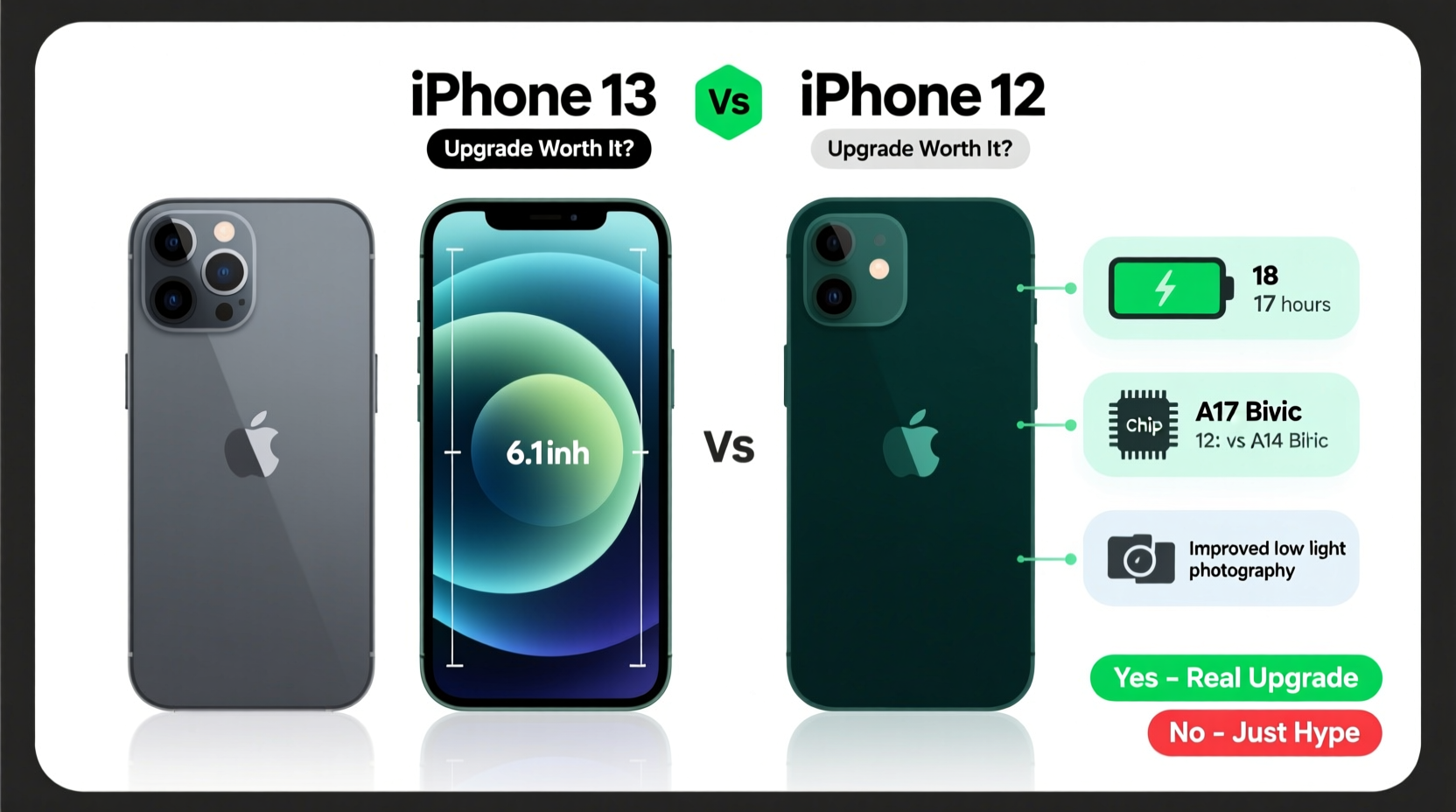
At first glance, the iPhone 13 and iPhone 12 look nearly identical. Both feature flat aluminum edges, glass backs, and IP68 water resistance. The dimensions are similar, though the iPhone 13 is slightly thicker (7.65mm vs. 7.4mm) and heavier (174g vs. 164g for the standard model). This extra bulk comes from a larger battery and improved internal layout.
The most noticeable change is the camera module. The iPhone 13’s dual cameras are positioned diagonally, compared to the vertical alignment on the iPhone 12. While this doesn’t affect functionality, it does make the 13 instantly recognizable.
Performance: A Meaningful Leap Under the Hood
The biggest internal upgrade lies in the chipset. The iPhone 12 runs on the A14 Bionic chip, while the iPhone 13 uses the A15 Bionic. On paper, the difference may seem modest, but in practice, it translates to tangible gains.
The A15 offers up to 10–15% faster CPU performance and a 15–20% improvement in GPU efficiency. More importantly, Apple optimized the chip for power efficiency, meaning tasks consume less energy. This directly contributes to better battery life—a critical factor for daily usability.
For most users, both phones handle everyday tasks like browsing, messaging, and streaming without lag. However, if you use graphics-intensive apps, edit video on your phone, or play high-end mobile games, the A15’s superior thermal management and sustained performance become apparent over time.
“The A15 Bionic isn’t just faster—it’s smarter about managing resources. That means longer responsiveness under load and slower degradation over years of use.” — David Lin, Mobile Hardware Analyst at TechPulse Insights
Camera Improvements: Subtle but Significant
Apple marketed the iPhone 13 as having “Cinematic Mode” and “Photographic Styles,” but the real story is sensor upgrades and computational photography.
- Larger sensors: The main wide camera on the iPhone 13 has a 1.7µm pixel size (up from 1.4µm), capturing 47% more light.
- Sensor-shift stabilization: Now available on the base iPhone 13 (previously reserved for Pro models), improving low-light photo and video stability.
- Cinematic Mode: Applies real-time depth-of-field effects in videos, automatically shifting focus between subjects.
In practical terms, this means noticeably better low-light photos, sharper details in backlit scenes, and smoother video recording—even when walking. For casual photographers, the difference may be hard to spot. But for those who regularly share photos or record family moments, the iPhone 13 delivers more consistent, professional-looking results.
Real Example: Nighttime Family Video
Sarah, a parent from Portland, upgraded from an iPhone 12 to a 13 primarily for better video quality. She records her toddler’s birthday parties indoors, where lighting is often poor. On the iPhone 12, videos were grainy and shaky. With the iPhone 13, she noticed immediate improvements: smoother stabilization, clearer facial details, and natural color tones—even under dim LED lights. “It felt like I upgraded to a mini camcorder,” she said.
Battery Life: Where the iPhone 13 Truly Shines
This is arguably the most compelling reason to upgrade. Despite similar screen sizes, the iPhone 13 lasts significantly longer than the iPhone 12.
| Task | iPhone 12 (hrs) | iPhone 13 (hrs) |
|---|---|---|
| Video playback | 17 | 19 |
| Streaming video | 11 | 15 |
| Talk time (LTE) | 17 | 22 |
| Standby time | ~60 hrs | ~72 hrs |
Users consistently report gaining 2–3 extra hours of screen-on time with the iPhone 13. For professionals, travelers, or anyone who relies on their phone throughout the day, this reduces charging anxiety and eliminates the need for midday power banks.
Display and Durability: One Key Advantage
Both phones feature Super Retina XDR OLED displays with 60Hz refresh rates. There’s no ProMotion 120Hz here—that’s reserved for the Pro models. However, the iPhone 13 introduced Ceramic Shield across all variants with improved drop performance.
More importantly, the iPhone 13 has a smaller front notch—reduced by 20%—freeing up a bit more screen space for videos and Face ID authentication. While not revolutionary, it’s a welcome refinement.
Should You Upgrade? A Practical Checklist
Before spending $700+ on a new device, ask yourself the following:
- Is your iPhone 12 struggling with app performance or frequent crashes?
- Do you regularly run out of battery before bedtime?
- Are you unhappy with photo quality in low light?
- Do you record videos often and want better stabilization?
- Is your current phone showing signs of wear (cracked screen, swollen battery)?
If you answered “yes” to two or more, the upgrade makes practical sense. If not, you’re likely getting solid value from your iPhone 12—especially since both models receive the same iOS updates and security patches.
Frequently Asked Questions
Can the iPhone 12 still run the latest iOS updates?
Yes. Both the iPhone 12 and iPhone 13 support iOS 17 and are expected to receive updates through at least 2026. Performance remains smooth even with newer OS versions.
Is the camera difference visible in daylight?
Marginally. In bright conditions, both phones produce excellent results. The gap widens significantly in low light, motion shots, or when using Night mode and Smart HDR.
Does the iPhone 13 charge faster than the iPhone 12?
No major difference in charging speed. Both support 20W wired fast charging and 15W MagSafe wireless charging. However, the iPhone 13 reaches full charge slightly quicker due to better power management.
Final Verdict: Worth It for Some, Hype for Others
The iPhone 13 isn’t a revolutionary leap over the iPhone 12—it’s an evolution. If you're deeply invested in Apple’s ecosystem, value camera quality, and depend on all-day battery life, the upgrade is justified. The combination of the A15 chip, improved cameras, and extended battery creates a noticeably smoother experience over months of use.
However, if your iPhone 12 is functioning well, holds a charge through your workday, and takes photos you’re happy with, the upgrade leans more toward desire than necessity. Apple excels at making last year’s model feel outdated, but in this case, the iPhone 12 remains a powerful, future-proof device.
Rather than chasing the latest release, consider your actual needs. Technology should serve you—not the other way around.




 浙公网安备
33010002000092号
浙公网安备
33010002000092号 浙B2-20120091-4
Comments
No comments yet. Why don't you start the discussion?