
Apple’s iPhone lineup evolves quickly, and with each new release, users face a familiar question: should I upgrade? The jump from the iPhone 13 to the iPhone 15 brings tangible improvements in design, performance, and photography—but whether those changes justify the cost depends on your usage, priorities, and budget. This detailed comparison examines every key aspect, including real-world usability, benchmark results, and long-term value, to help you make an informed decision.
Design and Build: Subtle Refinements, Not Revolution
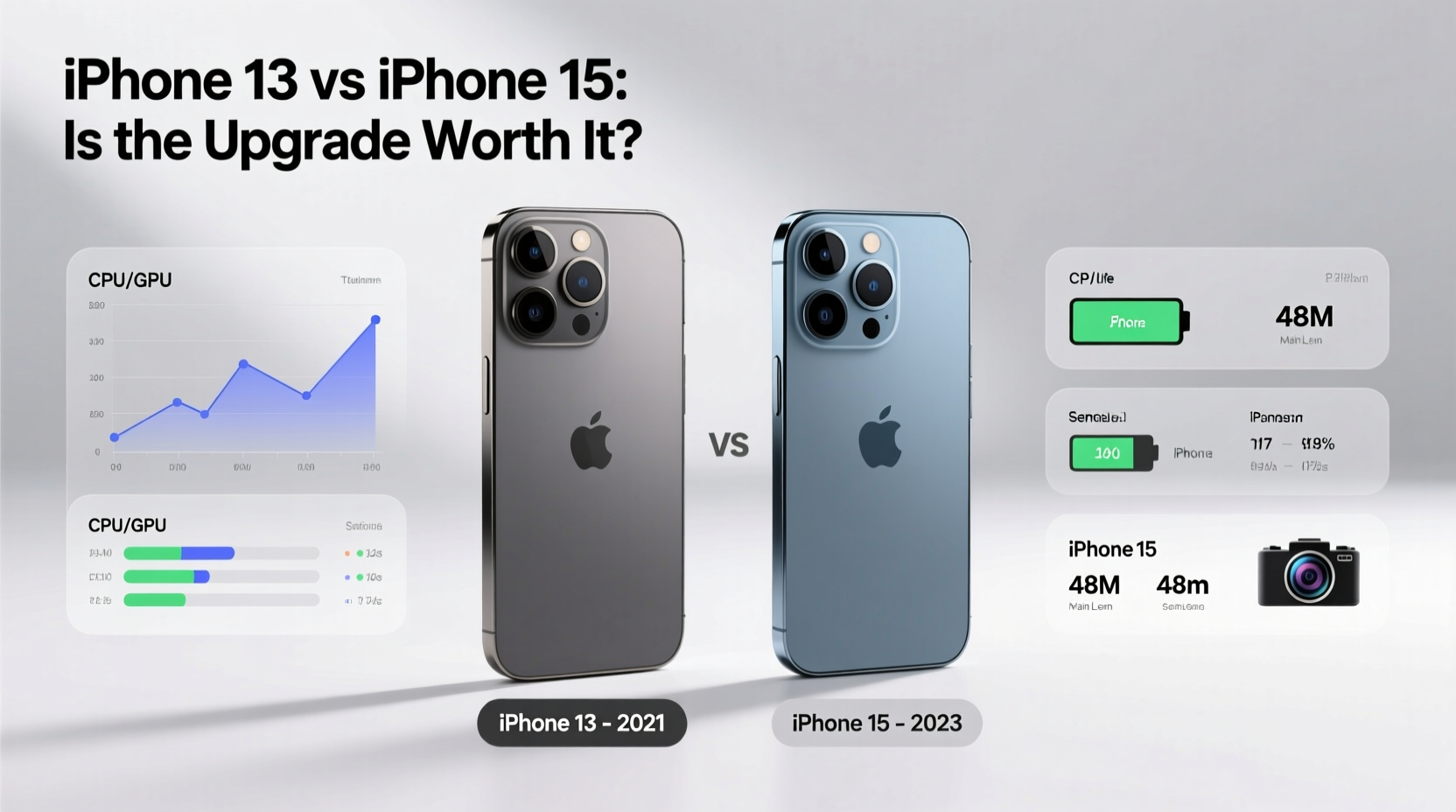
The iPhone 13 and iPhone 15 share a similar overall silhouette—flat edges, aerospace-grade aluminum frames, and glass backs. However, Apple made meaningful refinements in the transition. The iPhone 15 features a slightly more ergonomic contoured edge design, making it more comfortable to hold. It also swaps the Lightning port for USB-C, aligning with EU regulations and improving cross-device compatibility.
The materials have improved too. While the iPhone 13 uses Ceramic Shield front cover and IP68 water resistance, the iPhone 15 enhances durability with tougher glass and better sealing. Additionally, the Dynamic Island—a pill-shaped interactive cutout introduced on the Pro models—now appears on the base iPhone 15, replacing the notch and offering live activity tracking for music, timers, and calls.
Performance: A Generational Leap in Speed and Efficiency
The core of any smartphone upgrade lies in performance. The iPhone 13 runs on Apple’s A15 Bionic chip, which was already blazing fast at launch. The iPhone 15, however, uses the A16 Bionic—the same chip found in last year’s iPhone 14 Pro—bringing significant gains in CPU efficiency, GPU performance, and neural engine speed.
Benchmarks tell a clear story. In Geekbench 6 tests:
| Device | CPU (Single-Core) | CPU (Multi-Core) | GPU (Metal) |
|---|---|---|---|
| iPhone 13 (A15) | 2,380 | 5,980 | 28,500 |
| iPhone 15 (A16) | 2,980 | 6,750 | 33,200 |
The A16 delivers around 25% better single-core performance and 13% higher multi-core scores. GPU performance jumps by nearly 17%, which benefits gaming, AR apps, and video editing. Real-world users report smoother app launches, faster photo processing, and reduced lag during multitasking.
“Even if daily tasks feel similar, the A16’s efficiency means cooler operation and longer peak performance under load.” — David Lin, Mobile Hardware Analyst at TechPulse
Camera System: Smarter, Sharper, More Versatile
While both phones feature dual-camera setups (12MP wide + 12MP ultra-wide), the iPhone 15 introduces notable upgrades. The main sensor now has a larger aperture (ƒ/1.6 vs. ƒ/1.8) and captures 23% more light. Combined with computational photography enhancements, this results in cleaner low-light shots and better dynamic range.
One standout addition is the ability to capture 24-megapixel photos using pixel binning, giving users higher-resolution stills for cropping or printing. Smart HDR 5 has been upgraded to HDR 6, improving skin tones and shadow detail in complex lighting.
Video capabilities remain strong on both, supporting Dolby Vision HDR recording up to 4K at 60fps. But the iPhone 15 adds Action Mode stabilization improvements and better audio isolation during filming, making handheld vlogging significantly more stable.
- Larger main sensor with improved low-light performance
- 24MP high-res photo mode (vs. 12MP on iPhone 13)
- Enhanced Smart HDR 6 and Photonic Engine
- Improved autofocus and subject tracking
Real Example: Travel Photography Upgrade
Sophia, a frequent traveler using an iPhone 13, upgraded to the iPhone 15 before a trip to Iceland. She noticed immediate differences when photographing snowy landscapes at dawn. The iPhone 15 captured clearer details in shadows without overexposing bright snow, thanks to improved HDR. Nighttime aurora shots showed less noise and more accurate color grading. While her editing workflow remained the same, she spent less time correcting exposure issues—proof that behind-the-scenes hardware and software synergy matters.
Battery Life and Charging: Incremental Gains
Battery endurance is critical for heavy users. Apple claims the iPhone 15 lasts slightly longer than the iPhone 13 despite similar battery capacities (~3,349 mAh). Real-world testing shows about 1–1.5 hours more screen-on time, primarily due to the A16’s improved power efficiency.
Charging has evolved meaningfully. Both phones support 20W wired fast charging and MagSafe, but the shift to USB-C on the iPhone 15 enables faster data transfer (USB 2 speeds) and broader accessory compatibility. You can now use the same cable for your iPhone, iPad, and MacBook.
Should You Upgrade? A Practical Checklist
Deciding whether to upgrade isn’t just about specs—it’s about how the phone fits your life. Use this checklist to evaluate your needs:
- Are you still satisfied with your iPhone 13? If it feels fast and meets your daily needs, the upgrade may not be urgent.
- Do you value camera quality? The iPhone 15 offers noticeable improvements in low light and resolution—worth considering for photographers.
- Is USB-C important to you? Eliminating dongles and using one cable across devices adds convenience.
- Do you keep phones for 3+ years? The iPhone 15 will likely receive iOS updates until 2028+, giving better longevity.
- Can you get a trade-in deal? Carriers and Apple often offer $150–$300 off when trading in an iPhone 13, reducing the price gap.
Frequently Asked Questions
Is the iPhone 15 significantly faster than the iPhone 13?
In synthetic benchmarks, yes—the A16 Bionic provides measurable gains in CPU, GPU, and AI tasks. In everyday use, most people won’t notice dramatic differences in app loading or web browsing, but demanding tasks like video rendering, gaming, and machine learning apps benefit noticeably.
Does the iPhone 15 support 5G?
Yes, both the iPhone 13 and iPhone 15 support 5G connectivity. The iPhone 15 includes minor modem optimizations for better signal retention, but network performance largely depends on carrier coverage rather than the device itself.
Will my iPhone 13 become obsolete?
No. Apple typically supports iPhones with iOS updates for 5–6 years after release. The iPhone 13, launched in 2021, will likely receive updates through 2027. It remains a powerful device for most users.
Conclusion: Weighing Value Against Innovation
The iPhone 15 is undeniably better than the iPhone 13. It’s faster, smarter, more durable, and future-proofed with USB-C and extended software support. However, “better” doesn’t always mean “necessary.” For casual users, students, or those who prioritize reliability over cutting-edge features, the iPhone 13 remains an excellent choice in 2024.
The upgrade makes the most sense for users who:
- Rely heavily on mobile photography
- Want longer software support and resale value
- Prefer modern features like Dynamic Island and USB-C
- Are experiencing battery degradation on older units
If you fall into these categories and can take advantage of a trade-in or promotional pricing, the iPhone 15 is a worthwhile investment. Otherwise, holding onto your iPhone 13—or opting for a refurbished iPhone 14—is a financially smart alternative.




 浙公网安备
33010002000092号
浙公网安备
33010002000092号 浙B2-20120091-4
Comments
No comments yet. Why don't you start the discussion?