
The leap between iPhone generations often centers on camera improvements or processing power, but for many users, the display is the most intimate part of the experience. It’s where every photo is viewed, every message read, and every video consumed. When comparing the iPhone 13 and the iPhone 16, one of the most talked-about upgrades is the screen. But is it substantial enough to justify an upgrade? For those still enjoying a perfectly functional iPhone 13, this question isn’t just about specs—it’s about value, usability, and long-term satisfaction.
Display Evolution: From iPhone 13 to iPhone 16
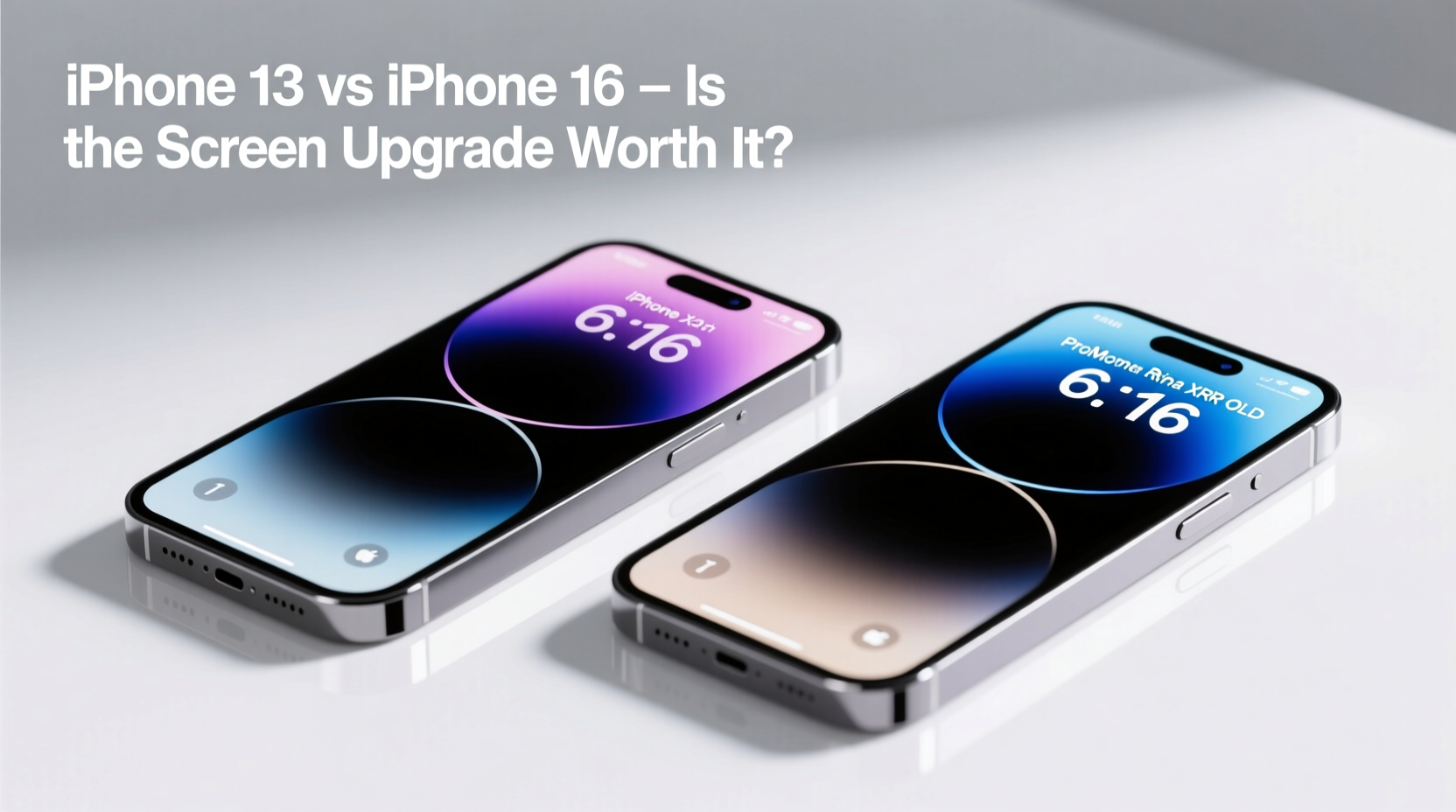
The iPhone 13 launched with a Super Retina XDR OLED display, a significant step up from earlier LCD models. At 6.1 inches with a resolution of 2532 x 1170 pixels and a peak brightness of 800 nits (1200 nits for HDR), it set a strong standard for clarity and color accuracy. However, Apple has steadily refined its display technology over the past few years, culminating in notable enhancements by the time the iPhone 16 arrived.
The iPhone 16 introduces a next-generation OLED panel with improved pixel architecture, higher peak brightness (up to 2000 nits outdoors), and better anti-reflective coating. More importantly, it features an adaptive 120Hz ProMotion refresh rate across all models—not just the Pro lineup as in previous years. This means smoother scrolling, more responsive touch input, and enhanced performance in games and animations.
Key Screen Upgrades Worth Noting
- Brightness & Visibility: The jump from 1200 nits (HDR) on the iPhone 13 to 2000 nits on the iPhone 16 dramatically improves outdoor visibility. Sunlight no longer washes out the screen as easily.
- Refresh Rate: While the iPhone 13 runs at a fixed 60Hz, the iPhone 16 offers a variable 120Hz refresh rate, adjusting dynamically based on content to balance smoothness and battery life.
- Color Accuracy & Contrast: Thanks to refined OLED materials and calibration, the iPhone 16 delivers deeper blacks, more consistent whites, and wider color gamut coverage—especially noticeable in photos and HDR videos.
- Durability: The latest Ceramic Shield front cover has been further reinforced, offering improved scratch resistance and drop protection compared to the iPhone 13’s version.
“Display quality is no longer just about resolution—it’s about how the screen performs under real conditions: sunlight, motion, and prolonged use.” — Dr. Lena Torres, Display Technology Analyst at TechInsight Labs
Comparative Overview: iPhone 13 vs iPhone 16 Screen Specs
| Feature | iPhone 13 | iPhone 16 |
|---|---|---|
| Display Type | Super Retina XDR OLED | Advanced Super Retina XDR OLED |
| Size | 6.1 inches | 6.2 inches (slightly taller aspect ratio) |
| Resolution | 2532 x 1170 pixels (~460 ppi) | 2688 x 1242 pixels (~470 ppi) |
| Refresh Rate | 60Hz | Adaptive 120Hz (ProMotion) |
| Peak Brightness (HDR) | 1200 nits | 2000 nits |
| Always-On Display | No | Yes (with dynamic notifications) |
| Anti-Reflective Coating | Standard | Improved nano-texture finish |
Real-World Impact: Who Benefits Most?
Not every user will notice—or benefit from—these display upgrades equally. Consider Sarah, a freelance photographer who uses her iPhone for editing on the go. She upgraded from an iPhone 13 to an iPhone 16 primarily for the improved color accuracy and outdoor visibility. “When I’m reviewing shots on location, the brighter screen and better contrast mean I don’t have to huddle under a jacket to see details,” she explains. “It’s small, but it saves time and reduces errors.”
In contrast, Mark, a college student who mostly texts, browses social media, and watches TikTok, found the upgrade less transformative. “It looks nicer, sure,” he says, “but my iPhone 13 screen was still great. I didn’t feel like I was missing out before.”
This divergence highlights a key insight: the value of the screen upgrade depends heavily on usage patterns. Users engaged in creative work, frequent outdoor use, or high-motion content consumption will gain the most. Casual users may find the improvement subtle.
Step-by-Step: Should You Upgrade Based on the Screen?
- Evaluate Your Current Experience: Are you satisfied with your iPhone 13’s screen in daily use? Does glare bother you? Do videos look dull or washed out?
- Test the iPhone 16 In Person: Visit an Apple Store or authorized retailer. Compare side-by-side in natural light and while scrolling through apps.
- Assess Your Use Case: Ask whether smoother animations, better HDR playback, or always-on glanceability add meaningful value to your routine.
- Consider Battery Trade-offs: The 120Hz display consumes more power. Check if the iPhone 16’s efficiency improvements offset this in real-world usage.
- Factor in Longevity: If you plan to keep your phone for 3+ years, investing in the better display now could enhance long-term satisfaction.
Frequently Asked Questions
Is the iPhone 16 screen significantly sharper than the iPhone 13?
While both displays are sharp, the iPhone 16’s slightly higher pixel density (470 ppi vs. 460 ppi) and improved subpixel arrangement result in marginally crisper text and finer image detail, especially when viewing high-resolution content.
Does the 120Hz refresh rate make a big difference?
Yes—for users sensitive to motion fluidity. Scrolling feels noticeably smoother, and interactions like swiping between apps or playing fast-paced games are more responsive. However, if you’re used to 60Hz, the change may take a day or two to appreciate fully.
Can the brighter screen improve battery life?
Not directly. Higher brightness typically consumes more power. However, the iPhone 16’s more efficient display driver and iOS optimizations help maintain battery life despite the brighter panel, especially when auto-brightness is enabled.
Actionable Checklist Before Upgrading
- ✅ Test both devices side by side in daylight
- ✅ Try scrolling through a long webpage or social feed to feel the refresh rate difference
- ✅ Play a 4K HDR video to assess contrast and color depth
- ✅ Check your current battery health—if it’s above 85%, your iPhone 13 may still have legs
- ✅ Calculate total upgrade cost including trade-in value
Final Verdict: Is the Screen Upgrade Worth It?
The screen improvements from the iPhone 13 to the iPhone 16 are technically impressive and deliver measurable gains in brightness, responsiveness, and durability. For professionals, creatives, or anyone who spends hours on their device in varied lighting conditions, the upgrade offers tangible benefits that enhance daily usability.
However, for average users who aren’t pushing their phones to the limit, the iPhone 13’s display remains excellent. The emotional \"wow\" factor of the new screen may fade after a week, leaving only marginal practical advantages.
If your decision hinges solely on display quality, ask yourself: *Does my current screen hold me back?* If the answer is no, the upgrade may be more about novelty than necessity. But if you crave a more immersive, responsive, and resilient viewing experience—one that future-proofs your device for years—the iPhone 16’s screen justifies the leap.




 浙公网安备
33010002000092号
浙公网安备
33010002000092号 浙B2-20120091-4
Comments
No comments yet. Why don't you start the discussion?