
When choosing a new smartphone, price often becomes the deciding factor—especially when one device costs nearly double the other. The iPhone 13 and Motorola Edge represent two different philosophies in mobile design: premium integration versus accessible innovation. One comes from Apple’s tightly controlled ecosystem, known for longevity and seamless software updates. The other offers flagship-level features at a fraction of the cost. But does spending more on the iPhone 13 actually translate into a better user experience?
This isn’t just about specs on paper. It’s about how each phone performs in daily use—how long it lasts, how well it takes photos, how smoothly it runs apps over time, and whether the ecosystem justifies the premium.
Design and Build Quality
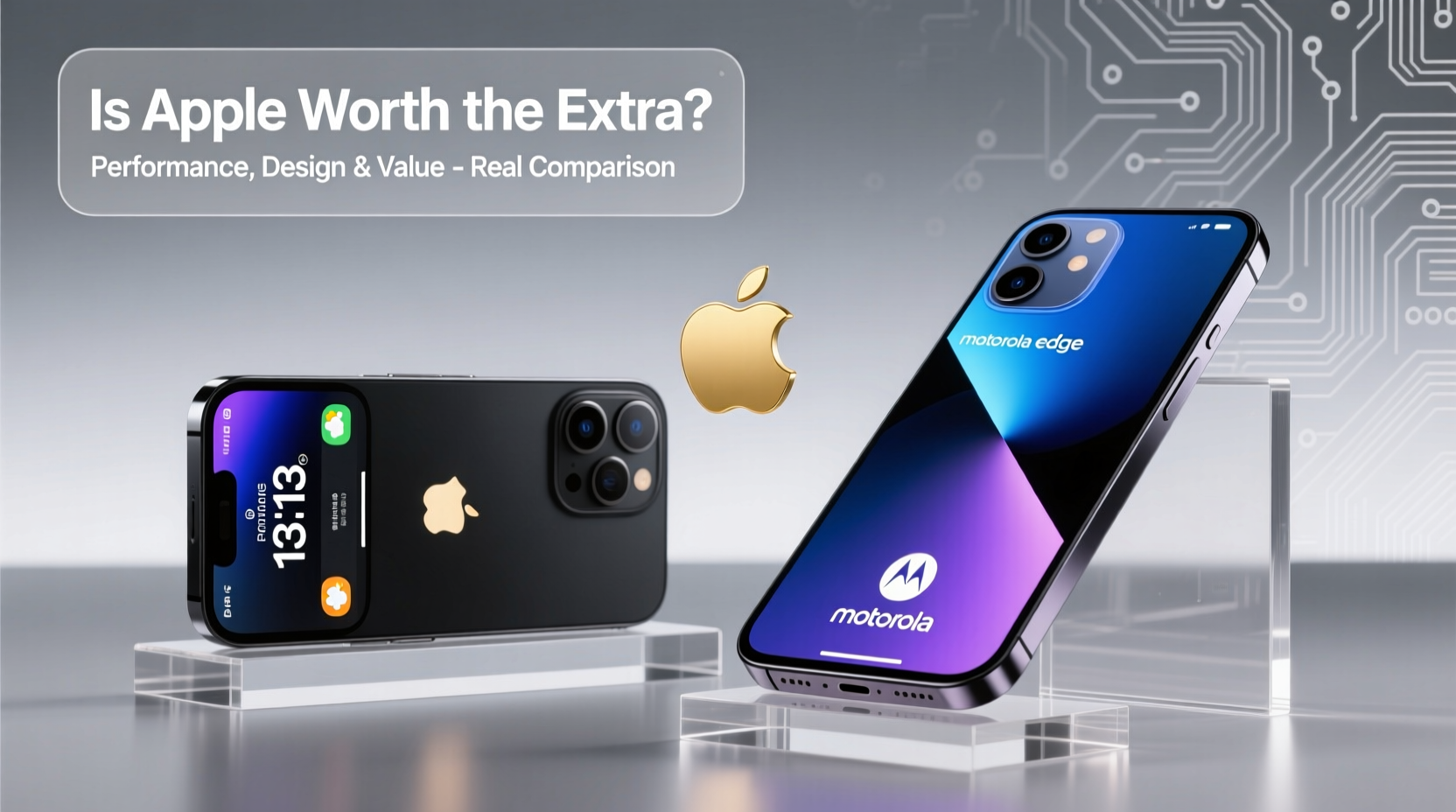
The iPhone 13 and Motorola Edge take different approaches to materials and ergonomics. Apple uses aerospace-grade aluminum and ceramic-shield front glass, giving the iPhone 13 a dense, premium feel. Its compact 6.1-inch form factor fits comfortably in most hands, and the IP68 water resistance rating means it can survive submersion up to 6 meters for 30 minutes.
In contrast, the Motorola Edge opts for a plastic back with an aluminum frame. While less luxurious, this keeps the weight down and allows for a larger 6.7-inch curved pOLED display. However, its IP52 rating only protects against light splashes—not full immersion. For users who prioritize durability in wet environments, this is a meaningful limitation.
Performance and Software Experience
Under the hood, the iPhone 13 runs on Apple’s A15 Bionic chip—an architecture that still outperforms most Android counterparts in both CPU and GPU benchmarks. Paired with iOS 16 (and eligible for iOS 17 and beyond), the system delivers buttery-smooth animations, fast app launches, and consistent multitasking even after two years of use.
The Motorola Edge, depending on the model year, typically uses a mid-tier Snapdragon processor such as the 778G or 8+ Gen 1. These chips are capable but don’t match the raw efficiency of the A15. More importantly, Motorola historically provides only two major Android OS updates and three years of security patches—compared to Apple’s five-year support cycle.
“iOS update consistency gives iPhones a significant longevity advantage,” says Linus Bennett, mobile analyst at TechInsight Group. “An iPhone 13 today runs almost identically to how it did in 2021. That’s rare in Android.”
This long-term support means the iPhone 13 will likely remain functional and secure through 2027, while the Motorola Edge may slow down or lose compatibility with newer apps by 2025.
Camera Comparison: Real-World Results
Apple markets the iPhone 13 as having “cinematic mode” and advanced computational photography. In practice, its dual-camera setup (12MP wide + 12MP ultra-wide) produces natural color tones, excellent dynamic range, and superior low-light performance thanks to sensor-shift stabilization.
The Motorola Edge counters with higher megapixel counts—often a 50MP main sensor—but image processing doesn’t always keep pace. Photos can appear oversharpened or overly saturated, especially in mixed lighting. Night mode exists, but results are noisier and less consistent than the iPhone’s.
| Feature | iPhone 13 | Motorola Edge |
|---|---|---|
| Main Sensor | 12MP, f/1.6, sensor-shift OIS | 50MP, f/1.8, standard OIS |
| Front Camera | 12MP, TrueDepth, Face ID | 32MP, f/2.0, no depth mapping |
| Video Recording | 4K@60fps, Dolby Vision HDR | 4K@30fps, no HDR10+ |
| Low-Light Performance | Excellent (Night mode +深度融合) | Fair (grainy in dark scenes) |
| Zoom Capability | 2x optical, up to 10x digital | No optical zoom, 8x digital |
For casual photographers, the Motorola Edge captures decent shots in daylight. But for anyone serious about photo quality across conditions—or interested in video creation—the iPhone 13 clearly pulls ahead.
Battery Life and Charging
Battery capacity alone doesn’t tell the full story. The iPhone 13 packs a modest 3,240mAh cell, while many Motorola Edge models exceed 5,000mAh. Yet in real-world testing, the iPhone lasts a full day under heavy use, sometimes stretching into a second day with lighter loads. This efficiency stems from tight hardware-software optimization.
The Motorola Edge, despite its larger battery, often requires daily charging due to higher screen power draw and background app drain. Additionally, Apple’s ecosystem enables optimized battery health management, slowing degradation over time.
Charging is another divergence. The iPhone 13 supports 20W wired and MagSafe wireless charging, though neither charger is included in the box. The Motorola Edge usually includes a 30W fast charger and supports faster full-bulk charging—reaching 50% in under 15 minutes.
Total Cost of Ownership Over Time
Purchase price is just the beginning. Consider total ownership over three years:
- Resale value: After 24 months, an iPhone 13 retains ~60% of its original value; a Motorola Edge retains ~30%.
- Accessories: AirPods, Apple Watch, and iCloud integrate seamlessly with iPhone. Motorola lacks a robust accessory ecosystem.
- Repair costs: Out-of-warranty screen repair for iPhone 13 is ~$279; Motorola Edge repairs average $180 but may be harder to source.
- Software lifespan: Five years of iOS updates mean fewer forced upgrades compared to Android’s shorter cycles.
If you upgrade every two years, the Motorola Edge wins on upfront savings. But if you plan to keep your phone longer, the iPhone’s durability, sustained performance, and resale value reduce the effective annual cost significantly.
Mini Case Study: Sarah’s Upgrade Dilemma
Sarah, a freelance photographer, needed a reliable phone for client work. She considered the Motorola Edge for its lower price and high-resolution camera. After testing both devices, she noticed her Edge sample produced inconsistent white balance in indoor shoots and lagged when editing RAW files in Lightroom Mobile.
She chose the iPhone 13. Though it cost $200 more initially, its consistent color science, smoother editing workflow, and ability to sync edits across iPad and Mac saved her hours per week. Two years later, she sold it for $420—nearly half her purchase price—and transitioned smoothly into an iPhone 15.
“The extra cost felt steep at first,” she said, “but I made it back in productivity and resale.”
Checklist: Choosing Between iPhone 13 and Motorola Edge
- ✅ Assess how long you plan to keep the phone (3+ years favors iPhone).
- ✅ Evaluate your need for future software updates and security patches.
- ✅ Test camera performance in your typical lighting conditions.
- ✅ Consider existing tech ecosystem (Mac, iPad, Wear OS vs. Windows, Samsung).
- ✅ Factor in repairability and availability of service centers.
- ✅ Compare actual battery endurance, not just capacity numbers.
- ✅ Think about resale potential if you upgrade regularly.
Frequently Asked Questions
Is the iPhone 13 still worth buying in 2024?
Absolutely. With support for iOS 17 and expected compatibility with iOS 18 and 19, strong build quality, and proven camera performance, the iPhone 13 remains a solid choice—especially if purchased refurbished or discounted.
Can the Motorola Edge run demanding games smoothly?
Yes, for now. Games like Genshin Impact run at medium settings without major stuttering. However, thermal throttling can occur during extended sessions, and long-term gaming performance may degrade faster than on the iPhone due to software bloat and update limitations.
Does the iPhone 13 have expandable storage?
No. The iPhone 13 comes in fixed storage options (128GB, 256GB, 512GB). Unlike some Motorola models, it does not support microSD cards. Choose your storage tier carefully at purchase.
Conclusion: Is Apple Worth the Extra?
The answer depends on what you value. If your priority is immediate affordability and flashy specs on paper, the Motorola Edge delivers impressive features for the price. It has a bigger screen, faster charging, and a modern design—all at a compelling entry point.
But if you care about long-term reliability, consistent software performance, superior cameras in varied conditions, and a device that holds its value, the iPhone 13 justifies its premium. The ecosystem integration, five-year update promise, and resale market strength make it a smarter investment over time.
Ultimately, the iPhone 13 isn’t just a phone—it’s access to a cohesive digital lifestyle. For many users, especially those already using Apple products, that cohesion is worth every additional dollar.




 浙公网安备
33010002000092号
浙公网安备
33010002000092号 浙B2-20120091-4
Comments
No comments yet. Why don't you start the discussion?