
For fans of compact smartphones, the iPhone 13 mini represented a rare gem — powerful performance in a pocketable form. But with Apple’s shift toward larger devices, many are now considering upgrading to the iPhone 14. The central question isn’t just about size — it’s whether the camera improvements justify leaving behind one of the last truly small iPhones.
The iPhone 14 brings tangible upgrades over its predecessor, especially in photography. But does that matter if you value portability above all else? Let’s break down the real-world differences between the iPhone 14 and iPhone 13 mini cameras, examine who benefits most from the upgrade, and help you decide if it’s time to let go of the mini form factor.
Camera Hardware: What Changed?
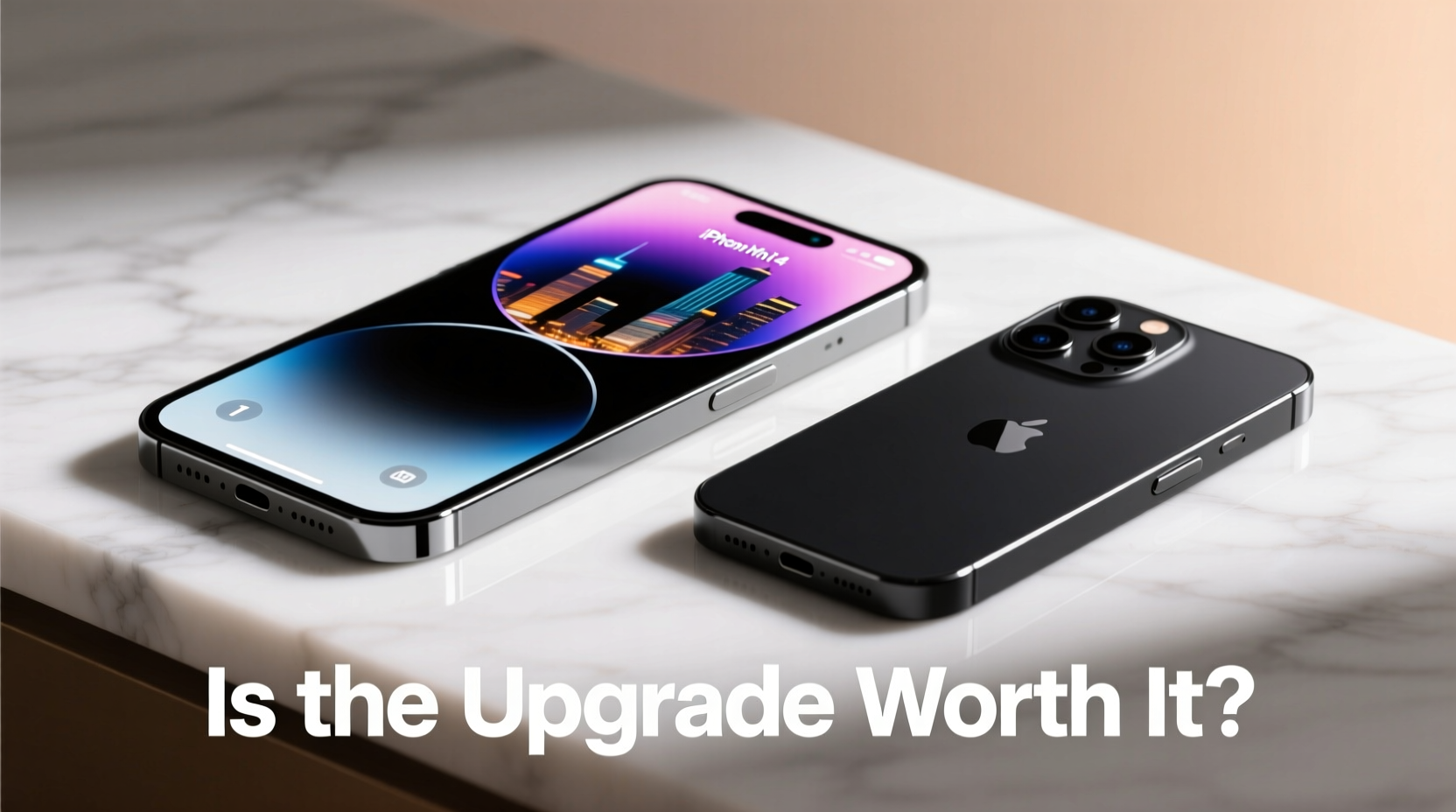
The iPhone 13 mini features a dual-camera system: a 12MP main sensor and a 12MP ultra-wide lens. While capable, both sensors are relatively small, limiting low-light performance and dynamic range. The main sensor uses sensor-shift stabilization, a feature previously reserved for Pro models, which helps reduce blur in handheld shots.
The iPhone 14 retains the same dual-lens setup but introduces key hardware improvements. Most notably, the main sensor is larger — 19% bigger than the one in the 13 mini — allowing more light capture. It also features a new Photonic Engine, an advanced image signal processing pipeline that enhances mid- to low-light performance before fusion and HDR processing.
While the ultra-wide lens remains unchanged, the computational photography upgrades on the iPhone 14 significantly affect photo quality across lighting conditions. Night mode now activates on both rear cameras and the front-facing camera, whereas on the 13 mini, it’s limited to the main and front cameras only.
“Apple’s focus on computational photography means even non-Pro models now deliver near-Pro results — especially in challenging lighting.” — David Kim, Mobile Imaging Analyst at DXOMARK
Image Quality Comparison: Real-World Performance
In daylight, both phones produce sharp, vibrant images with accurate color reproduction. However, subtle differences emerge upon closer inspection. The iPhone 14 delivers better shadow detail, reduced noise, and improved dynamic range thanks to the larger sensor and enhanced Smart HDR 4.
Low-light performance is where the gap widens. The iPhone 14 consistently captures brighter night shots with more natural exposure and less grain. Its Night mode exposures are faster and more consistent, reducing motion blur when shooting handheld. In side-by-side comparisons, the 13 mini often underexposes scenes or applies aggressive noise reduction that smudges fine details.
Video quality sees incremental gains. Both support Dolby Vision HDR recording up to 4K at 30fps, but the iPhone 14 adds Action mode — a highly effective stabilization feature that smooths out shaky footage, ideal for walking shots or active scenarios. This alone makes the 14 a better choice for vloggers or casual videographers.
Detailed Feature Comparison
| Feature | iPhone 13 mini | iPhone 14 |
|---|---|---|
| Main Sensor Size | 1/1.67\" | 1/1.54\" (19% larger) |
| Ultra-Wide Lens | 12MP, f/2.4 | 12MP, f/2.4 |
| Night Mode (Rear Cameras) | Main only | Main & Ultra-Wide |
| Front Camera Night Mode | Yes | Yes |
| Photonic Engine | No | Yes |
| Action Mode (Video) | No | Yes |
| Smart HDR Version | Smart HDR 4 | Smart HDR 4 (enhanced) |
| Photographic Styles | No | Yes |
Mini Case Study: Urban Photographer’s Dilemma
Sophie, a freelance photographer based in Brooklyn, used her iPhone 13 mini for street photography and social media content. She loved how easily it slipped into her jacket pocket and balanced well during long walks. But as winter approached, she noticed her night shots lacked clarity — city lights bloomed, and shadows turned muddy.
She borrowed an iPhone 14 for a week and immediately saw a difference. Her nighttime street scenes retained crisp details in neon signs and window reflections. Action mode stabilized her walking vlogs without needing a gimbal. Though she missed the smaller size, the quality jump made her reconsider. “I still miss the mini,” she said, “but I’m posting fewer retakes now — that saves me hours.”
Who Should Upgrade?
The decision hinges on your priorities. If you shoot frequently in dim environments — concerts, evening walks, indoor events — the iPhone 14 offers meaningful improvements. The larger sensor, combined with better software processing, translates to more usable photos without editing.
Videographers benefit even more. Action mode is a game-changer for smooth handheld footage, and improved audio isolation during video helps in windy or noisy settings. For content creators, TikTok filmmakers, or parents capturing fast-moving kids, this stability is invaluable.
However, if you rarely shoot in low light, mostly share photos casually, or prioritize one-handed use and pocketability, the 13 mini may still serve you well. Its camera remains competent, and iOS updates ensure continued software support.
Checklist: Is Upgrading Worth It for You?
- ✅ Do you often take photos in low-light conditions?
- ✅ Are you frustrated by blurry night shots on your 13 mini?
- ✅ Do you record videos while moving (e.g., walking, biking)?
- ✅ Have you considered using cinematic mode or Action mode?
- ✅ Can you adapt to a larger phone in your daily carry?
If you answered “yes” to three or more, the iPhone 14’s camera upgrade likely justifies the size trade-off.
Frequently Asked Questions
Does the iPhone 14 have a telephoto lens?
No, neither the iPhone 14 nor the 13 mini includes a dedicated telephoto lens. Both rely on digital zoom or software cropping for 2x and higher magnification. For optical zoom, consider the iPhone 14 Plus or Pro models.
Can the iPhone 14’s camera replace a compact camera?
For most casual and semi-professional needs, yes. The combination of improved low-light performance, Smart HDR, and Action mode makes the iPhone 14 competitive with many point-and-shoot cameras — especially when carrying convenience matters.
Will the iPhone 13 mini stop receiving updates?
Apple typically supports iPhones for five years. The 13 mini will likely receive iOS updates through 2026, so you’re not losing software longevity. However, future AI-powered photo features may favor newer hardware.
Conclusion: Balancing Size and Capability
The iPhone 13 mini was a triumph of compact engineering, proving that small phones could still deliver flagship-level performance. But technology evolves, and with it, expectations. The iPhone 14 doesn’t reinvent the smartphone, but it refines the photographic experience in ways that matter — especially when light is scarce or motion is involved.
Giving up the mini size isn’t trivial. Larger phones are harder to use one-handed, bulkier in pockets, and often require cases that further increase their footprint. Yet, if your phone is your primary camera, the iPhone 14 offers measurable gains in image quality, versatility, and creative control.
Ultimately, the upgrade is worth it if you value better photos and videos more than pocket comfort. For those who do, the iPhone 14 strikes a compelling balance between capability and usability — just not in the smallest package.




 浙公网安备
33010002000092号
浙公网安备
33010002000092号 浙B2-20120091-4
Comments
No comments yet. Why don't you start the discussion?