
Choosing between the iPhone 14 Plus and the iPhone 13 Pro Max isn’t just about deciding on a newer model versus an older one—it’s a fundamental trade-off between screen size and professional-grade capabilities. The 14 Plus offers a larger display and improved battery life in Apple’s newest lineup, but it lacks key features that defined the Pro series for years. Meanwhile, the 13 Pro Max still packs a punch with its triple-camera system, ProMotion display, and premium stainless steel build. So, is upgrading to the bigger screen of the 14 Plus truly worth sacrificing those high-end Pro features?
Display and Design: Size vs Substance
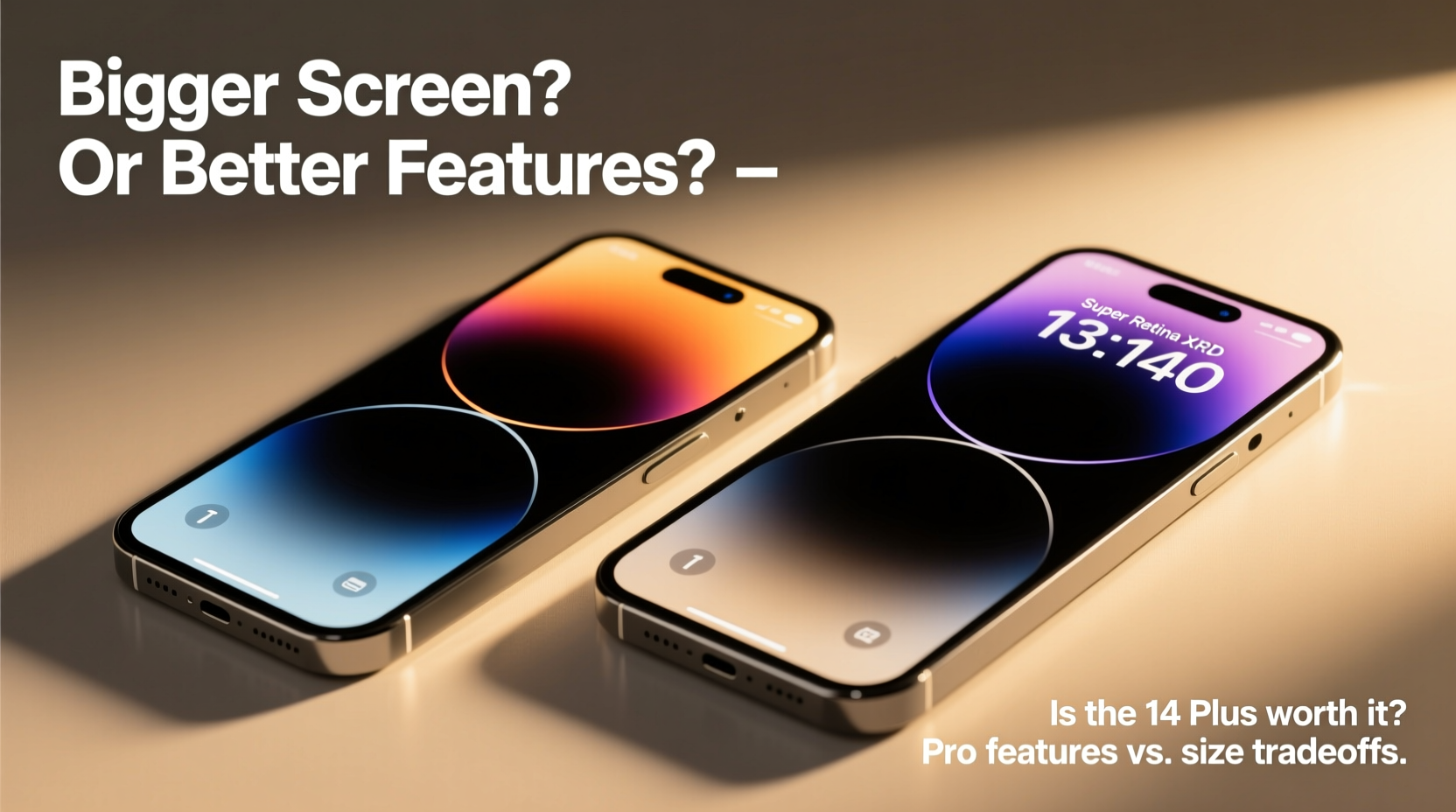
The most immediate difference between these two devices lies in their design philosophy. The iPhone 14 Plus features a 6.7-inch Super Retina XDR OLED display—matching the 13 Pro Max in size—but without the 120Hz ProMotion technology. That means smoother scrolling, responsive animations, and better gaming performance are exclusive to the older Pro model.
Apple’s decision to reserve ProMotion for Pro models underscores a clear product segmentation strategy. While the 14 Plus delivers excellent color accuracy and brightness, its 60Hz refresh rate feels noticeably less fluid when switching between apps or browsing fast-moving content.
In terms of build quality, the 13 Pro Max stands out with its surgical-grade stainless steel frame and textured matte glass back, offering a more premium feel than the aluminum chassis of the 14 Plus. The weight difference is notable too—the Pro Max feels substantial, almost luxurious, while the 14 Plus leans toward everyday practicality.
Camera Capabilities: One Step Forward, Two Steps Back?
On paper, the iPhone 14 Plus inherits Apple’s updated main sensor and improved computational photography. It supports Photonic Engine for better low-light shots and introduces Action Mode for stabilized video. However, it only has a dual-camera setup: wide and ultra-wide. Missing entirely is the telephoto lens—a defining feature of every Pro Max since 2016.
The 13 Pro Max, by contrast, includes a full trifecta: 26 mm wide, 52 mm telephoto (3x optical zoom), and 13 mm ultra-wide. This gives photographers far greater flexibility, especially in portrait work, wildlife shots, or distant subjects. Combined with ProRAW, ProRes video recording, and macro mode, the 13 Pro Max remains a compelling choice for creatives.
“Even two years later, the 13 Pro Max camera system holds up remarkably well against current mid-tier phones. Its versatility is unmatched in non-Pro iPhones.” — David Lin, Mobile Photography Analyst at TechScope Weekly
| Feature | iPhone 14 Plus | iPhone 13 Pro Max |
|---|---|---|
| Display Refresh Rate | 60Hz | 120Hz (ProMotion) |
| Rear Cameras | Wide + Ultra-Wide | Wide + Telephoto + Ultra-Wide |
| Optical Zoom | 2x (digital) | 3x optical, 15x digital |
| Video Recording | 4K HDR, Dolby Vision | ProRes, 4K HDR, Action Mode (iOS 16+) |
| Build Material | Aircraft-grade aluminum | Surgical-grade stainless steel |
| Battery Life (Video Playback) | Up to 20 hours | Up to 28 hours |
Battery Life and Performance: Real-World Trade-Offs
Apple claims the iPhone 14 Plus delivers up to 20 hours of video playback, which represents a significant improvement over previous standard models. But the 13 Pro Max still edges ahead with up to 28 hours—an advantage rooted in both battery capacity and A15 Bionic efficiency.
Performance-wise, the 14 Plus runs on the A15 chip (the same as the iPhone 13 Pro Max), though with one fewer GPU core. In daily use, this difference is negligible. Both phones handle multitasking, gaming, and app switching with ease. However, sustained graphical loads—like extended AR sessions or 4K video editing—favor the Pro Max’s superior thermal management and full GPU configuration.
If your usage revolves around long trips, travel vlogging, or all-day productivity without access to charging, the 13 Pro Max continues to set the benchmark for endurance.
Real-World Example: A Travel Photographer’s Dilemma
Consider Sarah, a freelance travel photographer who upgraded from an iPhone 12 Pro Max to the 14 Plus expecting better battery and modern features. She loved the brighter display and longer standby time. But within weeks, she noticed limitations: no 3x zoom for capturing distant landmarks, lack of ProRes for client deliverables, and the absence of macro mode for nature close-ups.
After three months, Sarah switched back to a refurbished 13 Pro Max. “The larger screen was nice,” she said, “but I lost creative control. For my work, zoom and video quality matter more than screen inches.” Her experience highlights a crucial truth: specs don’t always translate to utility. Context defines value.
Should You Choose Screen Size Over Pro Features?
For casual users, the answer may be yes. If you primarily stream videos, browse social media, or need a phone that lasts all day on a single charge, the iPhone 14 Plus makes sense. Its large screen enhances media consumption, and iOS 16+ features like improved Emergency SOS and Crash Detection add meaningful safety benefits.
But power users—especially those invested in photography, videography, or mobile creativity—will feel constrained by the missing Pro features. No amount of battery optimization compensates for the inability to shoot lossless 4K video or capture tight portraits with optical zoom.
- Choose the iPhone 14 Plus if: You want a modern, large-screen iPhone at a lower price point and don’t rely heavily on advanced camera tools.
- Stick with the 13 Pro Max if: You value professional-grade cameras, smoother display performance, and premium materials—even if it means using last year’s processor.
Checklist: Before Deciding Between iPhone 14 Plus and 13 Pro Max
- Assess how often you use optical zoom or shoot in low light.
- Determine whether 120Hz scrolling matters for your comfort.
- Consider your video needs—do you record in ProRes or edit on-device?
- Evaluate build quality preference: lightweight aluminum vs. durable stainless steel.
- Compare prices—refurbished 13 Pro Max units often match new 14 Plus pricing.
- Test both devices in-store to feel the size, weight, and responsiveness.
Frequently Asked Questions
Is the iPhone 14 Plus camera better than the 13 Pro Max?
In daylight and standard conditions, the 14 Plus produces excellent photos thanks to the Photonic Engine. However, the 13 Pro Max wins overall due to its telephoto lens, Night mode across all lenses, and ProRAW support. For serious photography, the Pro Max remains superior.
Does the 14 Plus support ProMotion or Always-On Display?
No. The 14 Plus uses a standard 60Hz display and does not include ProMotion or Always-On functionality. These features are reserved for iPhone 13 Pro and later Pro models.
Can the 13 Pro Max still receive software updates?
Yes. As of 2024, the iPhone 13 Pro Max is eligible for iOS 18 and will likely continue receiving updates through 2026. Its long-term software support remains intact.
Final Verdict: Value Beyond the Screen
The iPhone 14 Plus offers a tempting combination of size, battery life, and modern design. But dismissing the enduring strengths of the 13 Pro Max would be shortsighted. Its ProMotion display, versatile triple-camera array, and premium construction deliver tangible benefits that many users grow to depend on.
Ultimately, choosing between them isn’t about which phone is “better” overall—it’s about aligning your device with your lifestyle. If you watch a lot of video and hate charging multiple times a day, go big with the 14 Plus. But if you create content, appreciate fine details, or simply enjoy the refinement of top-tier engineering, the 13 Pro Max proves that sometimes, older doesn’t mean obsolete.




 浙公网安备
33010002000092号
浙公网安备
33010002000092号 浙B2-20120091-4
Comments
No comments yet. Why don't you start the discussion?