
When Apple released the iPhone 14 lineup, consumers were once again faced with a familiar dilemma: should they go for the larger standard model or invest in the flagship Pro variant? The iPhone 14 Plus and iPhone 14 Pro Max share core similarities—same screen size, comparable battery life, and access to the same iOS ecosystem—but differ significantly in key areas like camera technology, processor performance, display quality, and price. For many buyers, the question isn’t just about specs—it’s about value. Is the jump from $899 (14 Plus) to $1,099 (14 Pro Max) justified by real-world improvements?
Design and Build Quality
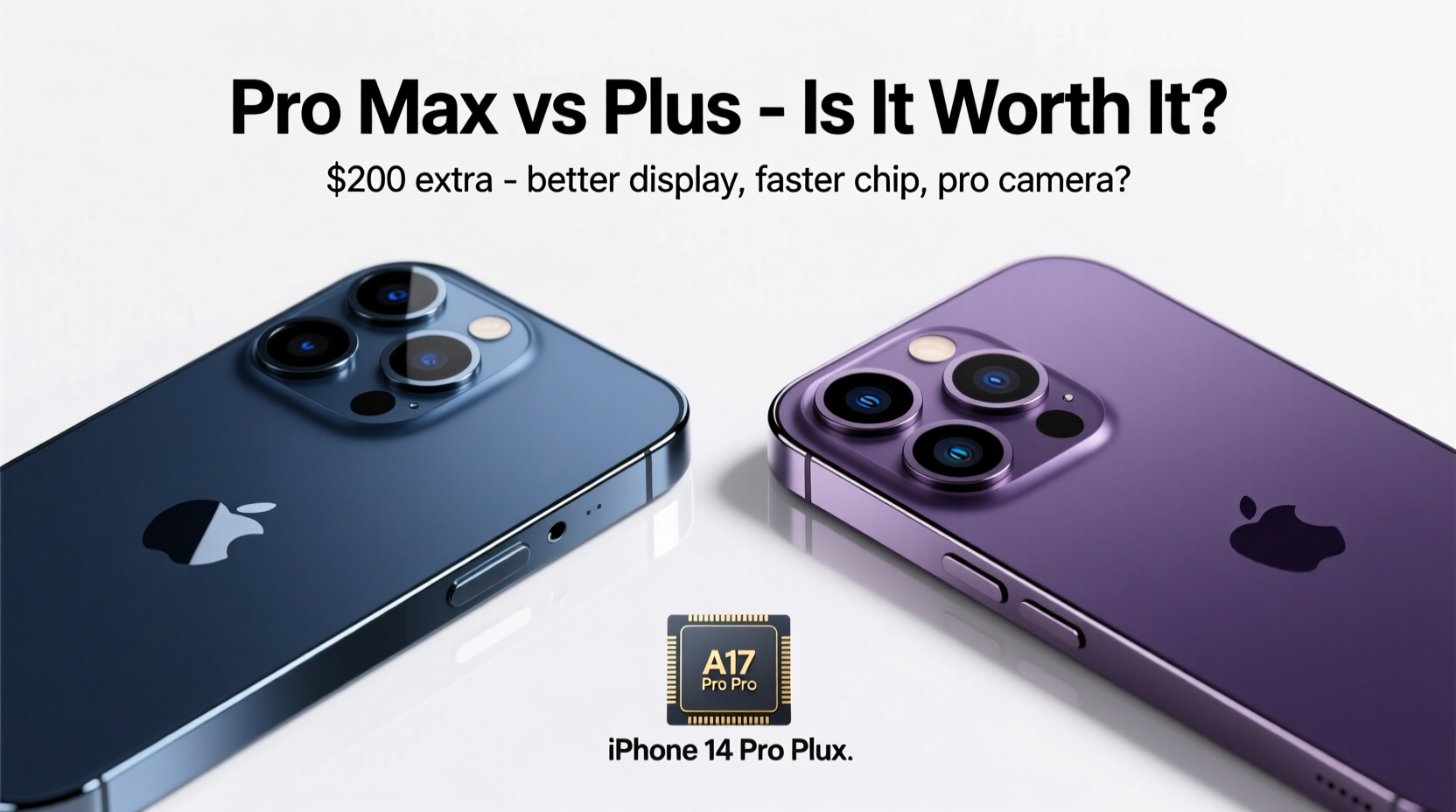
At first glance, both phones are large, rectangular slabs with flat edges and Ceramic Shield front covers. However, the differences in materials become immediately apparent. The iPhone 14 Plus uses aerospace-grade aluminum for its frame, while the 14 Pro Max steps up to surgical-grade stainless steel. This not only gives the Pro Max a more premium feel but also adds noticeable weight—240g compared to the Plus’s 203g.
The Pro Max also features a slightly more refined design language, including a smaller Dynamic Island cutout replacing the notch, which integrates notifications and live activities directly into the display. While the Plus retains the traditional notch, it doesn’t detract from usability, but it does signal that you’re not using Apple’s most advanced model.
Display: Brightness, Refresh Rate, and Usability
This is one of the most significant differentiators. The iPhone 14 Plus has a 6.7-inch Super Retina XDR OLED display with a maximum brightness of 1,000 nits (HDR). It’s bright, sharp, and perfectly adequate for everyday use. But the 14 Pro Max goes further with Apple’s ProMotion technology, offering an adaptive 120Hz refresh rate that makes scrolling, gaming, and animations dramatically smoother.
Beyond smoothness, the Pro Max peaks at 2,000 nits in outdoor conditions—twice as bright as the Plus. In direct sunlight, this translates to better readability without constantly adjusting brightness manually.
“High refresh rate displays have become essential for power users. Once you experience 120Hz, going back to 60Hz feels sluggish.” — David Liu, Mobile UX Analyst at TechPulse Insights
Display Comparison Table
| Feature | iPhone 14 Plus | iPhone 14 Pro Max |
|---|---|---|
| Screen Size | 6.7 inches | 6.7 inches |
| Refresh Rate | 60Hz | Adaptive 120Hz (ProMotion) |
| Peak Brightness (HDR) | 1,000 nits | 2,000 nits (outdoor) |
| Notch vs Cutout | Traditional Notch | Dynamic Island |
Performance: A15 vs A16 Bionic Chip
The iPhone 14 Plus runs on the A15 Bionic chip—the same processor found in the iPhone 13 Pro models. It's still powerful enough for multitasking, gaming, and AR applications. However, the iPhone 14 Pro Max introduces the A16 Bionic, built on a 4nm process, offering approximately 40% better power efficiency and 20% improved CPU performance under load.
In day-to-day usage, the difference may not be obvious. Both phones handle apps, Safari tabs, and FaceTime calls with ease. But under sustained workloads—such as video editing, 4K rendering, or intensive gaming—the Pro Max maintains higher performance without throttling.
More importantly, the A16 chip enables computational photography features like Photonic Engine and advanced Night mode across all lenses—features not available on the 14 Plus.
Camera System: Where the Pro Truly Shines
If there’s one area where the Pro Max pulls far ahead, it’s the camera. The 14 Plus has a solid dual-camera setup: 12MP main + 12MP ultra-wide. It takes good photos in daylight and acceptable low-light shots, but lacks telephoto capability and advanced software enhancements.
The 14 Pro Max, meanwhile, boasts a triple-lens system: 48MP main sensor (with pixel binning), 12MP ultra-wide, and a 12MP 3x telephoto lens. The jump to a 48MP sensor allows for much greater detail, especially when cropping or printing. Combined with Smart HDR 5 and Photographic Styles, the Pro Max delivers professional-level dynamic range and color accuracy.
Night mode is faster and more consistent across all lenses. Portrait mode now works at any zoom level thanks to machine learning depth mapping. And cinematic mode supports 4K HDR recording—something absent on the Plus.
Real-World Example: Travel Photography
Consider Sarah, a digital marketer who travels monthly for work. On a recent trip to Iceland, she used her iPhone 14 Plus to capture landscapes. While the wide shots were beautiful, she struggled to get close-ups of distant waterfalls without digital zoom degrading image quality. Her colleague, using the 14 Pro Max, captured the same scene with the 3x optical zoom and retained crisp detail. Later, in dimly lit restaurants, the Pro Max automatically adjusted exposure and color temperature more accurately, requiring less post-editing.
Battery Life and Charging
Surprisingly, the iPhone 14 Plus often outperforms the Pro Max in battery longevity despite lacking some efficiency gains from the A16 chip. Apple rates the Plus for up to 26 hours of video playback, while the Pro Max offers 25 hours. Real-world tests show the Plus lasting slightly longer due to its less aggressive display refresh rate and optimized power draw.
However, the Pro Max compensates with faster charging support (up to 27W with compatible adapters) and marginally quicker wireless charging. Neither includes a charger in the box, so users must factor in accessory costs.
Battery Performance Summary
- iPhone 14 Plus: Best-in-class endurance; ideal for heavy users who don’t need constant high refresh rates.
- iPhone 14 Pro Max: Slightly shorter life but superior performance density; better suited for professionals relying on real-time processing.
Is the Pro Max Worth the Extra $200?
The answer depends on how you use your phone. Let’s break it down with a checklist to help decide:
Checklist: Should You Upgrade to the Pro Max?
- Do you edit photos or videos regularly? → Yes? Choose Pro Max.
- Are you sensitive to screen smoothness? → Notice lag on 60Hz? Go Pro Max.
- Do you take zoomed or portrait shots often? → Telephoto lens is exclusive to Pro.
- Is peak brightness important (e.g., outdoor use)? → Pro Max wins here.
- Are you budget-conscious and mainly use social media, browsing, streaming? → 14 Plus is sufficient.
For creatives, photographers, business travelers, or tech enthusiasts, the Pro Max delivers tangible benefits. For average users who value battery life and simplicity, the 14 Plus offers excellent value without compromise.
Frequently Asked Questions
Can the iPhone 14 Plus take good portraits?
Yes, but only in specific lighting conditions. It uses software-based depth detection since it lacks a dedicated telephoto lens. Results can be inconsistent compared to the Pro Max’s hardware-assisted portrait mode.
Does the Dynamic Island do anything useful?
Absolutely. It turns the front camera area into an interactive module for music controls, timers, Face ID authentication, and live activity tracking (e.g., Uber ride status, sports scores). It’s more functional than decorative.
Will both phones receive the same software updates?
Yes. Apple supports all iPhone 14 models with equal iOS updates for at least five years. The difference lies in performance headroom—the Pro Max will likely remain fluid longer as future OS versions demand more resources.
Final Verdict
The iPhone 14 Pro Max isn’t just a bigger phone—it’s a tool designed for those who demand the best from their mobile device. Its superior display, advanced camera system, and next-gen chipset make it ideal for professionals and enthusiasts. But for the majority of users, the iPhone 14 Plus delivers 90% of the experience at a significantly lower price point.
The $200 premium for the Pro Max buys measurable upgrades, but only some of them will impact daily use. If you're someone who values photographic versatility, screen responsiveness, and cutting-edge features, the investment pays off. If your needs are practical—long battery, reliable performance, great media consumption—the 14 Plus stands as one of the smartest large iPhones Apple has ever made.




 浙公网安备
33010002000092号
浙公网安备
33010002000092号 浙B2-20120091-4
Comments
No comments yet. Why don't you start the discussion?