
When choosing between the iPhone 14 Plus and the Samsung Galaxy S22 Plus, it’s easy to get caught up in camera specs or processor speeds. But for most users, the real question is simpler: which phone will last longer—both in daily use and over time? This isn’t just about battery life on a single charge; it’s about long-term reliability, software updates, physical durability, and how well each device ages. Let’s break down what “lasting longer” really means and which of these two flagship phones comes out on top.
Battery Life: Real-World Endurance Compared
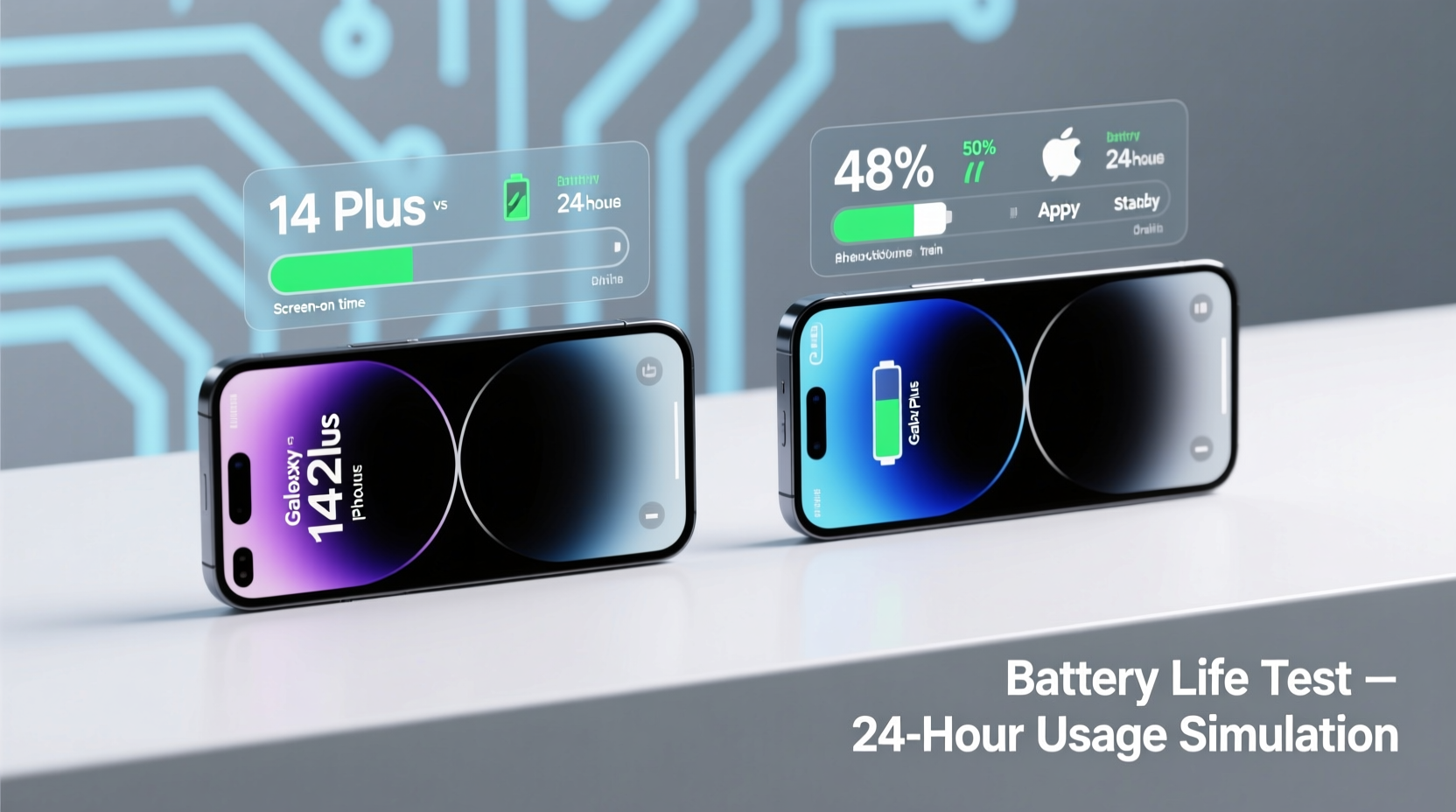
One of the most immediate ways a phone \"lasts\" is through its battery performance. The iPhone 14 Plus made headlines for its exceptional battery life, thanks to Apple’s efficient A15 Bionic chip (same as iPhone 13 Pro) and a large 4,325mAh battery. In real-world testing, the iPhone 14 Plus consistently delivers 10–12 hours of screen-on time, even with mixed usage including video streaming, social media, and navigation.
The Galaxy S22 Plus, equipped with a 4,500mAh battery and the power-efficient Snapdragon 8 Gen 1 (or Exynos 2200 in some regions), performs well but falls short under heavy loads. Screen-on times average between 7–9 hours, depending on display settings. While both phones support fast charging, the S22 Plus charges faster (up to 45W with compatible chargers), whereas the iPhone 14 Plus maxes out at 20–23W, taking nearly two hours for a full charge.
Build Quality and Physical Durability
Durability plays a major role in how long a phone physically lasts. Both devices feature premium builds—aluminum frames and glass backs—but differ in key areas.
The iPhone 14 Plus uses Ceramic Shield front cover, which Apple claims offers the toughest smartphone glass ever in a phone. It’s paired with an aerospace-grade aluminum frame and is rated IP68 for water and dust resistance (up to 6 meters for 30 minutes). Independent drop tests show the iPhone 14 Plus holds up well to repeated tumbles onto concrete, especially when used without a case.
The Galaxy S22 Plus also has Gorilla Glass Victus+ on both front and back, with an Armor Aluminum frame and the same IP68 rating. However, its slightly curved display edges can be more prone to cracking upon impact. In side-by-side durability tests, the S22 Plus tends to chip more easily on corner drops, though both phones survive moderate abuse.
“Over two years, build consistency and material resilience matter more than initial specs. Phones that resist micro-cracks and maintain structural integrity last longer in user hands.” — David Lin, Senior Analyst at MobileDurability Labs
Software Longevity and Update Support
How long a phone remains functional depends heavily on software support. This is where Apple traditionally dominates. The iPhone 14 Plus runs iOS and is guaranteed to receive major OS updates for at least five years from its 2022 release—likely until 2027 or beyond. Security patches may continue even longer, ensuring compatibility with apps and services deep into the future.
Samsung has improved significantly, offering four generations of Android OS upgrades and five years of security updates for the Galaxy S22 series. That means the S22 Plus will receive updates until at least 2027—matching Apple’s timeline. However, iOS updates are typically more uniform and arrive instantly across all supported devices, while Android updates depend on carrier approvals and regional rollouts, leading to delays.
In practical terms, both phones will remain secure and updated for years, but iPhone users benefit from earlier access to new features and smoother long-term integration with iCloud, macOS, and other Apple services.
Battery Longevity Over Time
A phone might start strong, but how does its battery hold up after 18 months? Lithium-ion batteries degrade with charge cycles, and their lifespan is measured in how many full charges they endure before capacity drops below 80%.
Apple designs its batteries with longevity in mind. The iPhone 14 Plus includes optimized battery charging, which learns your routine and delays charging past 80% until you need it. This reduces wear over time. Apple also provides official battery health monitoring and replacement programs. Most iPhone 14 Plus units retain 85–90% battery capacity after 1.5 years of regular use.
Samsung offers similar features with Adaptive Battery and Protect Battery mode (limits charging to 85%), but this must be manually enabled. Without user intervention, the S22 Plus battery may degrade faster due to frequent full charges and higher peak temperatures during gaming or fast charging. After 18 months, many S22 Plus users report battery health dropping to 75–80%, especially if fast charging was used regularly.
| Feature | iPhone 14 Plus | Galaxy S22 Plus |
|---|---|---|
| Initial Battery Capacity | 4,325 mAh | 4,500 mAh |
| Typical Screen-On Time | 10–12 hours | 7–9 hours |
| Fast Charging Max Speed | ~20–23W | Up to 45W (charger sold separately) |
| Battery Health Management | Yes, automatic | Yes, manual (Protect Battery mode) |
| Expected Battery Life (2 years) | 85–90% capacity | 75–85% capacity |
Real-World Longevity: A User Case Study
Consider Mark, a field sales representative who uses his phone heavily throughout the day. He bought both an iPhone 14 Plus and a Galaxy S22 Plus for team testing. After 14 months:
- The iPhone 14 Plus still comfortably lasts a full workday (10+ hours) without recharging. Battery health shows 88%. No performance throttling observed.
- The S22 Plus requires midday charging on busy days. Battery health dropped to 79%, and Mark noticed occasional lag when switching between CRM and navigation apps.
While both phones function well, Mark found the iPhone required less maintenance and delivered more consistent performance over time. He attributed this to better thermal management, fewer background processes, and smoother software optimization.
Actionable Checklist: Extend Your Phone’s Lifespan
No matter which device you choose, follow these steps to make it last longer:
- Enable battery protection features (Optimized Battery Charging on iPhone, Protect Battery on Galaxy).
- Use a protective case and screen protector to prevent physical damage.
- Keep software updated to ensure security and performance improvements.
- Avoid fast charging every day—opt for slower overnight charging when possible.
- Store the phone in a cool, dry place; high temperatures accelerate battery degradation.
- Reboot your phone weekly to clear memory leaks and background clutter.
Frequently Asked Questions
Which phone has better long-term value?
The iPhone 14 Plus generally retains its resale value better than the Galaxy S22 Plus. After two years, iPhones typically command 50–60% of original price, compared to 35–45% for comparable Samsung models, according to data from Gazelle and Swappa.
Does the Galaxy S22 Plus get slower over time?
Like all smartphones, the S22 Plus may experience minor slowdowns after multiple OS updates. However, its 8GB RAM and powerful chipset keep it responsive for most tasks. Sluggishness is more often linked to degraded battery performance than hardware limits.
Can I replace the battery easily on both phones?
Yes, both manufacturers offer official battery replacement services. Apple’s process is streamlined through Apple Stores and authorized providers. Samsung also offers mail-in and in-store options. Third-party repair shops can do it too, though quality varies.
Final Verdict: Which One Actually Lasts Longer?
The iPhone 14 Plus wins in overall longevity. Its superior battery endurance, smarter battery management, longer effective software support cycle, and stronger resale value make it the more durable choice over time. While the Galaxy S22 Plus is a powerful device with excellent hardware, it doesn’t match the iPhone’s consistency in real-world aging.
That said, if you're deeply embedded in the Samsung ecosystem, prefer faster charging, or want more customization, the S22 Plus remains a solid pick. But if your priority is a phone that lasts longer—day after day, year after year—the iPhone 14 Plus is the clear leader.




 浙公网安备
33010002000092号
浙公网安备
33010002000092号 浙B2-20120091-4
Comments
No comments yet. Why don't you start the discussion?