
The iPhone 14 lineup introduced a new dynamic with the addition of the iPhone 14 Plus — a device that sits between the compact iPhone 14 and the Pro models in size and price. At first glance, the most obvious difference is screen size: 6.1 inches on the iPhone 14 versus 6.7 inches on the Plus. But does that extra screen real estate translate into meaningful benefits? For many users, the answer depends on how they use their phone daily — from media consumption to battery demands and portability.
This isn’t just about pixels and dimensions. It’s about lifestyle fit. Whether you're watching videos during your commute, snapping photos on vacation, or simply want a phone that lasts all day without charging, the choice between these two models can significantly impact your experience.
Display and Usability: Bigger Isn't Always Better
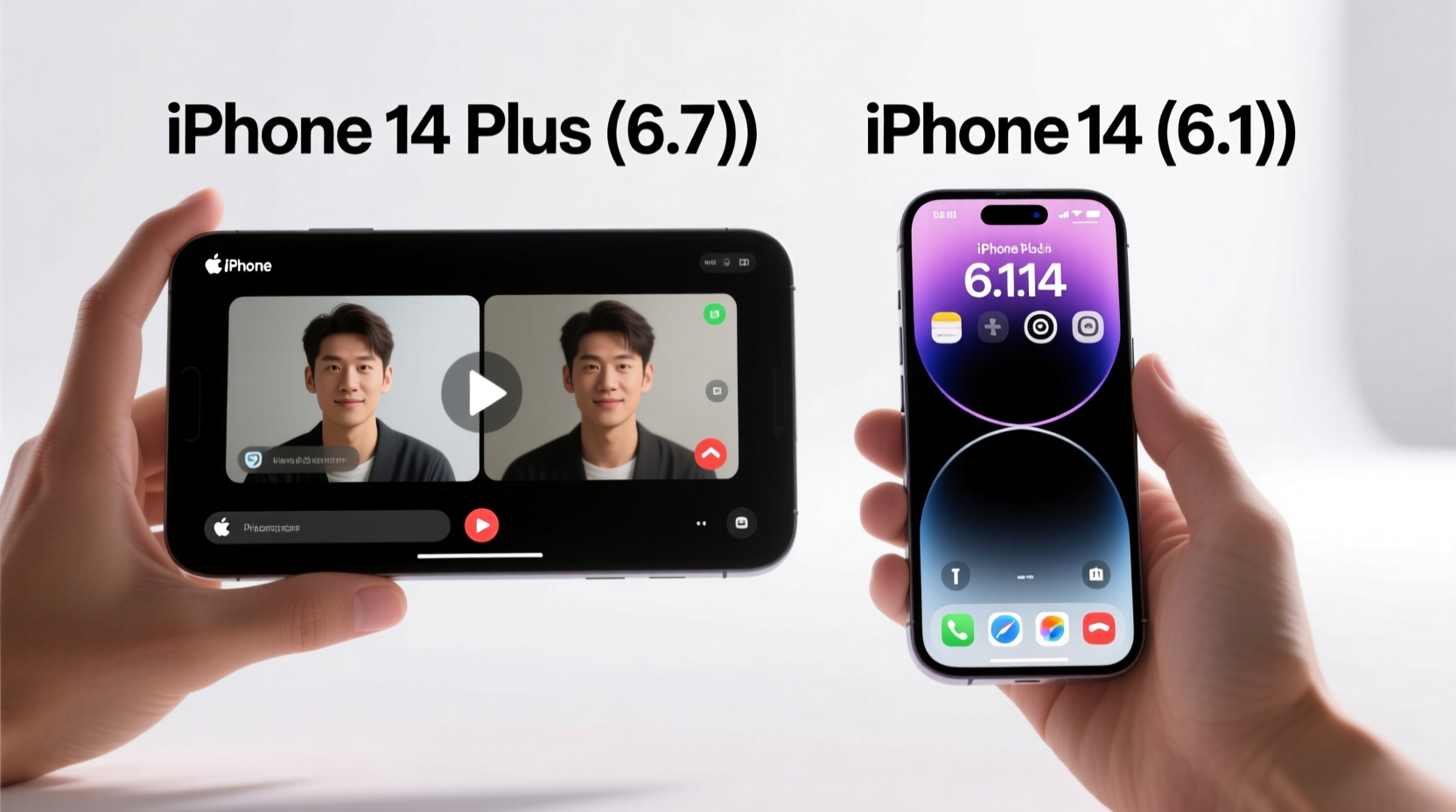
The iPhone 14 features a 6.1-inch Super Retina XDR OLED display, while the iPhone 14 Plus expands that to 6.7 inches — the same size as the iPhone 14 Pro Max. Both have identical resolution per inch (460 ppi) and support HDR, True Tone, and excellent color accuracy. Visually, they are nearly indistinguishable in quality.
However, the larger screen changes how you interact with the device. Watching movies, reading articles, and multitasking with split-view apps become noticeably more immersive on the Plus. Text is easier to read, and touch targets are slightly more spacious, which benefits users with reduced dexterity.
Yet, one-size-doesn’t-fit-all applies here. The iPhone 14 fits comfortably in one hand for most people, allowing easy thumb reach across the screen. The Plus, while powerful, requires two-handed use for basic navigation — especially when accessing top menus or switching apps. Pockets, particularly tight jeans or small purses, may also struggle with the Plus’s footprint.
Battery Life: Where the Plus Truly Shines
If there’s one area where the iPhone 14 Plus pulls far ahead, it’s battery endurance. Apple rates the Plus for up to 26 hours of video playback, compared to 20 hours on the standard iPhone 14. In real-world usage, this often translates to two full days of moderate use — something rare in modern smartphones.
For frequent travelers, outdoor workers, or anyone who dislikes hunting for outlets, this extended battery life is transformative. You’re less likely to wake up to a red battery icon or need to carry a portable charger. Even under heavy use — streaming music, GPS navigation, and social media — the Plus consistently outlasts its smaller sibling by several hours.
“Battery anxiety is one of the top reasons users upgrade phones. The iPhone 14 Plus reduces that stress significantly.” — David Lin, Mobile Device Analyst at TechPulse Insights
Performance and Camera: Identical Under the Hood
Both phones run on the same A15 Bionic chip (with 5-core GPU), ensuring identical performance in apps, gaming, and multitasking. There’s no lag, stutter, or processing advantage on either model. Software updates, AI tasks, and future-proofing are equal across the board.
The camera systems are also functionally the same:
- 12MP main sensor with sensor-shift optical image stabilization
- 12MP ultrawide lens
- Night mode, Deep Fusion, Smart HDR 4
- Photographic Styles and深度融合 (Deep Fusion)
In practice, photo and video quality are indistinguishable. The only minor edge the Plus has is longer recording time due to battery capacity, not sensor capability. If camera performance is your priority, neither model offers a compelling advantage over the other.
Price and Value Comparison
The iPhone 14 starts at $799, while the iPhone 14 Plus begins at $899 — a $100 difference. That premium buys you a larger screen, longer battery, and slightly larger build. But is it worth it?
Consider this: for $100 more, you could add cloud storage, a high-quality case, or even a pair of AirPods. Alternatively, that same amount gets you halfway to an iPhone SE — making the decision highly dependent on personal needs.
| Feature | iPhone 14 | iPhone 14 Plus |
|---|---|---|
| Screen Size | 6.1 inches | 6.7 inches |
| Starting Price | $799 | $899 |
| Battery Life (Video Playback) | Up to 20 hours | Up to 26 hours |
| Weight | 172g | 203g |
| One-Handed Use | Easy | Difficult |
| Storage Options | 128GB, 256GB, 512GB | 128GB, 256GB, 512GB |
Real-World Example: Sarah’s Commute Upgrade
Sarah, a project manager in Chicago, upgraded from an iPhone 12 to the iPhone 14 Plus after years of struggling with midday battery drain. Her day involves back-to-back Zoom calls, constant Slack notifications, and using Maps for client visits. On the iPhone 12, she charged twice daily — once at work and again at home.
After switching to the iPhone 14 Plus, she found her phone still had 30% charge at the end of her 12-hour workday — even after streaming a podcast during her train ride home. The larger screen made document reviews easier, but she admitted it was harder to type with one hand while standing. Over time, she adapted, using voice typing and landscape mode more often. For her, the trade-off was clear: battery longevity outweighed the slight loss in convenience.
When the Bigger Screen Makes Sense — And When It Doesn’t
The value of the larger screen hinges on your habits. Consider the following checklist to determine if the iPhone 14 Plus is right for you:
- ✅ Do you watch videos or stream content regularly on your phone?
- ✅ Is battery life a constant concern with your current device?
- ✅ Do you travel frequently or spend long stretches away from chargers?
- ✅ Are you upgrading from a Plus-sized phone or prefer larger devices?
- ❌ Do you prioritize one-handed use or pocketability?
- ❌ Are you sensitive to heavier phones (over 200g)?
If three or more of the “✅” items apply, the iPhone 14 Plus is likely a worthwhile investment. If you checked any of the “❌” boxes strongly, the standard iPhone 14 remains the smarter, more balanced choice.
Frequently Asked Questions
Does the iPhone 14 Plus have a better camera than the iPhone 14?
No. Both models feature the exact same dual-camera system, including the 12MP main and ultrawide lenses, Night mode, Deep Fusion, and computational photography features. Image quality is identical.
Can I use the iPhone 14 Plus one-handed?
Possible, but not comfortable for most users. Due to its 6.7-inch display and weight (203g), reaching the top of the screen typically requires shifting the phone in your hand or using both hands. iOS features like Reachability help, but don’t fully solve the issue.
Is the iPhone 14 Plus worth $100 more?
Only if you value battery life and screen size above all else. If you already own a recent iPhone and aren’t facing battery issues, the upgrade may feel underwhelming. But for users coming from older or compact models, the jump in screen and stamina can be transformative.
Conclusion: Making the Right Choice for Your Lifestyle
The iPhone 14 Plus doesn’t offer revolutionary upgrades — but it delivers meaningful improvements where it counts. The larger screen enhances media experiences, and the battery life sets a new standard for non-Pro iPhones. However, these benefits come with compromises in size, weight, and cost.
The core question isn’t whether the screen is bigger — it’s whether that size improves your daily routine enough to justify the trade-offs. For some, the answer is a resounding yes. For others, the iPhone 14 strikes the perfect balance of power, portability, and price.




 浙公网安备
33010002000092号
浙公网安备
33010002000092号 浙B2-20120091-4
Comments
No comments yet. Why don't you start the discussion?