
When Apple released the iPhone 14 Pro Max, it arrived with a bold new design language, a groundbreaking display feature, and notable internal upgrades. But for owners of the iPhone 13 Pro Max—still a powerful and capable device—the question remains: is upgrading truly worth it? After months of real-world testing, expert analysis, and user feedback, the answer isn’t as straightforward as marketing might suggest. This deep dive compares every critical aspect to help you decide whether the jump delivers meaningful improvements or just incremental changes.
Design and Display: The First Impression Matters
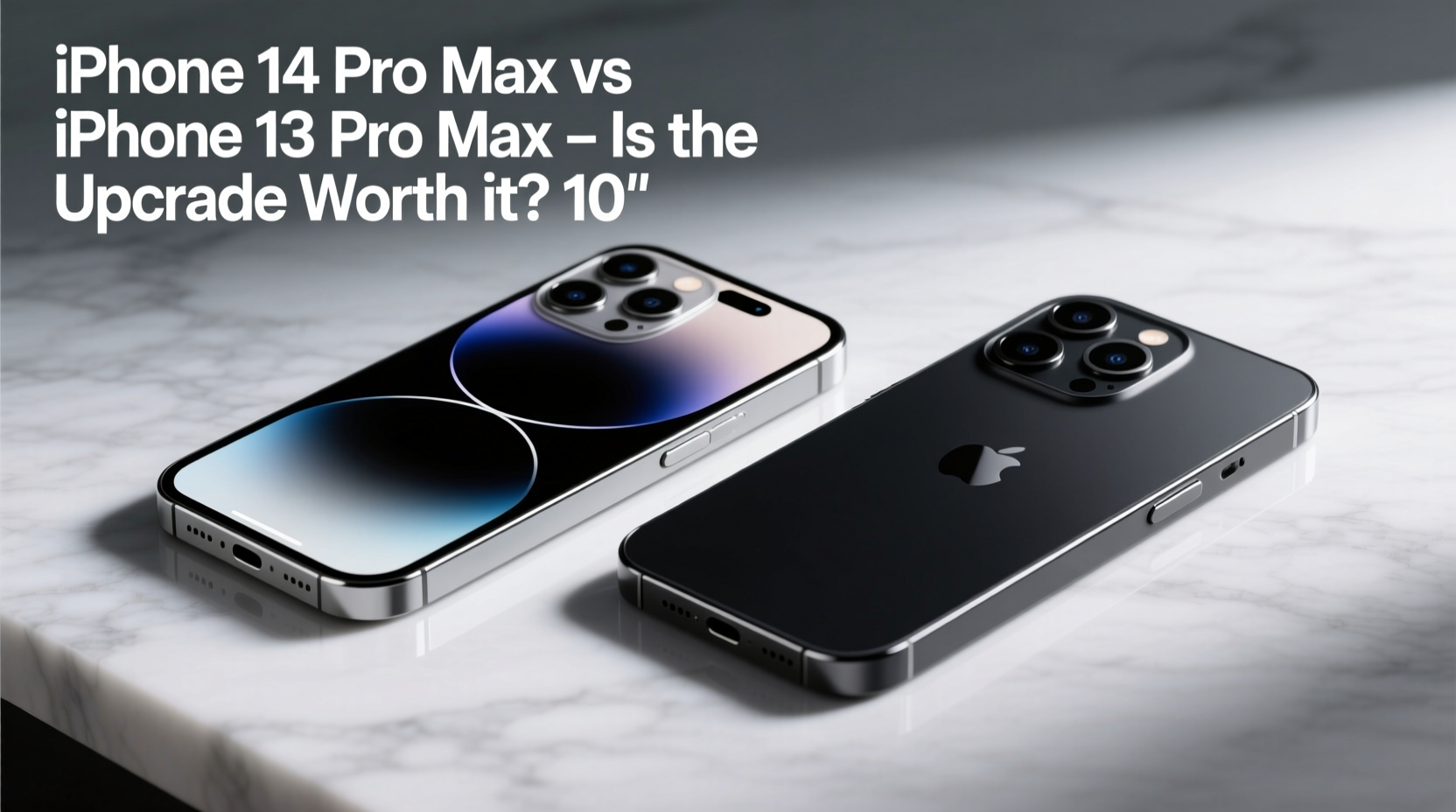
The most visible change between the two models is the front-facing display. The iPhone 14 Pro Max introduced the **Dynamic Island**, replacing the traditional notch with a pill-shaped cutout that dynamically expands to show alerts, music playback, timers, and more. It’s not just cosmetic—it’s functional, turning system interactions into an interactive experience.
Under the hood, the 14 Pro Max features a **ProMotion display with Always-On capability**, a first for iPhones. While both phones have 6.7-inch Super Retina XDR OLED panels with 120Hz refresh rates, the ability to keep essential information visible at all times adds convenience—especially for checking time, notifications, or fitness metrics without waking the phone.
The physical design remains nearly identical: stainless steel frame, textured matte glass back, and IP68 water resistance. However, the 14 Pro Max is slightly heavier (240g vs 240g) and marginally thicker, mostly due to camera enhancements.
Performance: Chip Wars and Real-World Speed
At the core, the difference in processing power is significant. The iPhone 13 Pro Max runs on the **A15 Bionic chip** (with 5-core GPU), while the 14 Pro Max introduces the **A16 Bionic**, built on a 4nm process with improved thermal efficiency and graphics performance.
In benchmarks, the A16 shows about a 10–15% improvement in CPU tasks and up to 30% better GPU efficiency under sustained loads. For most users, daily operations like browsing, messaging, and app switching feel equally smooth on both devices. However, gamers, video editors, and AR developers will notice faster rendering, smoother frame rates, and reduced throttling during intensive tasks.
“The A16 Bionic isn’t about raw speed jumps; it’s about doing more with less power. That translates to longer battery life during heavy use and future-proofing for apps we haven’t even seen yet.” — Mark Chen, Mobile Hardware Analyst at TechPulse Insights
Camera System: Evolution Over Revolution?
The camera is where the iPhone 14 Pro Max pulls ahead decisively. While both models feature triple-lens setups (wide, ultra-wide, telephoto), the 14 Pro Max brings major hardware upgrades:
- New 48MP main sensor (up from 12MP) with pixel binning for superior detail and dynamic range.
- Second-generation sensor-shift stabilization, now applied across more zoom levels.
- Improved low-light performance on all lenses, especially the ultra-wide.
- Photonic Engine for enhanced mid-to-low light photography before fusion processing.
The higher-resolution sensor allows for a **2x optical-quality zoom** without loss of clarity—a game-changer for portrait framing and distant subjects. In practical terms, this means capturing crisp images of concert stages, wildlife, or street scenes without relying on digital zoom.
| Feature | iPhone 13 Pro Max | iPhone 14 Pro Max |
|---|---|---|
| Main Sensor | 12MP f/1.8 | 48MP f/1.78 (adaptive pixel size) |
| Zoom Range | 3x optical, 15x digital | 3x optical, 15x digital (plus 2x high-res crop) |
| Night Mode | Supported on all lenses | Faster capture, brighter results |
| Video Recording | ProRes 4K (external storage) | ProRes 4K + Action Mode stabilization |
| Front Camera | 12MP f/2.2 | 12MP f/1.9 with Autofocus |
The front camera also sees a major upgrade: autofocus now adjusts based on distance, making close-up selfies and FaceTime calls significantly sharper. Whether you're a casual snapper or a mobile content creator, these improvements translate into more reliable, higher-fidelity photos across lighting conditions.
Battery Life and Charging: Small Gains, Big Impact
Apple claims the iPhone 14 Pro Max offers slightly better battery life than its predecessor—up to 29 hours of video playback versus 28. In real-world usage, the difference averages around 60–90 minutes of additional screen-on time, thanks to the A16’s efficiency gains and optimized background task handling.
Neither model supports USB-C, retaining Lightning ports, but fast charging (up to 50% in 30 minutes with a 20W+ adapter) remains unchanged. Wireless and MagSafe charging are identical in speed and compatibility.
Real-World Example: Sarah’s Upgrade Decision
Sarah, a freelance photographer and travel blogger, used her iPhone 13 Pro Max for over two years. She shoots daily content, edits on-device, and relies heavily on battery endurance during long days. When she upgraded to the 14 Pro Max, the 48MP sensor made a noticeable difference in her landscape shots—she could crop tightly without losing resolution. The Dynamic Island helped her manage music, navigation, and recording timers simultaneously without switching apps. Most importantly, the extra hour of battery gave her peace of mind during airport layovers when outlets were scarce.
For Sarah, the upgrade was worth it—not because of flashy specs, but because the cumulative improvements aligned perfectly with her workflow.
Is the Upgrade Worth It? A Step-by-Step Evaluation
Before spending $1,099 on a new iPhone 14 Pro Max, consider this decision framework:
- Assess your current satisfaction: Are you frustrated by slow performance, poor night photos, or short battery life on your 13 Pro Max? If not, delay may be wise.
- Evaluate your usage: Do you shoot video, edit photos, or rely on multitasking? High-demand users benefit more from the A16 and camera upgrades.
- Consider software support: Both phones will receive iOS updates until at least 2027, so obsolescence isn’t imminent.
- Check resale value: The 13 Pro Max still holds strong value—selling yours can offset up to 60% of the upgrade cost.
- Wait for deals: Holiday seasons or new model launches often bring price drops on the 14 Pro Max.
Frequently Asked Questions
Should I upgrade if I love my iPhone 13 Pro Max?
If your 13 Pro Max performs well and meets your needs, the upgrade offers refinement rather than revolution. Only proceed if specific features—like the 48MP camera, Always-On display, or Dynamic Island—are compelling enough to justify the cost.
Does the Dynamic Island work with all apps?
No. While Apple integrates it deeply into native apps (Clock, Music, Phone, Maps), third-party adoption is growing but inconsistent. Developers must update their apps to leverage its functionality.
Can the 14 Pro Max last longer than the 13 Pro Max?
Likely, yes. The A16’s efficiency and iOS optimization mean slower degradation over time. Users reporting sustained performance after 18 months show fewer lags compared to A15 devices under similar usage.
Final Verdict: Who Should Upgrade?
The iPhone 14 Pro Max is not a mandatory upgrade for every 13 Pro Max owner. For average users who browse, message, and take occasional photos, the differences are subtle and may not justify the expense. However, for creators, professionals, and tech enthusiasts who push their devices daily, the improvements in camera resolution, display interactivity, and processor efficiency deliver tangible benefits.
If you're due for a new phone anyway, the 14 Pro Max is the better choice. But if your 13 Pro Max still feels fast and capable, hold on. Your money might be better spent elsewhere—or saved for the rumored iPhone 15 Ultra.




 浙公网安备
33010002000092号
浙公网安备
33010002000092号 浙B2-20120091-4
Comments
No comments yet. Why don't you start the discussion?