
Choosing between the iPhone 14 Pro Max and the Samsung Galaxy A53 isn’t just about brand loyalty or design preference—it’s a decision shaped by budget, long-term needs, and what you truly use your phone for. With a price gap that can exceed $700, the question isn’t whether one is better on paper, but whether the premium experience justifies the cost. For many users, especially those who prioritize value over prestige, the answer may be more nuanced than expected.
Performance: Chipset, Speed, and Longevity
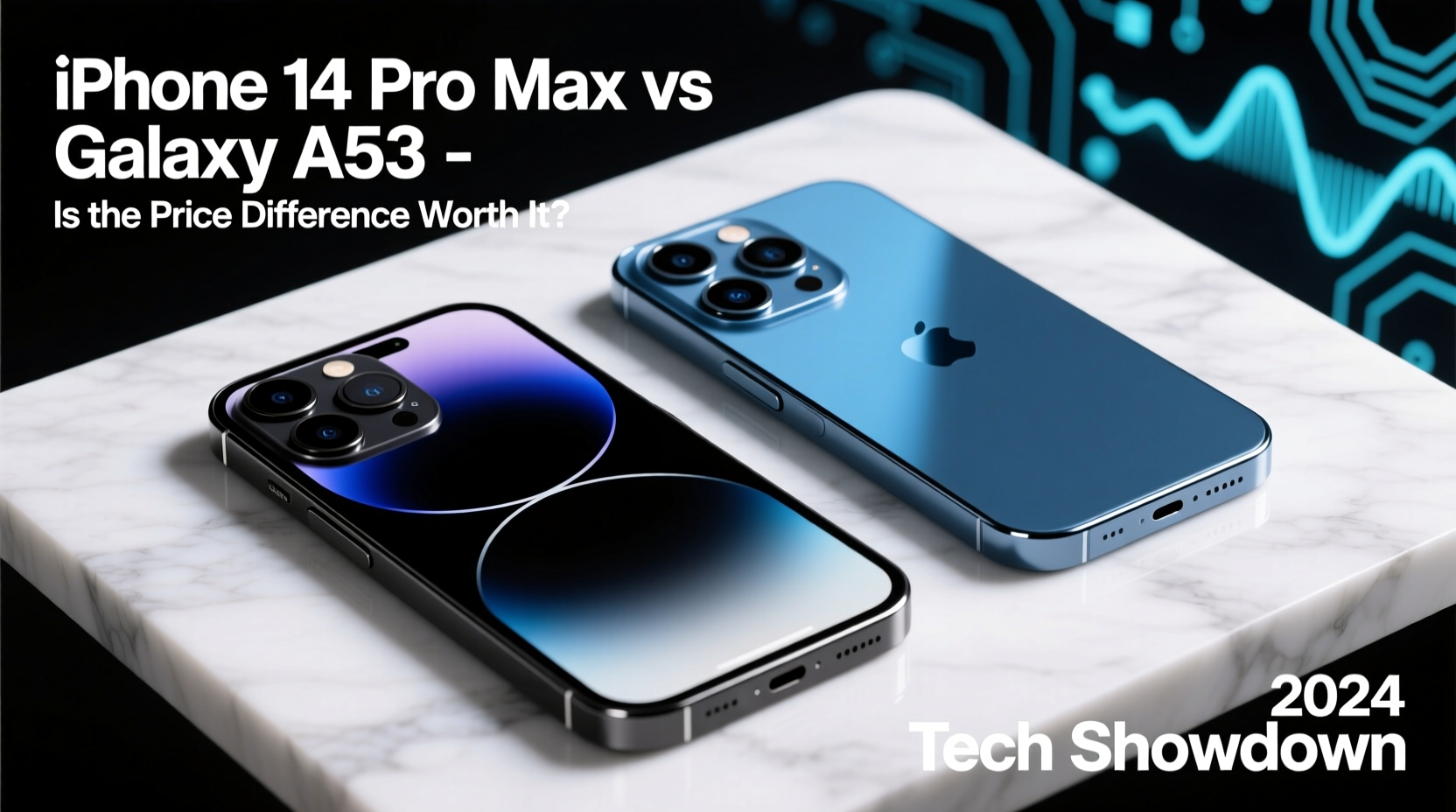
The core of any smartphone’s capability lies in its processor. The iPhone 14 Pro Max is powered by Apple’s A16 Bionic chip, built on a 4nm process and optimized specifically for iOS. This combination delivers blistering speeds, seamless multitasking, and exceptional efficiency. Whether editing 4K video or running graphics-intensive games, the A16 handles everything with ease.
In contrast, the Galaxy A53 runs on the Exynos 1280 (or Snapdragon 5G in select regions), a mid-tier chipset designed for balanced performance and energy efficiency. While perfectly capable for everyday tasks—browsing, messaging, streaming, and light gaming—it lacks the headroom for sustained high-performance workloads.
Real-world impact? The iPhone 14 Pro Max will likely remain fluid and responsive well into 2027 or beyond, thanks to Apple’s aggressive support cycle. The Galaxy A53, while receiving four major Android updates, may feel sluggish by year three due to hardware limitations.
Camera Comparison: Quality vs Practicality
Photography is where the divide becomes most visible. The iPhone 14 Pro Max features a triple-lens system: 48MP main sensor, 12MP ultra-wide, and 12MP telephoto with 3x optical zoom. Its computational photography engine excels in dynamic range, low-light clarity, and consistent color science across lenses.
The Galaxy A53 has a quad-camera setup: 64MP main, 12MP ultra-wide, 5MP macro, and 5MP depth. On paper, the higher megapixel count might suggest superiority, but in practice, pixel binning and software processing favor the iPhone in most conditions. Night mode shots, portrait lighting accuracy, and video stabilization are significantly better on the Pro Max.
| Feature | iPhone 14 Pro Max | Galaxy A53 |
|---|---|---|
| Main Sensor | 48MP, f/1.78, sensor-shift OIS | 64MP, f/1.8, OIS |
| Telephoto Zoom | 3x optical | Digital only |
| Video Recording | 4K@60fps, Cinematic Mode, ProRes | 4K@30fps, no advanced video tools |
| Low-Light Performance | Excellent with Night mode on all lenses | Moderate; noise appears in darker scenes |
For casual photographers who mainly share photos on social media, the A53’s camera is more than sufficient. But for enthusiasts or content creators, the Pro Max offers professional-grade results out of the box.
“Smartphone cameras have reached a point where hardware matters less than processing—but when both are excellent, like on the iPhone 14 Pro Max, the results are unmatched.” — David Lin, Mobile Imaging Analyst at TechPulse
Battery Life and Charging: Real Usage Patterns
Battery endurance is often overstated in marketing materials. In controlled tests, the iPhone 14 Pro Max lasts up to 29 hours of video playback, while the Galaxy A53 reaches around 22 hours. In daily mixed usage—social apps, navigation, video calls—the iPhone consistently delivers a full day and a half on a single charge.
The A53 performs admirably for its class, typically lasting a full day with moderate use. However, heavy users may need to recharge by late afternoon. Both phones support fast charging, but implementation differs: the iPhone requires a separate 20W+ adapter (not included), while Samsung includes a 25W charger in some regions.
- iPhone 14 Pro Max: Up to 29 hours video, 27W max wired charging, MagSafe compatible
- Galaxy A53: Up to 22 hours video, 25W fast charging, no wireless charging
If you travel frequently or rely on your phone during long workdays, the Pro Max’s extended battery could reduce stress and eliminate midday charging anxiety.
Build Quality and Display Experience
The physical experience of using each device reflects their market positioning. The iPhone 14 Pro Max uses surgical-grade stainless steel and Ceramic Shield glass, making it durable yet premium to hold. Its 6.7-inch ProMotion OLED display supports adaptive refresh rates from 1Hz to 120Hz, meaning smoother scrolling and reduced power consumption.
The Galaxy A53 features a plastic frame and Gorilla Glass 5 protection. While sturdy enough for daily wear, it lacks the refined heft and tactile satisfaction of the iPhone. Its 6.5-inch Super AMOLED screen runs at a fixed 120Hz, which feels smooth but doesn’t adapt to content, leading to slightly higher power draw.
Both displays are bright and colorful, but the Pro Max wins in peak brightness (up to 2000 nits HDR) and outdoor visibility. For users who consume a lot of media or work outdoors, this difference is tangible.
Software Ecosystem and Update Support
iOS and Android offer distinct philosophies. Apple controls both hardware and software, resulting in tightly integrated updates delivered directly to users. The iPhone 14 Pro Max will receive iOS updates for at least five years, possibly six—a critical factor for security and feature access.
Samsung promises four major Android OS upgrades and five years of security patches for the A53. While commendable for a mid-range device, Android fragmentation means update timing varies by region and carrier. Additionally, third-party app optimization often prioritizes flagship devices first.
Consider this: after three years, your iPhone may still run the latest version of iOS with full app support, while the A53 might miss newer features or face compatibility issues—even if technically updated.
Mini Case Study: Maria’s Upgrade Dilemma
Maria, a freelance graphic designer in her early 30s, needed a new phone for client communication, photo editing, and managing social media content. She considered the Galaxy A53 due to its lower price and good reviews. After testing both devices, she noticed the A53 struggled with large Photoshop files and lagged when switching between design apps. The iPhone 14 Pro Max handled everything seamlessly. Though the upfront cost was daunting, she calculated that the productivity gains and longer lifespan would save her money over five years. She chose the Pro Max—and hasn’t regretted it.
Is the Price Difference Worth It?
The iPhone 14 Pro Max starts at $1,099, while the Galaxy A53 retails around $400. That $700 gap represents nearly two A53s. So, is it worth it?
For users who:
- Need top-tier performance for creative work or multitasking
- Value superior camera quality for personal or professional use
- Want a device that lasts 5+ years without slowing down
- Rely on ecosystem integration (Mac, iPad, Apple Watch)
—the iPhone 14 Pro Max is a justified investment.
But for those who:
- Use phones primarily for calls, messaging, and social media
- Prefer lower upfront costs and don’t mind upgrading sooner
- Are satisfied with near-stock Android and Samsung’s One UI
—the Galaxy A53 offers exceptional value without unnecessary overhead.
Checklist: Choosing the Right Phone for You
- Assess your primary phone usage: casual, professional, or mixed?
- Estimate how long you want to keep the device before upgrading
- Evaluate your need for camera quality beyond social media snaps
- Consider your existing tech ecosystem (Apple, Google, Samsung)
- Determine your budget flexibility and total cost of ownership
FAQ
Can the Galaxy A53 handle mobile gaming?
Yes, for casual and mid-tier games like Candy Crush, Among Us, or Genshin Impact at medium settings. However, prolonged sessions may cause throttling and reduced frame rates compared to the iPhone 14 Pro Max.
Does the iPhone 14 Pro Max justify its price for average users?
Not always. If you rarely use advanced features, stick to basic apps, and upgrade every two years, the premium may not pay off. But if you value longevity, resale value, and consistent performance, it does.
Which phone holds value better over time?
The iPhone 14 Pro Max retains up to 60–70% of its value after two years, while the Galaxy A53 drops to 30–40%. This makes the iPhone a smarter choice if you plan to resell.
Conclusion
The iPhone 14 Pro Max and Galaxy A53 serve different segments of the market, and the price difference reflects that reality. It’s not simply about “better” or “worse,” but about alignment with your lifestyle, usage patterns, and financial priorities. The Pro Max delivers elite performance, unmatched camera systems, and long-term software support—luxuries that come at a cost. The A53 proves that mid-range phones can offer strong functionality, modern design, and reliable service at a fraction of the price.
Ultimately, the right choice depends on what you value most: cutting-edge capability and longevity, or affordability and practicality. Evaluate your real needs, not just the specs sheet, and you’ll find the answer that works best—for you.




 浙公网安备
33010002000092号
浙公网安备
33010002000092号 浙B2-20120091-4
Comments
No comments yet. Why don't you start the discussion?