
Choosing between the iPhone 14 Pro Max and the iPhone 11 isn’t just about deciding whether to upgrade—it’s about evaluating how much technology has evolved in four years and whether those changes meaningfully impact your daily experience. One of the most noticeable differences is physical size, but is that extra bulk justified by real improvements in functionality, performance, and user satisfaction? For users clinging to the compact design of the iPhone 11, the leap to the larger Pro Max model may feel intimidating. Yet, behind that size increase lies a suite of advancements that could redefine what a smartphone can do.
Physical Design and Size Comparison
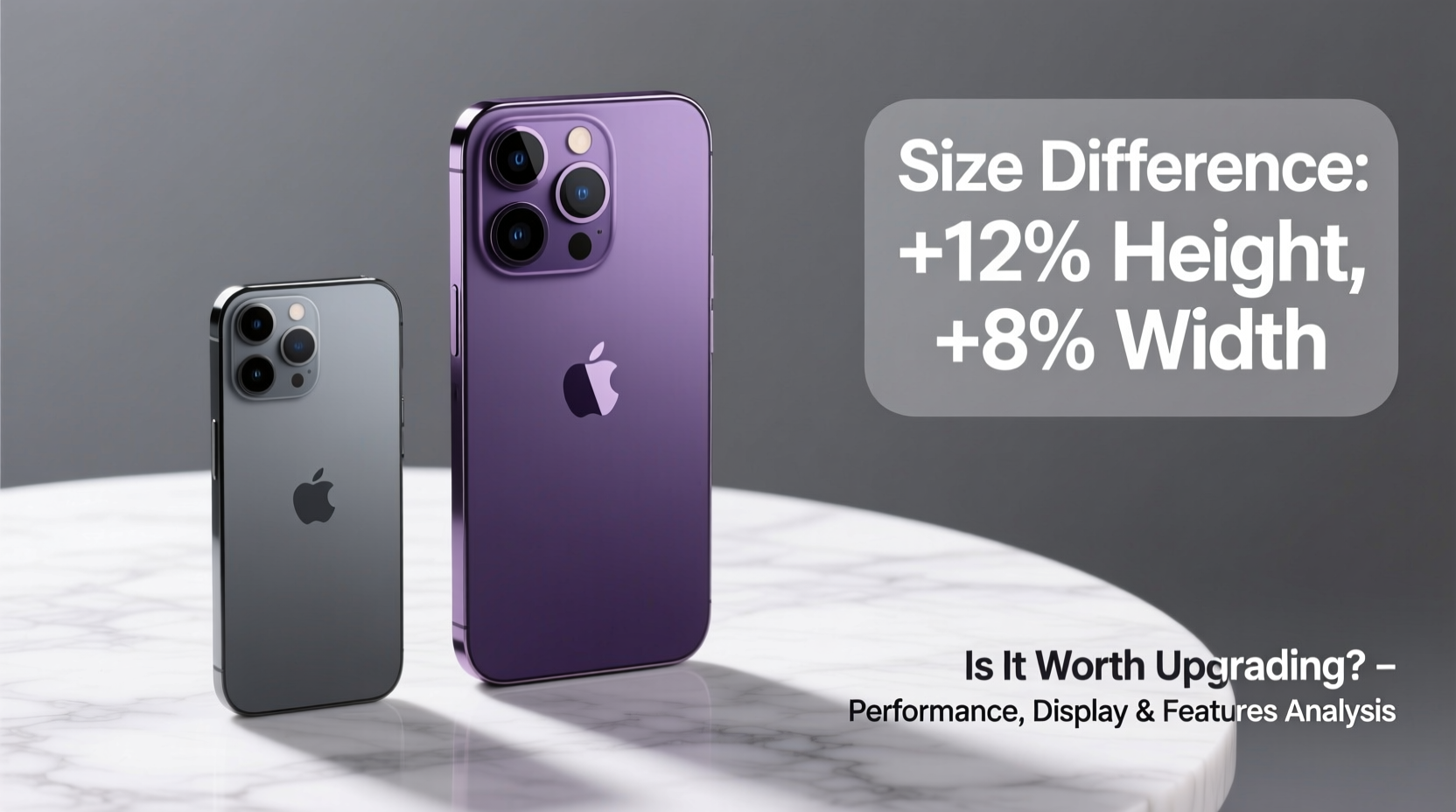
The most immediate contrast between the iPhone 14 Pro Max and the iPhone 11 is their physical footprint. The iPhone 11, released in 2019, features a 6.1-inch LCD display with bezels that give it a more traditional, manageable feel in hand. In contrast, the iPhone 14 Pro Max packs a 6.7-inch Super Retina XDR OLED display, making it not only taller but also heavier and wider. This shift reflects Apple’s broader industry trend toward larger screens optimized for media consumption, multitasking, and immersive photography.
| Feature | iPhone 11 | iPhone 14 Pro Max |
|---|---|---|
| Display Size | 6.1 inches (LCD) | 6.7 inches (OLED) |
| Weight | 194 grams | 240 grams |
| Dimensions (H x W x D) | 150.9 x 75.7 x 8.3 mm | 160.7 x 77.6 x 7.85 mm |
| Display Type | Liquid Retina HD (LCD) | Super Retina XDR (OLED) |
| Resolution | 1792 x 828 pixels | 2796 x 1290 pixels |
The size difference isn’t just about screen real estate—it affects pocketability, one-handed use, and long-term comfort. Users upgrading from the iPhone 11 often report an adjustment period when switching to the 14 Pro Max. However, once adapted, many find the larger screen enhances video streaming, gaming, and even typing accuracy.
Performance and Real-World Speed
Beneath the surface, the performance gap is staggering. The iPhone 11 runs on the A13 Bionic chip, which was groundbreaking in 2019 but now lags behind modern demands. The iPhone 14 Pro Max, powered by the A17 Pro chip built on a 3nm process, delivers up to 2x faster CPU and GPU performance. This isn't just theoretical—apps launch quicker, multitasking is smoother, and intensive tasks like video editing or AR gaming are far more responsive.
For example, exporting a 4K video in LumaFusion takes nearly twice as long on the iPhone 11 compared to the 14 Pro Max. Similarly, loading large photo libraries or switching between pro-level creative apps feels seamless on the newer model, whereas the older device shows signs of strain.
“Every generation of iPhone brings efficiency gains, but the jump from A13 to A17 Pro is among the most significant we’ve seen in recent years.” — David Liu, Senior Mobile Analyst at TechInsight Weekly
The 14 Pro Max also includes 6GB of RAM versus the 11’s 4GB, allowing for better background app retention and reduced reload times. Over time, this translates into a noticeably snappier experience, especially as iOS updates introduce more system-wide animations and AI-powered features.
Camera Evolution: From Good to Professional
The camera systems illustrate perhaps the most compelling reason to upgrade. The iPhone 11 introduced Night mode and dual-camera setup (wide and ultra-wide), which was impressive for its time. But the iPhone 14 Pro Max elevates mobile photography with a triple-lens system featuring a 48MP main sensor, second-generation sensor-shift stabilization, Photonic Engine, and advanced computational photography.
- Low-light performance: The 14 Pro Max captures significantly more detail in dim environments thanks to larger pixels and improved software processing.
- Zoom capability: 3x optical zoom (telephoto lens) allows tighter framing without quality loss—something the iPhone 11 lacks entirely.
- ProRAW and ProRes: Content creators can shoot in formats previously reserved for dedicated cameras.
In practical terms, this means clearer portraits, sharper distant shots, and greater flexibility in post-processing. Whether you're capturing family moments or creating social media content, the image fidelity difference is immediately apparent.
Mini Case Study: Travel Photographer's Experience
Sophia Tran, a freelance travel photographer based in Vancouver, used her iPhone 11 for two years before upgrading to the 14 Pro Max. On a recent trip to Iceland, she relied solely on her phone for content creation. “The dynamic range alone made a huge difference,” she said. “Shooting waterfalls at golden hour, I didn’t lose details in shadows or highlights. And being able to crop into a 48MP shot and still get a printable image? That changed how I compose now.”
She noted that while the size took some getting used to, the ability to edit high-resolution photos directly on-device made the trade-off worthwhile.
Battery Life and Charging Improvements
Larger phones usually mean larger batteries—and the 14 Pro Max delivers. With up to 29 hours of video playback, it outlasts the iPhone 11’s 17-hour maximum by a wide margin. For heavy users who rely on GPS, streaming, or constant messaging, this extended endurance reduces charging anxiety during travel or long workdays.
Charging technology has also evolved. While both models support wireless charging and fast charging via USB-C (with compatible adapters), the 14 Pro Max charges up to 50% in about 30 minutes using a 20W+ adapter—faster and more efficient than the iPhone 11’s implementation due to refined power management.
Step-by-Step Guide: Evaluating If the Upgrade Makes Sense
- Assess current pain points: Does your iPhone 11 struggle with slow app launches, poor battery life, or blurry low-light photos?
- Test screen size tolerance: Try holding a 6.7-inch device in-store or borrow a friend’s Pro Max to gauge comfort.
- Evaluate usage patterns: Are you consuming more video, gaming, or creating content? Larger screens benefit these activities.
- Check carrier deals: Many providers offer trade-in credits that reduce the effective cost of upgrading.
- Consider longevity: The 14 Pro Max will likely receive iOS updates until 2029+, while the iPhone 11 may stop receiving major updates sooner.
FAQ
Is the iPhone 14 Pro Max too big for average hands?
It depends on personal preference. Many users adapt within a week, especially if they frequently use their phone with two hands. Features like Reachability help bring top elements within thumb reach.
Can the iPhone 11 still handle everyday tasks?
Absolutely. For calls, messaging, light browsing, and basic photography, the iPhone 11 remains functional. However, newer apps and future iOS versions may gradually expose its hardware limitations.
Does the size affect durability?
Larger phones have slightly higher drop risk due to weight and surface area, but both models feature glass fronts and backs with similar IP68 water resistance ratings. Using a protective case mitigates most concerns.
Final Verdict: Is the Size Difference Worth It?
The size difference between the iPhone 14 Pro Max and iPhone 11 is undeniable—but so are the benefits it enables. You’re not just getting a bigger screen; you’re gaining superior brightness, deeper blacks, smoother scrolling (with ProMotion up to 120Hz), enhanced audio through wider stereo speakers, and room for a larger battery and advanced camera array.
If your priorities include media immersion, content creation, or future-proofing your device investment, the larger form factor pays dividends. However, if portability and one-handed control are non-negotiable, and your current iPhone 11 meets your needs, waiting for a potential compact Pro model might be smarter.




 浙公网安备
33010002000092号
浙公网安备
33010002000092号 浙B2-20120091-4
Comments
No comments yet. Why don't you start the discussion?