
When it comes to flagship smartphones, few matchups are as intriguing as the Apple iPhone 14 Pro Max and the Xiaomi Mi 11 Ultra. One represents the pinnacle of Apple’s ecosystem integration and long-term software support; the other showcases the raw power and innovation often seen in high-end Android devices. For users considering an upgrade—especially those coming from a powerful Android phone like the Mi 11 Ultra—the question isn’t just about specs. It’s whether the newer iPhone truly delivers enough to justify switching platforms, paying a premium, and potentially giving up features they’ve grown accustomed to.
This isn’t a battle of who has more megapixels or a higher refresh rate. It’s about real-world usability, longevity, ecosystem benefits, and whether the incremental gains of the iPhone 14 Pro Max translate into meaningful improvements for someone already using a top-tier Android device.
Design and Build: Refinement vs Innovation
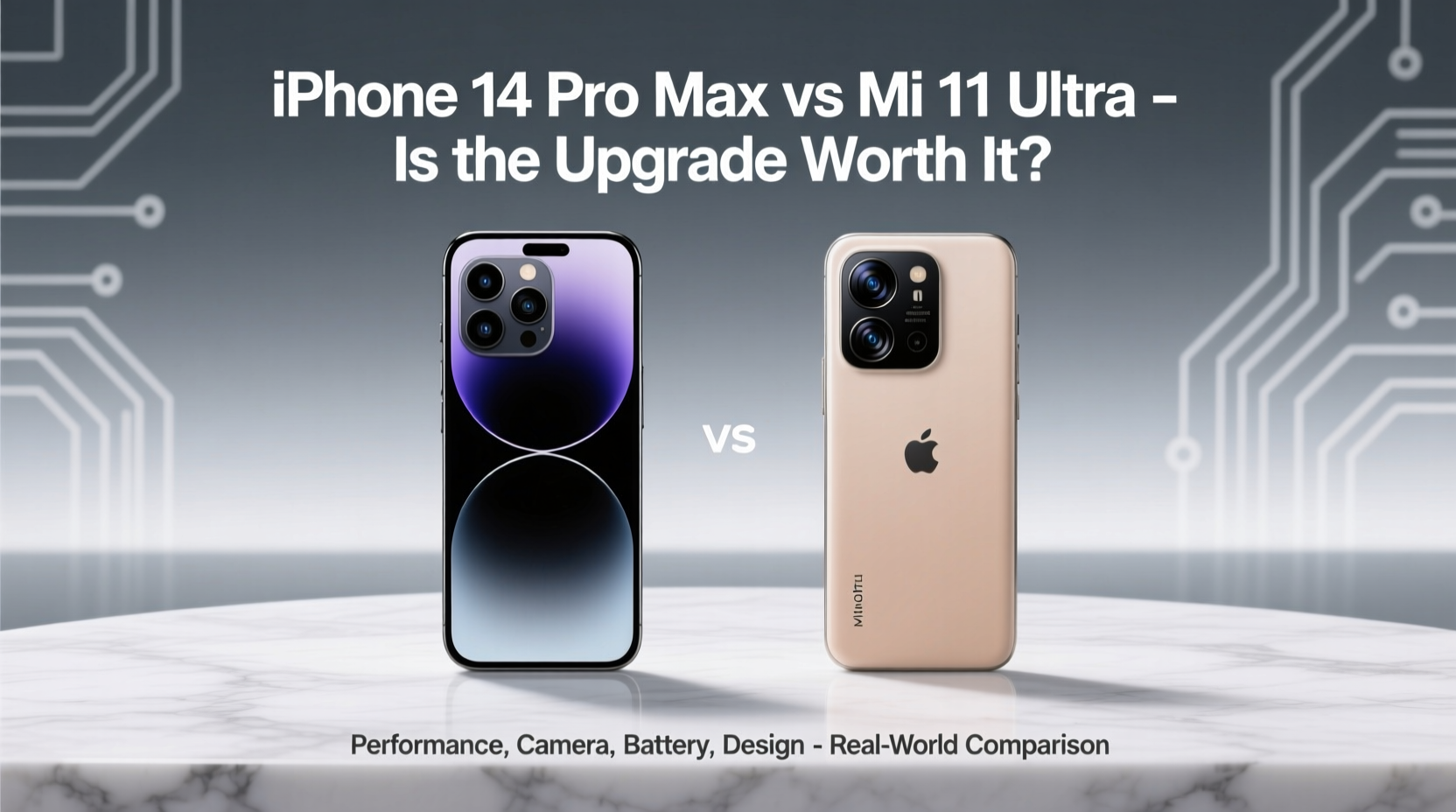
The iPhone 14 Pro Max continues Apple’s tradition of minimalist, precision-engineered design. Its surgical-grade stainless steel frame, flat edges, and Ceramic Shield front offer durability and a familiar, premium feel. At 240 grams, it’s heavy, but the weight distribution makes it comfortable in hand. The new Dynamic Island—a pill-shaped cutout replacing the notch—is both functional and visually engaging, animating alerts and live activities.
In contrast, the Mi 11 Ultra stunned the market with its bold dual-curved AMOLED display and a unique secondary rear screen on the back, allowing quick camera previews without flipping the phone. Constructed with ceramic materials and IP68 rating, it matches the iPhone in durability while offering a more futuristic aesthetic. However, that extra screen adds complexity and fragility.
Display Quality: Brightness, Smoothness, and Usability
The iPhone 14 Pro Max introduced ProMotion with adaptive 120Hz refresh rates down to 1Hz, conserving battery when static content is displayed. Its peak brightness hits an industry-leading 2000 nits in HDR, making it exceptionally readable in direct sunlight. True Tone and accurate color reproduction make it ideal for photographers and creatives.
The Mi 11 Ultra’s 6.81-inch WQHD+ AMOLED panel also supports 120Hz with LTPO technology and reaches up to 1700 nits. While slightly less bright, it offers sharper resolution (3200 x 1440 vs. 2796 x 1290) and deeper blacks due to its E4 OLED material. For media consumption and gaming, the difference is subtle—but noticeable on close inspection.
“Brightness and color accuracy matter most in real-world use, not just lab numbers. The iPhone 14 Pro Max sets a new benchmark for outdoor visibility.” — David Chen, Display Analyst at TechVision Labs
Performance and Software: iOS Efficiency vs Android Power
Under the hood, the iPhone 14 Pro Max runs on Apple’s A16 Bionic chip—built on a 4nm process, delivering unmatched single-core performance and energy efficiency. Apps launch instantly, multitasking is seamless, and even intensive tasks like 4K video editing feel effortless. iOS 16 further enhances stability, with optimized background processes and longer app retention in memory.
The Mi 11 Ultra, powered by the Qualcomm Snapdragon 888, was a powerhouse in 2021. But that chip has well-documented thermal throttling issues under sustained load. While daily performance remains strong, prolonged gaming or video rendering can cause slowdowns. MIUI 14 (based on Android 13) offers deep customization, split-screen multitasking, and faster feature rollouts—but at the cost of occasional bloat and inconsistent updates.
Apple’s advantage lies in long-term software support. The iPhone 14 Pro Max will receive iOS updates for at least five years, possibly up to seven. Xiaomi typically provides three years of OS upgrades and four years of security patches—still solid, but not on par with Apple’s commitment.
Camera Comparison: Consistency vs Versatility
The camera systems reflect each brand’s philosophy. The iPhone 14 Pro Max features a 48MP main sensor (a first for iPhone), a 12MP ultrawide, and a 12MP telephoto with 3x optical zoom. The new Photonic Engine improves low-light performance across all lenses, and computational photography ensures consistent results in any lighting. Video capabilities remain unmatched—supporting Cinematic Mode in 4K HDR and advanced stabilization.
The Mi 11 Ultra goes bigger: a 50MP main sensor with a 1/1.12” GN2—the largest in any smartphone at its release—plus a 48MP periscope telephoto (5x optical, 120x digital zoom) and a 48MP ultrawide. It captures more detail in daylight and offers superior zoom range. However, processing can oversharpen images, and low-light shots sometimes lack natural tone.
| Feature | iPhone 14 Pro Max | Mi 11 Ultra |
|---|---|---|
| Main Sensor | 48MP (1/1.28”) | 50MP (1/1.12”) |
| Telephoto Zoom | 3x optical | 5x optical, 10x hybrid, 120x digital |
| Low-Light Performance | Excellent (Photonic Engine) | Very good, but inconsistent |
| Video Recording | 4K Dolby Vision HDR, Cinematic Mode | 8K@24fps, 4K@60fps, no Dolby Vision |
| Front Camera | 12MP, 4K HDR | 20MP, 1080p |
If you shoot mostly in daylight and value zoom reach, the Mi 11 Ultra impresses. But for reliable point-and-shoot quality, especially in mixed lighting or for video creators, the iPhone delivers more consistently.
Battery Life and Charging: All-Day Endurance vs Fast Top-Ups
The iPhone 14 Pro Max boasts up to 29 hours of video playback—among the best in any smartphone. Its efficient chipset and optimized iOS allow true all-day (and often two-day) usage for moderate users. However, charging remains slow: 20W wired (0–50% in ~30 mins), 15W MagSafe, and no charger in the box.
The Mi 11 Ultra packs a 5000mAh battery with 67W wired and 67W wireless charging—capable of going from 0 to 100% in under 40 minutes. In practice, this means rapid top-ups during short breaks. Battery life is solid (up to 1.5 days light use), though less efficient than the iPhone under heavy loads due to the Snapdragon 888’s power draw.
Real-World Example: Sarah’s Upgrade Dilemma
Sarah had used the Mi 11 Ultra since 2021. She loved its camera versatility, especially the telephoto lens for bird photography, and appreciated the 67W charging after long shoots. But by late 2023, she noticed MIUI updates becoming erratic, battery health dropping below 80%, and overheating during video edits.
She switched to the iPhone 14 Pro Max for better long-term reliability. Though she missed the ultra-fast charging and secondary display, she gained smoother video workflows, seamless iCloud integration with her MacBook, and confidence in five more years of updates. “The camera doesn’t zoom as far,” she said, “but I spend less time editing because the photos look right the first time.”
Frequently Asked Questions
Is the iPhone 14 Pro Max better than the Mi 11 Ultra overall?
It depends on priorities. The iPhone excels in software longevity, video recording, and ecosystem integration. The Mi 11 Ultra offers superior zoom, faster charging, and more screen real estate. For most users seeking reliability and long-term value, the iPhone has the edge.
Can the Mi 11 Ultra still compete in 2024?
Yes, especially if purchased secondhand or at a discount. Its hardware remains capable, and MIUI 14 brings improved optimization. However, diminishing update support and aging battery performance limit its future-proofing compared to the iPhone.
Does switching from Android to iPhone mean losing functionality?
You gain tighter app integration and longer support but may miss certain Android features like native split-screen, sideloading apps, or custom launchers. Tools like Move to iOS help transfer data, but some habits require adjustment.
Checklist: Should You Upgrade?
- ✅ Need 5+ years of OS updates? → iPhone 14 Pro Max
- ✅ Prioritize video quality and editing? → iPhone 14 Pro Max
- ✅ Want fastest possible charging? → Mi 11 Ultra
- ✅ Use a Mac, iPad, or AirPods regularly? → iPhone 14 Pro Max
- ✅ Value extreme zoom and secondary display? → Mi 11 Ultra
- ✅ Prefer stock-like Android with fewer ads? → Consider alternatives, as MIUI includes ads and bloat.
Final Verdict: Is the Upgrade Worth It?
The iPhone 14 Pro Max isn’t just a new phone—it’s an investment in a tightly integrated ecosystem with unparalleled software support. For Mi 11 Ultra owners, the upgrade isn’t about raw specs. It’s about trading peak hardware flexibility for long-term consistency, reliability, and peace of mind.
If you’re satisfied with your Mi 11 Ultra’s performance and don’t need iOS-exclusive features, staying put is perfectly reasonable—especially if you’ve maintained the device well. But if you value seamless updates, superior video tools, and a phone that will likely remain fast and secure into 2029, the iPhone 14 Pro Max justifies its price.




 浙公网安备
33010002000092号
浙公网安备
33010002000092号 浙B2-20120091-4
Comments
No comments yet. Why don't you start the discussion?