
For millions of iPhone users still relying on the iPhone XR, the question isn’t whether newer models exist—it’s whether upgrading to a flagship like the iPhone 14 Pro Max makes financial and practical sense. Released in 2018, the XR was a breakthrough device: affordable, durable, and packed with features that stood the test of time. But nearly six years later, Apple’s latest flagship brings advancements so significant they may redefine what an iPhone can do. The real challenge lies in determining if those improvements justify the cost—especially when your current phone still works.
Performance: A Quantum Leap in Processing Power
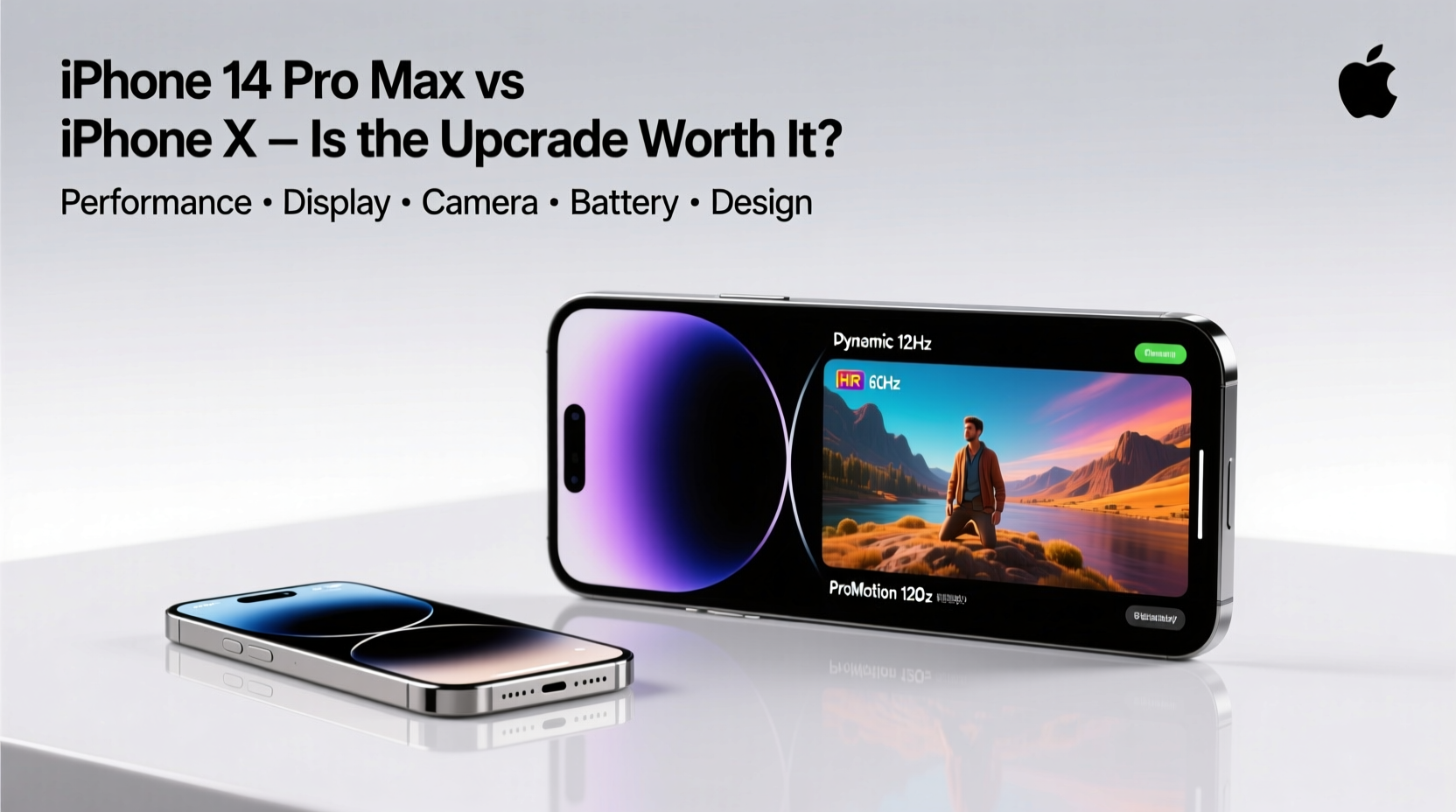
The difference between the iPhone XR’s A12 Bionic chip and the iPhone 14 Pro Max’s A17 Pro chip is more than generational—it’s transformative. The A12, while still capable for basic tasks, struggles with demanding apps, multitasking, and modern games. In contrast, the A17 Pro delivers desktop-class performance with a 6-core CPU, 5-core GPU, and 16-core Neural Engine. This translates to smoother animations, faster app launches, and seamless handling of augmented reality and machine learning workloads.
Benchmarks confirm this leap: the A17 Pro scores over 2.5x higher in Geekbench 6 CPU tests than the A12. Real-world usage reflects this too. Opening large photo libraries, editing 4K video, or switching between multiple Safari tabs happens instantaneously on the 14 Pro Max, whereas the XR shows noticeable lag.
Display Technology: From Good to Cutting-Edge
The iPhone XR introduced Liquid Retina LCD technology, which was impressive at launch but now feels outdated next to the 14 Pro Max’s Super Retina XDR OLED display. OLED panels offer deeper blacks, infinite contrast ratios, and better power efficiency. But the standout feature is Apple’s ProMotion technology—a 120Hz adaptive refresh rate that makes scrolling, gaming, and navigating feel fluid and responsive.
On the XR, the 60Hz screen feels sluggish in comparison, especially when swiping through social media feeds or playing fast-paced games. Additionally, the 14 Pro Max’s peak brightness reaches 2000 nits outdoors, making it far more usable in direct sunlight—something the XR’s 625-nit panel simply can’t match.
“High-refresh-rate displays are no longer a luxury—they’re expected for flagship devices. Once you experience 120Hz, going back to 60Hz feels like watching TV in slow motion.” — David Kim, Mobile UX Analyst at TechInsight Labs
Camera System: Night and Day Difference
Camera capabilities have evolved dramatically since 2018. The iPhone XR has a single 12MP rear camera with a wide lens and Smart HDR. It takes decent photos in daylight but falters in low light and lacks depth control for portrait mode. The iPhone 14 Pro Max, however, features a triple-camera system: a 48MP main sensor, a 12MP ultra-wide, and a 12MP telephoto with 3x optical zoom.
The high-resolution 48MP sensor uses pixel binning to deliver sharper images with better dynamic range. Night mode now activates across all lenses, and the Photonic Engine improves color accuracy and texture retention. For videographers, the 14 Pro Max supports 4K Dolby Vision HDR recording at up to 60fps—features absent on the XR.
Consider this scenario: You're photographing a sunset at the beach. On the XR, the sky blows out, shadows lose detail, and there's no way to zoom without losing quality. On the 14 Pro Max, the HDR captures both highlights and shadows, the telephoto lets you frame distant elements, and the final image retains professional-grade clarity.
Mini Case Study: Sarah’s Upgrade Experience
Sarah, a freelance photographer based in Portland, held onto her iPhone XR for five years, using it for client previews and social media content. After upgrading to the 14 Pro Max, she found she could shoot entire Instagram campaigns directly from her phone—no DSLR needed. “The macro photography feature alone changed how I document small products,” she said. “And shooting in low light without a tripod? That’s game-changing.”
Battery Life and Charging: Efficiency Meets Longevity
Battery degradation is a common issue with older iPhones. Even if your XR hasn’t slowed down much, its battery health likely has. Apple estimates the 14 Pro Max lasts up to 29 hours of video playback; the XR managed about 16 hours when new. With age, that number drops significantly—many XR users report needing midday charging after four years.
The 14 Pro Max also introduces USB-C (in most regions), enabling faster wired charging and easier integration with modern laptops and power banks. While both phones support wireless charging, the 14 Pro Max charges up to 50% faster with MagSafe thanks to improved thermal management and power delivery.
| Feature | iPhone XR | iPhone 14 Pro Max |
|---|---|---|
| Chipset | A12 Bionic | A17 Pro |
| Display | 6.1” LCD, 60Hz | 6.7” OLED, 120Hz ProMotion |
| Rear Cameras | 12MP Wide (f/1.8) | 48MP Main, 12MP Ultra-Wide, 12MP Telephoto (3x) |
| Front Camera | 7MP (f/2.2) | 12MP TrueDepth with Autofocus |
| Video Recording | 4K@60fps (Dolby Vision not supported) | 4K@60fps with Dolby Vision HDR |
| Charging | Lightning, Qi Wireless | USB-C, MagSafe, Qi2 |
| Water Resistance | IP67 (1m for 30 mins) | IP68 (6m for 30 mins) |
| Starting Storage | 64GB | 128GB |
Software Support and Future-Proofing
iOS updates are critical for security, privacy, and access to new features. The iPhone XR received iOS 16 as its final major update and will not get iOS 18. In contrast, the iPhone 14 Pro Max will likely receive software support until 2028 or beyond. Upgrading now ensures you’ll continue receiving bug fixes, security patches, and new functionalities like AI-powered tools expected in upcoming iOS versions.
This longevity matters. An unsupported phone becomes vulnerable to exploits and incompatible with future apps. If you plan to keep your device for three or more years, choosing a model with long-term software backing is essential.
Is the Upgrade Worth It? A Practical Checklist
Before committing to the $1,099 price tag (or trade-in costs), ask yourself the following:
- Does your current phone struggle with everyday tasks like messaging, browsing, or app switching?
- Are you frequently running out of storage or dealing with poor battery life?
- Do you care about taking high-quality photos or videos without carrying extra gear?
- Do you want access to the latest iOS features for the next 4–5 years?
- Are you using your phone for work, content creation, or navigation where reliability matters?
If you answered “yes” to three or more, the upgrade is likely justified. However, if your XR still performs well and you primarily use it for calls, texts, and light apps, the benefits may not outweigh the cost.
Frequently Asked Questions
Can the iPhone XR still run most apps in 2024?
Yes, but with limitations. Many newer apps require A13 or later chips and won’t install on the XR. Performance-heavy apps like advanced photo editors or AR games may crash or run slowly.
How much does it cost to upgrade from XR to 14 Pro Max?
Without trade-in, the 14 Pro Max starts at $1,099. With Apple’s trade-in program, the XR (depending on condition) may be valued between $80–$150, reducing the net cost to around $950–$1,000.
Is the Dynamic Island worth the upgrade?
Dynamic Island is more than a design gimmick—it integrates live activities, music controls, timers, and Face ID alerts into an interactive space. While not essential, it enhances usability and represents Apple’s direction for future interfaces.
Final Verdict: When the Upgrade Pays Off
The iPhone 14 Pro Max isn’t just an incremental upgrade over the XR—it’s a reimagining of what a smartphone can do. The combination of superior processing, best-in-class cameras, adaptive display technology, extended software support, and enhanced durability makes it a compelling choice for users who rely on their phones for more than just communication.
However, the decision ultimately hinges on your needs and budget. If you're a casual user satisfied with your XR’s performance, holding off or considering a mid-tier option like the iPhone 13 or 14 might make more sense. But if you value speed, photographic capability, and long-term usability, stepping up to the 14 Pro Max offers tangible, lasting benefits.




 浙公网安备
33010002000092号
浙公网安备
33010002000092号 浙B2-20120091-4
Comments
No comments yet. Why don't you start the discussion?