
For many iPhone users, upgrading every year isn’t practical or necessary. The decision between sticking with a reliable device like the iPhone 13 Pro or moving to the newer iPhone 14 Pro comes down to tangible improvements that affect daily use. In 2024, both models remain relevant, but does the 14 Pro deliver enough meaningful upgrades to justify the cost—especially when buying new or trading in your current phone?
This analysis dives deep into design, performance, camera systems, battery life, software support, and real-world usability to help you decide if the jump from the 13 Pro to the 14 Pro still holds value nearly two years after its release.
Design and Display: Subtle Yet Significant Changes
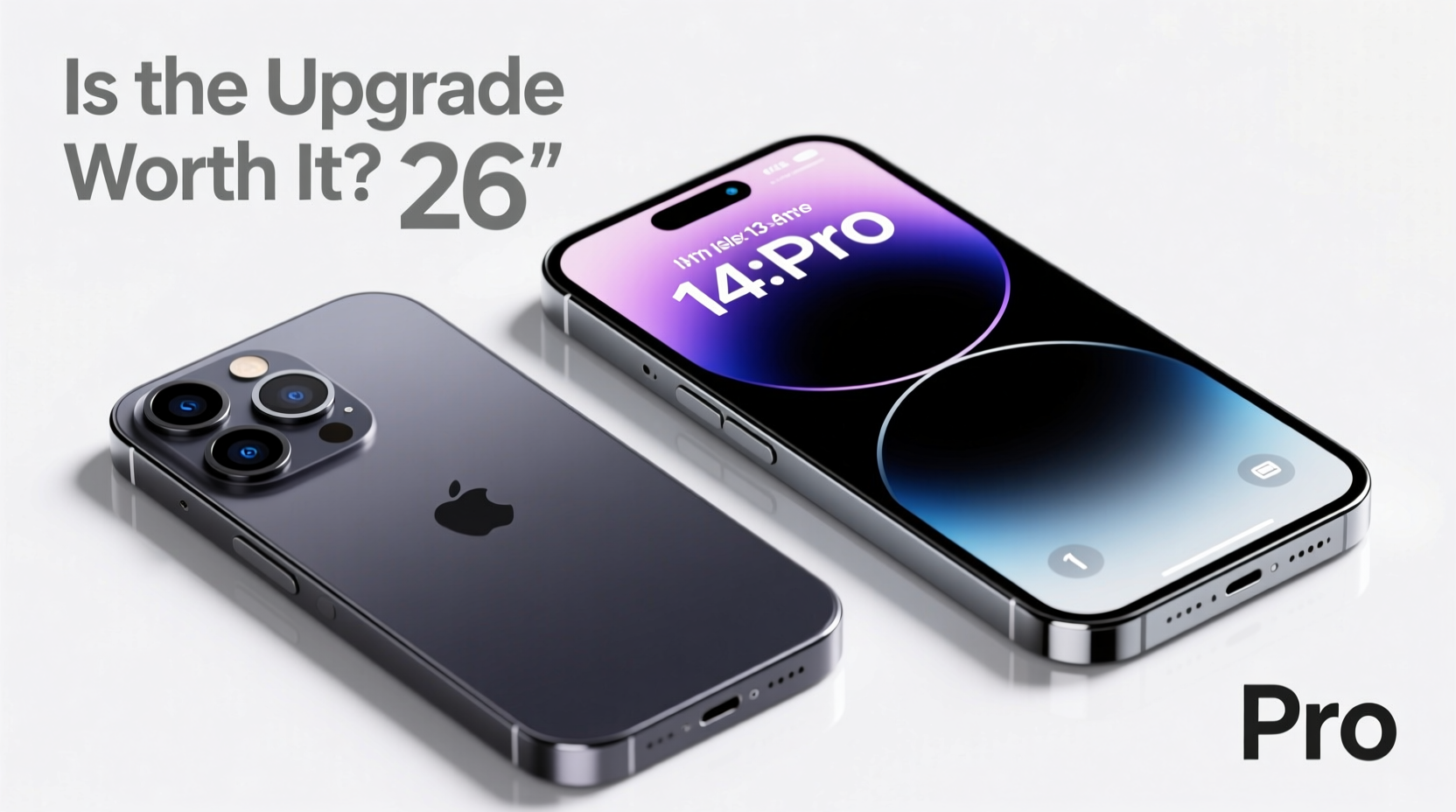
At first glance, the iPhone 14 Pro and 13 Pro look nearly identical. Both feature stainless steel frames, textured matte glass backs, and IP68 water resistance. However, one major change sets the 14 Pro apart: the introduction of the Dynamic Island.
The Dynamic Island replaces the traditional notch with a pill-shaped cutout that transforms into an interactive status area for notifications, music playback, timers, and Face ID authentication. It’s not just cosmetic—it adds functionality by integrating system alerts directly into the lock screen experience.
Another key improvement is the display brightness. The 14 Pro supports up to 2000 nits peak outdoor brightness (HDR), compared to the 13 Pro’s 1000 nits. This makes a noticeable difference under direct sunlight, where screen readability improves significantly.
Performance: A15 vs A16 – Real-World Impact
The iPhone 13 Pro runs on Apple’s A15 Bionic chip (5nm process), while the 14 Pro introduces the A16 Bionic (also 5nm, but enhanced). On paper, the A16 delivers about 40% better GPU performance and improved power efficiency.
In everyday tasks—browsing, messaging, video streaming—the difference is negligible. Both chips handle multitasking and app switching smoothly. However, under heavy loads such as gaming, video editing, or AR applications, the A16 maintains cooler temperatures and sustained performance longer.
“Even minor gains in thermal efficiency translate to longer gameplay sessions and faster export times.” — David Lin, Mobile Performance Analyst at TechPulse Labs
Both phones have 6GB of RAM and similar storage options (128GB–1TB). With iOS optimization, neither will feel outdated soon. But if future-proofing matters—especially for creative professionals—the A16 gives the 14 Pro a slight edge.
Camera System: Where the 14 Pro Truly Shines
The most compelling reason to upgrade lies in the camera department. While both models feature triple-lens setups (wide, ultra-wide, telephoto) with Night mode and ProRAW support, the 14 Pro brings a completely redesigned main sensor.
- 48MP Main Sensor (14 Pro): Quadruples resolution over the 13 Pro’s 12MP sensor. Uses pixel binning to capture more light and detail.
- Better Low-Light Photos: Larger sensor size and advanced computational photography yield sharper night shots with less noise.
- Photonic Engine: Introduced in the 14 series, this enhances image processing across all lenses before fusion.
- ProRAW & Photographic Styles: More control for enthusiasts shooting in manual modes.
The 14 Pro also enables 2x optical-quality zoom using the center-cropped portion of the 48MP sensor—a feature absent on the 13 Pro. This means clearer mid-range shots without relying on digital zoom.
| Feature | iPhone 13 Pro | iPhone 14 Pro |
|---|---|---|
| Main Camera | 12MP f/1.8 | 48MP f/1.78 |
| Low-Light Performance | Good (Night Mode) | Excellent (Improved sensors + Photonic Engine) |
| Zoom Range | 3x Optical, 15x Digital | 3x Optical, 15x Digital (plus 2x sensor crop) |
| Video Recording | Cinematic Mode (1080p), Dolby Vision HDR | Cinematic Mode (up to 4K), Action Mode stabilization |
| Front Camera | 12MP f/2.2 | 12MP f/1.9 (brighter low-light selfies) |
Real-World Example: Portrait Photographer's Experience
Sophie Tran, a freelance portrait photographer based in Portland, upgraded from the 13 Pro to the 14 Pro primarily for event coverage. She noticed immediate benefits during a wedding shoot held indoors with mixed lighting.
\"The 14 Pro captured skin tones more naturally and retained highlight details in white dresses far better than my old 13 Pro,\" she said. \"Switching between 24mm and 48mm equivalent focal lengths via the 48MP sensor gave me flexibility without changing lenses or positions.\"
She added that ProRAW files exported faster and were easier to edit in Lightroom due to richer dynamic range. For creatives who rely on mobile photography, the camera leap is substantial.
Battery Life and Charging: Incremental Gains
Apple claims up to 23 hours of video playback on the 14 Pro versus 22 hours on the 13 Pro. In real-world testing, the difference averages around 30–45 minutes of additional usage per charge under moderate conditions.
Neither model supports USB-C or faster wired charging beyond 20W, so charging speed remains unchanged. Both require MagSafe or Qi-compatible chargers for wireless power.
However, the A16’s improved energy efficiency contributes to slightly longer standby times and slower drain during background activity. Users reporting all-day endurance on the 13 Pro will see marginal extension on the 14 Pro—not transformative, but welcome.
Software Support and Longevity
Both devices launched with iOS 15 and 16 respectively and are expected to receive updates through at least 2027. Given Apple’s track record, either phone should handle upcoming iOS versions well into the next decade.
That said, newer features often debut first—or exclusively—on latest-generation hardware. For example, iOS 17 introduced StandBy mode, which works best with Always-On Display available only on the 14 Pro.
Checklist: Should You Upgrade?
Use this checklist to evaluate whether the iPhone 14 Pro is worth the investment over the 13 Pro:
- Do you take frequent photos, especially in low light? → Yes? 14 Pro wins.
- Do you edit videos or play graphics-intensive games? → A16 handles load better.
- Are you sensitive to screen glare or use your phone outside often? → Higher brightness helps.
- Is Dynamic Island something you’d actively use? → If yes, it adds convenience.
- Are you still satisfied with your 13 Pro’s performance? → You may not need to upgrade.
Frequently Asked Questions
Can the iPhone 13 Pro run the same apps as the 14 Pro?
Yes. All apps compatible with iOS 16 and later run on both devices. No functional limitations exist due to app ecosystem parity.
Is the price difference justified?
At launch, the gap was $100. Today, used or refurbished 14 Pros sell for only $150–$250 more than equivalent 13 Pros. For photography and display improvements, many find this premium reasonable.
Does the 14 Pro last longer on battery?
Slightly. You’ll gain about 30–45 minutes under typical use. Not revolutionary, but consistent with incremental annual upgrades.
Final Verdict: Who Should Upgrade?
The iPhone 14 Pro isn’t a revolutionary leap over the 13 Pro, but it refines what already worked well. The combination of the 48MP main camera, Dynamic Island, brighter display, and A16 chip creates a more modern, capable device—particularly valuable for photographers, content creators, and tech enthusiasts.
If you’re still using an iPhone 13 Pro and it meets your needs, there’s no urgent reason to switch. But if you're trading in from an older model or buying secondhand, the 14 Pro offers tangible benefits that enhance daily usability and extend relevance in a post-iPhone-15 world.
Ultimately, the upgrade is “worth it” not because it reinvents the iPhone, but because it polishes the formula with thoughtful, user-focused enhancements.




 浙公网安备
33010002000092号
浙公网安备
33010002000092号 浙B2-20120091-4
Comments
No comments yet. Why don't you start the discussion?