
If you're still using an iPhone 11 Pro and wondering whether upgrading to the iPhone 14 is a smart move—or just falling for marketing hype—you're not alone. Apple releases new iPhones annually, each promising better speed, sharper cameras, and longer battery life. But how much of that actually translates into meaningful improvements for users who already own a high-end model like the 11 Pro? Let’s take a detailed, no-fluff look at the real differences between these two phones and whether spending hundreds on an upgrade delivers proportional value.
Performance: A Leap in Processing Power
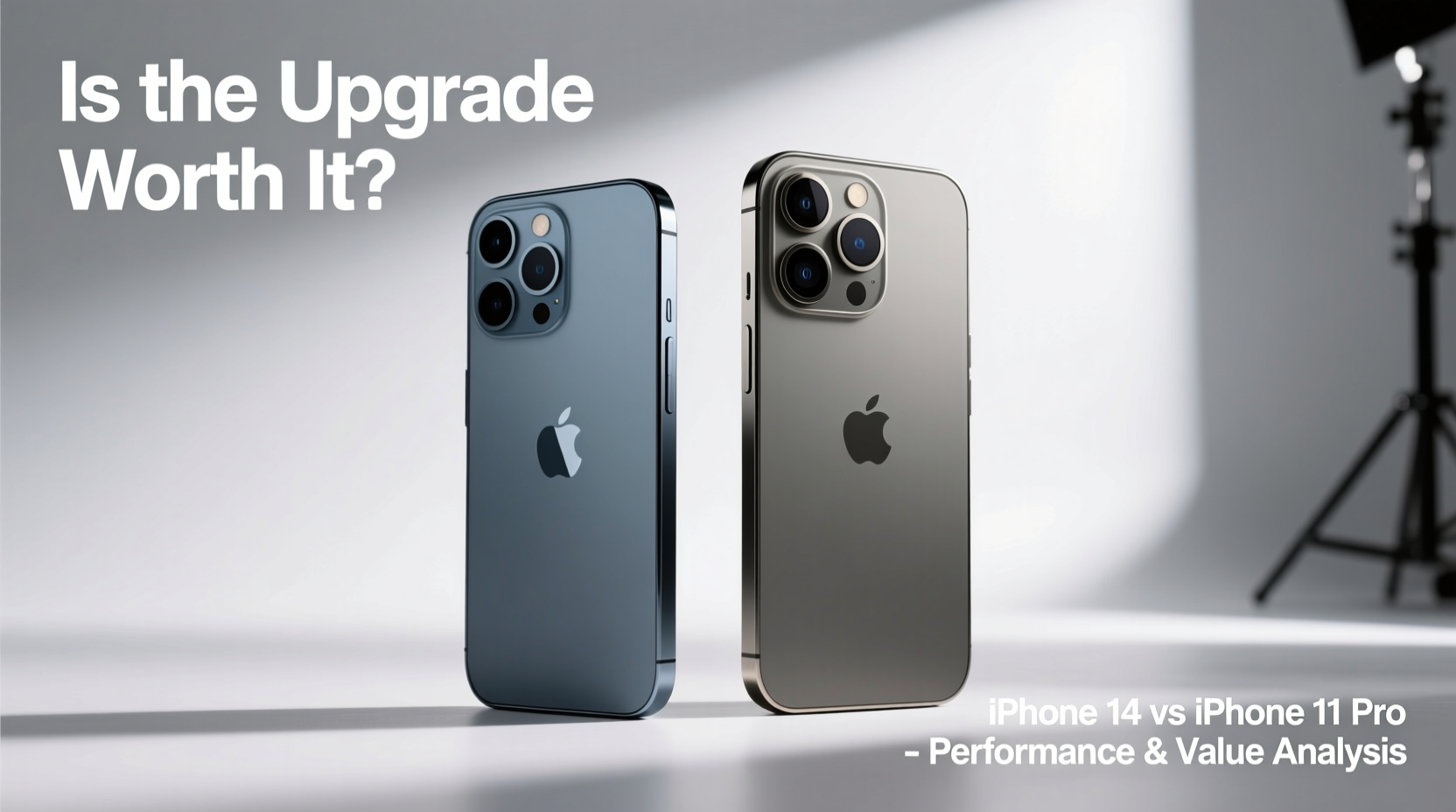
The iPhone 11 Pro runs on Apple’s A13 Bionic chip, which was groundbreaking in 2019. At the time, it delivered top-tier performance for gaming, multitasking, and photo editing. Fast forward to 2023, and the iPhone 14 features the A15 Bionic chip—yes, the same one used in the iPhone 13 Pro series—with enhanced GPU and Neural Engine capabilities.
In real-world use, this means apps launch faster, animations are smoother, and machine learning tasks (like portrait mode processing or voice recognition) happen almost instantly. For most daily tasks—browsing, messaging, streaming—the difference may be subtle. However, if you rely on your phone for creative work like video editing or augmented reality apps, the iPhone 14 handles those loads with noticeably less lag.
“Even a year-old flagship can feel outdated when running modern AI-heavy applications. The A15 isn’t just faster—it’s more efficient under sustained load.” — David Lin, Mobile Hardware Analyst at TechPulse Insights
Camera Comparison: More Than Just Megapixels
The iPhone 11 Pro introduced Apple’s first triple-lens system: ultra-wide, wide, and telephoto. It was excellent for its time, especially in daylight. The iPhone 14 retains a dual-camera setup (wide and ultra-wide), but with significant sensor upgrades.
The main sensor on the iPhone 14 is larger and supports Photonic Engine, Apple’s latest image-processing technology that improves low-light performance across all lenses. This means night mode now works on both rear cameras and the front-facing camera, something the 11 Pro lacks entirely.
In side-by-side tests, the iPhone 14 captures richer detail in shadows, more natural skin tones, and better dynamic range. Video quality also sees a boost with improved stabilization and cinematic mode at 1080p/30fps.
| Feature | iPhone 11 Pro | iPhone 14 |
|---|---|---|
| Main Camera | 12MP, f/1.8 | 12MP, f/1.5 (larger sensor) |
| Ultra-Wide | 12MP, f/2.4 | 12MP, f/2.4 |
| Front Camera | 12MP, f/2.2 | 12MP, f/1.9 (Night Mode support) |
| Night Mode | Rear only (no ultra-wide) | All cameras including front |
| Video Recording | 4K@60fps | 4K@60fps + Cinematic Mode |
For casual photographers, the improvement might not justify the cost. But if you regularly shoot in dim lighting or value consistent portrait quality, the iPhone 14 offers tangible benefits.
Battery Life and Efficiency Gains
Apple doesn’t always increase battery capacity with new models, but efficiency gains from newer chips often lead to better endurance. The iPhone 14 lasts up to 20 hours of video playback, compared to the 11 Pro’s 18 hours. In mixed usage, users report gaining about 1.5 to 2 extra hours of screen time per charge.
This may seem modest, but over time, fewer midday charges add convenience—especially for travelers or heavy users. Additionally, the iPhone 14 supports faster charging (up to 50% in 30 minutes with a 20W+ adapter), while the 11 Pro charges slightly slower despite supporting similar specs.
Real-World Example: Sarah’s Upgrade Decision
Sarah, a freelance photographer based in Portland, used her iPhone 11 Pro for four years. She shot client previews, edited on-the-go, and relied on FaceTime for consultations. By late 2023, she noticed longer export times, frequent app reloads, and disappointing results in evening shoots.
After testing the iPhone 14 at a store, she was struck by how quickly Lightroom applied edits and how much cleaner her low-light shots looked. “It wasn’t flashy,” she said, “but everything just worked better. I didn’t realize how much I was fighting my phone until I upgraded.”
For Sarah, the upgrade paid off—not because of new features, but because the device stopped being a bottleneck.
Design and Durability: Subtle but Meaningful Changes
Both phones feature stainless steel frames and glass backs, but the iPhone 14 uses Ceramic Shield front cover, which Apple claims is tougher than any smartphone glass. Drop tests suggest it survives more impacts than the 11 Pro, especially on flat surfaces.
The design language has evolved too. The iPhone 14 has flatter edges reminiscent of older iPhones, which some find more comfortable to hold. It’s also slightly lighter (172g vs 188g), making one-handed use easier over long periods.
One major omission: the 11 Pro had a 3D Touch display, replaced by Haptic Touch on the iPhone 14. While functionally similar, power users miss the pressure-sensitive shortcuts. On the flip side, the iPhone 14 includes Crash Detection—a safety feature that alerts emergency services during severe car accidents—which could be lifesaving.
Should You Upgrade? A Practical Checklist
Before spending $799 or more on a new iPhone, ask yourself the following. Check off what applies:
- ✅ My current phone struggles with basic tasks (apps crash, slow loading)
- ✅ I need better low-light photos or video quality
- ✅ Battery dies before bedtime even with moderate use
- ✅ I use my phone for creative or professional work
- ✅ I want newer safety features like Crash Detection
- ✅ I’m still under AppleCare+ or eligible for trade-in credit
If three or more apply, the upgrade likely makes sense. If not, consider holding off—especially since iOS updates continue to support the 11 Pro through at least 2025.
Frequently Asked Questions
Can the iPhone 11 Pro still run the latest iOS?
Yes. The iPhone 11 Pro supports iOS 17, ensuring access to the newest features, security patches, and app compatibility for the foreseeable future.
Is the iPhone 14 waterproof like the 11 Pro?
Yes, both have an IP68 rating, meaning they can survive submersion in up to 6 meters of water for 30 minutes. However, water resistance degrades over time, so avoid intentional exposure.
Will my accessories work with the iPhone 14?
Most cases, chargers, and wireless earbuds will work. The iPhone 14 uses the same Lightning port as the 11 Pro, so cables and docks remain compatible.
Final Verdict: Value Over Hype
The iPhone 14 isn’t a revolutionary leap from the 11 Pro, but it’s a solid evolutionary step. You’re not just paying for hype—you’re paying for measurable gains in camera quality, battery efficiency, processor speed, and safety features.
However, if your 11 Pro still performs well and meets your needs, there’s no urgent reason to upgrade. Apple’s ecosystem ensures longevity, and many users get five or more years of reliable service from their devices.
But if you’ve noticed your phone slowing down, your photos lacking punch, or your day ending with a dead battery, the iPhone 14 delivers real, usable improvements. It’s not about chasing the latest trend—it’s about getting a tool that works seamlessly with your life.




 浙公网安备
33010002000092号
浙公网安备
33010002000092号 浙B2-20120091-4
Comments
No comments yet. Why don't you start the discussion?